
Simanaitis Says
On cars, old, new and future; science & technology; vintage airplanes, computer flight simulation of them; Sherlockiana; our English language; travel; and other stuff
A CALIFORNIAN MINX
ANOTHER REASON WHY THE BRIT CLASSIC & SPORTS CAR is my favorite car magazine: Senior Contributor Martin Buckley has a marvelous way with words in describing something of a Time Capsule, not just automotively but of 1953 Britain. Here are tidbits gleaned from his “Hillman Minx Californian: A Ray of Sunshine,” Classic & Sports Car, March 17, 2026.
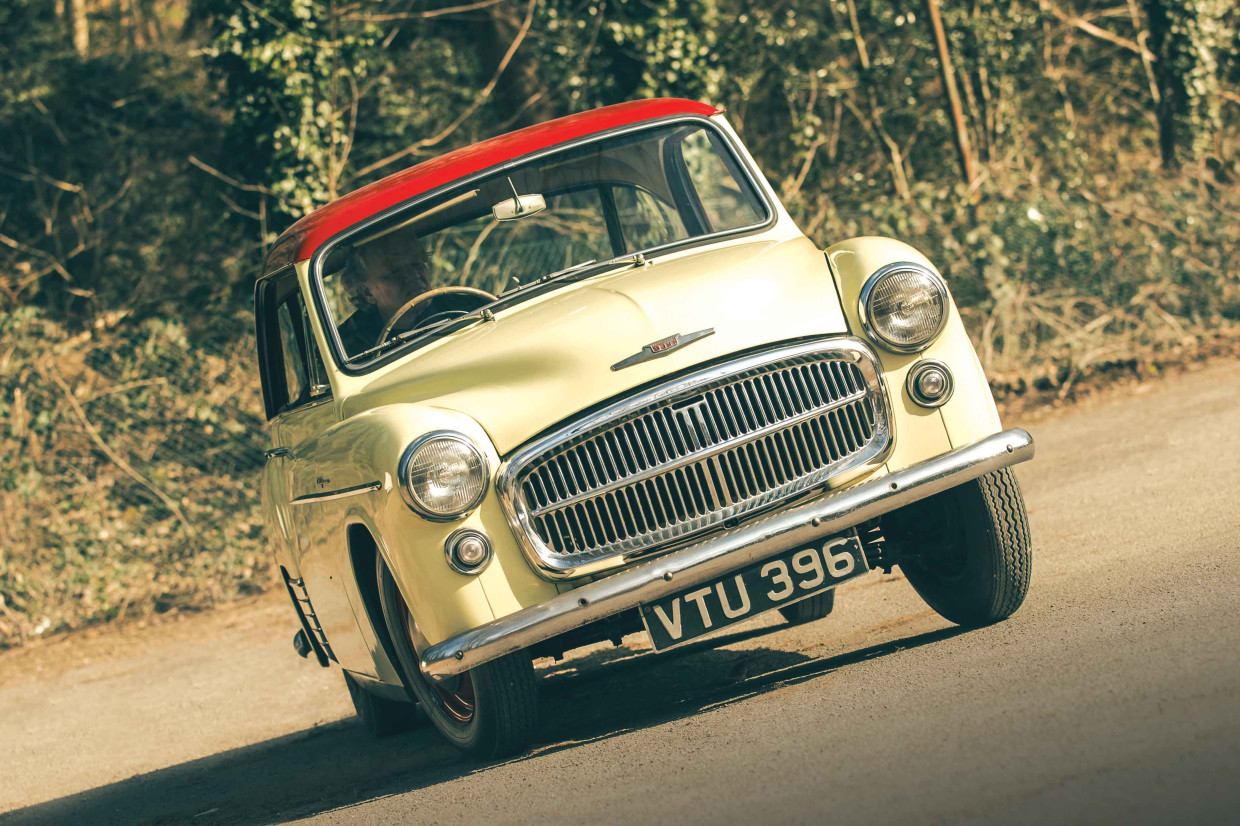
This and following images by Jack Harrison in Classic & Sports Car.
Post-War G.B. “The year 1953,” Martin recounts, “was when life in Britain began finally to bleed from monochrome to colour. Not everywhere, and not for everybody, but, slowly, there was a palpable sense that brighter days were just beyond the smog-shrouded horizon. It wasn’t so much ‘never had it so good,’ but rather ‘not as bad as it was.’ ”
Still Challenges A’Plenty. Martin noted, “The war had been over for eight years, but we were still trying to win peace in a world where the traditions of music halls, warm, flat beer and cricket on the village green were crossing over with the new distractions of television (1953 was the year of Quatermass) and freshly minted social anxieties, such as the rise of the Teddy Boy phenomenon.”
“Even London’s first espresso coffee bar,” he relates, “appeared to challenge public morals in a country of tea drinkers.”
Egad.
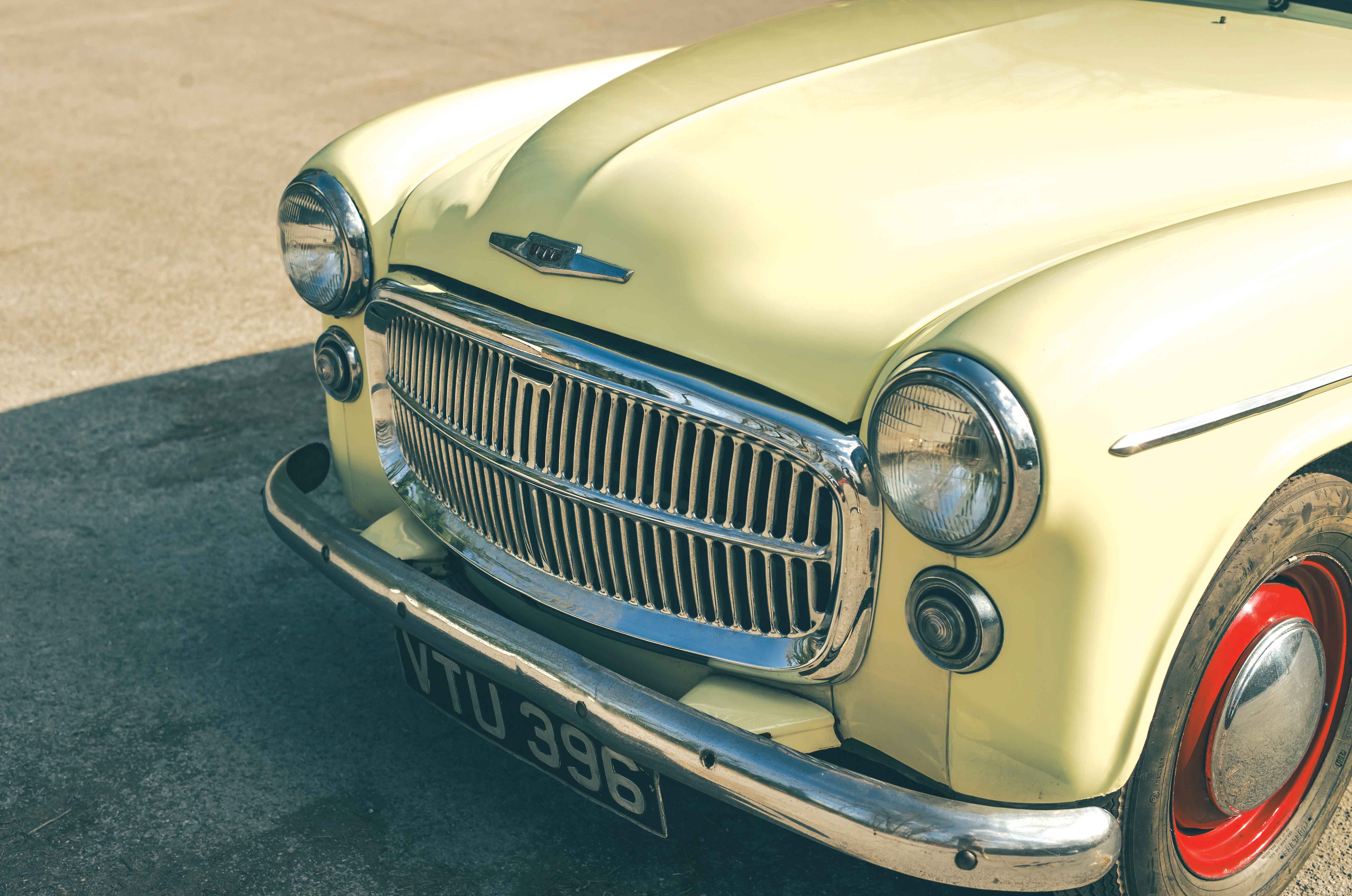
But Good Times As Well: “We had a new, young queen,” he says, “and a very old prime minister in Winston Churchill, who had just won the Nobel Prize in literature…. Sweets and petrol were no longer rationed, and the first of Ian Fleming’s racy James Bond novels, Casino Royale, offered readers an exotic escape into 007’s world of ‘sex, snobbery and sadism.’ ”
I’ll have to remember that: sex, snobbery, and sadism…. On second thought, ditch the sadism.
Martin also mentions the charming 1953 movie Genevieve. I recalled it fondly in “The Tale of Genevieve,” SimanaitisSays, March 17, 2022.
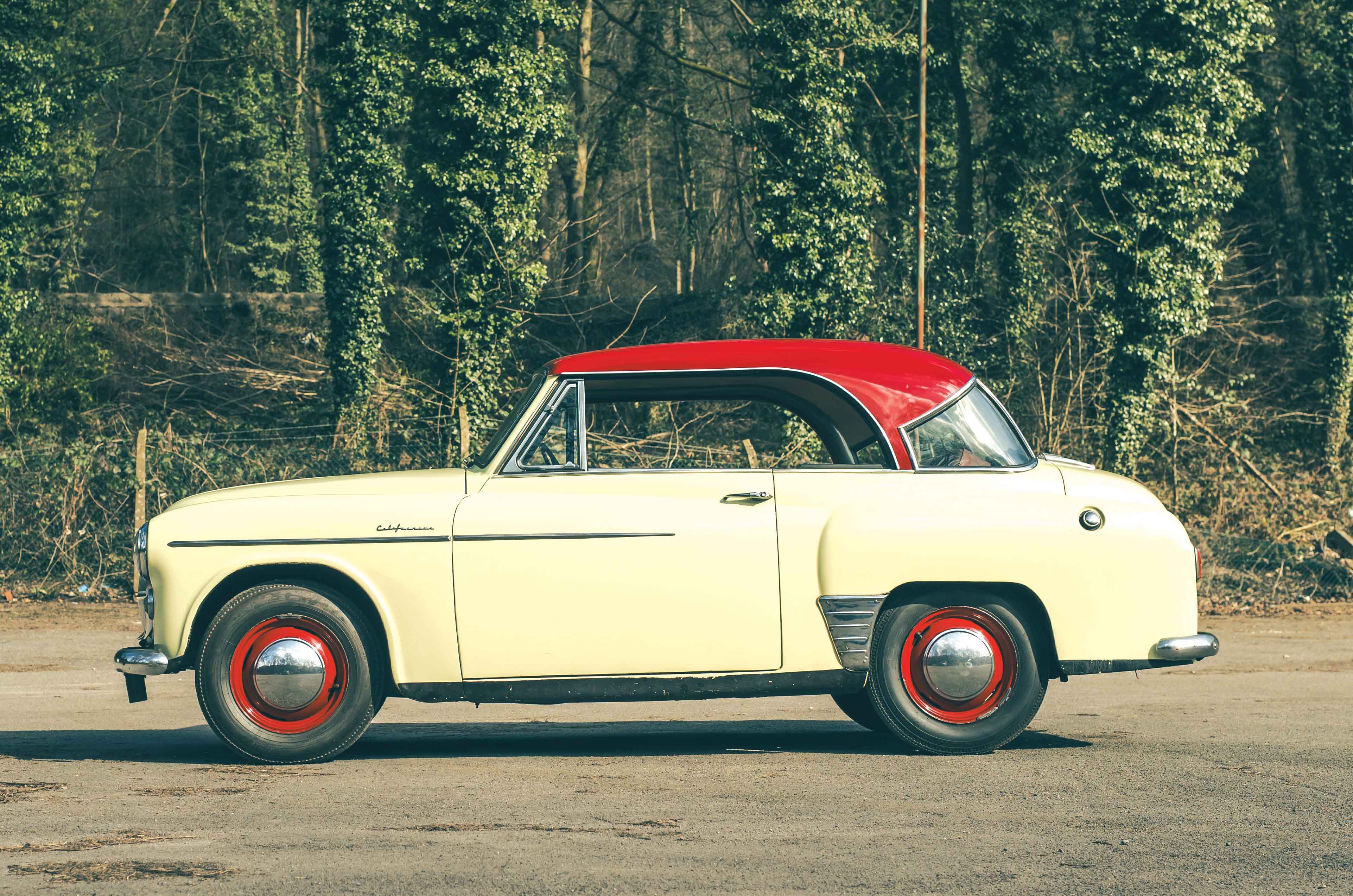
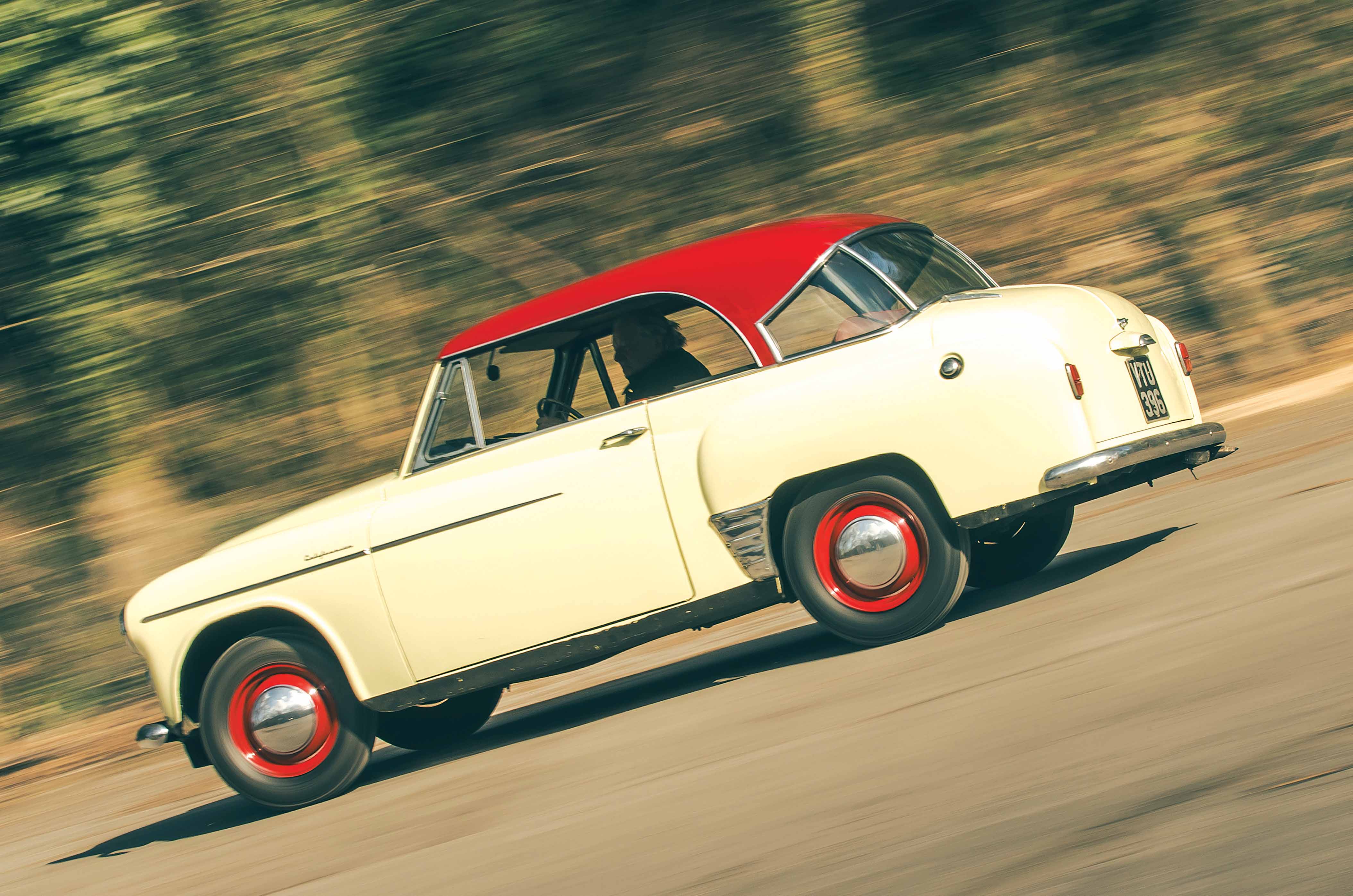
The 1953 Hillman Minx Californian. “I’m going to stick my neck out,” relates Martin, “and say that the Californian was Britain’s only pillarless hardtop during its three-year run, which was a brave move for what was the first fully unitary-bodied Minx.”
The transition away from body-on-frame was slowly evolving around the automotive world. But the pillarless hardtop continued to be a rarity, with the exception of American products from G.M. and eventually Ford.
An Earlier Variant: The “California Top.” Wikipedia describes, “Another form of early pillarless hardtop is the ‘California top,’ originating in Los Angeles and most popular from 1917 to 1927. These were designed to replace the folding roofs of touring cars, to enclose the sides of the car for better weather protection…. Automobile dealers were encouraged to equip an open car with a California top to demonstrate that they were ‘cool and clean in summer, and warm and dry in winter.’ ”
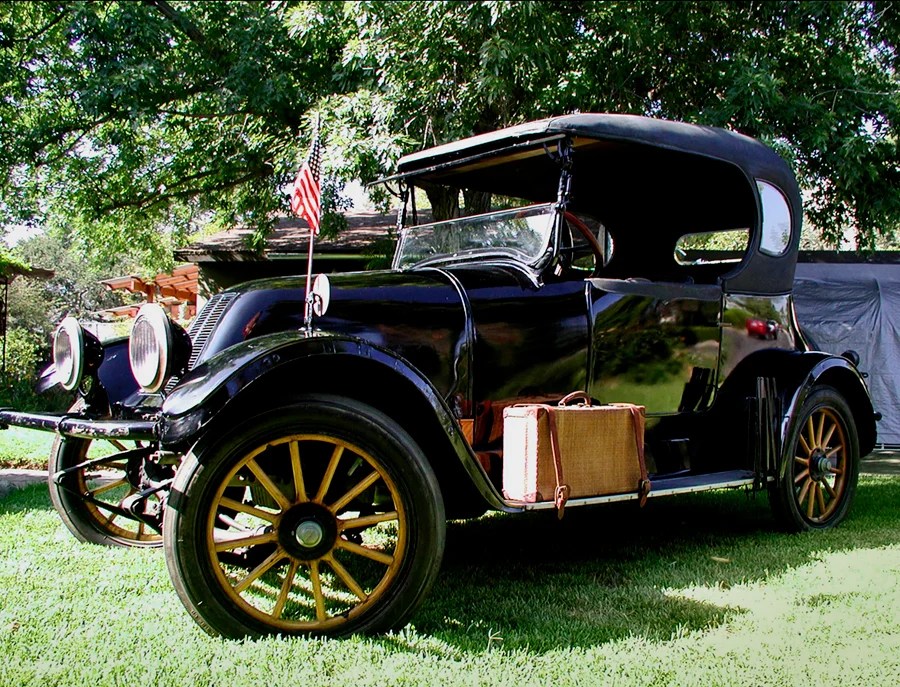
A 1917 Franklin 4 Passenger Roadster, its folding top replaced with a California top in the mid-20s. Image by Guest richentee at forums.aaca.org.
By the way, the term appeared here in “A Pair of Wind Wagons,” SimanaitisSays, March 3, 2026: Bill Milliken’s Aero-Triple-Cycle encountered a neighbor’s Chevy sporting a California top, the latter’s rarity costing Bill’s father extra cash to straighten out matters.
Back to the Minx. “The Hillman Minx,” Martin recounts, “is a sad echo of a lost world before supermarkets and Sunday trading. It was a cornerstone of the Rootes Group’s pre- and post-war success, with a history beginning in the early 1930s and ending in 1970 on a lesser species of the ‘Arrow’ Hillman Hunter range. They were remarkable cars only for their total and utter unremarkableness.”
Martin continues, “With their big, 16in wheels, tiny, seven-gallon fuel tanks and ability (according to the dubious sales-brochure artwork) to accommodate up to six emaciated, presumably chain-smoking 1950s occupants, the various species of Minx were about on a par with an Austin A40 but a cut above a Ford Anglia.”
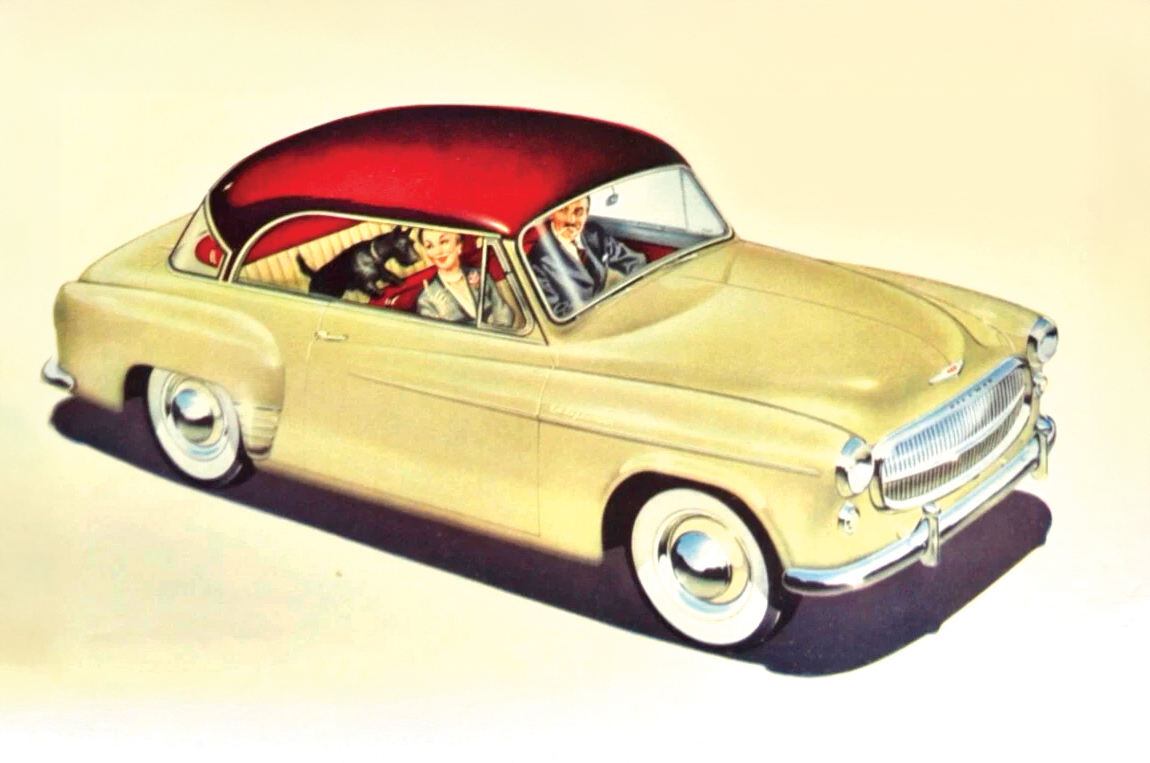
“Tiny figures in the Hillman Minx Californian’s brochure artwork give an impression of space.”
“With its styling allegedly modelled on that of America’s 1949 Plymouth,” Martin relates, “the new Minx had independent front suspension (by wishbones and coil springs), hydraulic braking and a modern, full-width look that manifested as the sort of rounded, three-blob proportions you associate with the cars pictured in the Thomas the Tank Engine books.”
Martin observes, “While most Minx saloons were offered in austerity black or export-or-die beige, the Californian was presented in a variety of chic two-tone colour combinations that included Balmoral Grey, Quartz Blue and limestone grey, with a claret or black roof plus appropriately matching upholstery.”
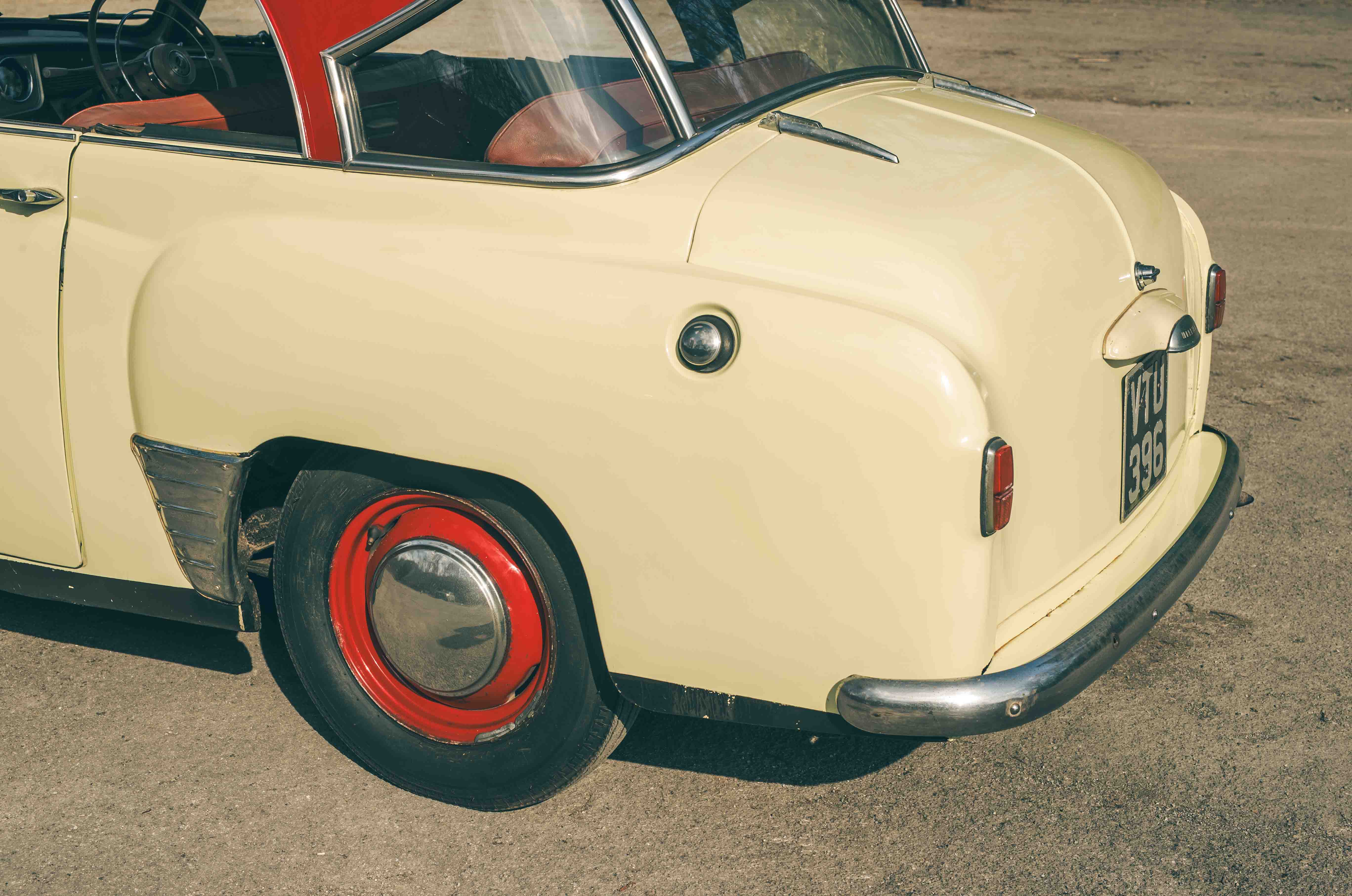
Martin continues, “There is a hint of Austin Atlantic saloon about the three-piece rear window, and the tail-lights look like red pimples on a large expanse of chubby back end.” He also notes “the massive steering wheel appears out of proportion to the Hillman Minx Californian’s modest dimensions.”
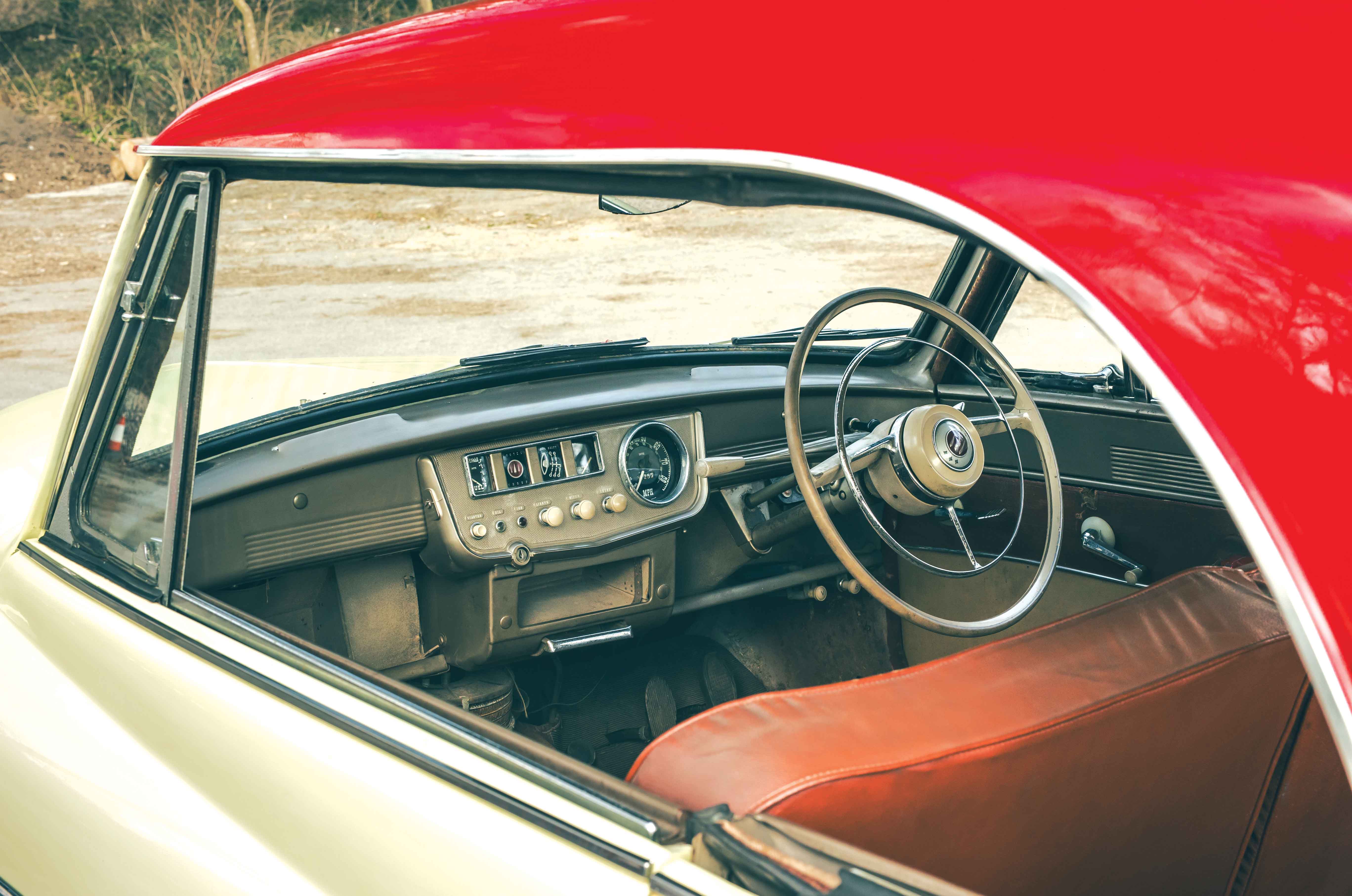
Imagine how big that wheel would have seemed to those tiny occupants.
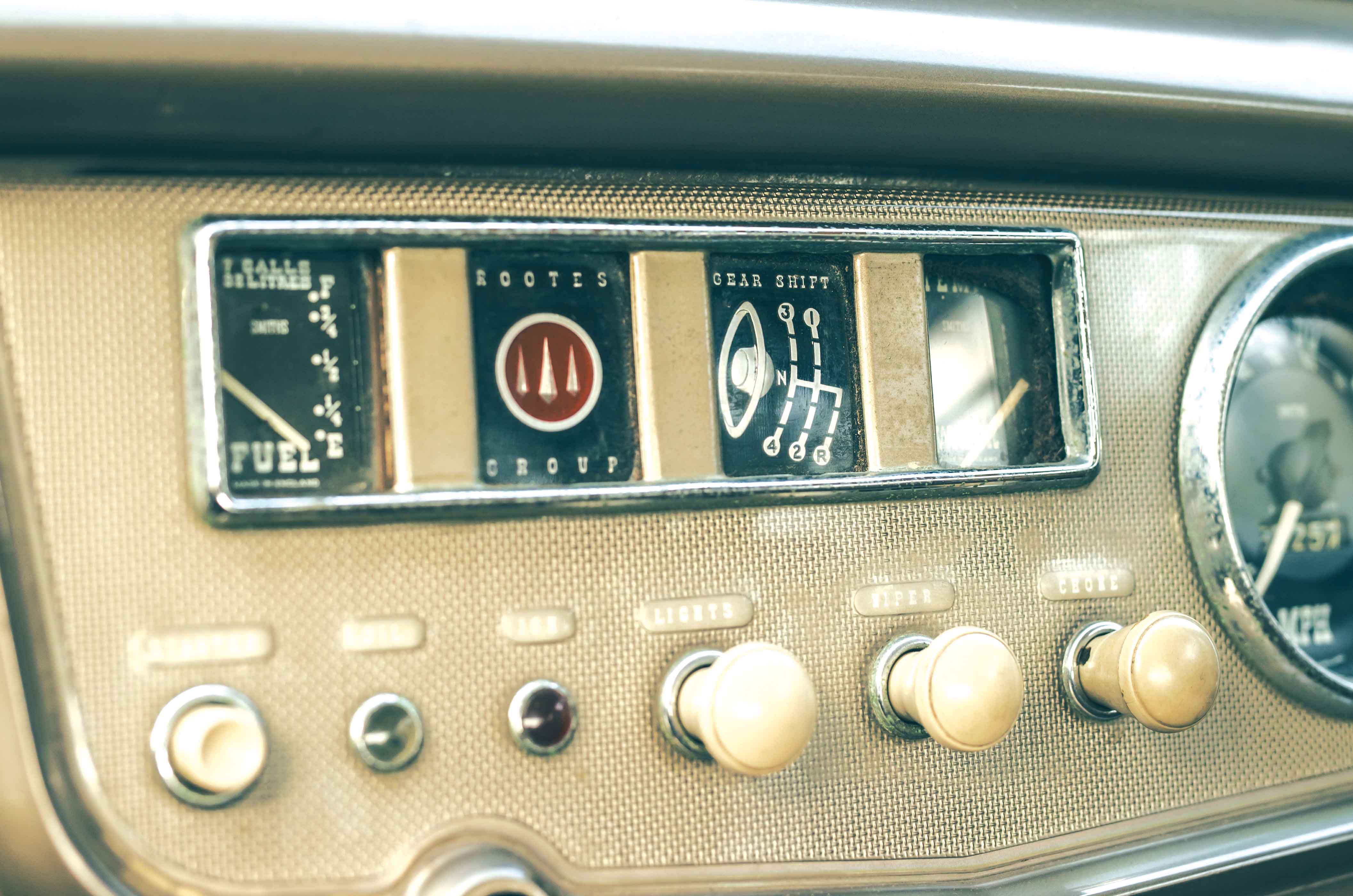
Martin observes, “All the controls and instrumentation are in the centre, including a clock, a helpful diagram of the ‘synchromatic’ gearchange layout, and warning lights for battery charging and oil pressure. The typeface used on the dials catches the eye, having something of the feel of the font used on ‘Wanted: dead or alive’ posters from the old American West.”
Summing Up. Martin recounts, “With its two-tone paint scheme and sexy roofline, it looked like a car for the ’50s girl about town in her twinset and pearls – you can picture a delicate, white-gloved hand manipulating the column change.”
“If,” Martin posits, “the bumbling Minx saloon suggested a tragic, cowed and fairly doomed accountant from deepest Surrey, who motored out of necessity rather than for pleasure, then there was something almost risqué about the Californian.”
Yes, Martin, being as I am a born-again Californian, I’ve aspired to that almost risqué persona as well. Thanks for your entertaining writing. ds
© Dennis Simanaitis, SimanaitisSays.com, 2026
 Simanaitis Says
Dennis, my oldest friend, 1948, Roger Sperling, motor cycle racer , had a 1951 Minx in high school, 1961. Mentioned to last week that I have never seen any writing on them. First HMN had one this month, and now yours. What is going on?John