
Simanaitis Says
On cars, old, new and future; science & technology; vintage airplanes, computer flight simulation of them; Sherlockiana; our English language; travel; and other stuff
KIT MARLOWE—AN ELIZABETHAN JOHN LE CARRÉ PART 2
YESTERDAY, MICHAEL DOBSON’S LRB PIECE “Flash and Thunder” got me thinking about Christopher Marlowe, my favorite noir Elizabethan. Today in Part 2, we shuffle through Kit’s Tudor closet, not to say John le Carré’s as well some 380 years later.
Edward II and Other “Boies.” In his LRB article, Michael Dobson recounts, “What mainly kept Marlowe himself alive in the popular imagination was the resonance between his sole English chronicle play, Edward II, with its explicit presentation of a sexual relationship between the king and his favourite, Piers Gaveston, and the rumours about Marlowe’s own sexuality put about by a renegade Catholic priest in the weeks leading up to Marlowe’s death in 1593.”
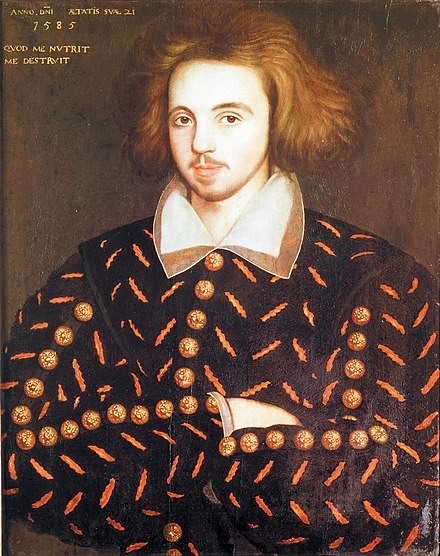
Anonymous portrait, possibly of Marlowe, at Corpus Christi College, Cambridge. Image from Wikipedia.
Dobson continues, “According to BL Harley MS.6848 ff.185-6 (known as the ‘Baines note’ and headed ‘A note Containing the opinion of one Christopher Marly Concerning his Damnable Judgment of Religion, and scorn of gods word’), Marlowe had stated on at least one occasion ‘That all they that loue not Tobacco & Boies were fooles.’ ”
For ‘Em or Agin ‘Em. Dobson observes, “There is a whole study to be written about when and for whom this attributed viewpoint came to count in Marlowe’s favour rather than against him, and how his widespread image in popular culture as an excitingly shady gay martyr came to replace the 17th century’s sporadic treatments of his short life as the cautionary tale of a blasphemer justly punished.”
Indeed, among the many closets of Tudor life, homosexuality was not the most dangerous. What with Henry VIII nationalizing Christianity, being a practicing Catholic was another of them.

A Wonderful Tidbit. By the way, LRB Letters inevitably offer wonderful tidbits. One such occurred from reader Bob Jope in Vol. 48 No. 5 March 19, 2026: “Michael Dobson notes that Christopher Marlowe has come to be seen as ‘an excitingly shady gay martyr’ (LRB, 5 March). I was reminded of an incident that took place in what must have been 1993, on the quatercentenary of Marlowe’s death, at St Nicholas’s Church in Deptford, the site of his unmarked grave. The afternoon’s celebrations, including a soliloquy performed by Antony Sher, were suddenly interrupted by the joyfully noisy arrival of a group of burly bearded ‘nuns’ in leathers and habits declaring themselves to be – banners and all – ‘gay bikers for Marlowe.’ ”
I love it.
And, what’s more, as I noted from my research, “In real life, maybe Kit was counterfeiting coins for the benefit of seditious Catholics. Or maybe he was a government double agent. At one point, Kit was arrested, sent before Lord Treasurer Burghley (yes, that Burghley), and released without charge. Was he a mole among Catholics for Burghley and the late Sir Francis Walsingham, Queen Elizabeth I’s spymaster? We’ll never know for sure, because on May 30, 1593, Kit was killed in a Deptford altercation with Ingram Frizer (another Walsingham operative).”
Or Was He Killed? I continued, “One theory: Kit’s death was faked to save him from trial and execution for subversive atheism. And that he lived on to ghost-write plays for a hack actor from Stratford-on-Avon.”
David Cornwell aka John le Carré. Dobson recounts, “As in the case of John le Carré né David Cornwell, it may be a good selling point for a writer to have it known that he was once a professional spy, but, if revealed, the actual details of his work may give readers pause.”
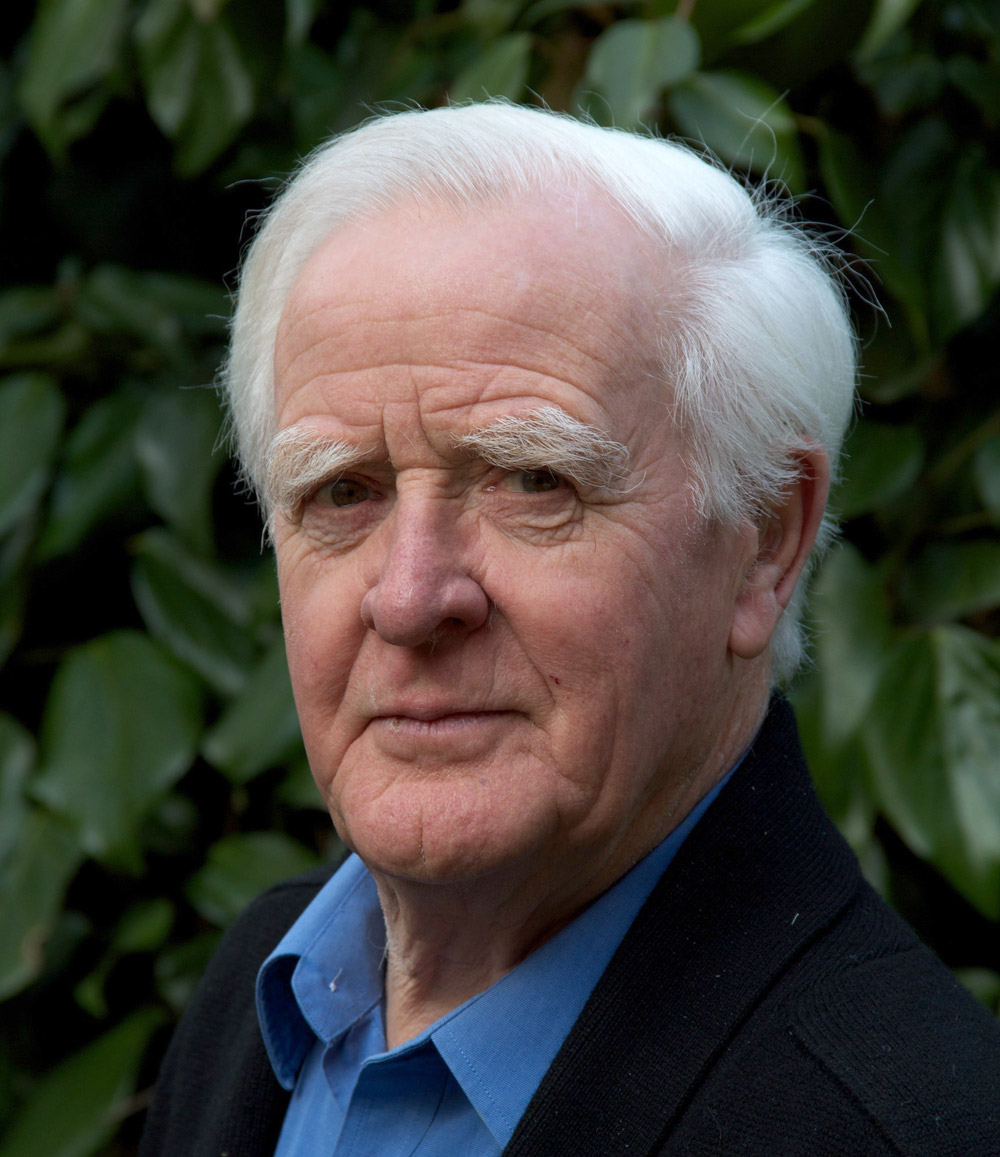
David John Moore Cornwell, 1931–2020, pen name John le Carré, Irish-British author, considered one of the greatest novelists of the postwar era. During the 1950s and 1960s, he worked for both the Security Service (MI5) and the Secret Intelligence Service (MI6). Image from The Crime Writers’ Association.
“In his novels,” Dobson describes, “the mature le Carré personified the agonised liberal conscience of his country, horrified at the successive betrayals forced on even those with its best interests and noblest aspirations at heart, but that doesn’t make us feel any less queasy when we learn that the young Cornwell’s earliest intelligence assignment was to join left-wing student societies at Oxford in order to provide information to MI5 about his fellow members.”
Kit’s Legacy. Dobson has an adroit means of identifying Marlowe’s legacy: “… before Marlowe, little entertainment worthy of the name was available to the English except the public burning of heretics, variegated with an afternoon spent bull-baiting. And… suddenly with the advent of Marlovian drama, new creative possibilities opened for scepticism, dissent and sheer dash.”
In finest iambic pentameter: “Was this the face that launch’d a thousand ships,/ And burnt the topless towers of Illium?” ds
© Dennis Simanaitis, SimanaitisSays.com, 2026
 Simanaitis Says