
Simanaitis Says
On cars, old, new and future; science & technology; vintage airplanes, computer flight simulation of them; Sherlockiana; our English language; travel; and other stuff
A SELF-SUPPORTING NOBLE COMPOSER—AND A WOMAN AS WELL PART 2
YESTERDAY IN PART 1, DORA PEJAČEVIĆ WAS INTRODUCED as a composer as well as a duchess with Socialist leanings. We started listening to her Symphony in F-sharp minor. (Perhaps you’d like to listen along today.)
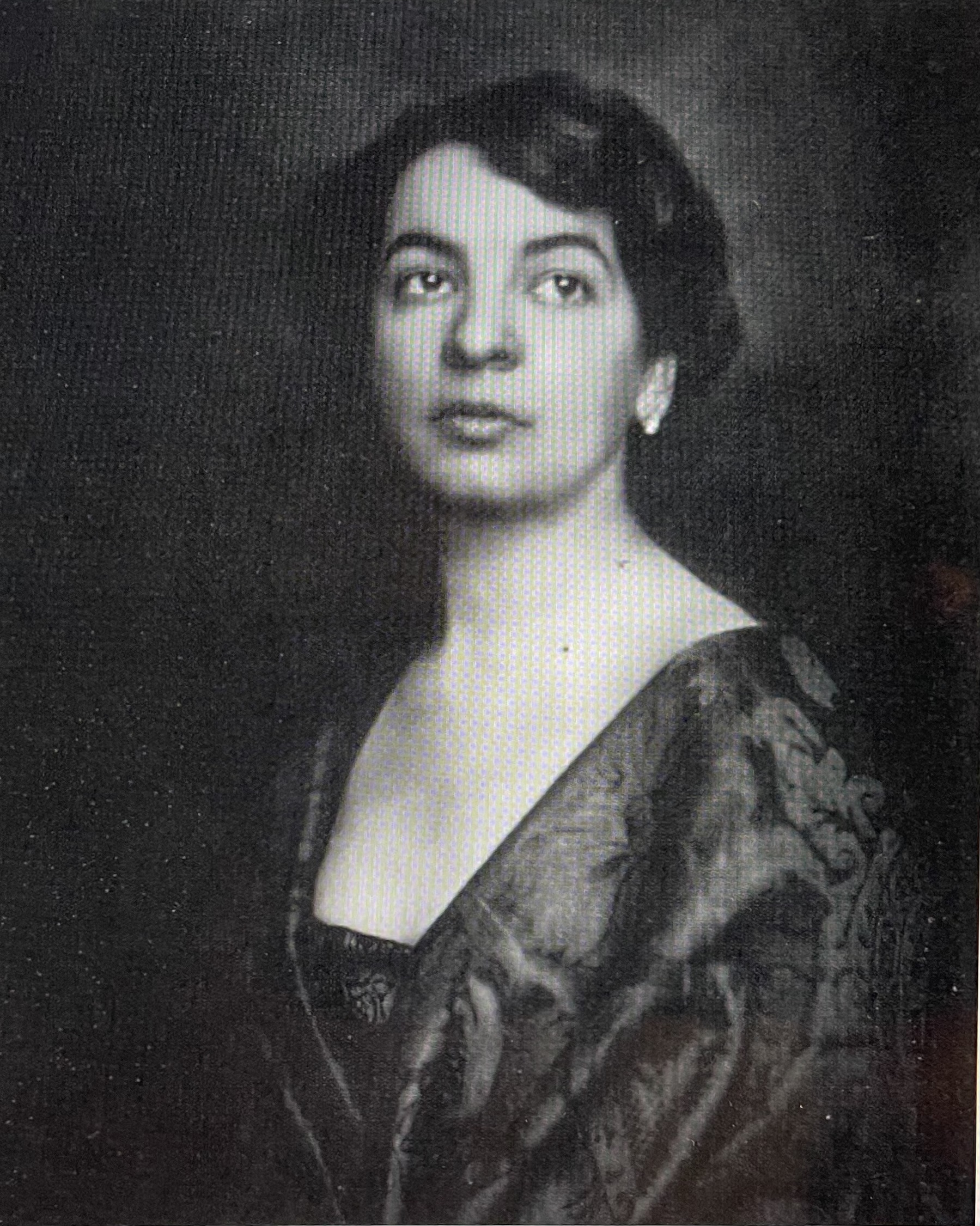
Dora’s Musical Flair. “Dora started to compose at the age of twelve,” Blevins writes. “Fortunately her parents recognized her natural gifts and allowed her to study abroad. However, those studies included relatively little instruction in music and were largely devoted to broadening her intellectual horizons. She was largely self-taught in music, which is remarkable considering the inventiveness, rich brilliance and enduring quality of her compositions.”
Wikipedia notes, “She developed her own intellectual abilities under the influences of Wilde, Ibsen, Dostoevsky, Mann, Schopenhauer, Rilke, Kierkegaard, Kraus, and Nietzsche, among others. In one of her diaries, she commented on 470 books she had read in the period from 1902 to 1921, which covered fields of literature, philosophy, music, religion, history, and natural sciences.”
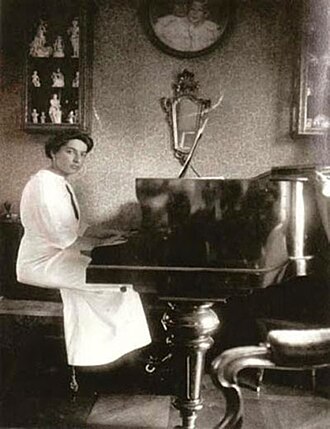
A Transition from the Romantic to Modern Music. Wikipedia continues, “In 1913, Pejačević composed a piano concerto, her first orchestral work, marking her as the first ever Croatian composer to write a concerto. Pejačević’s earlier compositions mostly consisted of piano pieces, sonatas, and songs and were considered elite in their nature. She later replaced the romantic music of her youth with new musical expressions that corresponded to the time in which she lived—the turbulent war years and the revolutionary changes of the 1920s.”
Her symphony dates from 1916–1917, with revision in 1920.
Dora’s WWI and its Influence. Blevins recounts, “At the height of the First World War, Dora experienced a reality known to few of her sheltered fellow aristocrats. She was greatly affected by what she saw firsthand of grotesque horrors of the war. She volunteered as a nurse when wounded soldiers started arriving at Nasice, her home village.”
Blevins continues, “After the war she became even more alienated from and critical of members of her class. Their superficiality went against everything she held dear. She wrote to a friend: ‘I simply cannot understand how people can live without work—and how many of them do, especially the higher aristocracy—I despise them because of this.’”
Blevins quotes Dora, “ ‘I think that the surroundings and external events never take a force capable of outweighing what occupies and fills our souls.’ And her soul was filled with beauty and love. She believed that ‘everything that is good and great springs from love.’ ”
Marriage and Motherhood. Blevins describes, “Romantic love came into Dora Pejačević’s life much later than it might have done had she followed a true aristocrat’s path. In 1921, Dora married Ottomar von Lumbe, a military officer seven years her junior. They settled in Munich, where Dora became pregnant with their first child.”
“Dora, Rest Now.” Alas, Wikipedia notes, “She died of puerperal sepsis after childbirth on March 5, 1923, at the Munich Clinic for Women’s Diseases…. Before her death, she expressed the wish to rest in a separate grave, in the ground, outside the family tomb in the crypt of the Church of the Ascension of the Lord (Pejačević Family Chapel) in Našice, which the family had erected in 1881. She also wished her tombstone to have her name written solely as ‘Dora’ with the short phrase ‘Rest Now.’ ”
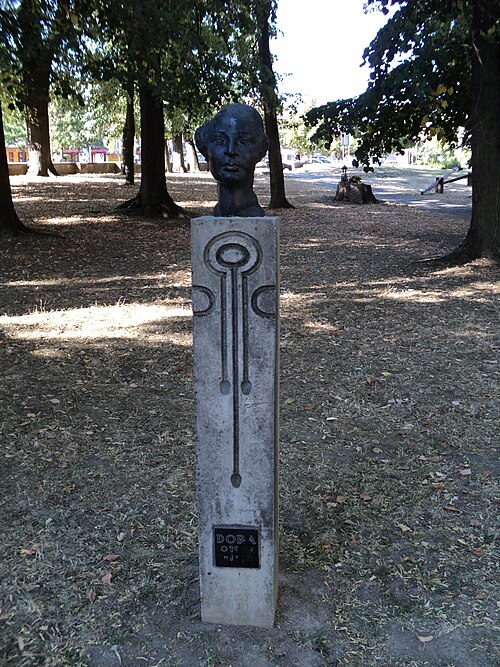
A memorial to Dora in Našice. Image by Flammard from Wikipedia.
I’ve been listening to her symphony as I write this. At the moment, its scherzo molto allegro movement has particularly lyrical portions celebrating her Croatian heritage. ds
© Dennis Simanaitis, SimanaitisSays.com, 2026
 Simanaitis Says