
Simanaitis Says
On cars, old, new and future; science & technology; vintage airplanes, computer flight simulation of them; Sherlockiana; our English language; travel; and other stuff
THE MITFORD SISTERS (AND BROTHER) PART 2
YESTERDAY, WE BEGAN EXPLORING varied adventures of the fabled Mitford sisters, acknowledging their brother as well. Today, there’s the last three in birth order: Unity, Jessica, and Deborah.
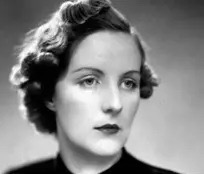
Unity Mitford. This and following images from BBC News.
Unity Valkyrie Mitford, 1914—1948. Wikipedia recounts, distressingly enough, “Mitford returned to Germany in the summer of 1934, aged 19, enrolling in a language school in Munich close to the Nazi Party headquarters. [Diana biographer Jan] Dalley notes “She was obsessed with meeting Hitler, so she really set out to stalk him.”
Wikipedia continues, “Hitler became smitten with the young blonde British student, the embodiment of the Nazi ideal of ‘Aryan’ womanhood. [She stood 6’ 1’’.] He was also struck by her curious connections to Germanic culture, including her middle name, Valkyrie.”
Lyndsy Spence adds in “The Mitfords: Six Sisters Who Captured the Maelstrom,” BBC News, September 25, 2014: “Unity, the restless middle child, followed Diana’s lead and took up with the fascist cause, donning a Black Shirt and parading through Hyde Park, accosting the communists…. Following a clumsy suicide attempt in 1939, she died a few years later when the bullet-wound became infected. A sad, wasted life—she ignited more fury than pity.”

Jessica Mitford.
Jessica Lucy “Decca” Mitford, 1917—1996. Unlike the rest of her family, Decca was a communist. Wikipedia recounts, “She eloped with Esmond Romilly to Spain to participate in the Civil War; they subsequently moved to the United States. On 30 November 1941, during an air raid on Hamburg. Romilly’s aircraft was lost over the North Sea with all on board.”
Wikipedia continues, Decca “remained in the U.S. most of her adult life, where she married Robert Treuhaft and was a member of the American Communist Party until 1958. She wrote several volumes of memoirs and several volumes of polemical investigation, including the best-selling The American Way of Death (1963) about the funeral industry.”
She is also the subject of Rosemary Hill’s “One of the Worst Things,” a review of Carla Kaplan’s Troublemaker: The Fierce, Unruly Life of Jessica Mitford, in London Review of Books, February 5, 2026. Rosemary Hill is an especially talented wordsmith. Here are several examples.

A Mitford Industry Lighthouse. Hill observes, “What Jessica, one of Deborah Devonshire’s older siblings, called ‘the Mitford Industry’ has powered on in spite of the absence of its principals (and in some cases because of it), refuelled by access to new material and a reduced fear of libel. Of the seven children of David and Sydney, Lord and Lady Redesdale, six were girls; the Mitford industry revolves, lighthouse-like, between them.”
Decca’s Forte. Hill continues, “Where Decca was perhaps an outlier in her family was that she possessed a degree of empathy, something none of her sisters appears to have had. She alone noticed that the people who lived in the cottages on her parents’ estate had bad teeth and inadequate clothes, and she was never content with the view….”
Thus, her belief in communist ideology.
Hill also cites a generally English trait: “There is a national tendency to avoid discussion of anything ‘unpleasant’, a preference for a register somewhere between stoicism and repression.”
Decca’s Impressions of America. “When Decca first stayed with well-off Americans,” Hill relates, “she was astonished by the absence of ‘cold bathwater, electric lights that don’t work, inedible food’ and draughts that characterised the stately homes of England.”
And later, Hill observes, “Attempts to find work gave Decca an early encounter with the inequalities she would spend the rest of her life fighting. She had no luck with applications until someone told her that ‘colour’ meant skin colour not hair. She stopped writing ‘brown’, started writing ‘white’, and immediately got a job. In 1939 she was selling tweeds in the Merrie England Village at the New York World’s Fair; she would never settle permanently in England again.”
On The Mosleys’ Internment and Her Husband’s Death. Hill recounts, “Churchill, who spent Christmas at the White House in 1941, sent for Decca and apologised for jailing the Mosleys. He explained that he had arranged for other prisoners to clean and housekeep for them. Decca was furious. She told Churchill that she blamed the Mosleys and their followers for the war and for Romilly’s death.”
“By the end of the war,” Hill observes, “Decca was transformed. Adolescent ‘dissatisfaction’ with the order of things found focus in the Communist Party and the civil rights movement. She was now a naturalised American citizen, living in San Francisco with her second husband, the Jewish lawyer and communist Bob Treuhaft.”
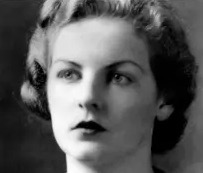
Deborah Mitford.
Deborah Vivien “Debo” Mitford, 1920 – 2014. Wikipedia observes, “Deborah was a contented, loving and cheerful child who, unlike her politically active sisters, was happy to accept life as she found it, and never felt the need to right the world’s injustices. In a later memoir, she wrote ‘as everything in life is unfair, perhaps the sooner it is realised the better.’ ”
JFK’s Involvement. Sedate though Debo’s life may have seemed by comparison, Rosemary Hill shares a great tale: “Debo, who became duchess of Devonshire in 1950, was sister-in-law to Kathleen ‘Kick’ Kennedy, Jack Kennedy’s sister. By the time he became president her sisters were convinced that Debo was having an affair with him. So Mitford-centric was their universe [recall the Mitford Industry Lighthouse], it seemed obvious that Kennedy’s address to the nation on 22 October 1962 would be an abdication speech, à la Edward VIII, announcing his love for Debo. The Cuban Missile Crisis came as a terrible disappointment.”
Ha. ds
© Dennis Simanaitis, SimanaitisSays.com, 2026
 Simanaitis Says