
Simanaitis Says
On cars, old, new and future; science & technology; vintage airplanes, computer flight simulation of them; Sherlockiana; our English language; travel; and other stuff
BOUBA-KIKI: EVEN CHICKS CAN PLAY PART 1
BEFORE YOU BEGIN, PAIR THE MADE-UP WORDS “BOUBA” AND “KIKI” with these pictured shapes. Which is which?
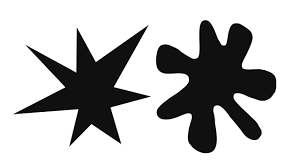
Images from science friday.
As noted by the sciencefriday.com website, “The Bouba-Kiki Effect describes the following phenomenon: When people are presented with a pointy shape and a blob shape and given a choice between two made-up words to name each one, most associate the pointy shape with the made-up word ‘Kiki’ and the blob shape with the made-up word ‘Bouba.’ ”
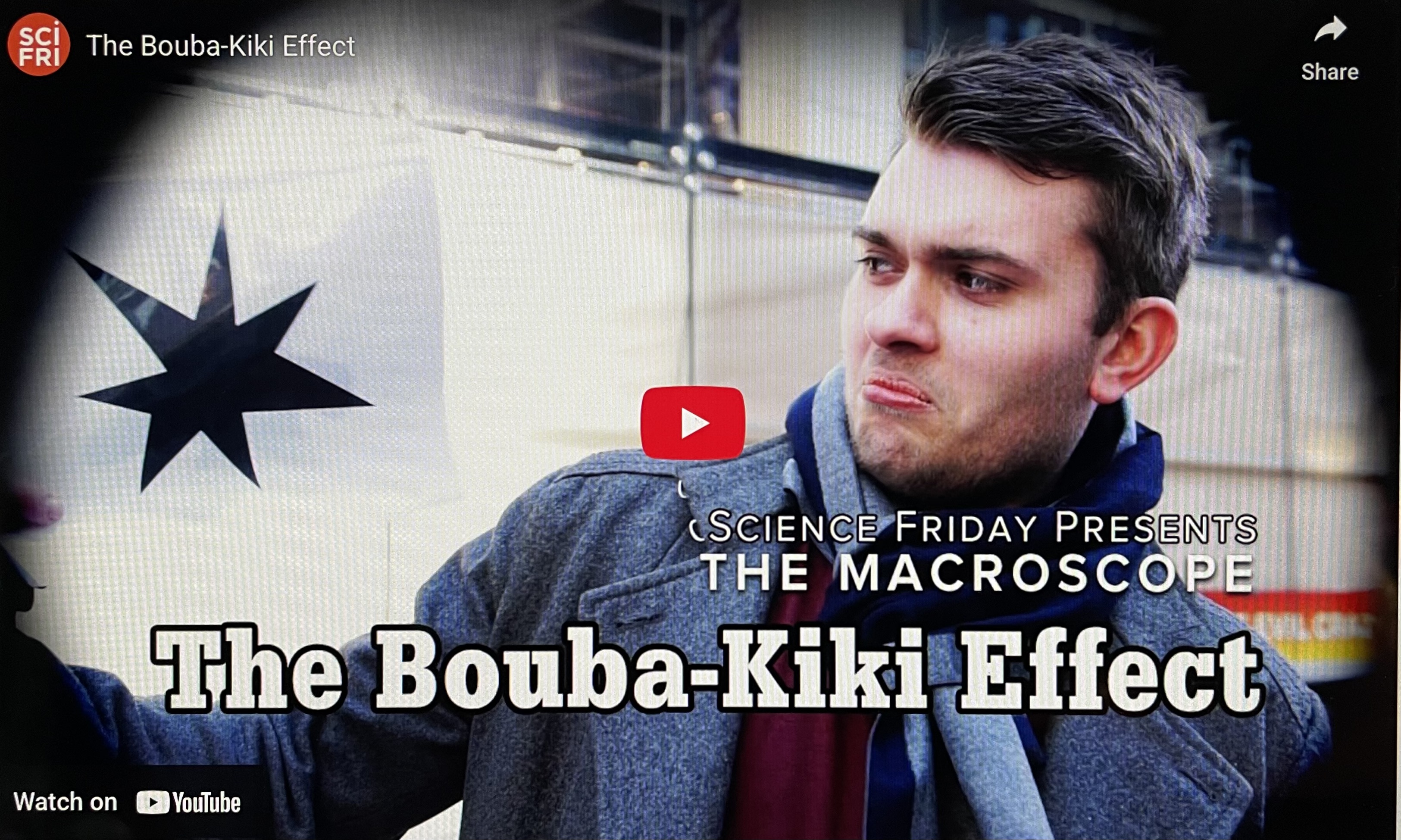
This YouTube video comes from the science friday website.
Wikipedia observes, “There is a strong general tendency towards the effect worldwide. It has been robustly confirmed across a majority of cultures and languages in which it has been researched; examples include English-speaking American university students, Tamil speakers in India, speakers of certain languages with no writing system, young children, infants, and (though to a much lesser degree) the congenitally blind.”
And even more astounding, recent research has shown “Evidence of the Bouba-Kiki Effect in Naïve Baby Chicks,” Maria Loconsole, Silva Benavides, and Lucia Regolin, University of Padova, Science, February 19, 2026. See also “In Search of Meaning,” Marcus Perlman and Bodo Winter, Science, February 19, 2026.
Here, in Parts 1 and 2 today and tomorrow, are tidbits gleaned from these sources, together with my usual Internet sleuthing.
Origin of this Perceptional Effect. Wikipedia recounts, “This effect was first observed by Georgian psychologist Dimitri Uznadze in a 1924 paper. He conducted an experiment with 10 participants who were given a list with nonsense words, shown six drawings for five seconds each, then instructed to pick a name for the drawing from the list of given words. He describes the different ‘strategies’ participants developed to match words to drawings and quotes their reasoning.”
Wikipedia continues, “German American psychologist Wolfgang Köhler referred to Uznadze’s experiment in a 1929 book which showed two forms and asked readers which shape was called ‘takete’ and which was called ‘maluma.’ Although he does not say so outright, Köhler implies that there is a strong preference to pair the jagged shape with ‘takete’ and the rounded shape with ‘maluma.’ ”
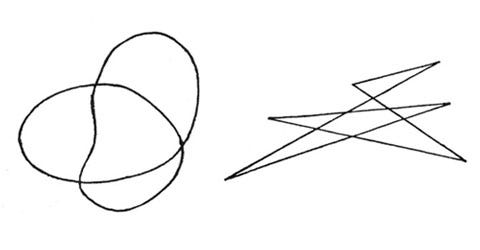
Image from everybody talks.substack.com.
Older Than Linguistics. Sacha Vignieri’s Editor’s Summary to Loconsole et al. in Science notes, “This phenomenon has been hypothesized to be associated with language and language development, among other human-associated traits. Loconsole et al. showed that this same phenomenon occurs in newborn chickens, which show a preference for the shape (round or spiky) associated with the sound (round or spiky) played (see the Perspective by Perlman and Winter). This finding suggests that this kind of pattern association in the brain may not have to do with language and may be much older than previously believed.”
Tomorrow in Part 2 we’ll discuss Loconsole et al., their methodology, and their results. Plus, we’ll share an interesting tidbit about bouba-kiki and our primate cousins. ds
© Dennis Simanaitis, SimanaitisSays.com, 2026
 Simanaitis Says