
Simanaitis Says
On cars, old, new and future; science & technology; vintage airplanes, computer flight simulation of them; Sherlockiana; our English language; travel; and other stuff
女武者 AND SNAP ELECTIONS PART 1
女武者 (“ONNA-MUSHA”) IS JAPANESE FOR “FEMALE WARRIOR,” i.e., a lady samurai. To some (e.g., Pete Hegseth, the secretary of whatever), this may seem oxymoronic. But as described in Wikipedia, the 13th-century female warrior Hangaku Gozen would have kicked Pete’s butt, easy-peasy, drunk or sober.
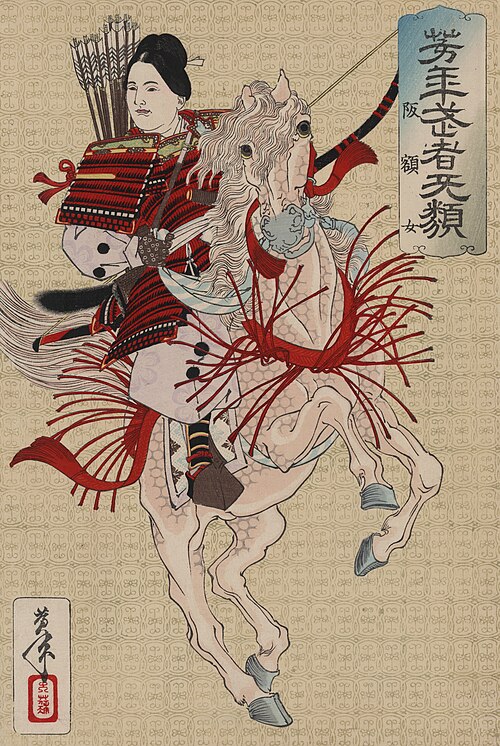
Hangaku Gozen, woodblock print by Tsukioka Yoshitoshi, c. 1885, via Wikipedia.
Notes Wikipedia, “Hangaku was noted for her leadership and bravery during the three-month long defense during which she and Sukemori led forces of men against Sasaki Moritsuna’s bakufu army, who were loyal to the Kamakura Shogunate. ‘Dressed as a boy,’ Hangaku stood on the tower of the castle and all those that came to attack her were shot down by her arrows which pierced them either in their chests or their heads.”
“The rebel defenses,” Wikipedia continues, “were eventually struck down and Hangaku’s fighting stopped only after she was wounded by an arrow that pierced her thigh. She was captured and presented, ‘fearless as a man and beautiful as a flower,’ as a prisoner of war to the Shogun Minamoto Yoriiye, who was intrigued by her beauty and reputation. Lady Hangaku was precluded from ritual suicide by the Shogun’s orders to marry his retainer, Asari Yoshito.”
A formidable onna-musha.
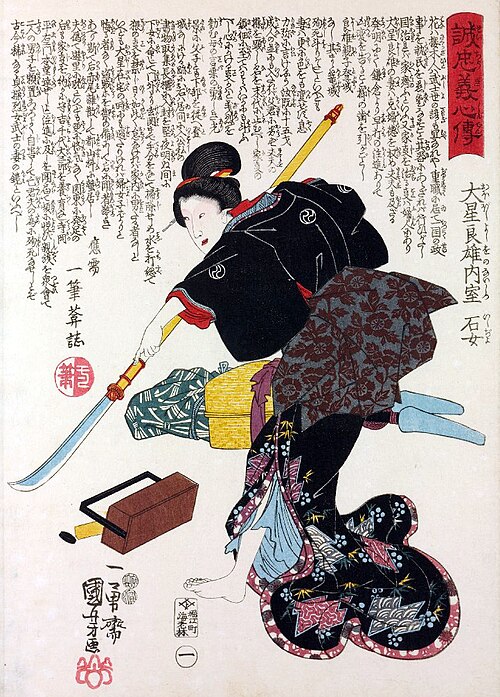
Ishi-jo wielding a naginata. Image of woodblock print by Utagawa Kuniyoshi, 1848, via Wikipedia.
Set For Big Win. Female samurais come to mind in a recent headline: “Japan’s Leader Set For Big Win in Snap Election,” The New York Times, February 8, 2026.
Times reporters Javier C. Hernández, River Akira Davis, Kiuko Notoya, and Hisako Ueno write, “Prime Minister Sanae Takaichi of Japan made a big gamble on Sunday, holding a snap election only 110 days into her tenure. It paid off, with voters offering a resounding mandate for her economic policies and tough stance on immigration and China.”
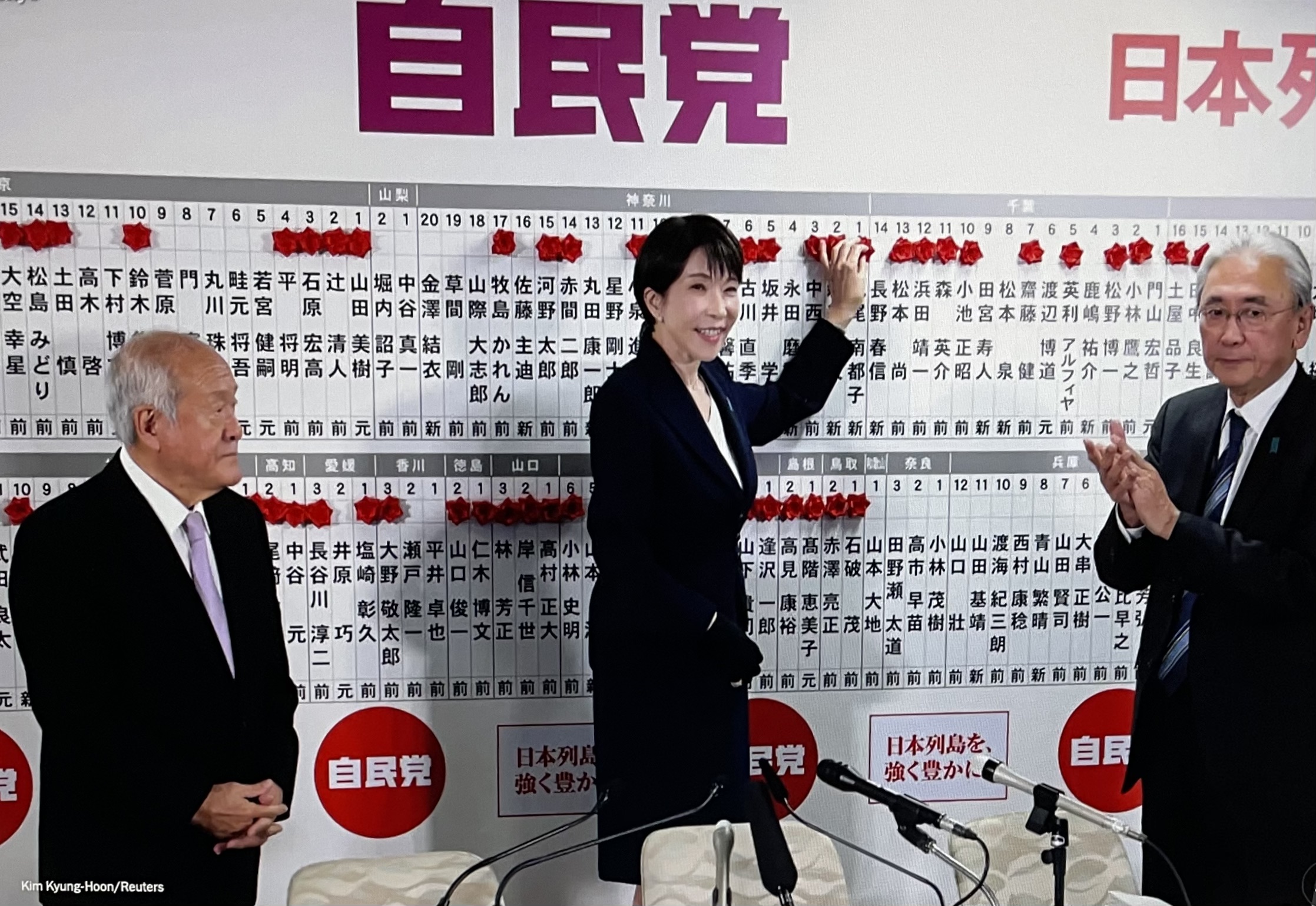
Image by Ki Kyung-Hoon/Reuters via The New York Times.
They continue, “Ms. Takaichi’s Liberal Democratic Party secured an absolute majority in Japan’s 465-member House of Representatives, the lower house of Japan’s bicameral Parliament, according to results analyzed by NHK, the public broadcaster. As of 11.50 p.m. Sunday local time, the party had won at least 289 seats, up from 198, NHK said. The result clears the way for Ms. Takaichi to enact a conservative agenda that would bolster Japan’s military and strengthen its oversight of immigration and tourism.”
I won’t say I agree with (or even know) everything in her conservative agenda. Indeed, Japan’s Liberal Democratic party seems anything but liberal or democratic in our sense. Nevertheless, I admire her insight and faith in setting a snap election.
What’s a Snap Election Anyway? As its name implies, a snap election is one held earlier than scheduled. Wikipedia notes, “Snap elections in parliamentary systems are often called to resolve a political impasse such as a hung parliament where no single political party has a majority of seats, when the incumbent prime minister is defeated in a motion of no confidence, to capitalize on an unusual electoral opportunity, or to decide a pressing issue.”
In particular, I stress the word “parliamentary,” in contrast to a presidential system, such as ours with separation of powers among executive, legislative, and judicial branches.
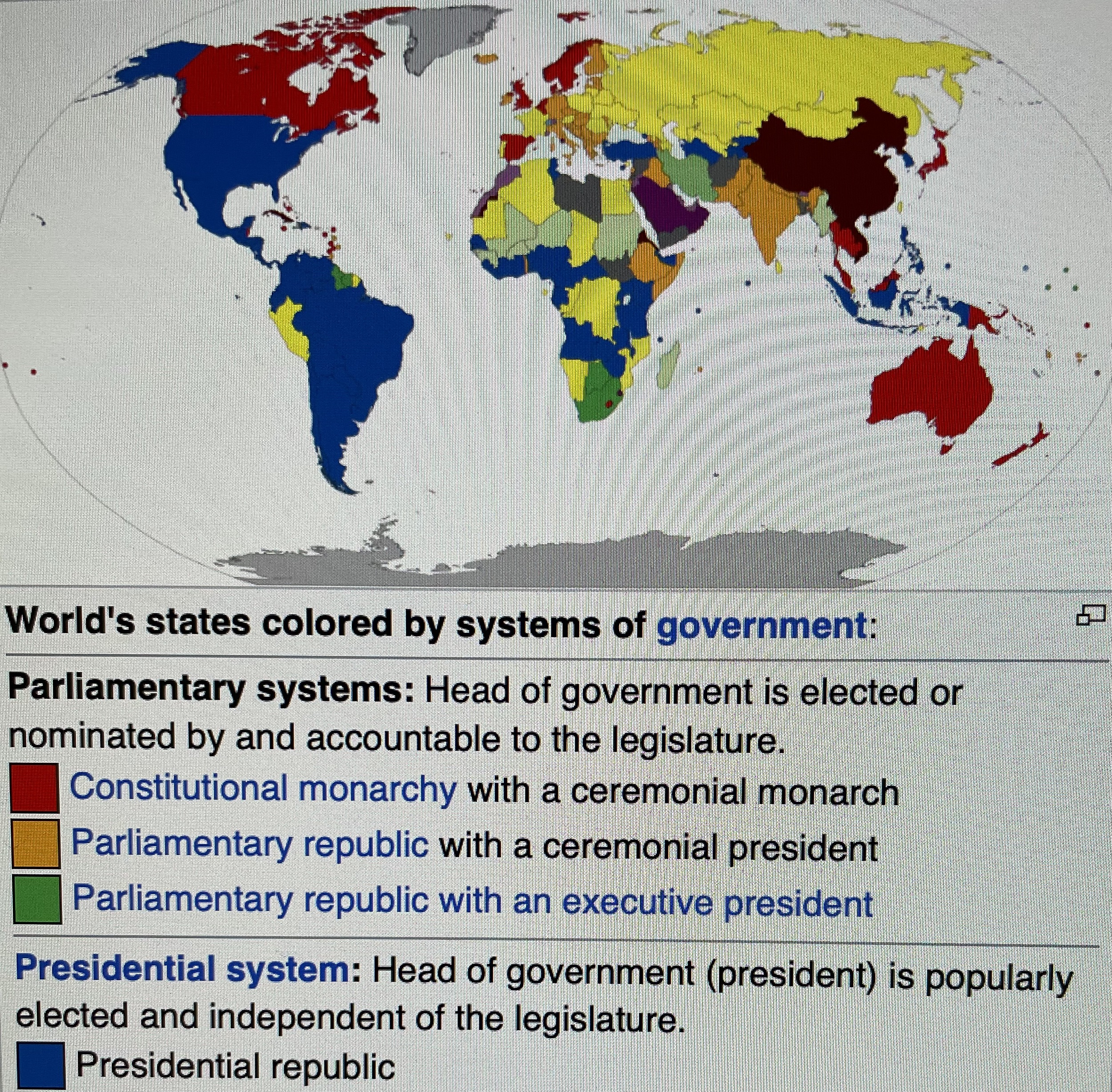
Image by Newfraferz87 from Wikipedia.
The U.K. and its Offspring. With the exception of the United States (which, of course, is also something of an offspring), parliamentary systems exist in the United Kingdom and its offspring around the world, including Canada, Australia, New Zealand, those in the Caribbean, Ireland, India, Bangladesh, and Singapore.
Other Parliamentarian Countries. Indeed, the U.S. is something of the odd-man-out. Much of Europe has parliamentarian governments, including Austria, Belgium, the Czech Republic, Denmark, Estonia, Finland, Germany, Greece, Italy, Latvia, (Lithuania’s is a semi-presidential system), Luxembourg, The Netherlands, Norway, Poland, Portugal, Spain, and Sweden.
Enough of other countries. What about the U.S.? Tomorrow in Part 2, we’ll examine our nearest “Snap Elections,” sorta. ds
© Dennis Simanaitis, SimanaitisSays.com, 2026
 Simanaitis Says