
Simanaitis Says
On cars, old, new and future; science & technology; vintage airplanes, computer flight simulation of them; Sherlockiana; our English language; travel; and other stuff
WHA’CHA’ CALL IT? AND WHERE Y’AT?
WE ARE AN ENGLISH-SPEAKING NATION, SORTA. But our regional dialects and slang are entertaining too. I’ve written about this from time to time. And recently I came upon The American Facts website, which offers tantalizing bits of regional slang, several of which are new to me. Here’s a sampling.

New England: Grinder. The American Facts recounts, “Subs must be one of the most widely known American sandwiches, and rightfully so. Its possibilities when it comes to fillings are seemingly endless, no matter your personal tastes. But you must consider that not every sub is called a sub. If you are passing through New England and fancy a sandwich, looking for a grinder will get you there quicker.”
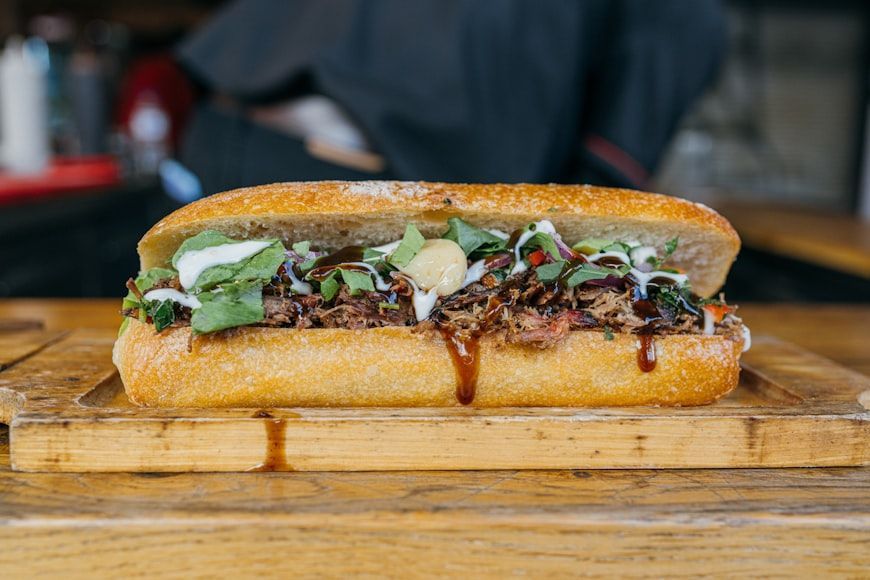
Image by Yoad Shejtman from The American Facts.
I recall this one from “U.S. Dialects,” SimanaitisSays, June 7, 2013: “The big winner, a sub, scored 77 percent nationally with a uniform distribution. Geographical specialities included grinder, at 3 percent nationally, almost all in New England; hoagie, 7 percent nationally with heavy Pennsylvania scoring; hero, 5 percent, largely in the New York City area; and poor boy, 2 percent, along the Gulf Coast but also sprinkled elsewhere.”
Philadelphia: Jawn. The American Facts observes, “If it’s a noun, it can be jawn’ed.”
This one is new to me: The Encyclopedia of Greater Philadelphia goes into detail: “Jawn is a neutral, all-purpose noun used to reference any person, place, situation, or object. In casual conversation, it takes the place of the word thing…. African American English speakers in Philadelphia adapted joint and created the new word jawn.”
The Encyclopedia continued, “In 2017, Merriam-Webster acknowledged the rising presence of jawn and the significance of urban Philadelphia culture by publishing an online essay defining and contextualizing the word.”
Hawaii: Da kine. Another “placeholder for something,” The American Facts relates. Wikipedia amplifies: “Da kine (/də ˈkaɪn/) is an expression in Hawaiian Pidgin (Hawaii Creole English), probably derived from ‘that kind,’ that usually functions grammatically as a placeholder word (compare to English ‘whatsit’ and ‘whatchamacallit’).… It can be used to refer to something nonspecific, or given enough context (especially when used in conversation between native speakers of the dialect) to something very specific. As such, it appears to be unique among English dialects, at least in its centrality to everyday speech.”
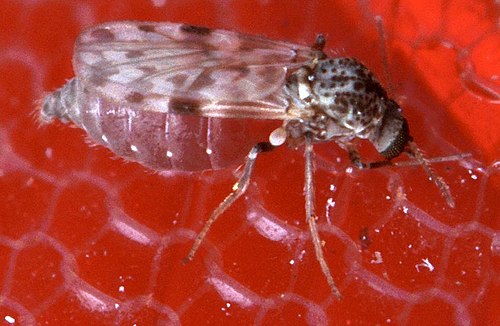
Florida: No-see-ums. From St. Thomas days I know these “tiny biting midges” or sand flies, but with a slight variation: “no-sees-um. The American Facts recounts, “They go by the government name Ceratopogonidae, but the no-see-ums nickname seems more accurate.”
Midwest: Schnookered. “Is there a connection,” The American Facts asks, “between excessive alcohol consumption and being easy to deceive? Midwesterners apparently think so, because they use the same term for both situations. We tend to agree, nothing good can come from doing business while under the influence.”
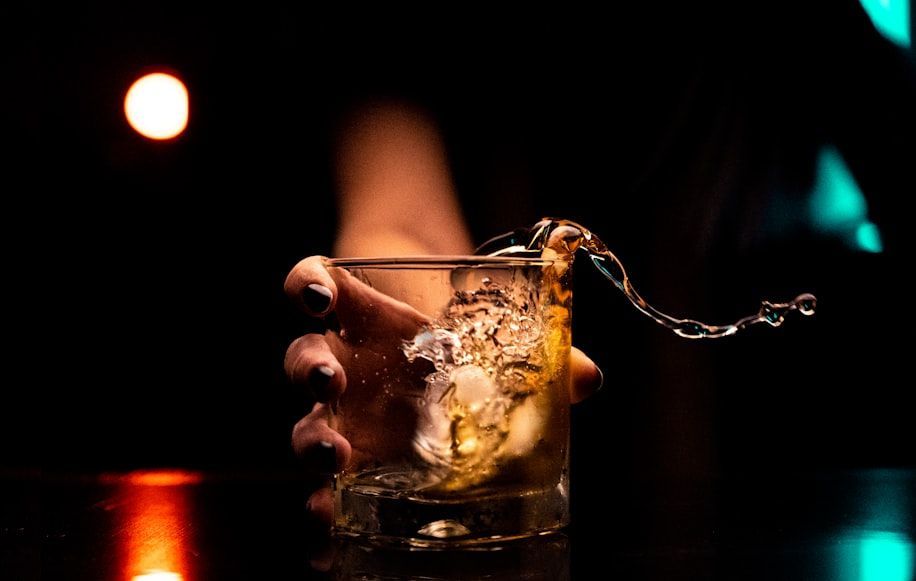
Image by Vinicius amnx Amano from The American Facts.
Pacific Northwest: The Mountain Is Out. The American Facts observes, “Mount Rainier is one of the icons of Seattle and the Pacific Northwest, even though the stormy weather can often make it difficult to admire. On the days when the sky is clear and cloudless, this natural wonder “is out” and can be seen in its entirety. For the locals, the mountain being out has become synonymous with lovely weather and sunny skies.”
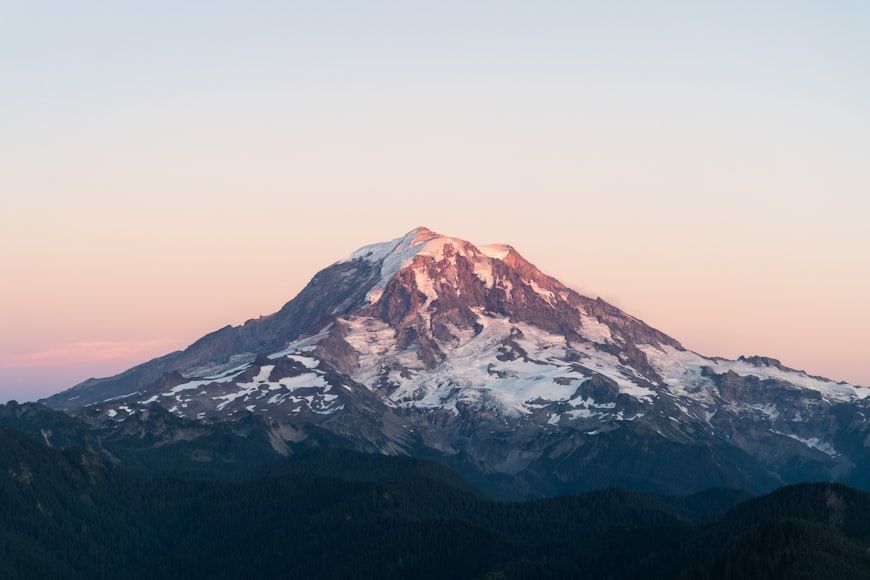
Image by Caleb Riston from The American Facts.
I particularly like this one. Here in SoCal, it could well be “The San Gabriels Are Out.”
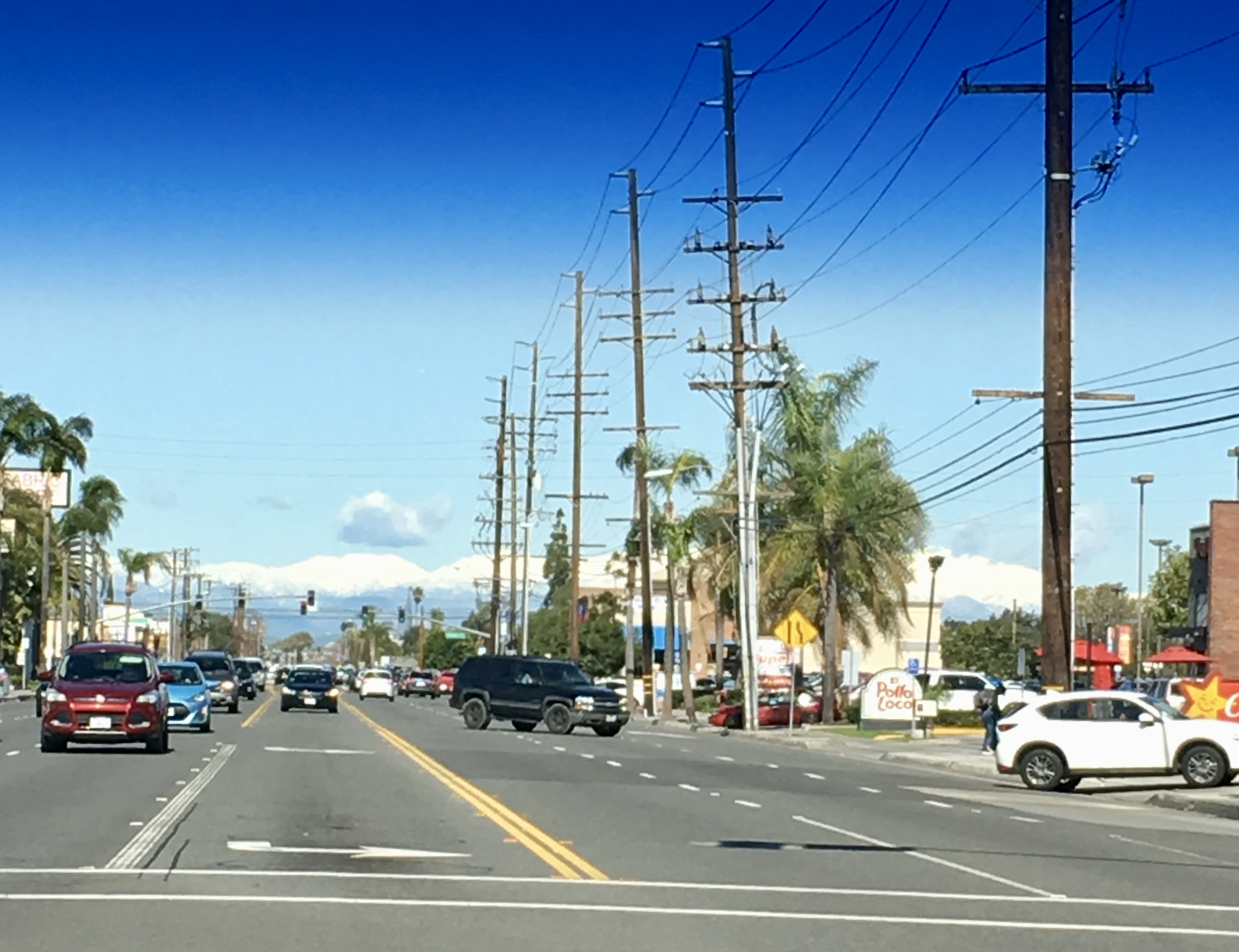
Looking north on Bristol Street.
Thanks, The American Facts.; all in good regional fun. ds
© Dennis Simanaitis, SimanaitisSays.com, 2026
 Simanaitis Says
Excellent ;
I use most of these words and never realized where they came from .
Since childhood I tend to pick up descriptive words I hear, on the fly .
-Nate
I’m a Canuck, and even I know better than to order a “poor boy” in NOLO – it’s “po’boy”.
Agreed, eh.—ds