
Simanaitis Says
On cars, old, new and future; science & technology; vintage airplanes, computer flight simulation of them; Sherlockiana; our English language; travel; and other stuff
IN NEED OF A DIVINE COMEDY PART 2
YESTERDAY IN PART 1 WE BEGAN sharing Eric Bulson’s review of Mary Jo Bang’s new translation of Dante’s Divina Commedia. In today’s Part 2, Bulson explores Italian (and its Tuscan dialect) and poet Bang’s efforts to bring it to modern readers.

Lost in Translation. Bulson observes, “A great deal of Dante’s remarkable repertoire of technical tricks will get lost in translation, whatever the language and whoever the translator: the chiasmuses, the neologisms, the numerical correspondences, the wordplay, all of the dazzling rhymes necessary to keep the engine of terza rima going.”
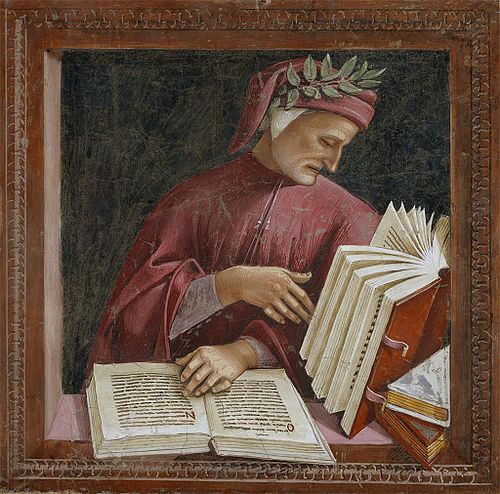
“To appreciate just one example of Dante’s feats,” Bulson offers, “here is Bang’s rendition of the tercet from Paradiso’s final canto, in which he is now face-to-face with God: ‘O Eternal Light, You who alone exist within/ Yourself, who alone know Yourself, and self-known/ And knowing, love and smile on Yourself!’ ”
“It flows,” Bulson says, “but what Dante does can’t be matched. The pileup of you and yourself and alone is meant to approximate something extraordinary that is happening in the Italian words: Etterna, intendi, intelletta, and intendente are infused with the pronoun te, ‘you,’ which is directed toward God. He is everywhere, present in the very language being employed to address him at this moment.”
English Translations. When Henry Wadsworth Longfellow rendered the first American translation of Divine Comedy, Bulson recounts, “he chose the more forgiving blank verse, which works much better in English, a rhyme-poor language without Italian’s abundance of vowel sounds at the end of words.”
“His translation, published in 1867,” Bulson notes, “was wildly popular. Since then, about 50 other American renditions of the entire poem have appeared. None is as provocative as the one that Mary Jo Bang, a poet, has been working on for the better part of two decades.”
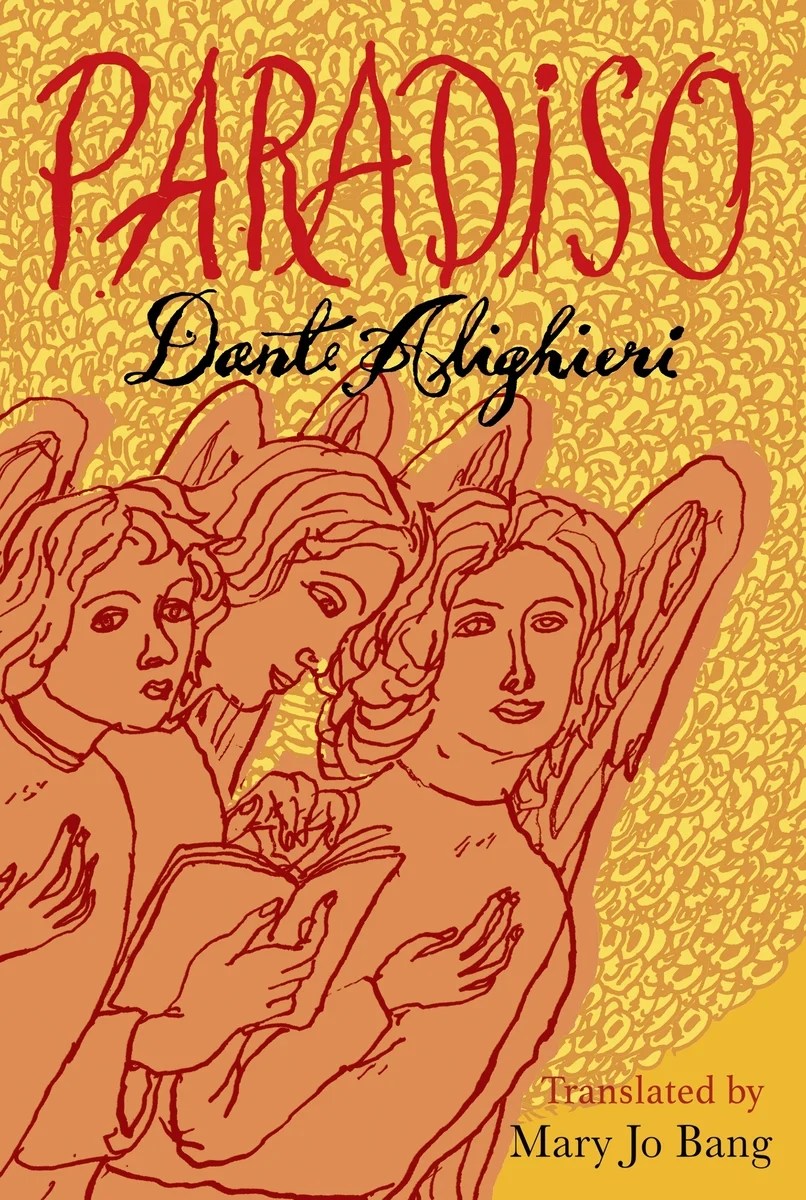
Poet Mary Jo Bang’s Paradiso.
Bang’s Methodology: Bulson observes, “Never having studied Italian, Bang saw a chance to try her hand by relying on those variations, along with Charles S. Singleton’s translation (already on her shelf). The 47 variations mostly struck her as formal and ‘elevated,’ and she was curious to discover how contemporary English would sound.”
“In the process,” Bulson says, “she arrived at something fresh: ‘Stopped mid-motion in the middle/ Of what we call our life,’ her tercet began, conveying an abrupt jolt, as if a roller coaster was kicking into gear, and then went on: ‘I looked up and saw no sky—/ Only a dense cage of leaf, tree, and twig. I was lost.’ ”
Referencing Ray Bradbury, Elton John, Shakespeare, and Led Zeppelin. As other examples, Bulson observes, “Bang mixes in nods to the more contemporaneous references she’s used. An image of reflecting light that ‘bounces up, / Like a rocket man who longs to come back’ is accompanied, for example, by a citation to both a 1951 Ray Bradbury short story and the Elton John song ‘Rocket Man.’ ”
Bulson continues, “Commenting on the line ‘Don’t be like a feather in each wind’ as a metaphor for inconstancy, she refers to an echo not just in Shakespeare’s The Winter’s Tale but also in Led Zeppelin’s ‘All My Love.’ This poem, she conveys, isn’t frozen in time….”
Indeed, art should be etterna. Thanks, Eric Bulson and Mary Jo Bang for this. ds
© Dennis Simanaitis, SimanaitisSays.com, 2026
 Simanaitis Says