
Simanaitis Says
On cars, old, new and future; science & technology; vintage airplanes, computer flight simulation of them; Sherlockiana; our English language; travel; and other stuff
IN NEED OF A DIVINE COMEDY PART 1
READERS BACK TO 2017 MAY RECALL “Dante’s Inferno, a Destination Guide;” this, concerning the first of three parts of Divina Commedia (the other two, Purgatorio and Paradiso).
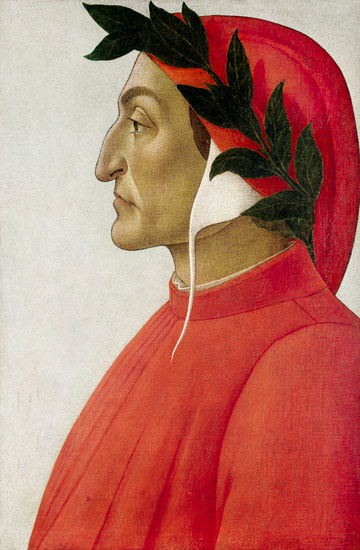
Durante degli Alighieri, known as Dante, c. 1265–1321, Italian poet, writer, and philosopher. Renowned as the Father of the Italian language. A posthumous portrait by Sandro Botticelli, 1495, via Wikipedia.
Given plenty of today’s hellish goings-on, I felt compelled to read Eric Bulson’s “What Dante Is Trying To Tell Us,” The Atlantic, January 2, 2026: In particular, “A colloquial translation of Paradiso might make people actually read it.”

Well, I can’t say that for sure, but I certainly can glean tidbits, here in Parts 1 and 2 today and tomorrow, from Bulson’s most informative review of poet Mary Jo Bang’s renderings of Divina Commedia. “Following on her Inferno (2012) and Purgatorio (2021),” Bulson writes, “Bang’s Paradiso has arrived at a moment of national turmoil, and sets out to make a vision of hope and humility accessible to all in an unusual way.”
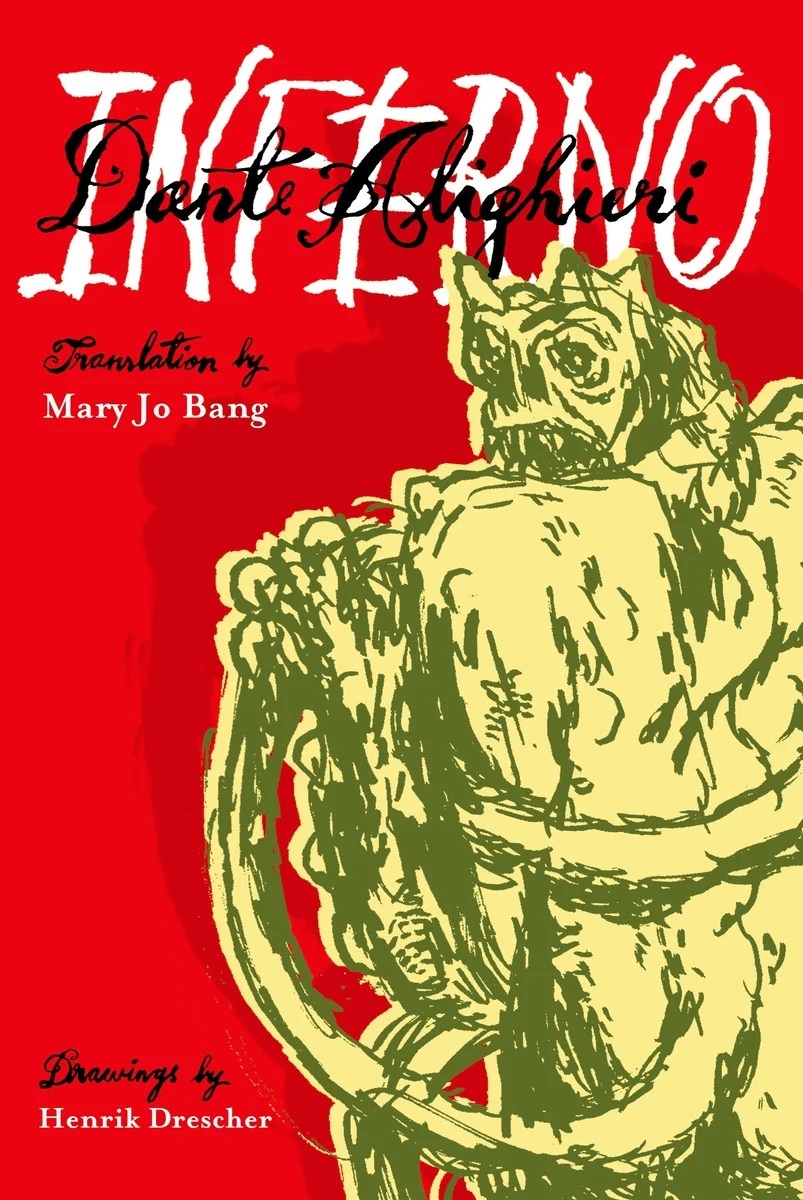
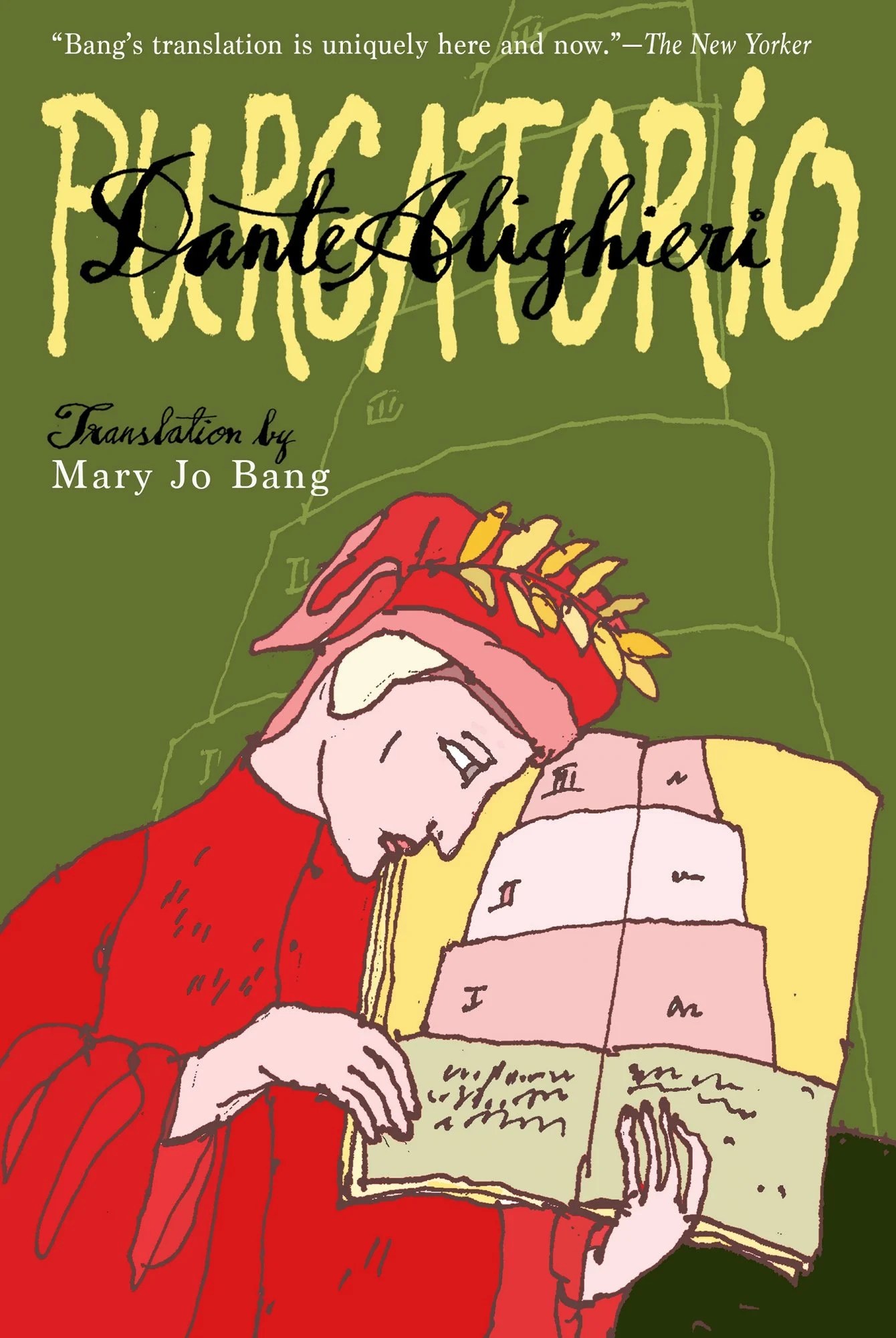
Dante’s Faction-Ridden Florence. Bulson recounts, “During the years that Dante worked on the Divine Comedy—1307 to 1321, the last decade and a half of his life—he was exiled from his faction-ridden hometown of Florence. Dante, who vehemently opposed the papacy’s desire for secular power, had been charged with financial corruption, a politically motivated accusation, and the threat of being burned at the stake if he returned hung over him.”
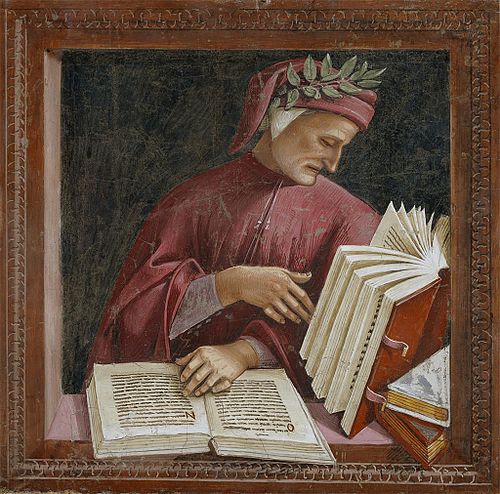
Dante Alighieri, detail from Luca Signorelli‘s fresco in the Chapel of San Brizio, Orvieto Cathedral. This and following images from Wikipedia.
“A party of one,” Bulson relates, “as he later called himself, he wandered from court to court, living off the generosity of a few patrons. He never set foot in Florence again.”
The Conventional Tuscan Commedia. Despite being exiled from Florence—and contrary to the literary practice of the era—Dante chose to compose Commedia in his native Tuscan dialect, not the usual Latin.

Divina Commedia, 1472. Image from the BEIC digital library and uploaded in partnership with BEIC Foundation.
What’s more, Bulson reminds us that Dante’s poem has a particularly complex “terza-rima scheme (in which the last word in the second line of a tercet provides the first and third rhyme of the next tercet).” Check this out in the example above.
Such a scheme makes Shakespeare’s iambic pentameter rhyming look simple indeed. (My own modest example: “And now ’tis time that I shall off and git/ To ponder all the nonsense I’ve just writ.”)
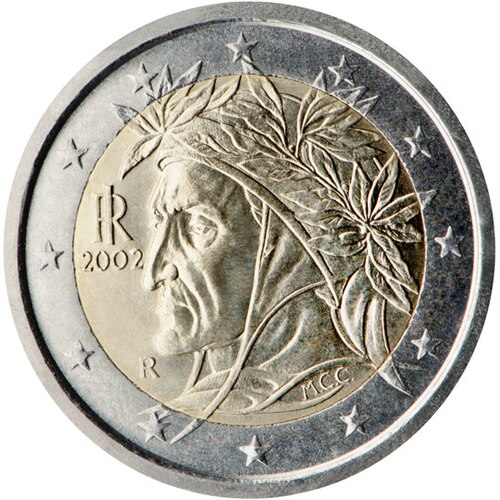
Dante on the national side of the Italian 2 euro coin. Image from European Central Bank via Wikipedia.
Tomorrow in Part 2, we’ll learn more of translating Dante’s remarkable tale. ds
© Dennis Simanaitis, SimanaitisSays.com, 2026
 Simanaitis Says