
Simanaitis Says
On cars, old, new and future; science & technology; vintage airplanes, computer flight simulation of them; Sherlockiana; our English language; travel; and other stuff
PAUL FRÈRE ON FERRARI PROTOTYPES 1961–1967 PART 1
PAUL FRÈRE WAS A BELGIAN RACING DRIVER, ENGINEER, AND JOURNALIST. Indeed, as the European Editor for R&T he was also a pal (and mentor).
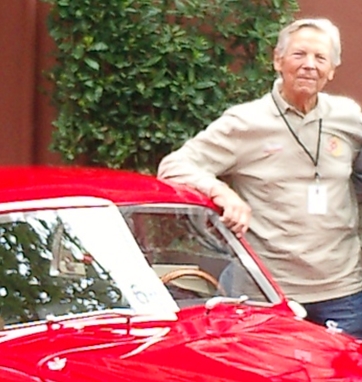
Paul Frère, 1917–2008, French-born Belgian race driver, engineer, and journalist. Formula 1, 1951–1956 (including a Ferrari drive to 2nd at the Belgian GP, 1956); Le Mans, 1953–1960 (including a Ferrari co-drive to 1st, 1960). Author of Sports Car and Competition Driving. Image by Claude F. Sage, 2003.
Paul was, as I noted, “the consummate old-world European: charming, knowledgable, and articulate. I never knew quite how many languages he spoke fluently, though I recall being among journalists when Paul switched comfortably from French to German to English to facilitate his colleagues’ communications.” That is, he was a gentleman as well.
Cars in Profile Collection 1. In 1973, Cars in Profile Collection 1 published Paul’s “Rear-engined Ferrari Prototypes 1961/67” as its lead article. What follows here, in Parts 1 and 2 today and tomorrow, are tidbits gleaned from this, replete with Paul’s illuminating and elegant commentary and images by the era’s talented photographers.
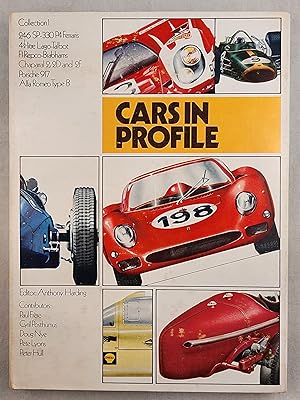
Cars in Profile Collection 1, Anthony Harding, General Editor, illustrations by Gordon Davies, Terry Hadler, James Leech, Martin Lee, and David Warner, Doubleday & Co., 1974.
Ferrari Achievements. Paul recounted, “Grand Prix, Sports Car Racing (including, of course, Prototypes), and GT Racing. In all these specialist fields, success has alternated with failure, but in contrast to most others, Enzo Ferrari has never either given up the struggle or rested on his laurels….”
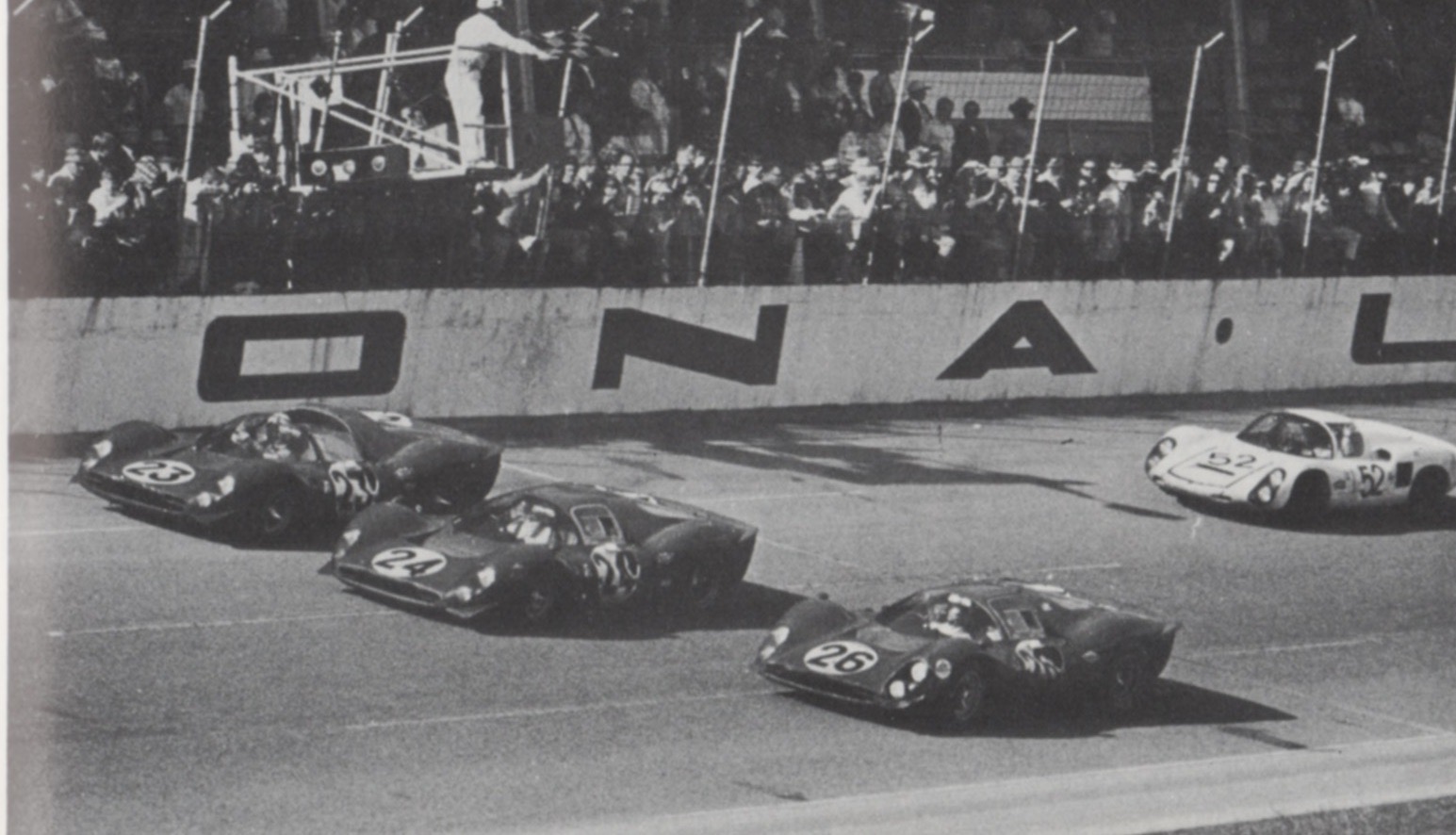
Daytona Hat Trick, 1967. A Ferrari 330 P4 placed first, following by another in second, and a 412 P third. Image by London Art Tech. This and following images from Cars in Profile Collection 1.
A Sole Proprietor. Paul continued, “Thus ever since he left school, motor racing has been his very life and soul whilst his persistence in continuing to race, regardless of commercial considerations, has been helped by the fact that up to 1969 he remained the sole owner of his company, and even since the 50% takeover by Fiat, he has, by mutual agreement, retained for life his complete right to rule the racing department and the racing policy of the firm.”
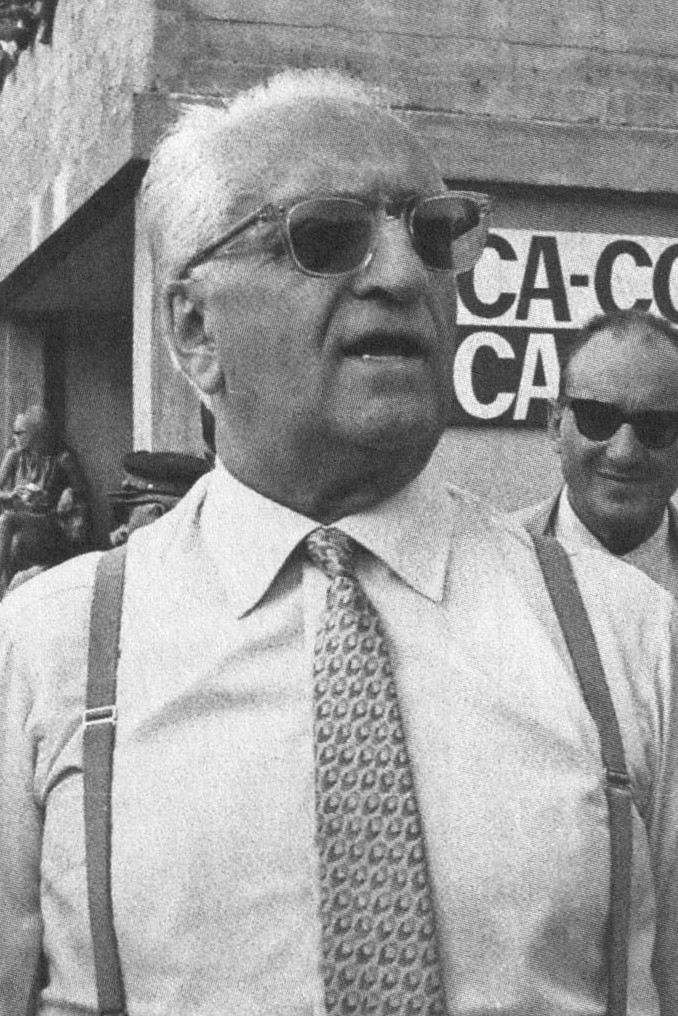
Enzo Anselmo Giuseppe Maria Ferrari, Cavaliere di Gran Croce OMRI, 1898–1988, was an Italian racing driver and entrepreneur, the founder of Scuderia Ferrari in Grand Prix motor racing, and subsequently of the Ferrari automobile marque. Image by Rainer W. Schlegelmilch.
Ferrari on Advanced Design. Like Ettore Bugatti, Ferrari could be reluctant to accept new technology. Paul noted, “Ferraris were supreme at the time and the Commendatore (he was not yet Ingegnere at the time) just could not be bothered by such a trivial matter as aerodynamics.” Nevertheless, he listened to his drivers and reacted accordingly, as with aerodynamics of the 246 SP (Sports Prototype), the first car to use a rear spoiler.
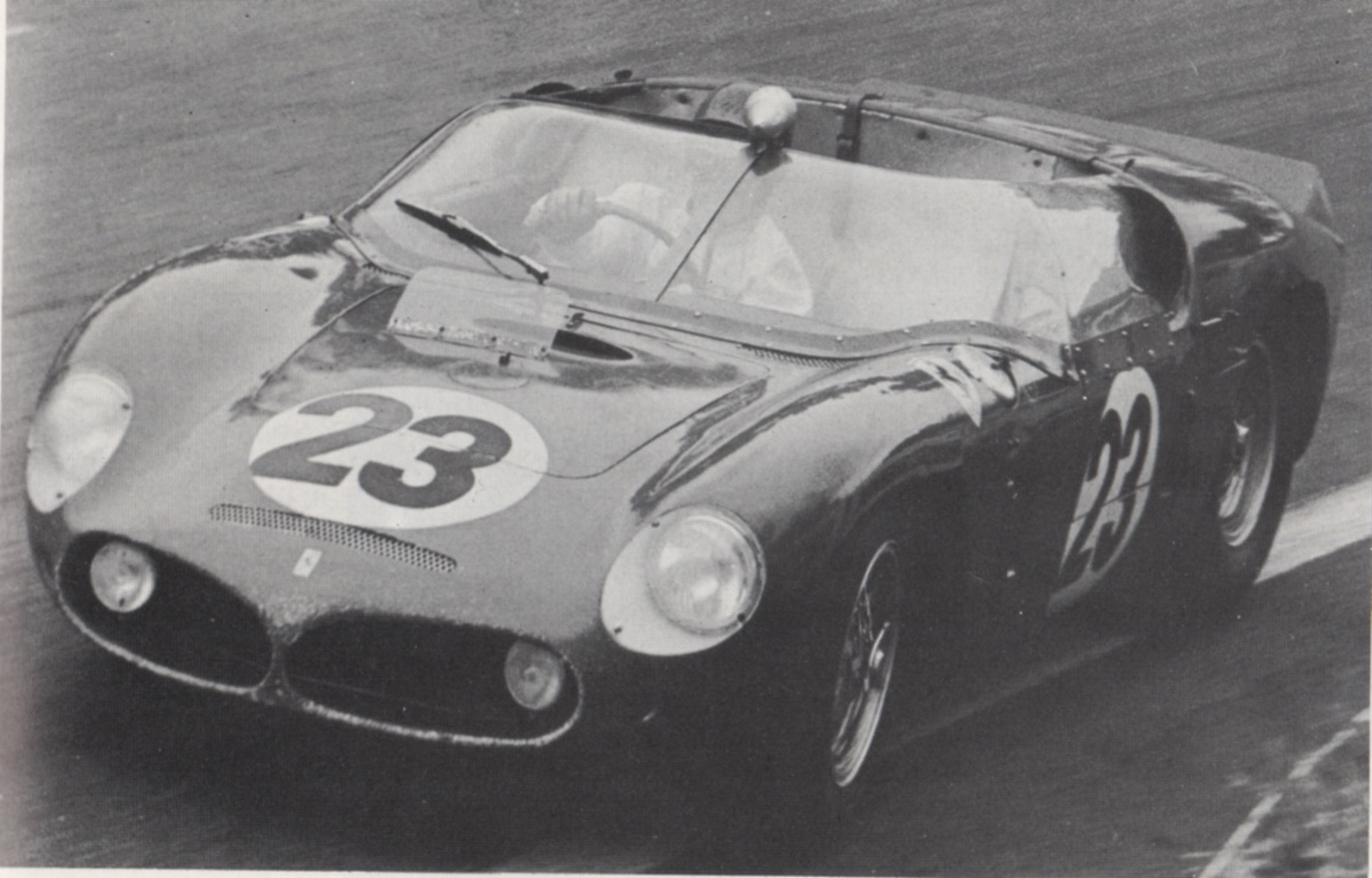
Richie Ginther in the 1961 Le Mans 246 SP, the first car to feature a rear spoiler. Image by Geoffrey Goddard.
Paul described that the rear spoiler “was ‘invented’ in the course of a practice session at Monza when Richie Ginther found that the lift on the rear deck, combined with the rear weight bias, made handling impossible on the ‘Curve Grande.’ ”

Cockpit of a 275 P ready for Le Mans. Flashlight, tool bag, and wire mesh are in case the car gets stuck in one of the circuit’s safety banks. Image by Phipps Photography.
Tomorrow in Part 2, Paul will discuss Ferrari’s engineering conservatism and eventual acceptance of changing times. ds
© Dennis Simanaitis, SimanaitisSays.com, 2026
 Simanaitis Says
Reader Andrew Grosheider recognized my originally misplaced ‘Ring’s 1963 250 P pic. As he notes, “… the captioned 1961 car would have had the twin-nostril ‘shark nose” and a high rear deck instead of the basket handle.” Thanks, Andrew; the photo now agrees with the caption.