
Simanaitis Says
On cars, old, new and future; science & technology; vintage airplanes, computer flight simulation of them; Sherlockiana; our English language; travel; and other stuff
CELEBRATING AYRTON SENNA, LEGO, AND GRANDSON CARTER
CARTER RECENTLY SHARED NEAT PICS, the topic of which suggest the efficacy of DNA. He along with his mom, Daughter Beth, are hooked on Formula 1 (along with Daughter Suz and, of course, me).
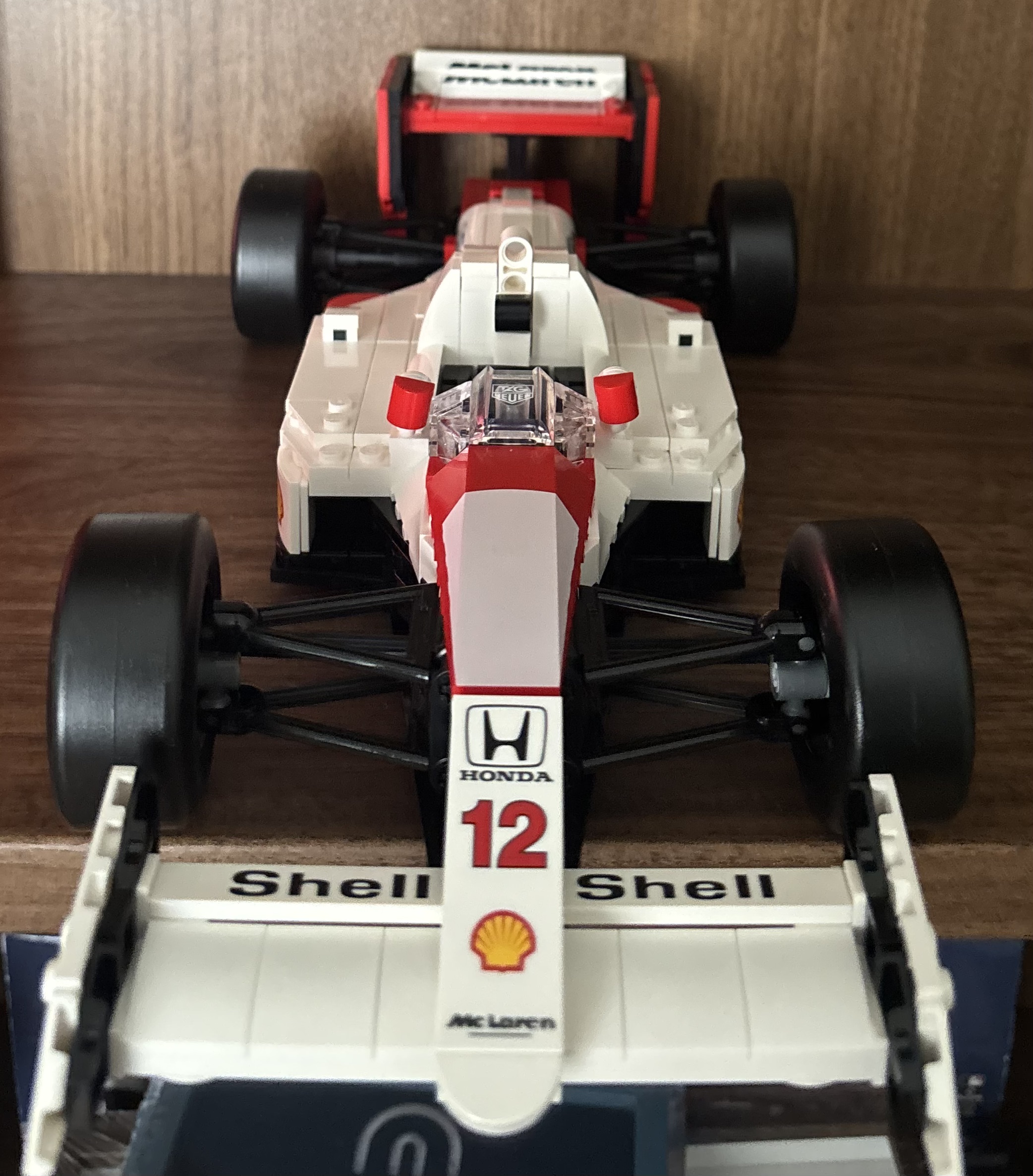

One pic showed Lego appreciations of Ayrton Senna and his championship-winning McLaren MP4/4 posed in front of a coffee table book on Ferraris. (Gee, I wonder if people still have coffee tables? I suspect Carter doesn’t have one in his St. Louis Washington University dorm room.)

Grandson Carter, amidst his growing bunch of memorabilia. (Perhaps he inherited my collecting trait as well.)
Posted on the wall by the window are my Zone Rouge vests from Montreal GP 1999 and Monaco GP 1993. The latter was when I drove the circuit as part of an EV demonstration. (It’s difficult to work this into ordinary conversation, but it can be done.)
Yet I stray from the topic, namely the Lego McLaren MP4/4 and Ayrton Senna.
McLaren’s MP4/4. According to Wikipedia, the McLaren-Honda MP4/4 was “one of the most successful and dominant Formula One car designs of all time. Powered by Honda‘s RA168E 1.5-litre V6–turbo engine and driven by teammates Alain Prost and Ayrton Senna, the car competed during the 1988 Formula One season. The design of the car was led by American engineer Steve Nichols.”
“In the 1988 season,” Wikipedia continues, “the MP4/4 won all but one race and claimed all but one pole position. The team won the year’s constructors’ title with about three times as many points as runners-up Ferrari. It holds the record for highest percentage of laps led in a season with 97.3% (1,003 out of 1,031). The car held the record for the highest win rate in a season until 2023, when the record was broken by the Red Bull Racing RB19, which was also powered by a Honda V6 turbocharged engine (95.45% win rate).”
Talk about domination.
Ayrton Senna. Wikipedia recounts, “Ayrton Senna da Silva, 1960–1994, was a Brazilian racing driver who competed in Formula One from 1984 to 1994. Senna won three Formula One World Drivers’ Championship titles with McLaren, and—at the time of his death—held the record for most pole positions (65), among others; he won 41 Grands Prix across 11 seasons.”

Senna at the 1988 German Grand Prix. Image from Instituto Ayrton Senna via Wikipedia.
From a Suzuka grassy hillock, I witnessed one of the most dramatic—and controversial—moments of Formula 1 racing.

It was at the 1989 Japanese Grand Prix, the drama being a high point of the rivalry between teammates Ayrton Senna and Alain Prost.
I met Senna only once, at that Japanese GP. As I noted later in “Concentration,” not only was he “the quickest driver of his generation, he was the most articulate as well.” Indeed, I cannot name any more recent drivers who are as thoughtful in describing their task.
Lego’s Formula 1 Involvement. We’ve seen the current crop of drivers having a ball at the Drivers Parade of the 2025 Miami Grand Prix.

Image from BBC Top Gear.
Most appropriately, the Lego display car at Las Vegas was a pink Cadillac. But, with rather more accuracy a complete set of F1 machinery is available in Lego kit form.
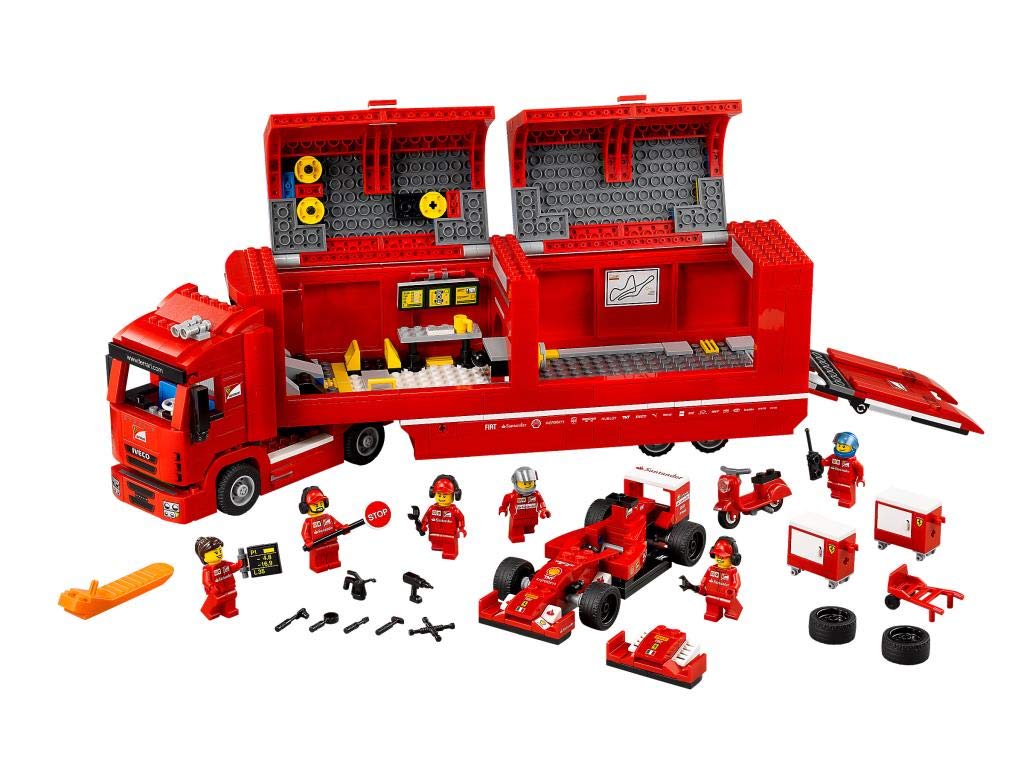
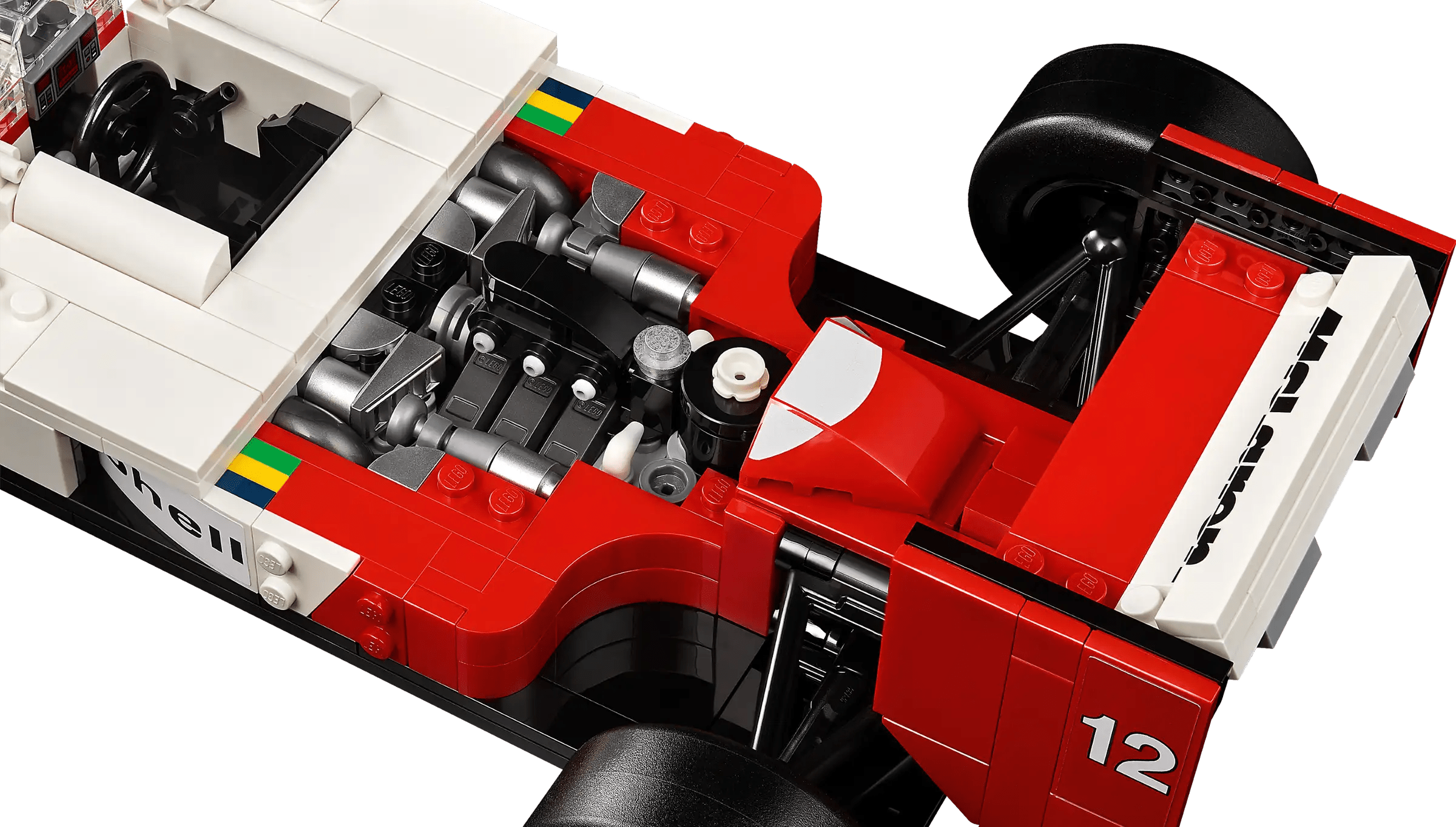
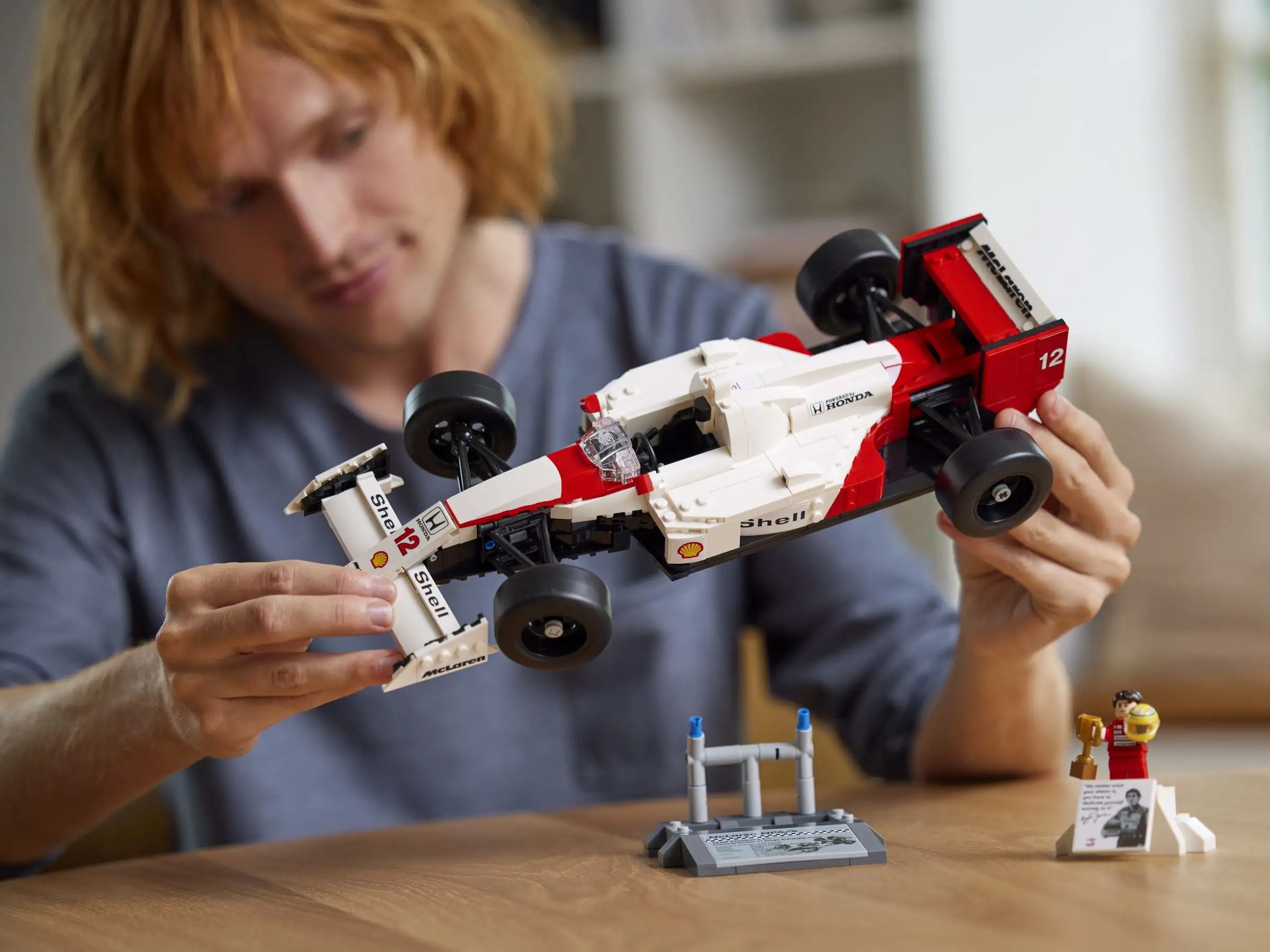
Lego’s McLaren MP4/4 & Ayrton Senna. Ayrton Senna’s McLaren MP4/4 model is the one assembled by Carter. Images from Lego follow, including one with another model builder (not Carter) showing scale of the car.
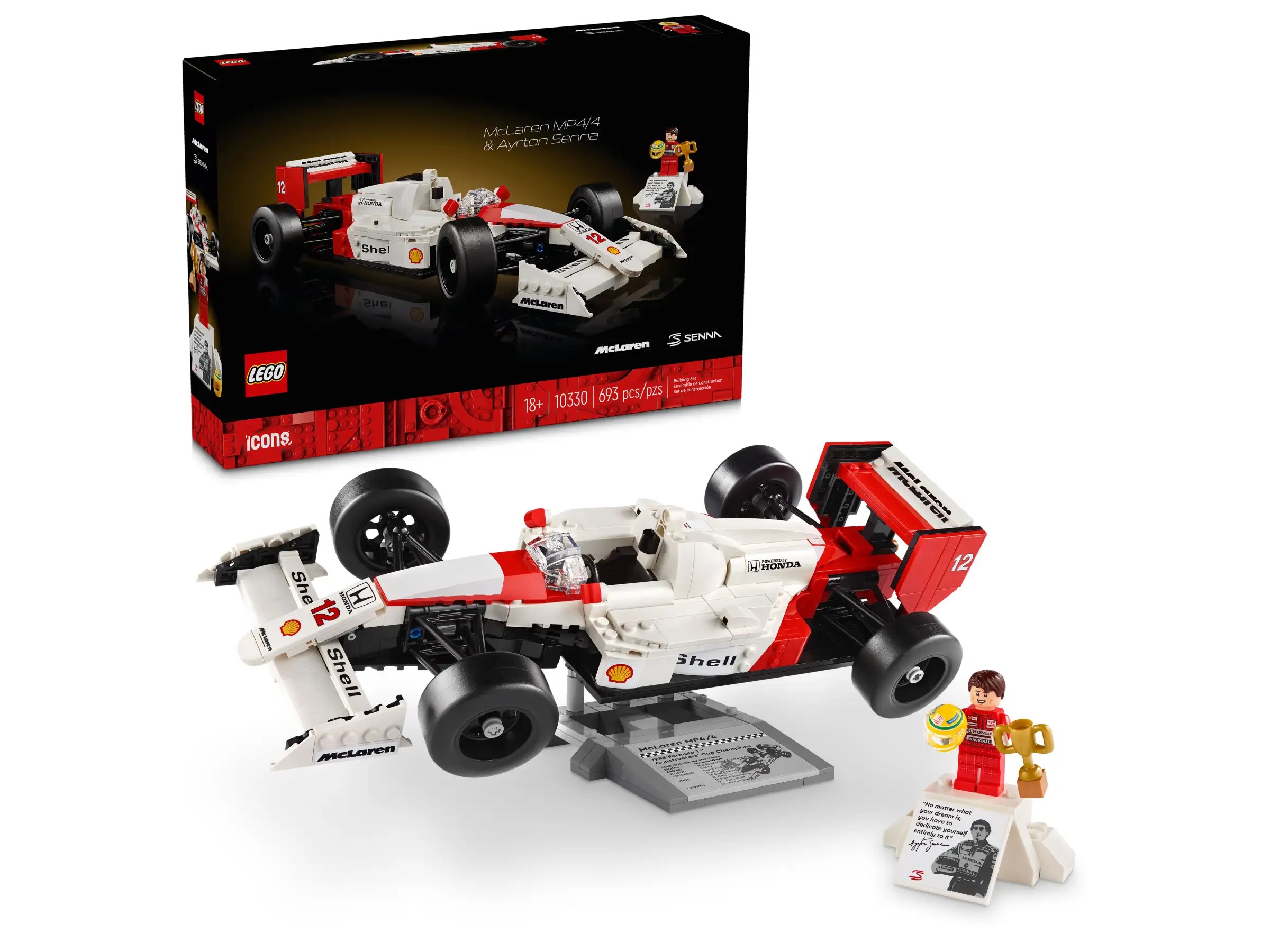
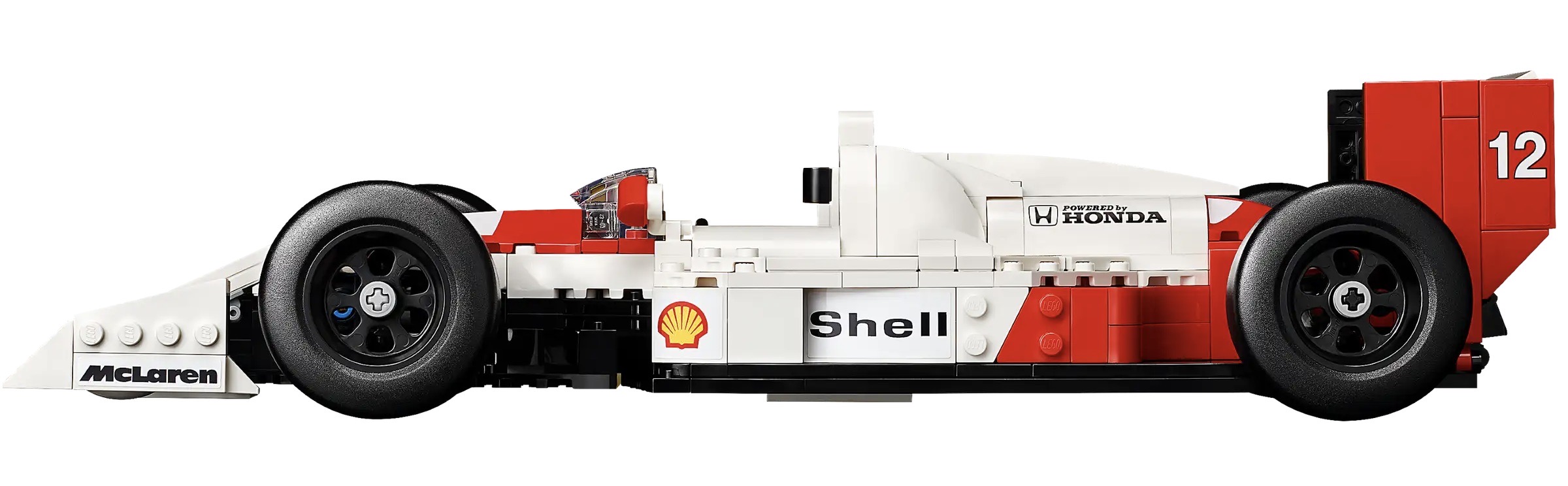
All in good fun. Maybe you should get a bigger dorm room, Carter. Love, GPd.
© Dennis Simanaitis, SimanaitisSays.com, 2026
 Simanaitis Says