
Simanaitis Says
On cars, old, new and future; science & technology; vintage airplanes, computer flight simulation of them; Sherlockiana; our English language; travel; and other stuff
FROM BIRD DROPPINGS TO HOLIDAY KISSES
WHAT A GREAT HEADLINE FROM NPR to Scott Neuman’s“How We Ended Up Under the Mistletoe,”December 17, 2025. Here are tidbits gleaned from this appealing etymological essay.

Origins. Scott Neuman describes, “Stealing a smooch under the mistletoe is a time-honored holiday tradition—but the word itself has an origin that invokes the exact opposite of romance. The etymology of mistletoe—a plant with small, oval evergreen leaves and waxy white berries—likely comes from the Anglo-Saxon words for manure—‘mist’ or ‘mistel’—and ‘tan’ (sometimes rendered as ‘toe’), meaning ‘twig’ or ‘stick.’ ”
Neuman cites British lexicographer Susie Dent, author of Guilty by Definition: “It literally means bird poop on a stick.”
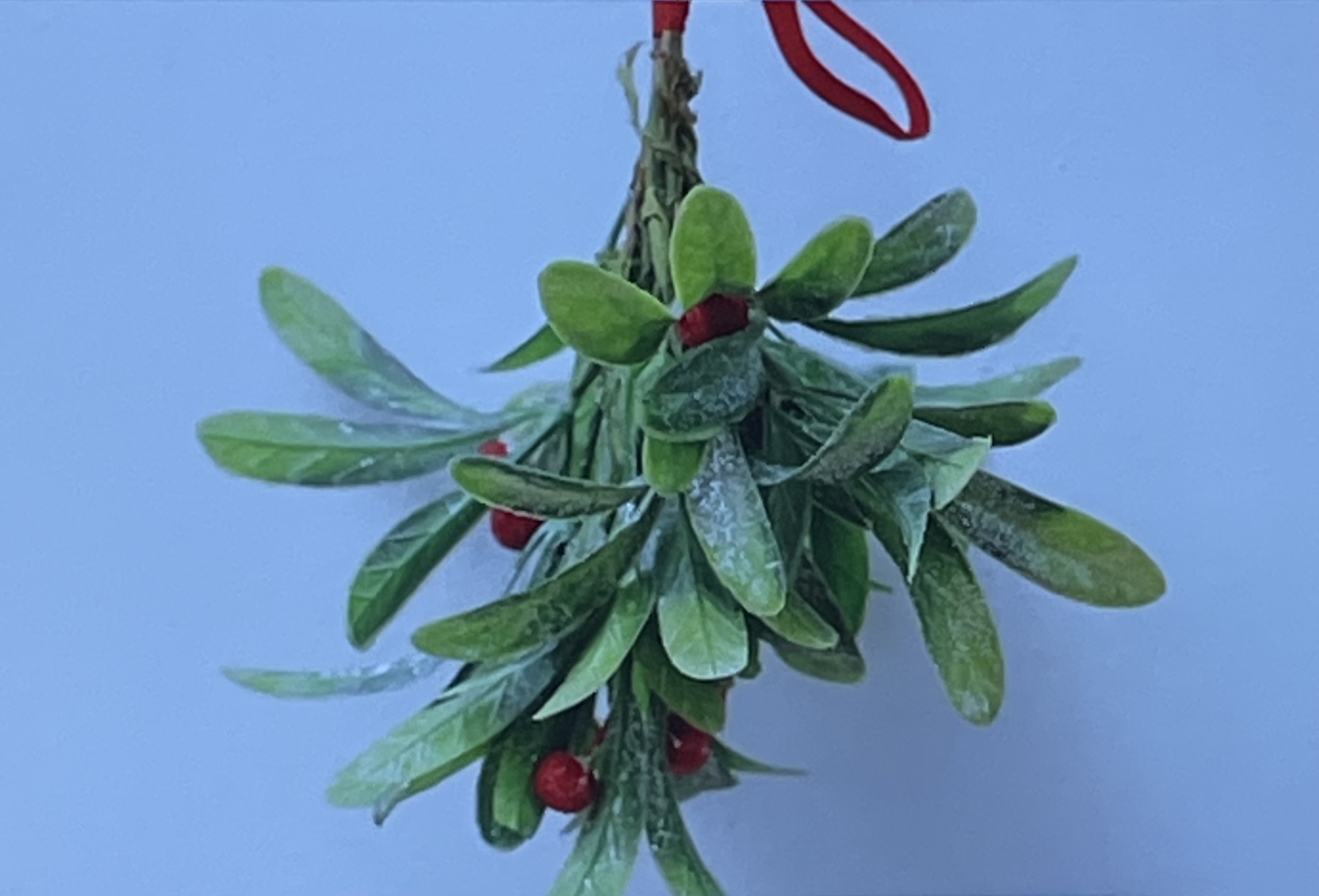
Mistletoe, Viscum cruciatum, (red berries rather than white). Image from Pixel Shot/Shutterstock via The Conversation.
The Botanical Importance of Endozoochory. Neuman recounts, “The name stems from the way its seeds are carried by birds and dropped after passing through their digestive tract. This method of seed dispersal is called endozoochory, says Tristram Seidler, a biology professor at the University of Massachusetts Amherst and the curator of the UMass Amherst Herbarium.”
More Etymology. Let’s pause here to examine “endozoochory.” Zoo, as you might guess, has to do with animals; chory, with dispersal of plant seeds or spore. Three possible behaviors are noted: endo implies internal means (e.g., ingestion); ecto or epi, external (like burrs caught in fur); and syn, intentional transport (by mouth).
Ain’t etymology fun?
Neuman continues, “In short, animals eat fruits, including berries, move on and ‘deposit’ the seeds in a different location, he says. For mistletoe seeds, that location happens to be the tops of trees. From an evolutionary standpoint, Seidler says, species survival can depend on getting seeds away from the parent plant. ‘Any seeds that land near their parent plant may germinate,’ he explains. ‘But they’re almost certainly going to be wiped out by disease because those areas tend to be crowded and small plants are very susceptible to their own pathogens.’ ”
Humans and Winter Solstice. “Humans, then,” Neuman relates, “make use of the mistletoe spread by those birds—planting it in cultural practices that stretch back into antiquity. The oldest customs surrounding mistletoe are likely tied to celebrations of the winter solstice, according to Bettina Arnold, a professor of anthropology at the University of Wisconsin–Milwaukee. These go back to the Neolithic era in prehistoric Europe.”
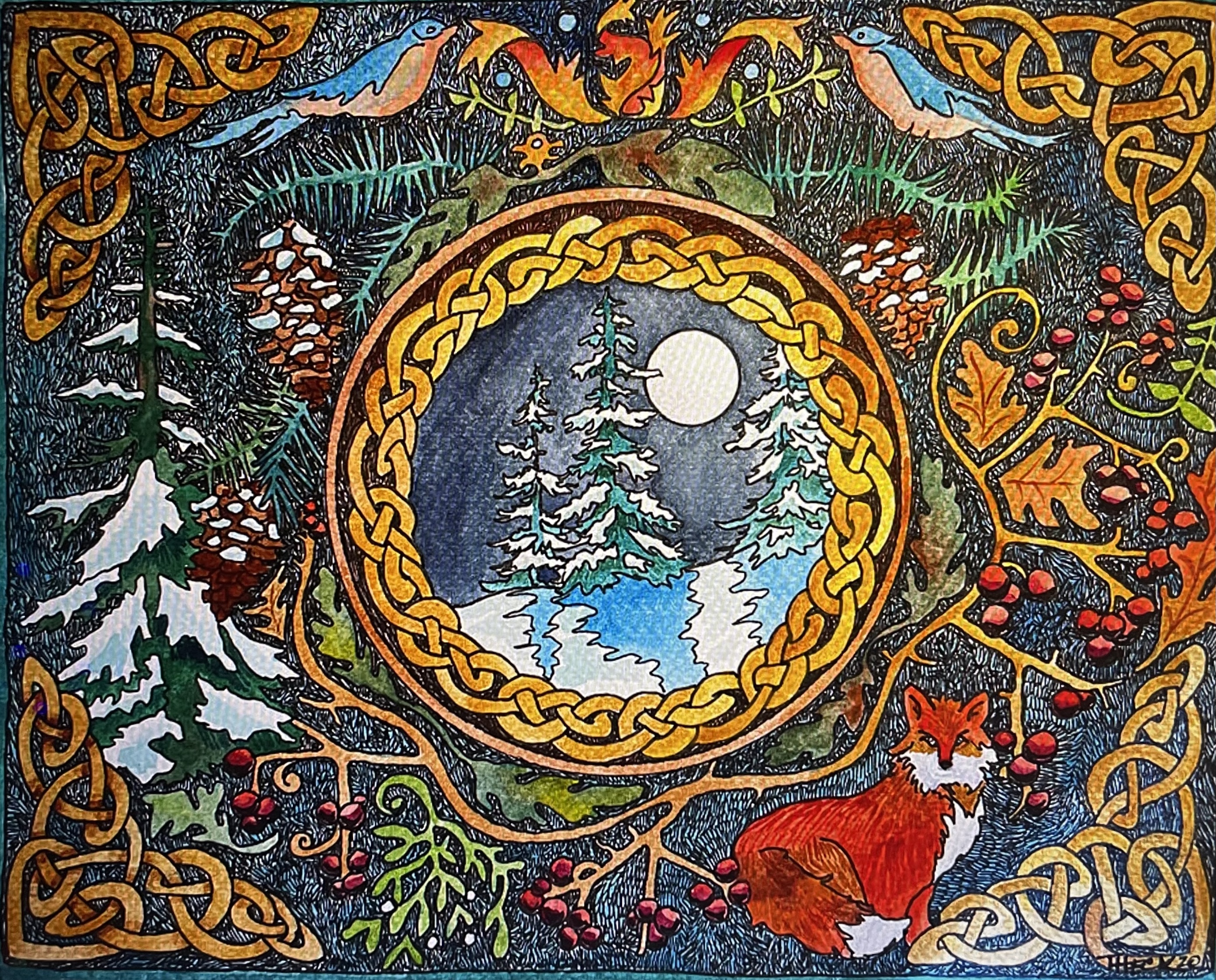
Celtic Winter Solstice, by Tina Heck. Image from Fine Art America, 2021.
A Return to Life. Neuman quotes Bettina Arnold: “All agricultural societies would have made note of [the winter solstice] because it literally is the time when… you can start seeing the days getting longer again. So it’s a return to life after sort of a seasonal death, in a way.”
Druids, Mistletoe, and Pliny the Elder. Arnold relates to Neuman that “Pliny the Elder, a first-century Roman author, provided a detailed account of mistletoe and its use by druids, a nature- and ritual-focused priesthood that lived in Iron Age Gaul (modern-day France) and the British Isles. Pliny said that when they found mistletoe growing on a particular kind of oak tree, a priest in white vestments would climb up to cut down the mistletoe with a golden sickle.”
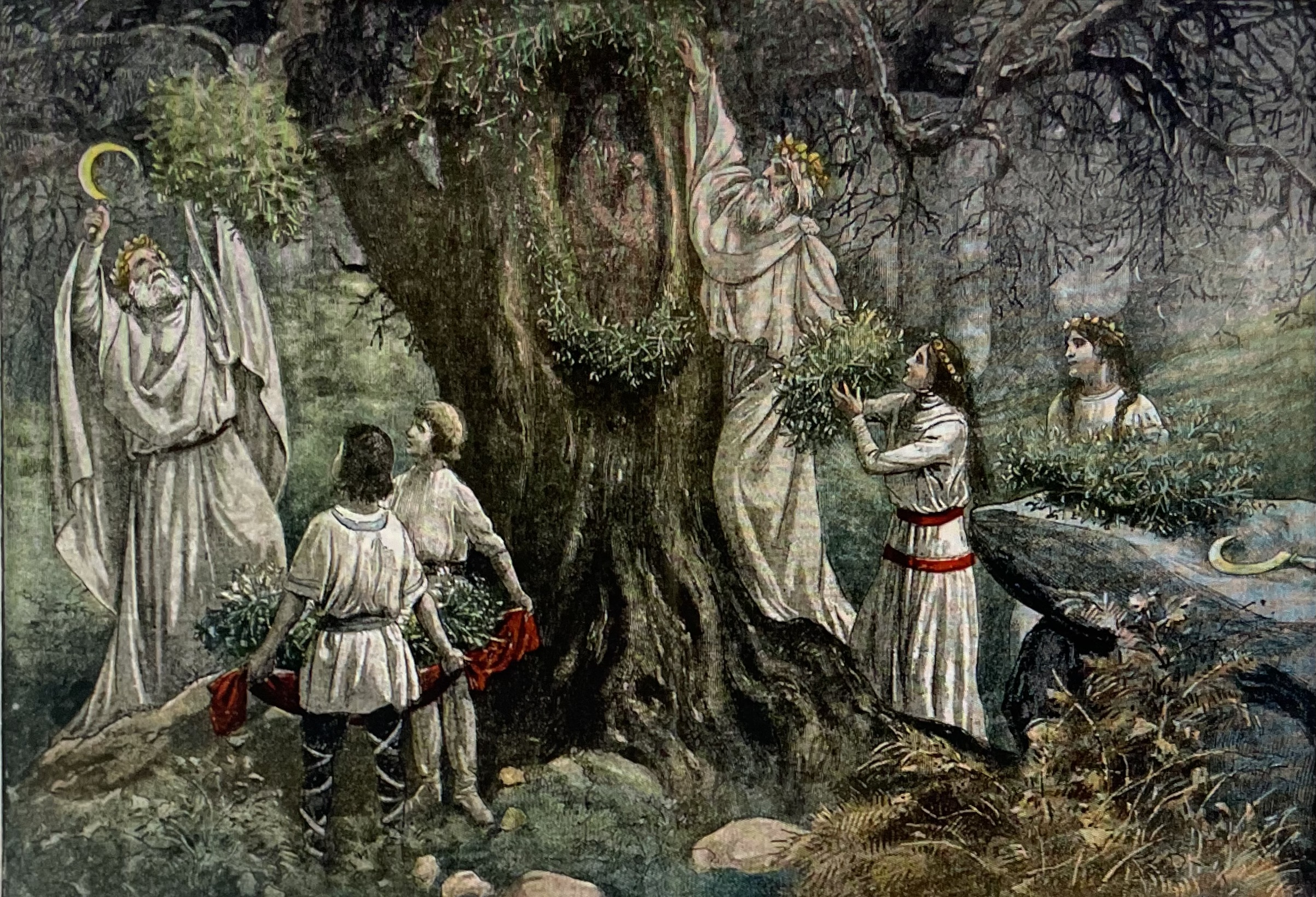
Druids collecting mistletoe. Image by Chronicle/Alamy Stock via The Conversation.
Don’t Try This At Home, Kids. Pliny believed that imbibing a mistletoe drink would impart fertility and, what’s more, would serve as an antidote for all poisons.
As to the former, who knows what kissing might lead to? For the latter, see MedlinePlus: Mistletoe Poisoning.
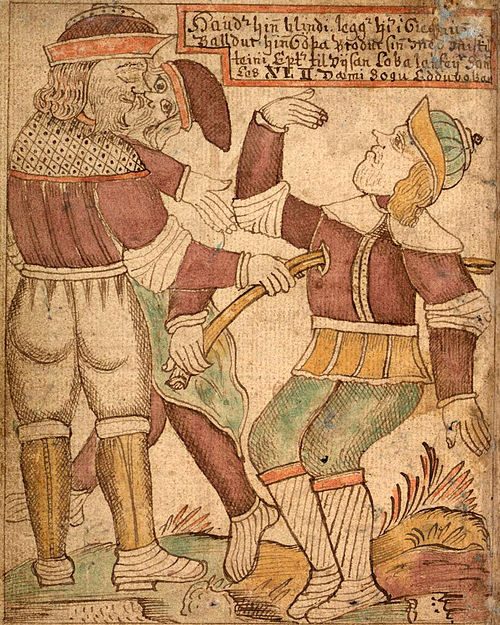
Baldur’s death. Image by Jacob Sigurðsson, c. 1765.
Loki’s Shaft. Neuman recounts, “Norse mythology adds another mistletoe tale—of Baldur, the god of light. In a story reminiscent of the Greek hero Achilles, Baldur’s mother, Frigg, makes her son invincible to all things except mistletoe. Loki, the trickster, exploits this unusual weakness by using an arrow made of mistletoe to kill Baldur. In some later versions of the story, Frigg’s tears over her son’s death become mistletoe berries, symbolizing her love.”
Neuman asks, “So, what about all the kissing? A reference appears in a song from the 1784 musical comedy Two for One, which celebrates ‘what good luck has sent ye/ And kiss beneath the mistletoe.’ It’s the oldest written reference to the custom, according to Arnold. It appears to have gained popularity in the following centuries, with holiday themes of regeneration, renewal and redemption helping to reinforce it.”
In Old Radio. I recall a related tale about holly from a SiriusXM “Radio Classic” yarn about The Saint.

Vincent Price, portraying Simon Templar aka The Saint, employs a twig of holly to catch a culprit’s color-blindness: Told the berries are bright red, they’re actually unripened green.
Apparently kissing under holly is entirely up to you. ds
© Dennis Simanaitis, SimanaitisSays.com, 2025
 Simanaitis Says