
Simanaitis Says
On cars, old, new and future; science & technology; vintage airplanes, computer flight simulation of them; Sherlockiana; our English language; travel; and other stuff
CHERNOBYL MOULD MAY THRIVE ON RADIATION
THE HORRIFIC DISASTER OF CHERNOBYL may have a beneficial mouldy lining—thanks to the relatively recent discovery of radiotrophism. Just as plants thrive from the sun through photosynthesis, some moulds have shown characteristics of growing in response to presence of typically deadly radiation. Here are tidbits gleaned from BBC, Wikipedia, plantlet.org, and other Internet sleuthing.

Etymology. On the onset, let’s decide to adopt the British spelling “mould” to describe the wooly stuff, e.g., the order Mucorales, responsible for discarding spoiled food and invention of penicillin. Our spelling “mold” already has enough other uses. Merriam-Webster notes origin of the words comes from Middle English mowlde, perhaps alteration of mowle, from moulen to grow moldy, of Scandinavian origin; akin to Old Danish mul mold.”
Photosynthesis comes directly from the Greek: φωτοσύνθεση, “light composition.” Similarly, as described in Wikipedia, radiosynthesis involves the presence of “using ionizing radiation as a main energy source to drive metabolization. It has been claimed that radiotrophic fungi have been found in extreme environments such as in the Chernobyl Nuclear Power Plant.”

Image from The Vintage News via planet.org.
Why Chernobyl? As described by Alex Riley in “The Mysterious Black Fungus From Chernobyl That May Eat Radiation,” BBC, November 28, 2025, researcher Nelli Zhdanova has been studying “one of the most radioactive places on Earth, the abandoned ruins of Chernobyl’s exploded nuclear power plant.” In particular, she has identified black moulds on the damaged structure, part of a 19-mile “zone of alienation.”
Riley continues, “But while humans were kept away, Zhdanova’s black mould had slowly colonised the area.”

Melanin, a Familiar Pigment. “At the centre of this story,” Riley recounts, “is a pigment found widely in life on Earth: melanin. This molecule, which can range from black to reddish brown, is what leads to different skin and hair colours in people. But it is also the reason why the various species of mould growing in Chernobyl were black. Their cells were packed with melanin.”
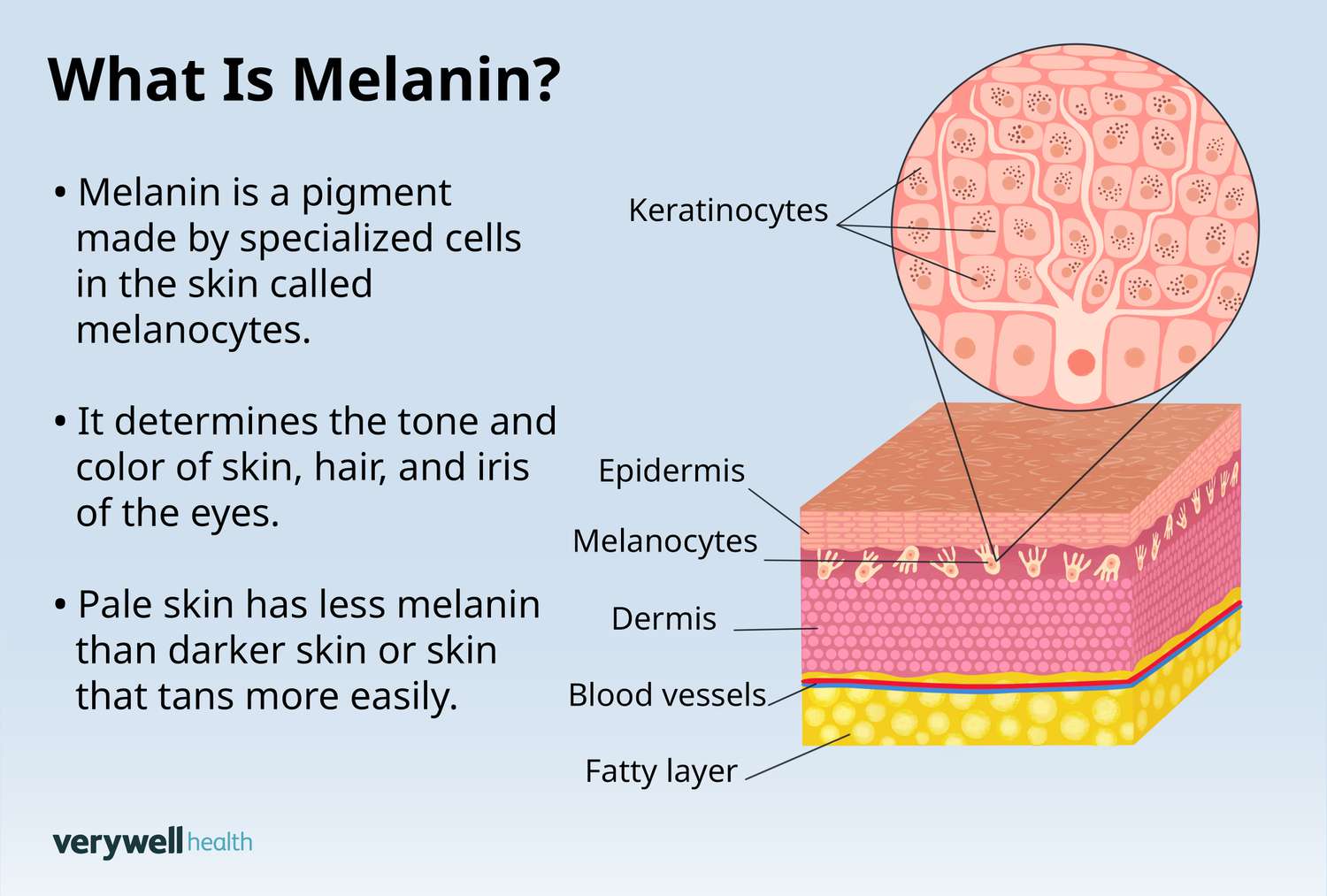
Image from verywellhealth.com.
Riley observes, “Just as darker skin protects our cells from ultraviolet (UV) radiation, Zhdanova suspected that the melanin of these fungi was acting as a shield against ionising radiation.”

Beneficial Melanin-Containing Fungi. Wikipedia recounts, “Further research conducted at the Albert Einstein College of Medicine showed that three melanin-containing fungi—Cladosporium sphaerospermum, Wangiella dermatitidis, and Cryptococcus neoformans—increased in biomass and accumulated acetate faster in an environment in which the radiation level was 500 times higher than in the normal environment. C. sphaerospermum in particular was chosen due to this species being found in the reactor at Chernobyl.”

Cladosporium sphaerospermum. Source: ati via planet.org.
Uses in Human Spaceflight. Wikipedia continues, “It is hypothesized that radiotrophic fungi could potentially be used as a shield to protect against radiation, specifically in relation to the use of astronauts in space or other atmospheres. An experiment taking place at the International Space Station in December 2018 through January 2019 was conducted in order to test whether radiotrophic fungi could provide protection from ionizing radiation in space, as part of research efforts preceding a possible trip to Mars.”
“This experiment,” Wikipedia notes, “used the radiotrophic strain of the fungus Cladosporium sphaerospermum. The growth of this fungus and its ability to deflect the effects of ionizing radiation were studied for 30 days aboard the International Space Station. This experimental trial yielded very promising results.”
Still to be Determined. BBC’s Riley observes, “Radiosynthesis is still just a theory, as it can only be proven if the precise mechanism between melanin and metabolism is discovered. Scientists would need to find the exact receptor—or a particular nook in melanin’s convoluted structure—that is involved in converting radiation into energy for growth.”
Riley concludes, “Just as those black moulds colonised an abandoned world at Chernobyl, perhaps they could one day protect our first steps on new worlds elsewhere in the Solar System.”
A heady prospect indeed. ds
 Simanaitis Says
Dennis:
If moulds are someday used to absorb radiation in space vehicles, how is that job done now? What levels of radiation are current astronauts subjected to, and what long-term effects does it have on them?
Excellent questions, with some info only a Goggle away. Note, though, the speculative nature of this mould research.