
Simanaitis Says
On cars, old, new and future; science & technology; vintage airplanes, computer flight simulation of them; Sherlockiana; our English language; travel; and other stuff
EXPO TIDBITS PART 2
YESTERDAY GOT US STARTED REVIEWING TWO of the world’s expositions—both, curiously, in Philadelphia. Today in Part 2 we focus on my own involvement with others of this form of public celebration.
Miscl. Expos. In chronological order, in one way or another, I fondly recall the sites of San Diego’s Panama-California Exposition, 1915; the Chicago World’s Fair, 1933; San Diego’s California Pacific Exposition, 1935; the Golden Gate International Exposition, 1939; the New York World’s Fair, 1965; and the Knoxville International Energy Exposition, 1982.
How come I recall them? Read on.
Mystery Guests at a Wedding. San Diego wisely retained structures of its 1915 exposition for the 1935 event. Indeed, the city’s Balboa Park remains a great venue for family events—weddings and the like—as well as general tourism.
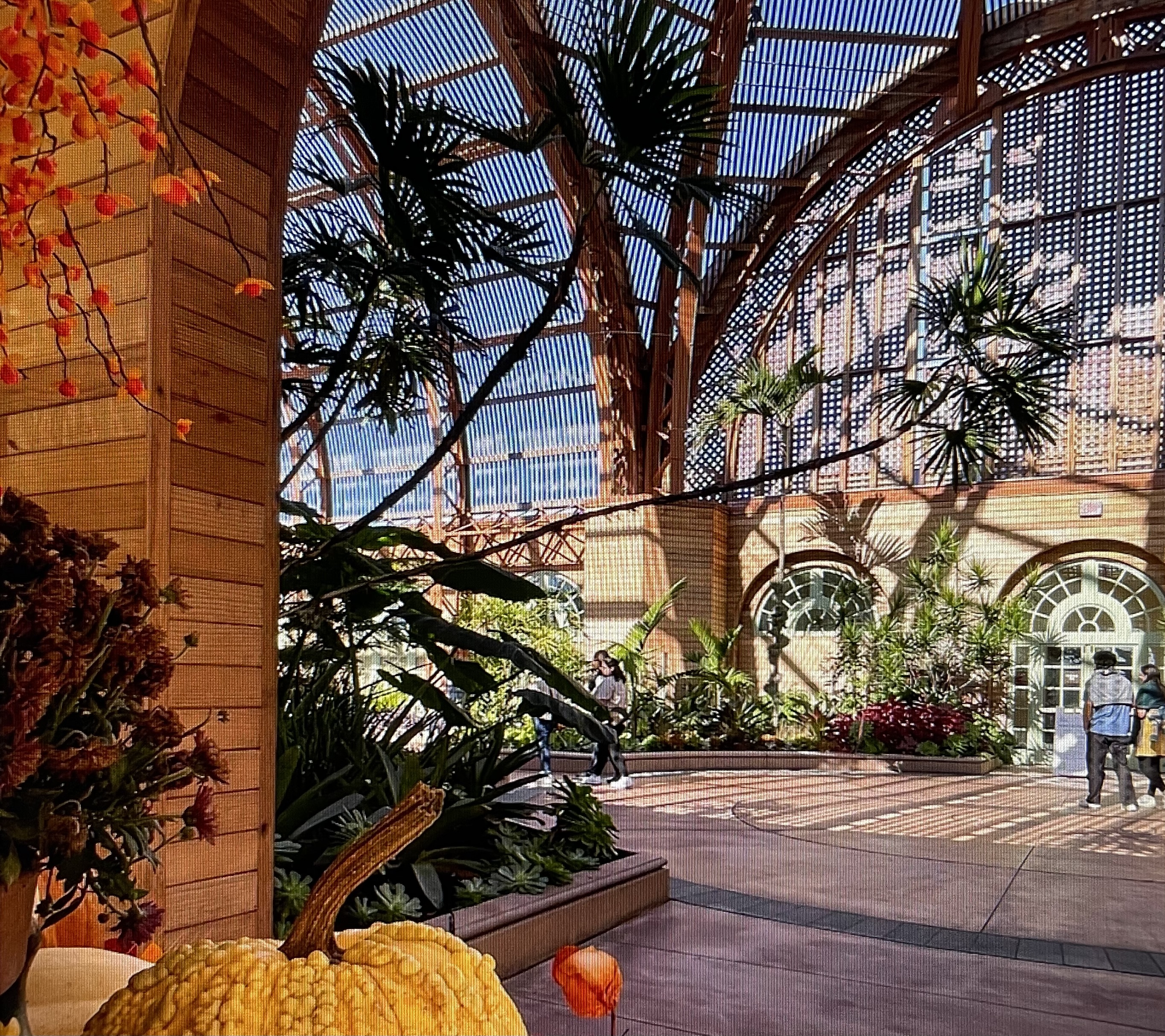
Wife Dottie and I were lunching at one of the park’s restaurants when we happened to be seated not far from a wedding party. As part of their festivities along came the wedding photographer and, with us all in a smiling mood, snapped our picture. To this day, I imagine the husband and wife wondering “Were these nice people your kin? Or?”
Chicago 1933. The Chicago World’s Fair, 1933, is highly regarded to aircraft enthusiasts for “Italo Balbo’s Chicago Visit.” A squadron of 24 Savoia-Marchetti SM.55X flying boats traveled from its Orbetello, Italy, home base near Rome to Chicago and return.
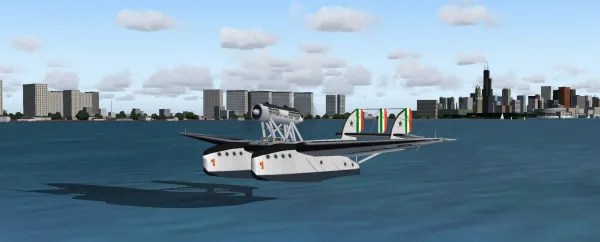
Balbo’s Savoia-Marchetti SM.55X touches down onto Microsoft Flight Simulator’s Lake Michigan. The model, by flight simmer Massimo Taccoli.
Treasure Island 1939. “The Golden Gate International Exposition,” noted SimanaitisSays in 2020, “celebrated San Francisco’s two newly built bridges: The San Francisco-Oakland Bay Bridge opened in 1936; the Golden Gate Bridge, in 1937.” This exposition also introduced the world to Treasure Island, an artificial island built in San Francisco Bay.
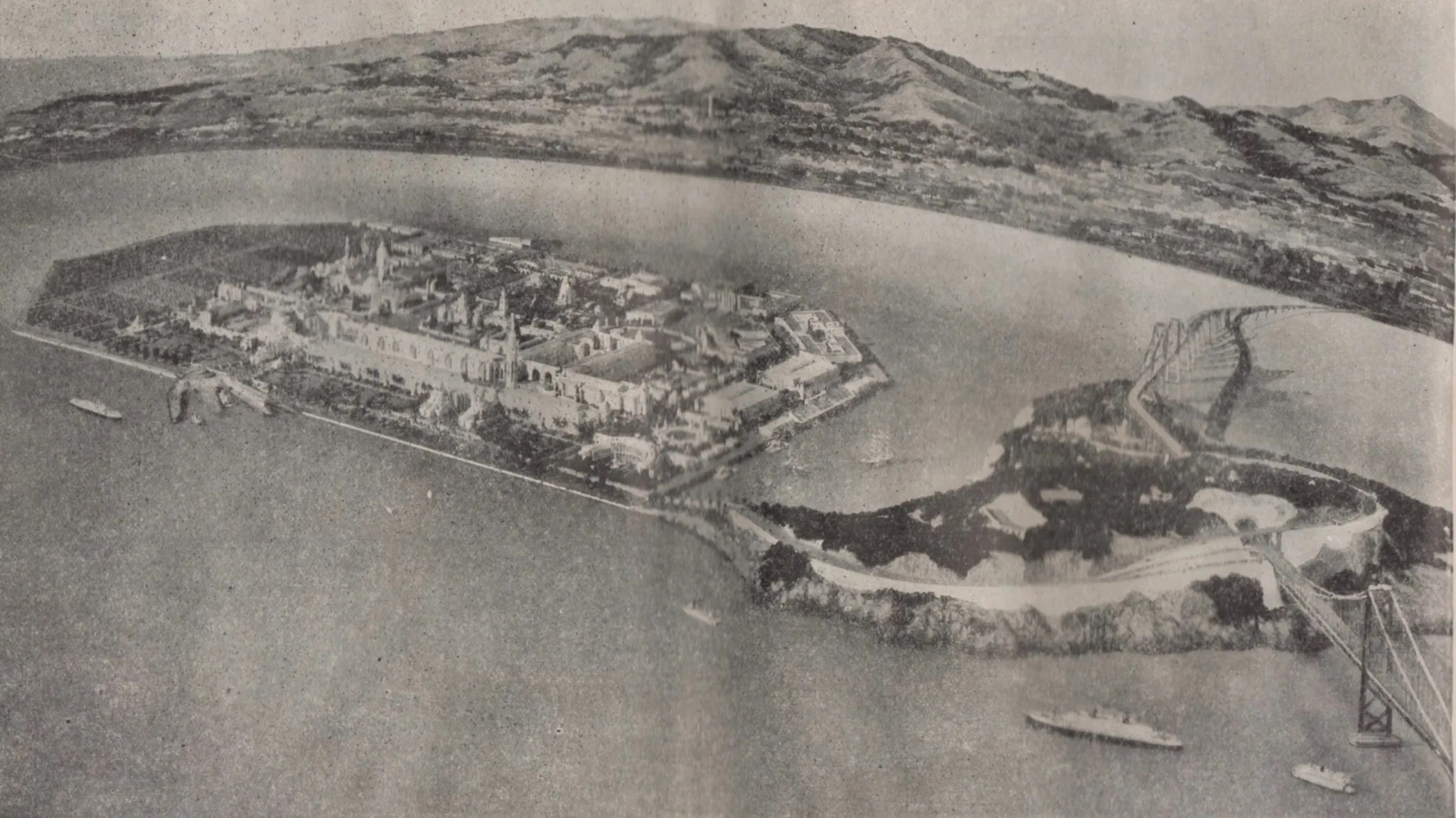
Treasure Island. This and the following image from Travel Tips, Winter 1939.
Treasure Island, 5520 ft. by 3410 ft., is just north of Yerba Island, a natural island connecting the western and eastern spans of the San Francisco-Oakland Bay Bridge.
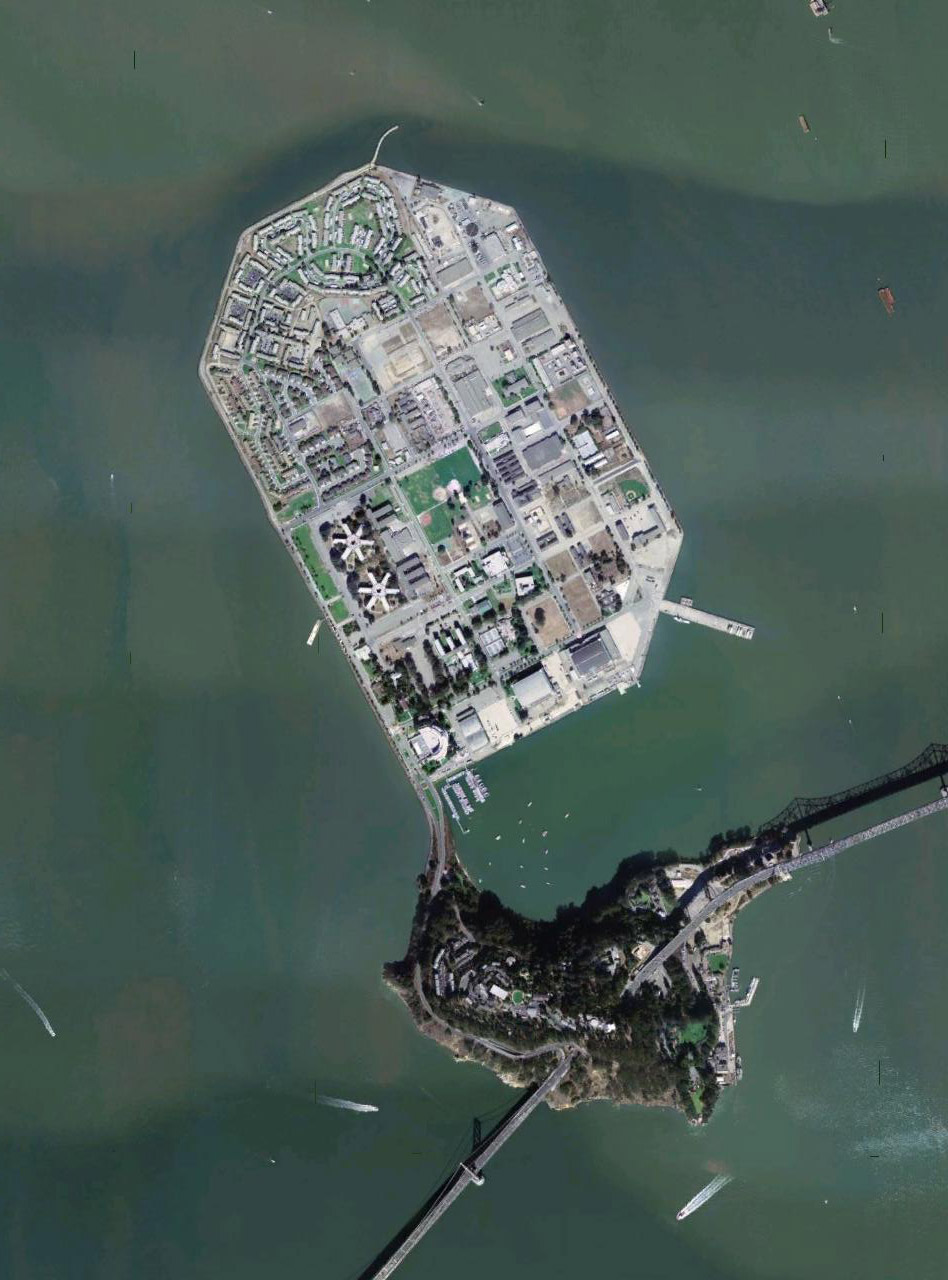
The formation of Treasure Island took advantage of Yerba Buena Shoals, which used to be a shipping hazard at varying depths of less than 27 ft. Treasure Island now contains some 4000 trees, 70,000 shrubs, and 700,000 flowering plants.
A Tattoo Heritage. Wikipedia recounts, “A couplet from the song ‘Lydia the Tattooed Lady,’ in the Marx Brothers‘ 1939 film, At The Circus, reads ‘Here is Grover Whalen unveilin’ the Trylon/Over on the West Coast we have Treasure Island,’ citing, in the Trylon and Treasure Island, two prominent features of international civic events happening that year (as the 1939 New York World’s Fair vied for tourist patrons with the Golden Gate International Expo).”
New York 1964. As I noted in “1964 World’s Fair,” “It’s said you never forget your first kiss, your first love, your first…. But what about your first taco?”

Mine was at the New Mexico Pavillion, one of 25 U.S. states and regions hosting visitors at the 1964 New York World’s Fair. Another introduction there was the first “It’s a Small World,” now an attraction at Disney parks around the world.
Knoxville 1982. This city, home to its 1982 International Energy Exposition, is a “straight shot south [from Detroit] on Interstate 75, a distance of 513 miles with a Google driving time of 7 hours 36 minutes, figured at an average speed of 67.5 mph.”

My Detroit/Knoxville drive was in VERA, Véhicule Economé de Recherche Appliquée, an only somewhat modified Peugeot 305 turbodiesel—at an official 91.2 mpg.
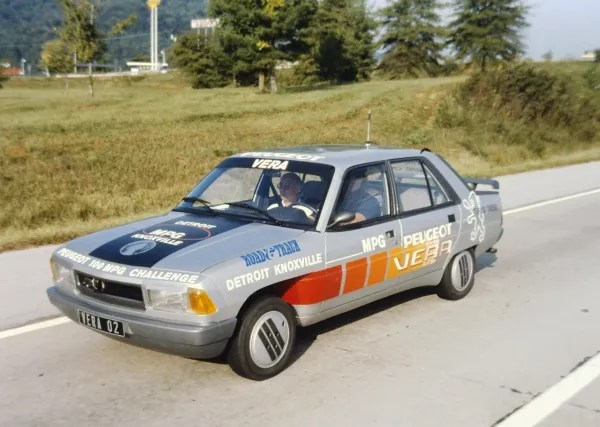
I drove VERA at “33.1 mph, took 15 1/2 hours, non-stop but for a single 30-minute break in the middle of the night….”
We had to return to Detroit the next day; in truth, I never saw much of the Expo. “On the way north, we celebrated our Double Nickel national speed limit by averaging 54.9 mph. VERA—and I—did this at an impressive 73.7 mpg. Formidable!”
According to the Corporate Average Fuel Economy standards, the average fuel efficiency for new passenger cars in 1982 was 24.0 miles per gallon, while the average for new light trucks was 17.5 mpg.
I doubt that I’ll be doing anything as heroic for the U.S. Semiquincentennial. ds
© Dennis Simanaitis, SimanaitisSays.com, 2025
 Simanaitis Says