
Simanaitis Says
On cars, old, new and future; science & technology; vintage airplanes, computer flight simulation of them; Sherlockiana; our English language; travel; and other stuff
A TRIP BACK TO NASCAR—1982
“BEFORE OUR TRIP TO CHARLOTTE, I probably couldn’t have challenged one of that city’s average 10-year-olds with my NASCAR knowledge.” Indeed, it’s even less so for me today 43 years later.

Thus, it’s good fun to glean tidbits from “Petty Grand National Pontiac,” R&T, April 1982. I shared this testing opportunity with Sam Posey; he, a race driver of high order but almost equally new to NASCAR Grand National. In what follows, Sam’s comments are quoted in italics; mine are merely quoted.
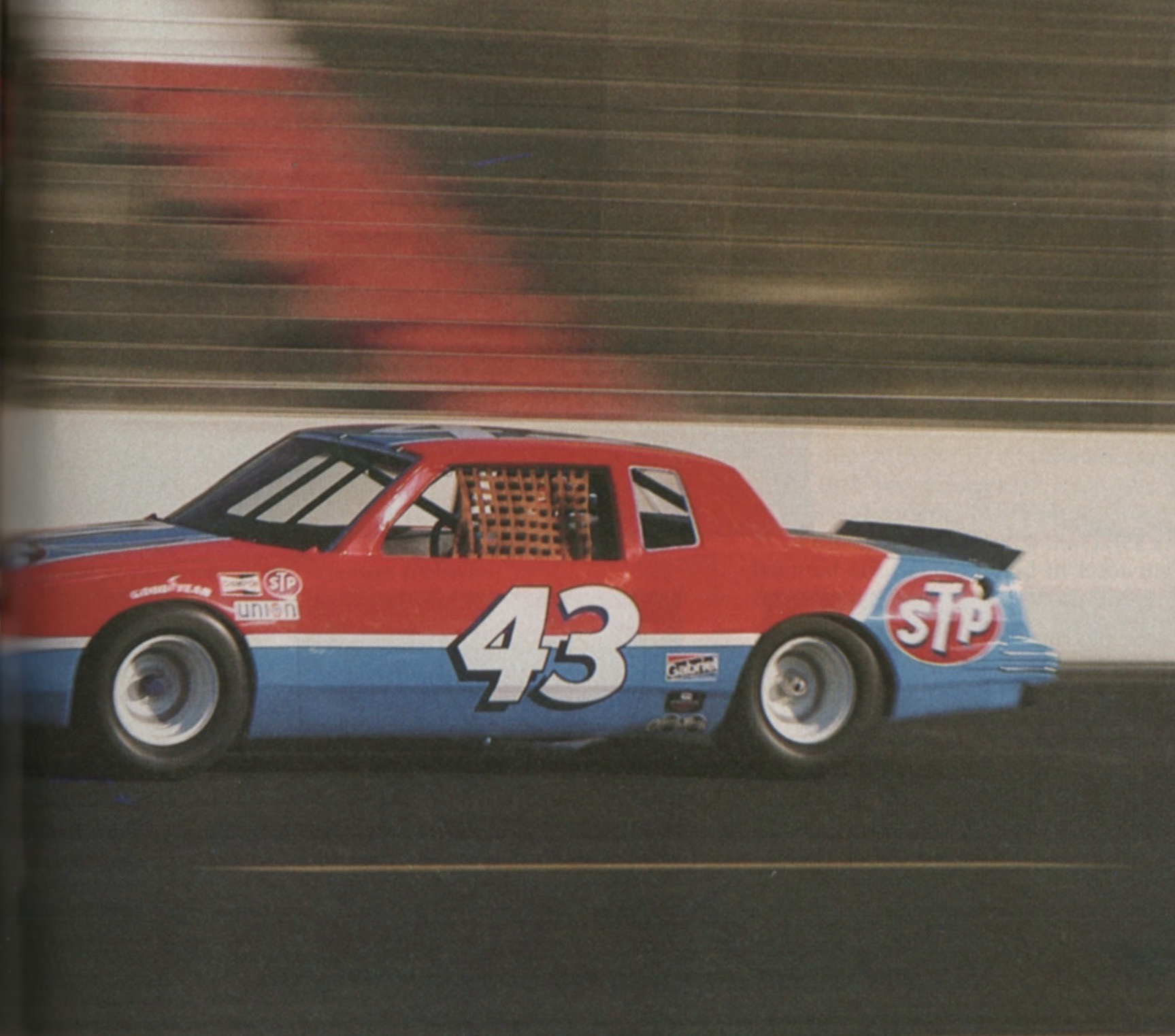
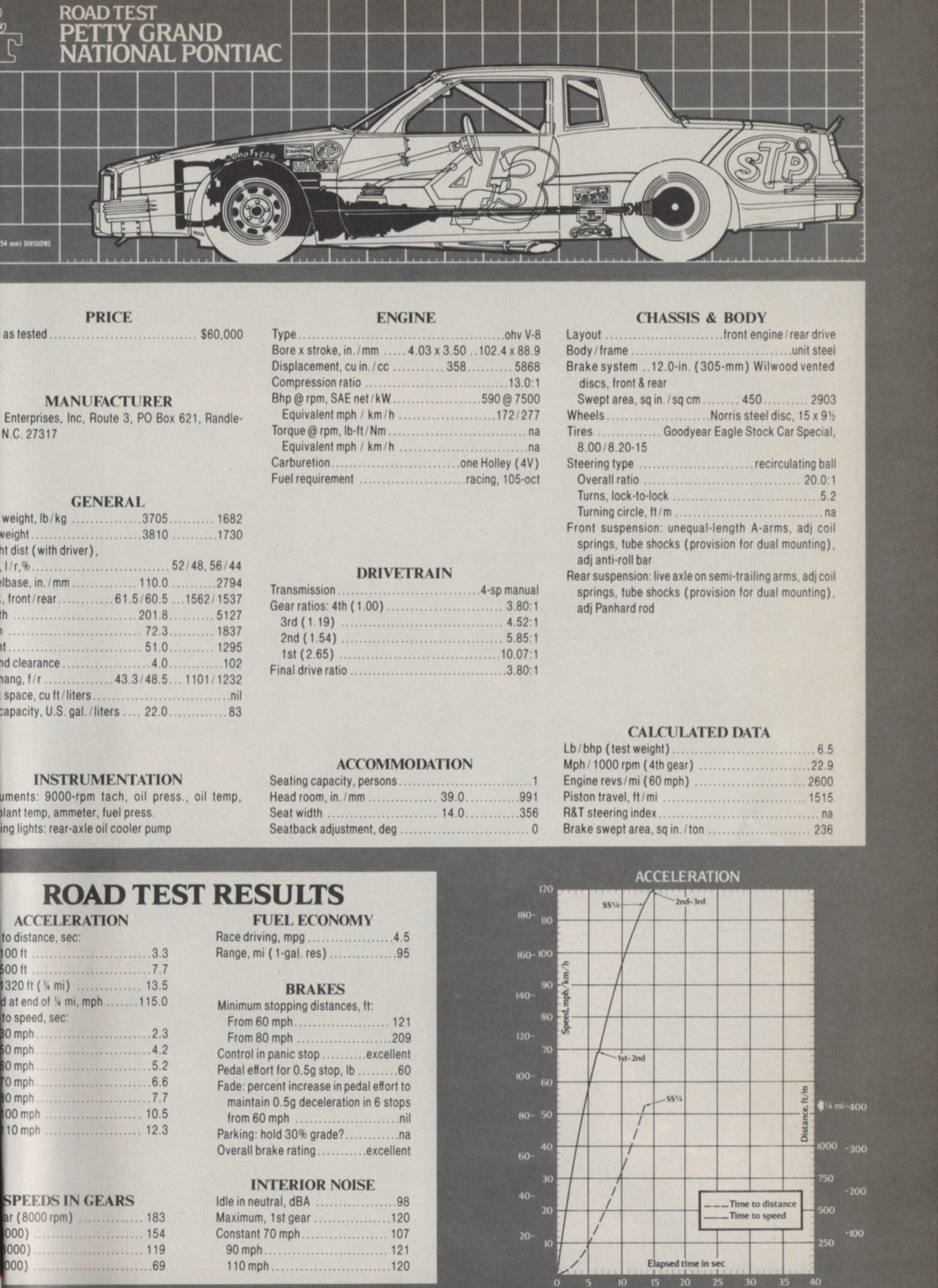
The Petty Grand National Pontiac. Alas, cropped because of the thickness of R&T’s 1982 bound volume; ditto for the Data Panel. This and following images from R&T, April 1982.
Richard and Son Kyle. “As I drove out to the track where my NASCAR education would begin, I couldn’t help but reflect on the advantages of starting at the top.”
“The past few years,” Sam noted, “has been a period of transition for the Pettys, with Kyle positioning himself to take over from Richard just as Richard 20 years ago took over from his father Lee.”
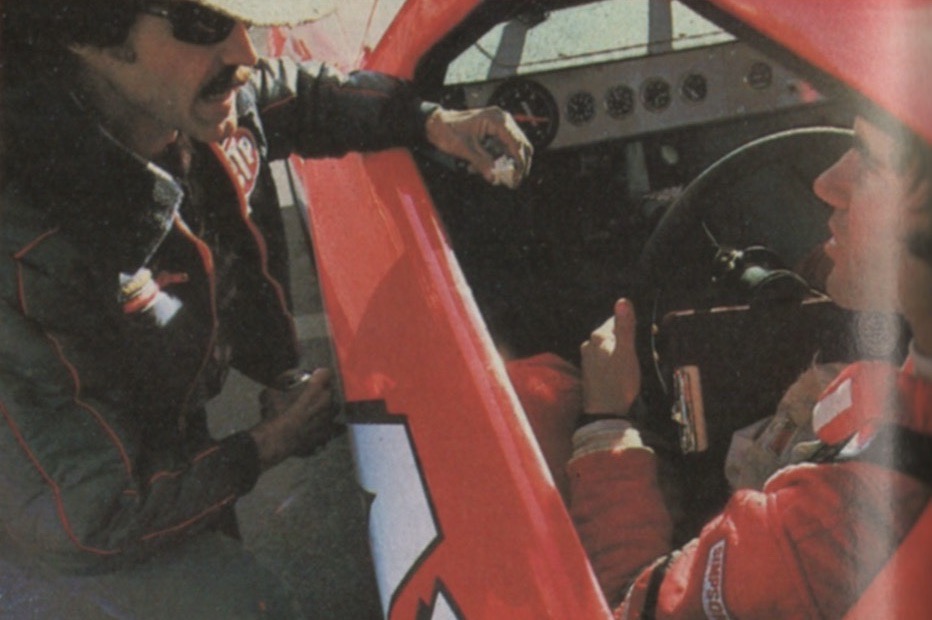
Above, Richard Petty chats with Sam before Posey’s turn at the wheel. Below, Kyle Petty displays entry technique for a Grand National car.
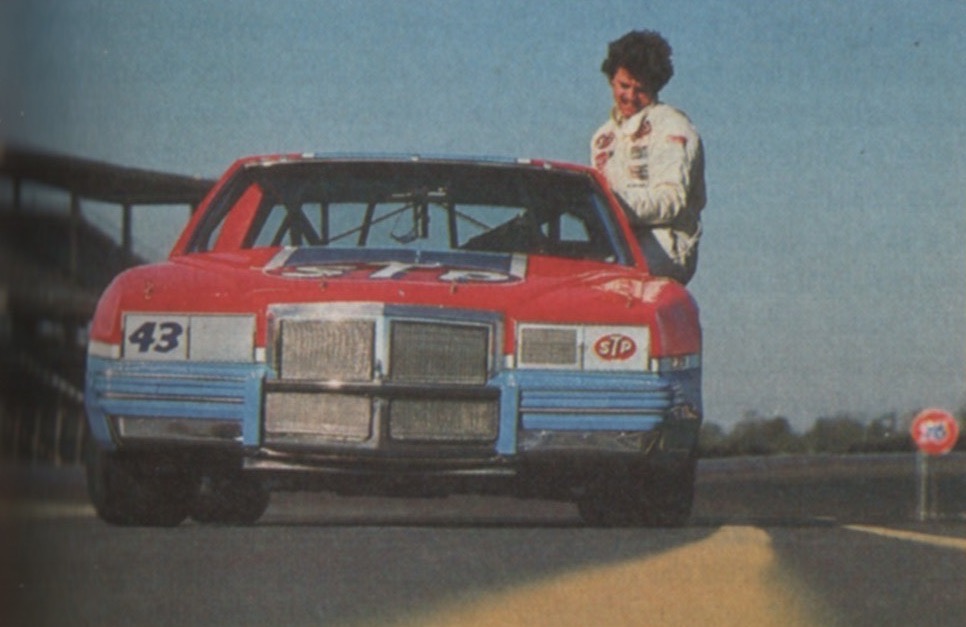
A “Stock” Car, Sorta. “The car’s unit body, fenders, hood and trunk lid are all stock, by regulation. Their shapes are checked by template-wielding NASCAR scrutineers to keep folks from shaving a hood contour here or a windshield angle there.”
Creative Mods. “For awhile, only a car’s side silhouette was verified. But then some teams went to vertical sectioning of the bodywork to reduce width (and hence frontal area) and this brought about more extensive template checking.”
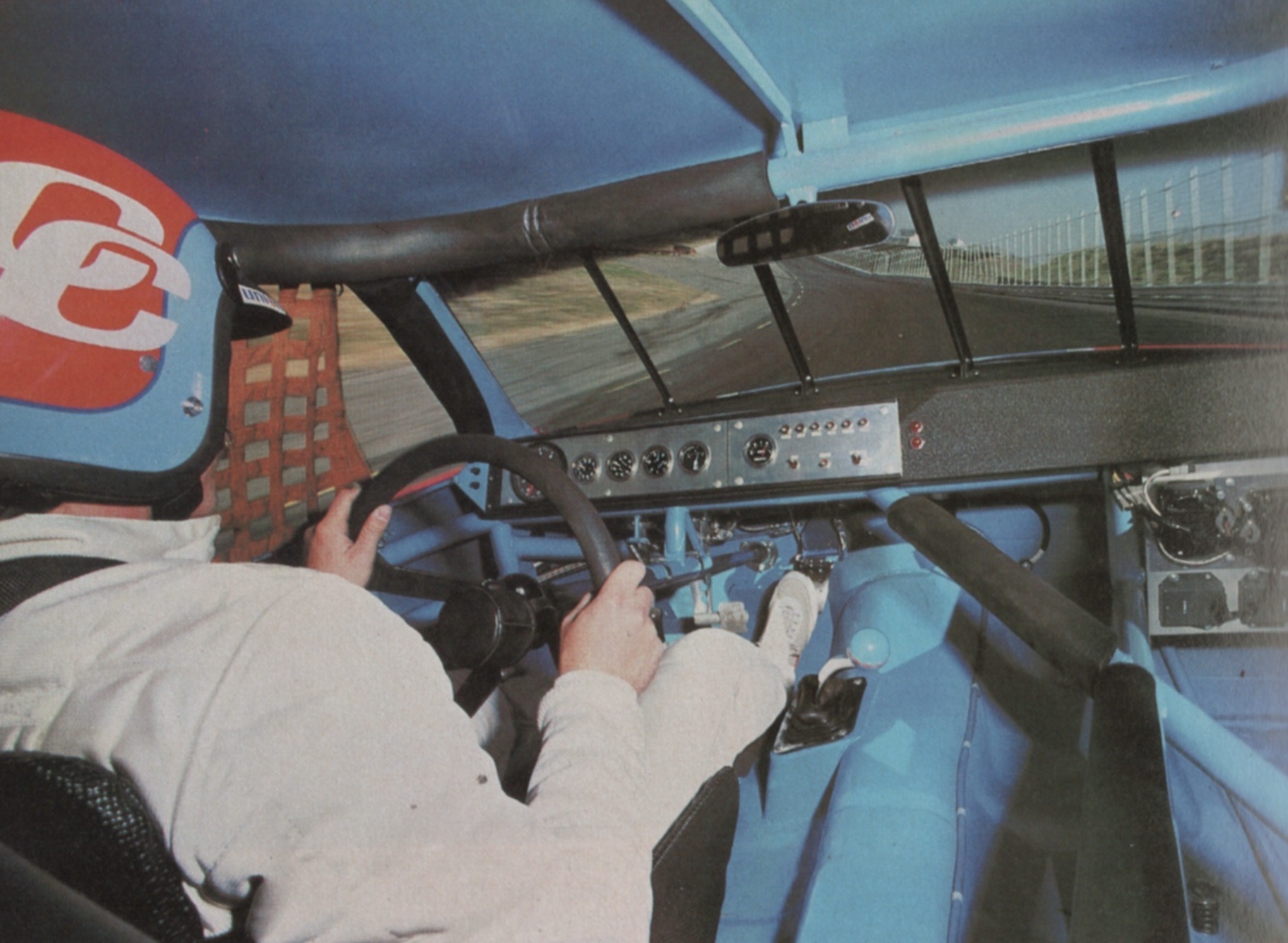
A Racer Interior. “The exterior of this ‘stock car’ may pass for stock, but its interior is racer, pure and simple. There’s a fabricated dashboard carrying the necessary gauges and switches along with the 2-way radio customary these days, a high-sided form-fitting seat angled sharply to the left, a longish shifter growing out of the Petty-blue-painted floor pan, huge pedals with corrugated faces and a thick-rimmed removable steering wheel. Surrounding all this is a roll cage whose robustness accounts for the frequency with which NASCAR drivers tend to emerge unscathed from occasional 180-mph contretemps.”
Seated to the Aft. “And, curiously enough, just where the driver sits is partly NASCAR regulation with a dose of genetics thrown in for good measure. As Kyle explained, it helps to sit relatively far back to get the best feel of rear grip coming down off the turns…. For the past few years, teams were edging their drivers farther and farther to the rear, to the point that some folks were said to have trouble seeing around the B-pillar.”
“Enter the talented NASCAR rule makers: They measured the “stock” cars—and stock cars—and regulated a 100-in. maximum distance from clutch and brake pedal to firewall. But you can appreciate where genetics enter the picture: Richard and Kyle Petty are 6 ft. 2 in. and lanky, so they and other taller sorts still end up a bit farther back than some of the drivers on the Grand National Circuit.”
“Like the Pettys I too am 6 ft. 2 in.,” Sam recounted, “so when I first climbed into the Pontiac’s cockpit I had expected to feel right at home. But those men from North Carolina sure have long legs compared to this boy from New England!”
North Carolina Men vs a New Englander. “I could barely reach the accelerator, and once the engine was running I found that the linkage had so much travel I had to slide forward in the seat to open the throttle all the way.”
As Sam had noted earlier, “That is part of NASCAR’s fascination. Much of the so-called cheating is right out there in the open.”
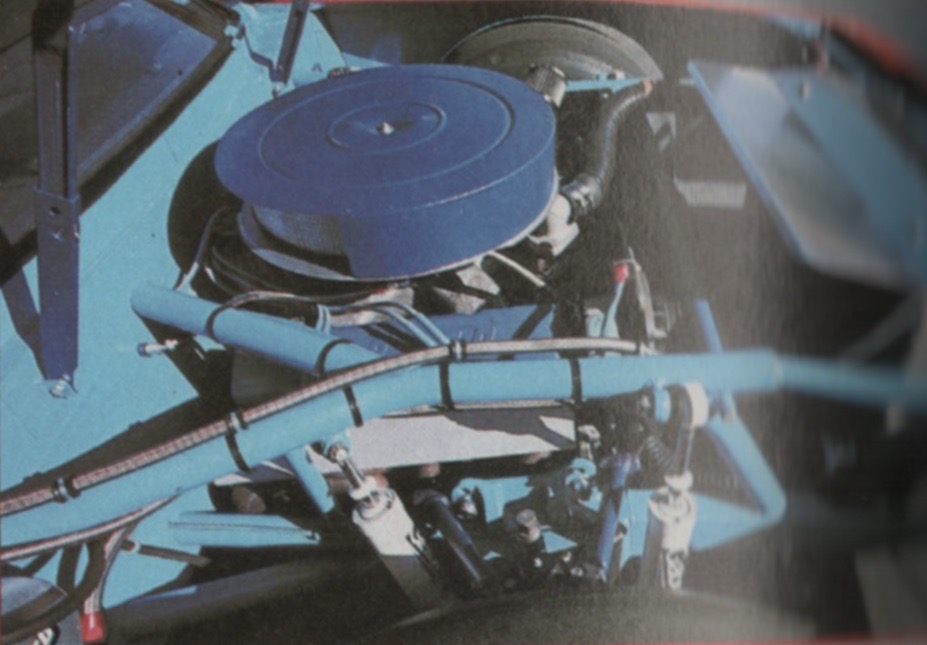
No Lightweights. “Grand National regulations foster cars that are robust, not especially lightweight. For instance, there’s a 3700-lb minimum, measured with full fluids but no driver. Teams tend to build cars a little lighter than this, then ballast up to the minimum with weight placed where it’ll do the most good. And this, of course, means to the left…. As its ballast, the Petty Pontiac carries nine 35-lb lead bars fitted into a chassis channel slotted for this purpose. With driver aboard, left/right weight distribution works out to 56/44; front/rear, 52/48.”
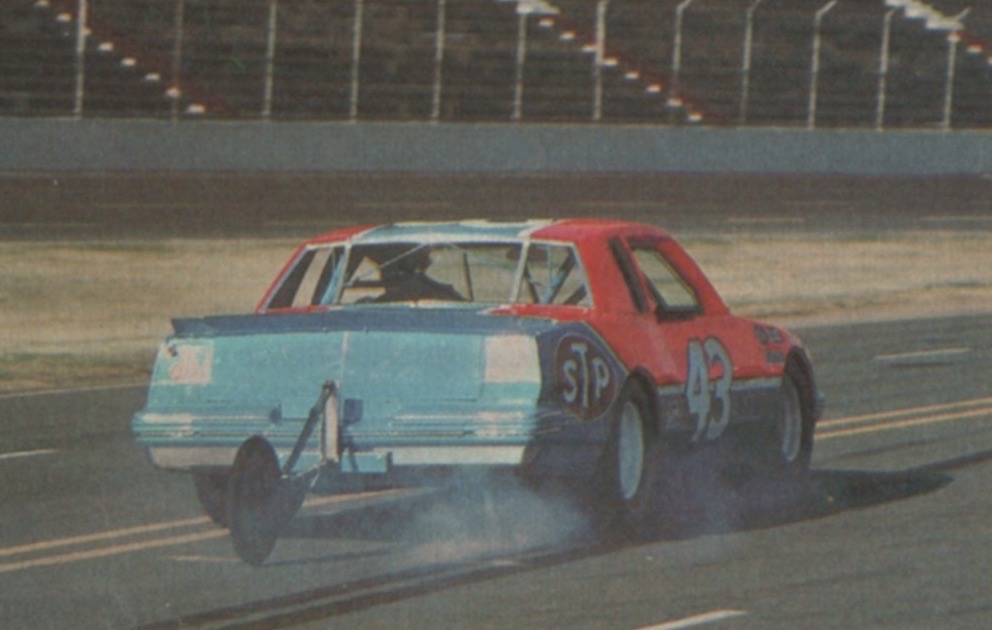
Braking was superb, but staggered suspension exhibited a trail of rubber.
Cheating by Pellet. “One story, possibly apocryphal, but entertaining nonetheless, concerns a team that ballasted with lead pellets in the roll cage structure and, what’s more, fitted a driver-controlled dump hatch for jettisoning the added weight while underway. Seems the driver made for the pits during a yellow but forgot to close the hatch, and ballast now has to be in minimum 5-lb increments. Thud.”
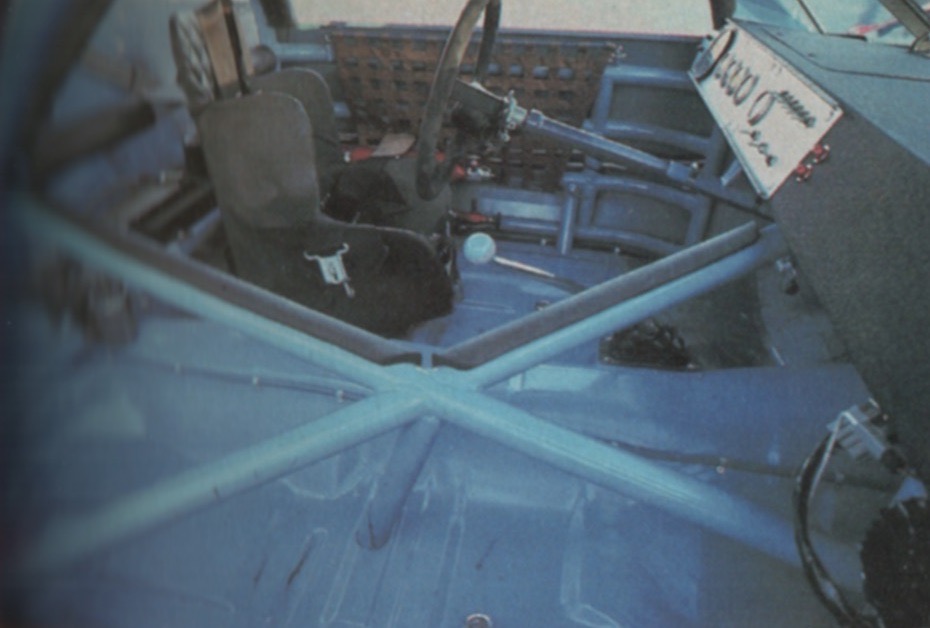
“Next came my turn to tangle myself around the roll cage for the sound measurement runs. Even at idle, the V-8 bellowed to the tune of 98 dBA…. And it went off-scale when I signaled Kyle to run a couple of laps at his own comfortable pace. We touched 7000 briefly down the straight, roughly 160 mph, and the g-force through the turns was astounding.”
I wonder if my grip left a permanent impression on the roll cage. Needless to say, Sam and I had a ball during this track test. ds
© Dennis Simanaitis, SimanaitisSays.com, 2025
 Simanaitis Says