
Simanaitis Says
On cars, old, new and future; science & technology; vintage airplanes, computer flight simulation of them; Sherlockiana; our English language; travel; and other stuff
MACHEATH’S LADY FRIENDS PART 2
YESTERDAY WE CELEBRATED MACHEATH, a theatrical alter ego of real 17th-century Brit bad guy Jack Sheppard. This got us investigating Mack’s lady friends, “Suky Tawdry, Jenny Diver, Lotte Lenya and Sweet Lucy Brown” appearing in the pop song “Mack the Knife.” Yeah, there are operas too: John Gay’s Beggar’s and Bertolt Brecht and Kurt Weill’s Three Penny.
Let’s continue here in Part 2 with more about the ladies, both theatric and real.

The era dated from 1660, with restoration of King Charles II. Image from Theatre Age.
Suky Tawdry. Names like Suky Tawdry evolved a bit earlier than Gay’s time, and were typical of “Restoration Riffs,” back when the Brits were getting over Puritan Lord Protector Oliver Cromwell. For example, characters in Wycherley’s The Country Wife included Sir Simon Softhead, Sir Jaspar Fidget, Pinchwife, and Horner.
And, corroborating this, Britannica reports Suky is purely a fictional character.
Again, as recently noted here at SimanaitisSays, junior high is brought to mind.
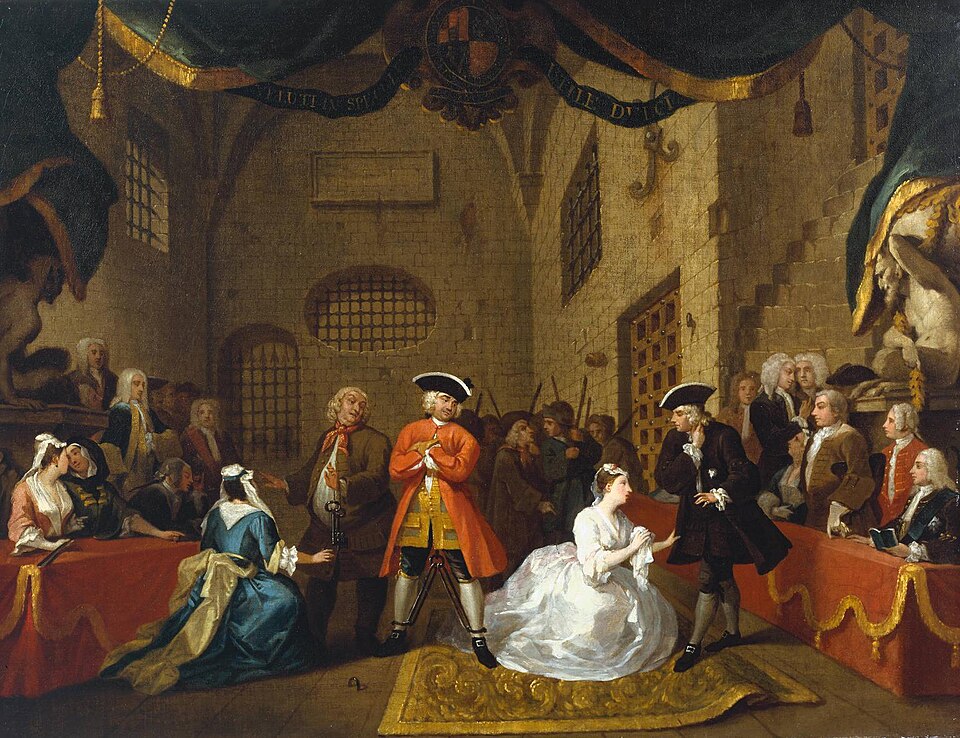
What About Sweet Lucy Brown? Well, she is a character, sorta, in Gay’s opera, albeit given the Lockit moniker. And, in either opera, she’s the daughter of a cop, jail keeper Lockit or Police Chief Jackie “Tiger” Brown.
This, of course, only begs the question. What about a real Brown or Lockit father/daughter?
My sleuthing reveals only Lucy Locket in the nursery rhyme of the same same: “Lucy Locket lost her pocket,/ Kitty Fisher found it,/ Not a penny was there in it,/ Only ribbon round it.” An 18th-century Brit courtesan, Catherine Maria Fischer, is thought to be subject of the rhyme.
And, no, Catherine/Kitty Fischer/Fisher fails to appear in either opera. By the way, other Begger’s ladies have great names: Mrs. Vixen, Molly Brazen, Betty Doxy and Mrs. Slammekin (each word implying “slut”), and Dolly Trull (“trull” meaning “prostitute”).
Jenny Diver. Jenny is the most interesting and, via Brewer’s Rogues, Villains, & Eccentrics, perhaps the best documented.
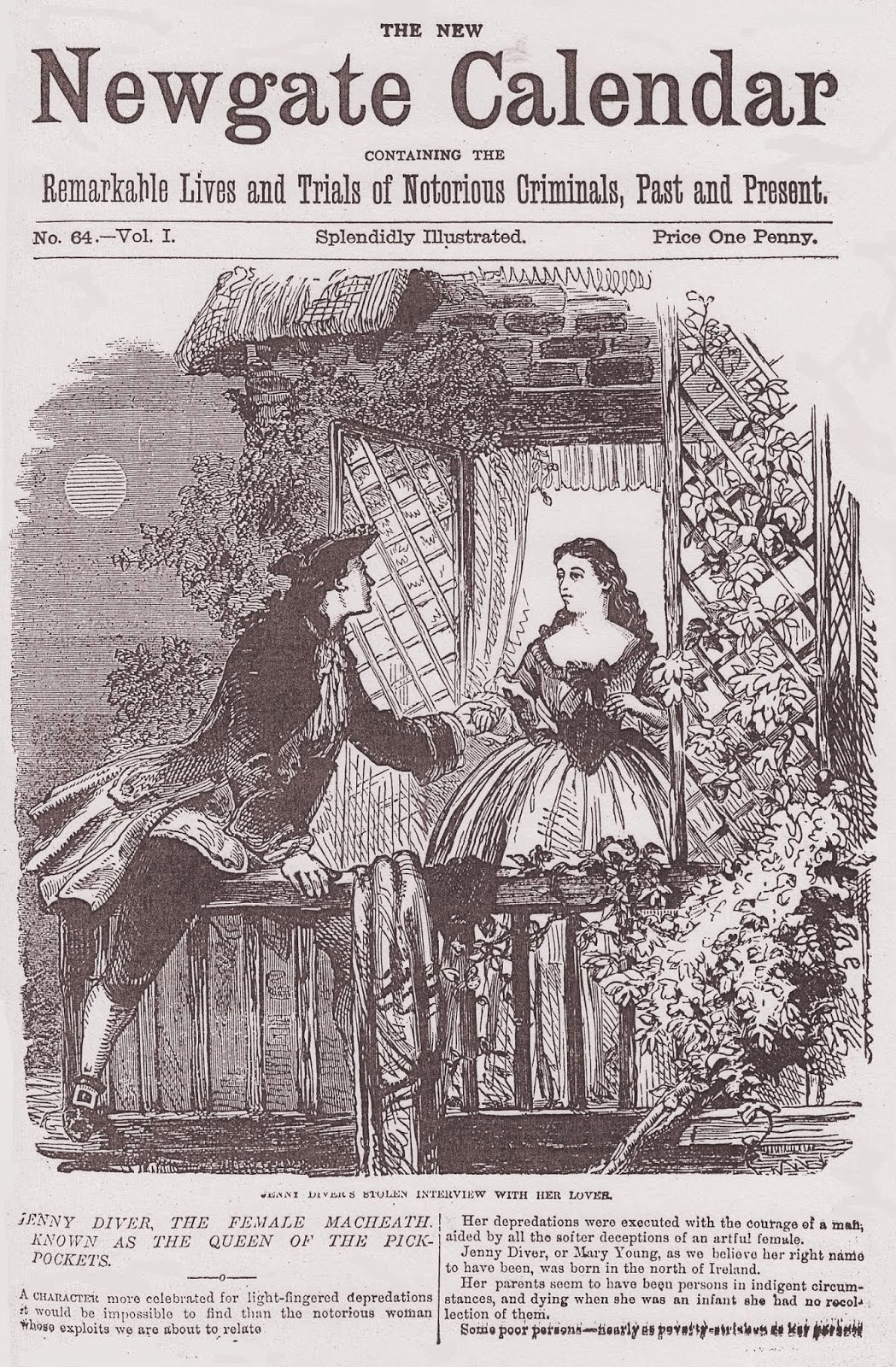
Jenny Diver, born Mary Young, c. 1700–1741, Irish pickpocket. Image from Colonial Quills.
The New Newgate Calendar recounts, “Her depredations were executed with the courage of a man, aided by all the softer depictions of an artful woman.” William Donaldson writes in Brewer’s, “Diver’s most imaginative innovation was to equip herself with a pair of false hands and arms, allowing her to conceal her real ones under her dress.”
“With her extensions in place, and having stuffed a cushion under her stays to simulate pregnancy, she would proceed to a church service in a sedan chair with one of her gang going ahead to secure her a seat among the wealthier members of the congregation, and with another in attendance as her footman.”
“Having taken her seat between two elderly ladies of quality,” Donaldson describes, “she would wait until they were crouched in prayer and then relieve them of their watches and jewelry, which she would pass to an accomplish in an adjoining pew. Should one of her elderly victims discover her loss, the other would exonerate ‘the pregnant lady’ whose hands, she would vouch, had never left her lap.”
You go, grrl! ds
© Dennis Simanaitis, SimanaitisSays.com, 2025
 Simanaitis Says