
Simanaitis Says
On cars, old, new and future; science & technology; vintage airplanes, computer flight simulation of them; Sherlockiana; our English language; travel; and other stuff
CELEBRATING THE 100th ANNIVERSARY OF THE MOTEL
MEGAN MCCREA CELEBRATES “100 YEARS of the Motel: Neon Signs, Swimming Pools, and American Dreams,” The New York Times, October 22, 2025. What fun, even if experienced armchair-fashion! Here are tidbits gleaned from McCrea’s article, together with some Internet sleuthing and personal recollections.
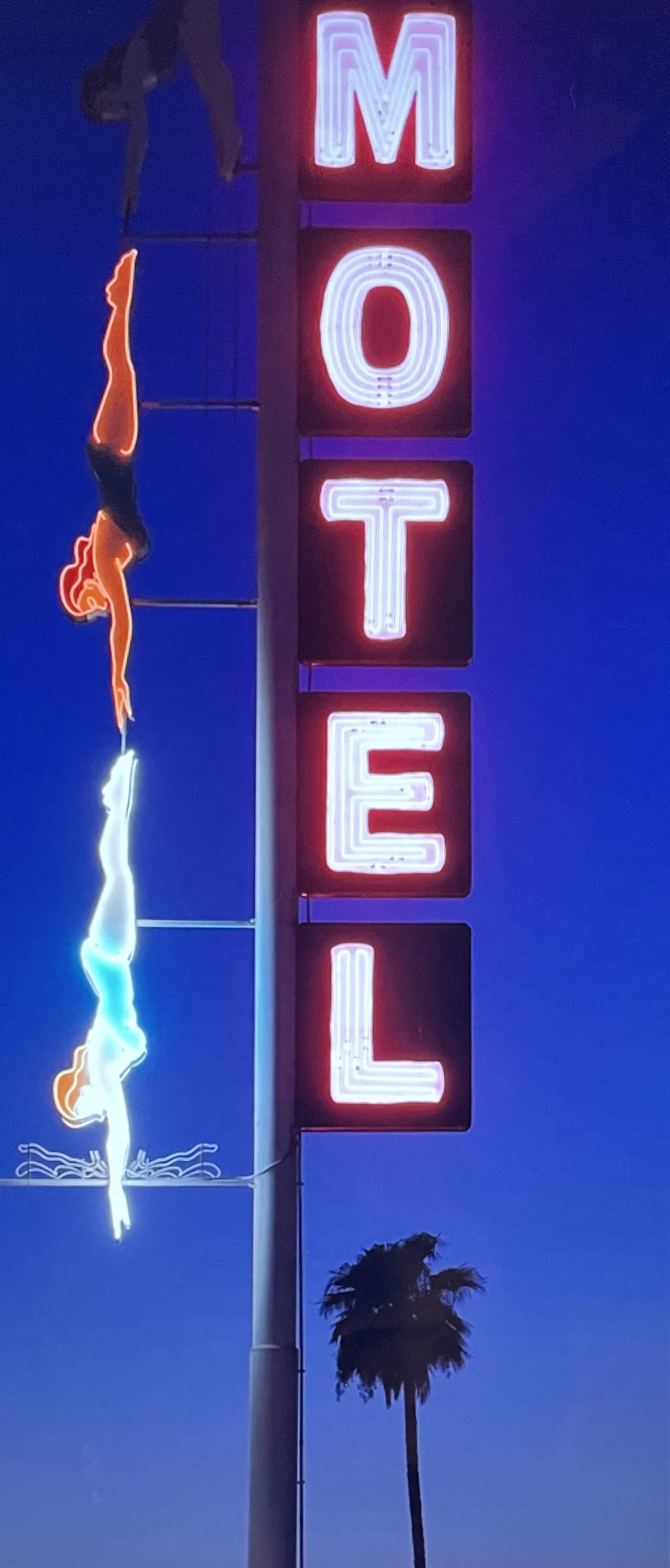
Image captured from video by Ash Ponders from The New York Times.
Origins. “The motel might seem like an ageless fixture of the American landscape,” McCrea observes, “but in fact, this roadside mainstay didn’t exist before Dec. 12, 1925. That’s when Arthur and Alfred Heineman, two brothers with a successful Southern California architecture practice, opened the Milestone Mo-Tel, the first ‘motor hotel,’ in San Luis Obispo, roughly halfway between San Francisco and Los Angeles.”
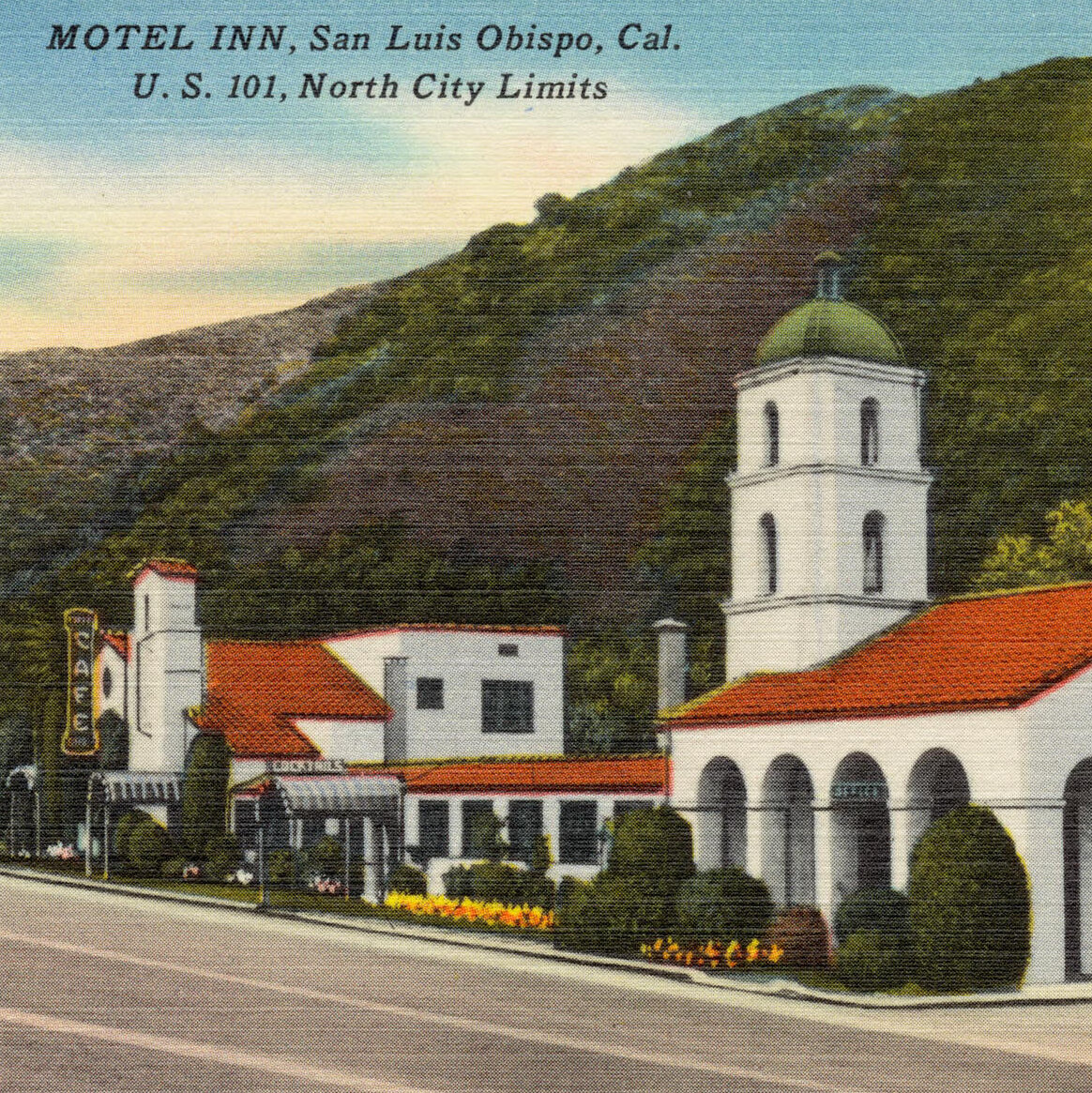
The Milestone Mo-Tel (later renamed the Motel Inn). Image from Almany via The New York Times.
Fulfilling a Need. “At the time,” McCrea recounts, “motorists had limited options. Their dust-covered clothes hardly suited the highbrow standards of most hotels, and parking in cities could be challenging. So many drivers stayed in autocamps, roadside resting places that sometimes offered basics like firewood and communal bathrooms, pitching tents off their running boards and cooking underneath the stars.”
Even the likes of Thomas Edison, Harvey Firestone, and Henry Ford enjoyed such rustic travel. See also “Fat Cats and Vagabounds,” HistoryNet.
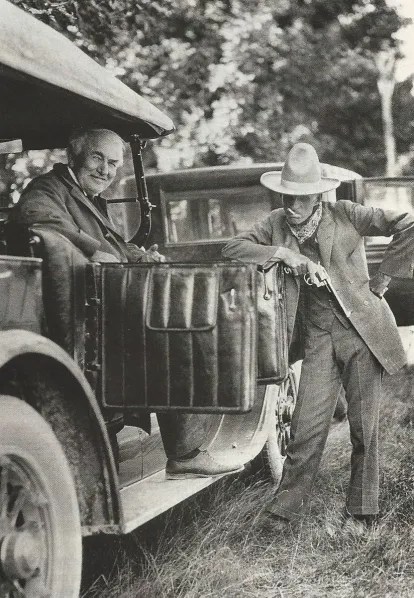
Henry Ford, in cowboy gear, clowns with his pal Thomas Edison in 1923. Image from American History, August 2013.
McCrea describes, “In contrast, the brand-new Milestone featured novel comforts like hot showers and private garages. ‘There were orange trees in front of every door,’ said Thomas Kessler, the executive director of the History Center of San Luis Obispo County, adding, ‘The idea of being able to reach out and pick an orange from out your window—you know, they talk about that in The Grapes of Wrath. It’s such a concept of the American dream.”
The Dream Began with the Model T. Back in 1908, Henry Ford began marketing the Model T, the price of which was within reach of his workers. McCrea notes, “In 1916 President Woodrow Wilson signs the Federal Aid Road Act, laying the groundwork for a novel way to travel: the road trip…. In September, 1925, the Joint Board on Interstate Highways completes the first federal numbered highway system. One of those future highways, Route 66, from Chicago to Santa Monica, Calif., will come to symbolize driving through the Southwest.”
R&T Modest Contribution. It also gave R&T a unique “road” test in 1982; April, of course.
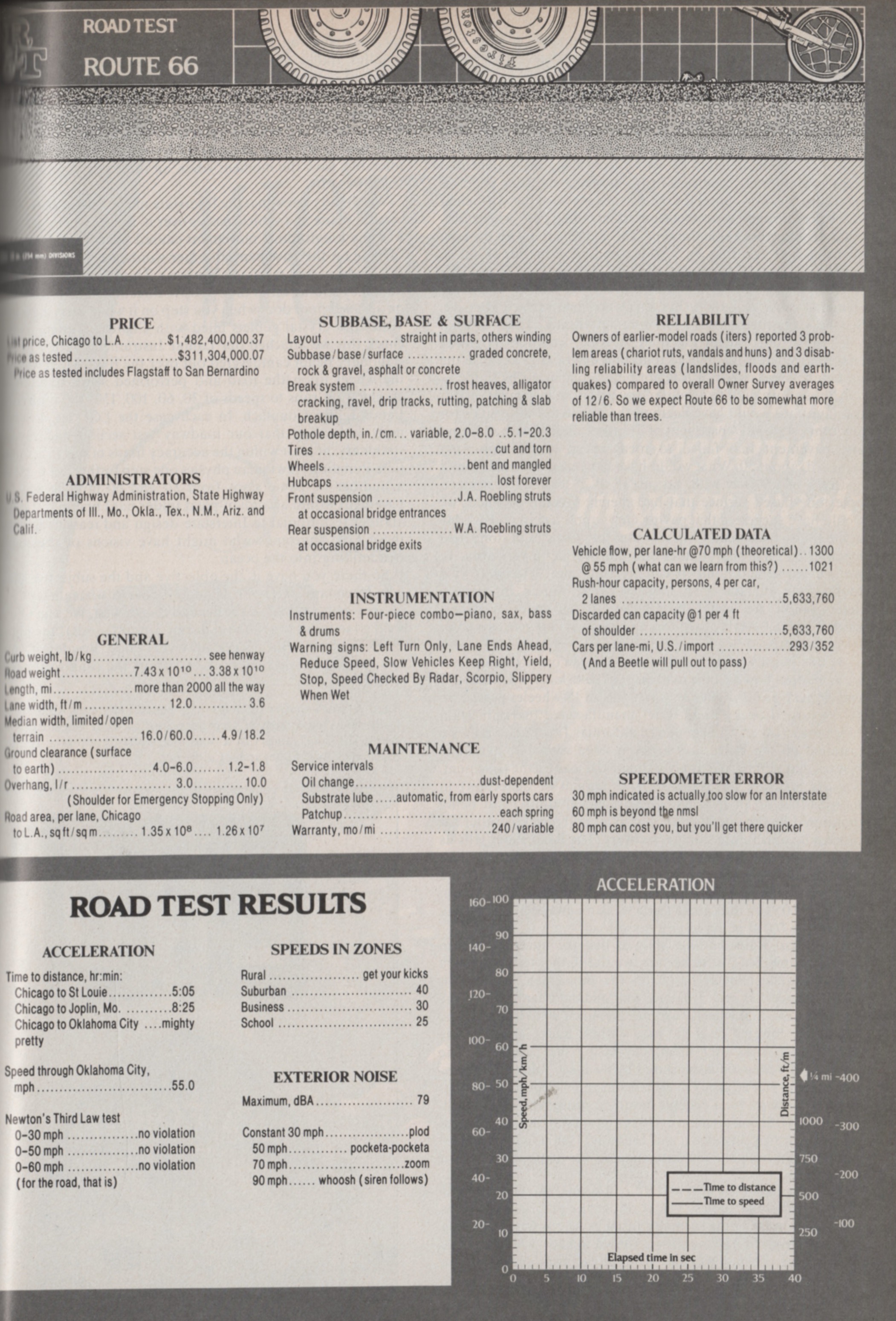
“So there you have it,” we concluded back then, “the objective and subjective reasons why Interstates 10, 15, 40, 44, and, of course, what’s left of Route 66 are worth a ride if you’re headed east or west. We don’t know if we’d go so far as to say it’s (in Bobby Troup’s words) ‘the highway that’s the best.’ But it’s certainly very good. Besides, if you get lost you can always recite the lyrics of the song to determine where you are.”
“Mo-Tel” Etymology. The Milestone Mo-Tel, McCrea describes, “got its name, according to local lore, because the sign painter determined that the words ‘Motor Hotel’ would not fit in letters of the desired size.”
McCrea notes it wasn’t until 1945 that “The portmanteau ‘motel’ is added to Webster’s New International Dictionary, Second Edition.“
Motel Chains. McCrea observes of 1929, “Edgar Lee Torrance opens the original Alamo Plaza in East Waco, Texas. With a facade designed to look like the Alamo, it will become one of the first major motel chains in the country.”
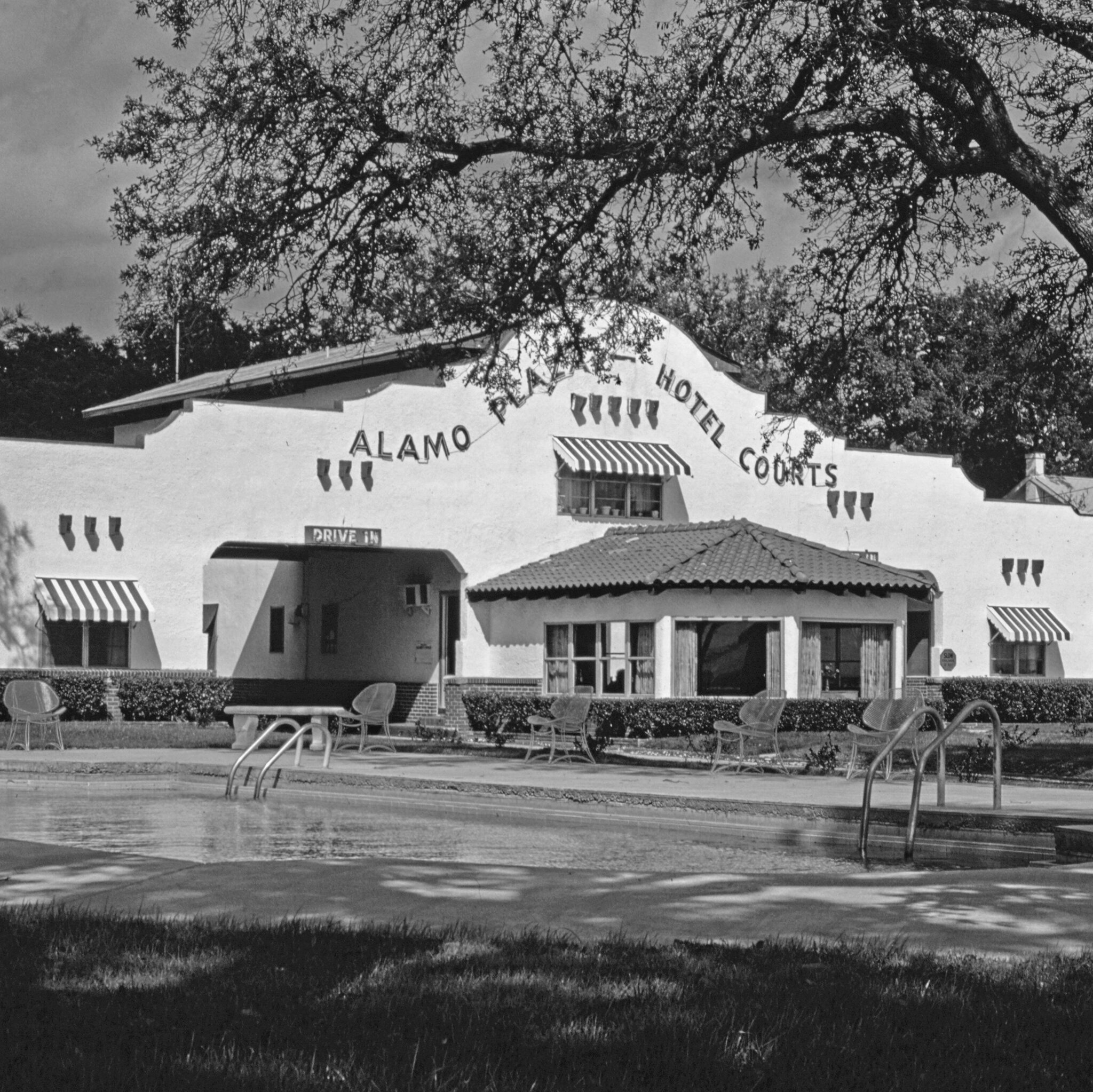
An Alamo Plaza motel in Gulfport, Mississippi. Image from Alamy via The New York Times.
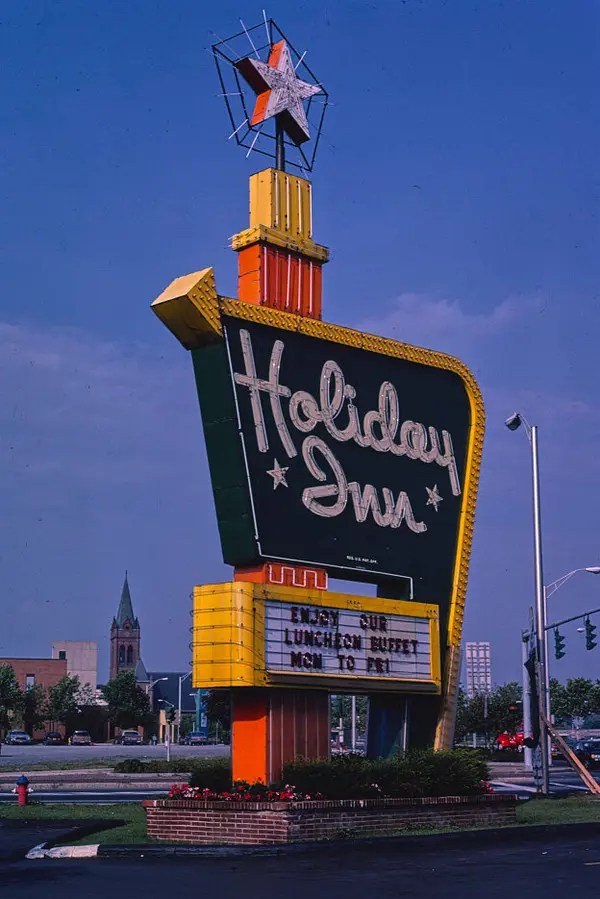
Another Chain of Note. McCrea recounts in 1952: “Kemmons Wilson, an entrepreneur, opens the first Holiday Inn in Memphis after a road trip with his family. A single room costs $4 per night, the equivalent of about $49 today. By 1972, when Time magazine lauds Wilson on its cover as ‘the man with 300,000 beds,’ the chain will have more than 1,400 locations in 50 states and 20 foreign countries or territories.”
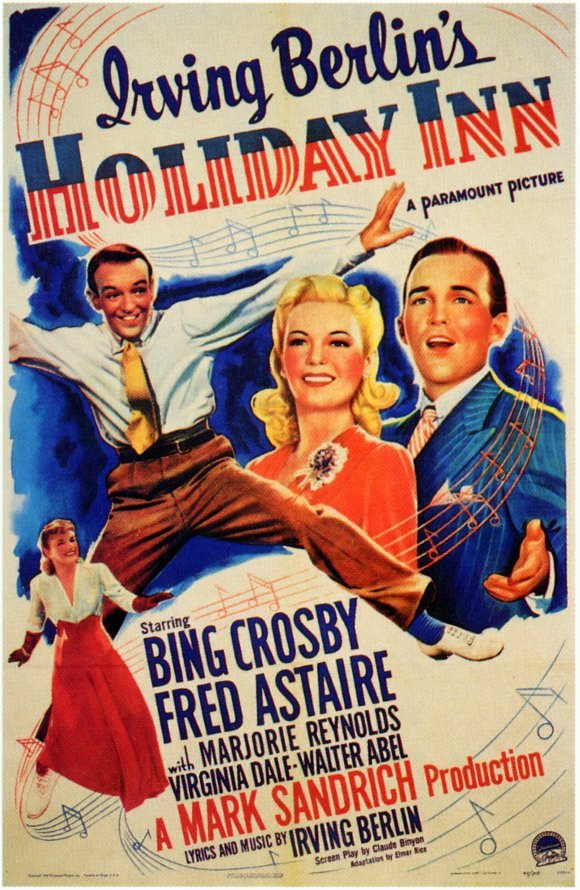
Which reminds me of Irving Berlin’s Holiday Inn, 1942, here at SimanaitisSays: The flick “predates the accommodations with those sparkly ceilings by a decade (Memphis, 1952).”
Central to Civil Rights. McCrea also notes the 1954 opening of the A.G. Gaston Motel in Birmingham, Alabama: “A Black-owned motel catering to Black travelers, it will become a central fixture in the civil rights movement, when Martin Luther King Jr. and Ralph Abernathy use it to organize marches and sit-ins.”
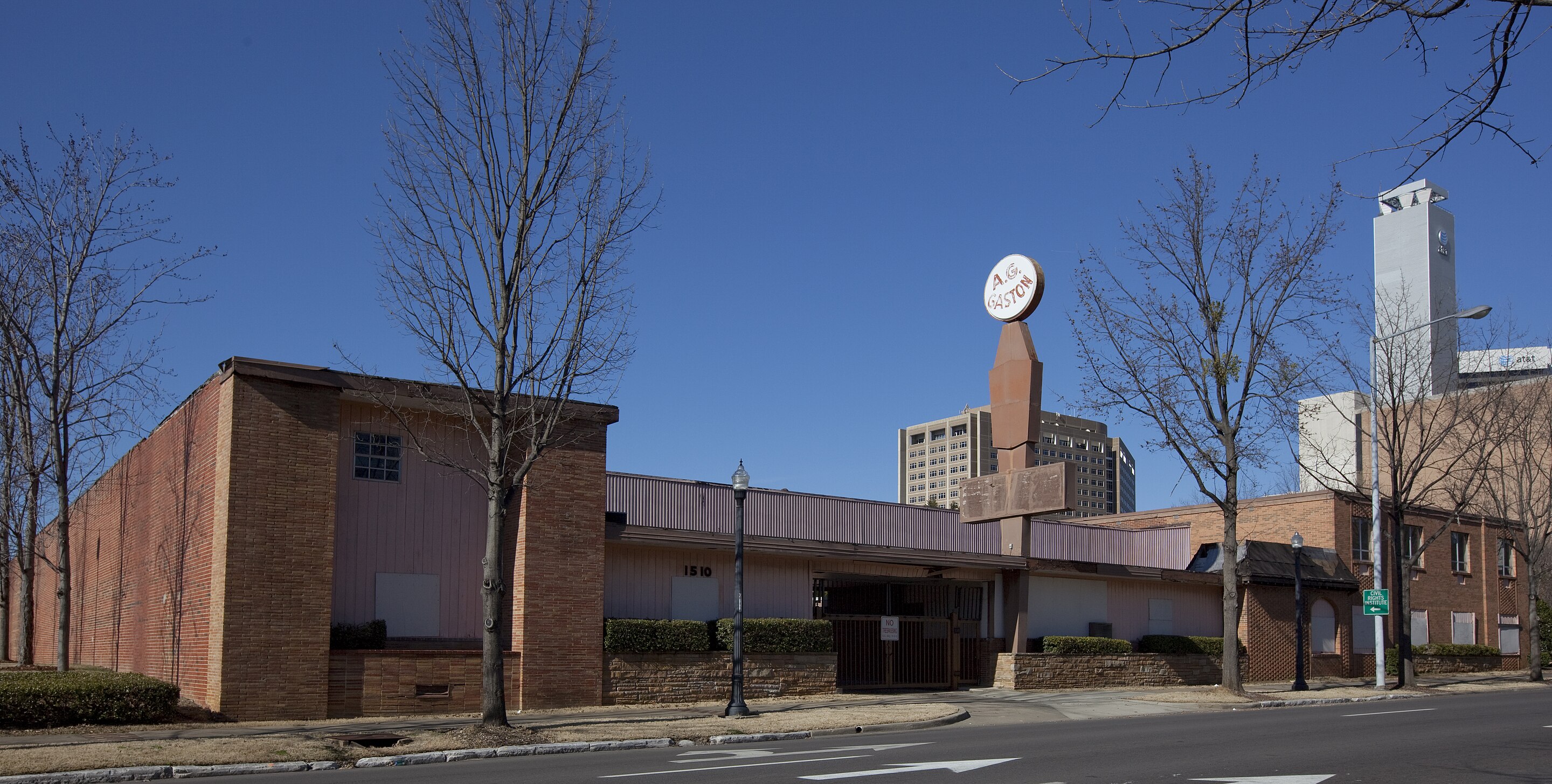
The A.G. Gaston Motel, Birmingham, Alabama. Image by Carol M. Highsmith via Wikipedia.
Wikipedia notes, “Since 2017 it is owned in part by the Birmingham Civil Rights National Monument, the National Park Service, and the City of Birmingham. It has been designated by the National Trust for Historic Preservation as one of America’s National Treasures.”
No doubt the Gaston appeared in The Negro Motorist Green-Book.
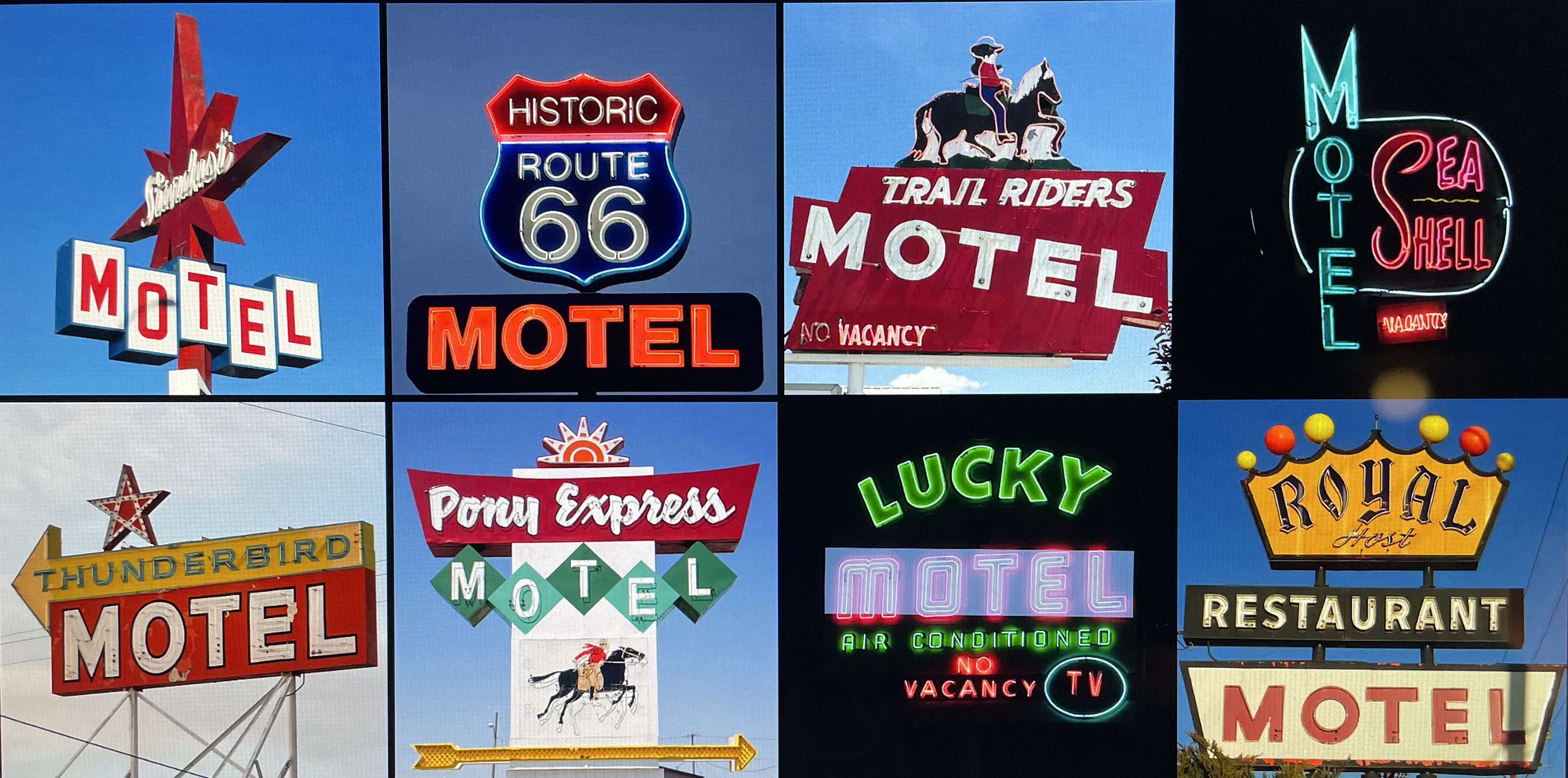
The photographer Carol M. Highsmith documented motel signs throughout all 50 states. Image via The New York Times.
A Roadside Renaissance. McCrea’s article cites Lolita, Psycho, Thelma & Louise, and Shitt’s Creek, the Route 66 Corridor Preservation Program, and the Silver Sands Motel and Beach Bungalows in Greenport, New York. Quite the variety.
Thanks, Megan McCrea, for all these vicarious check-ins. ds
© Dennis Simanaitis, SimanaitisSays.com, 2025
 Simanaitis Says
We live 4 miles below US Route 20 in NYS. Until 20 years ago, I never realized RT 20 went all the way across the country. We had a guest speaker that wrote a book on it. Not sure how many motels, but lots of cabins. many are still here, but most gone. In NY 20 followed the Eire canal in many places. It called the Western Turnpike in the early days.
John
Hello, John,
U.S. 20 is a main drag through my native Cleveland as well. I used to hang out between Cleveland’s East Side and suburban Euclid. Agreed, lots of motels along the way.