
Simanaitis Says
On cars, old, new and future; science & technology; vintage airplanes, computer flight simulation of them; Sherlockiana; our English language; travel; and other stuff
BARONESS ORCZY AND EARLY TV PART 2
YESTERDAY IN PART 1, WE LEARNED how the first superhero novel transformed from rejection status to best seller by way of its stage play counterpart. Pimpernel cinema followed—indeed, in multiple flicks. Today in Part 2, one of the latter earns an asterisk in the history of television.
W2XBS TV. In 1928 Radio Corporation of America established experimental station W2XBS, a low-definition mechanical television scanning system. Wikipedia notes, “Felix the Cat was one of the first images ever broadcast by television when RCA chose a papier-mâché (later Bakelite) Felix doll for an experimental broadcast on W2XBS.”

Felix the Cat by Otto Messmer.
Wikipedia continues, “The doll was chosen for its tonal contrast and its ability to withstand the intense lights needed in early television. It was placed on a rotating phonograph turntable and televised for about two hours each day. The doll remained on the turntable for nearly a decade as RCA fine-tuned the picture’s definition, and converted to electronic television.”
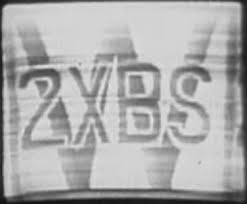
Image from earlytelevision.org.
Wikipedia continues, “As W2XBS broadcasting on ‘Channel 1’ (44–50 MHz), the station scored numerous ‘firsts.’ These included: the first televised Broadway drama (June 1938); the first live news event covered by a mobile unit (a fire in an abandoned building in November 1938); the first live telecast of a presidential speech (Franklin D. Roosevelt opening the 1939 New York World’s Fair); the first live telecasts of college and Major League Baseball (both in 1939), the first telecast of a National Football League game (also in 1939); the first telecast of a National Hockey League game (early 1940); the first broadcast of religious services (Easter Sunday 1940); the first network (multi-city) telecast of a political convention (the 1940 Republican National Convention, held June 24–28 in the Philadelphia Civic Center) seen also on W3XE in Philadelphia (now KYW-TV) and W2XB in Schenectady (now WRGB); and the broadcast of the feature film The Crooked Circle on June 18, 1940.”
The careful reader will note the lack of “first” in The Crooked Circle citation. And there’s a good story to go with it.
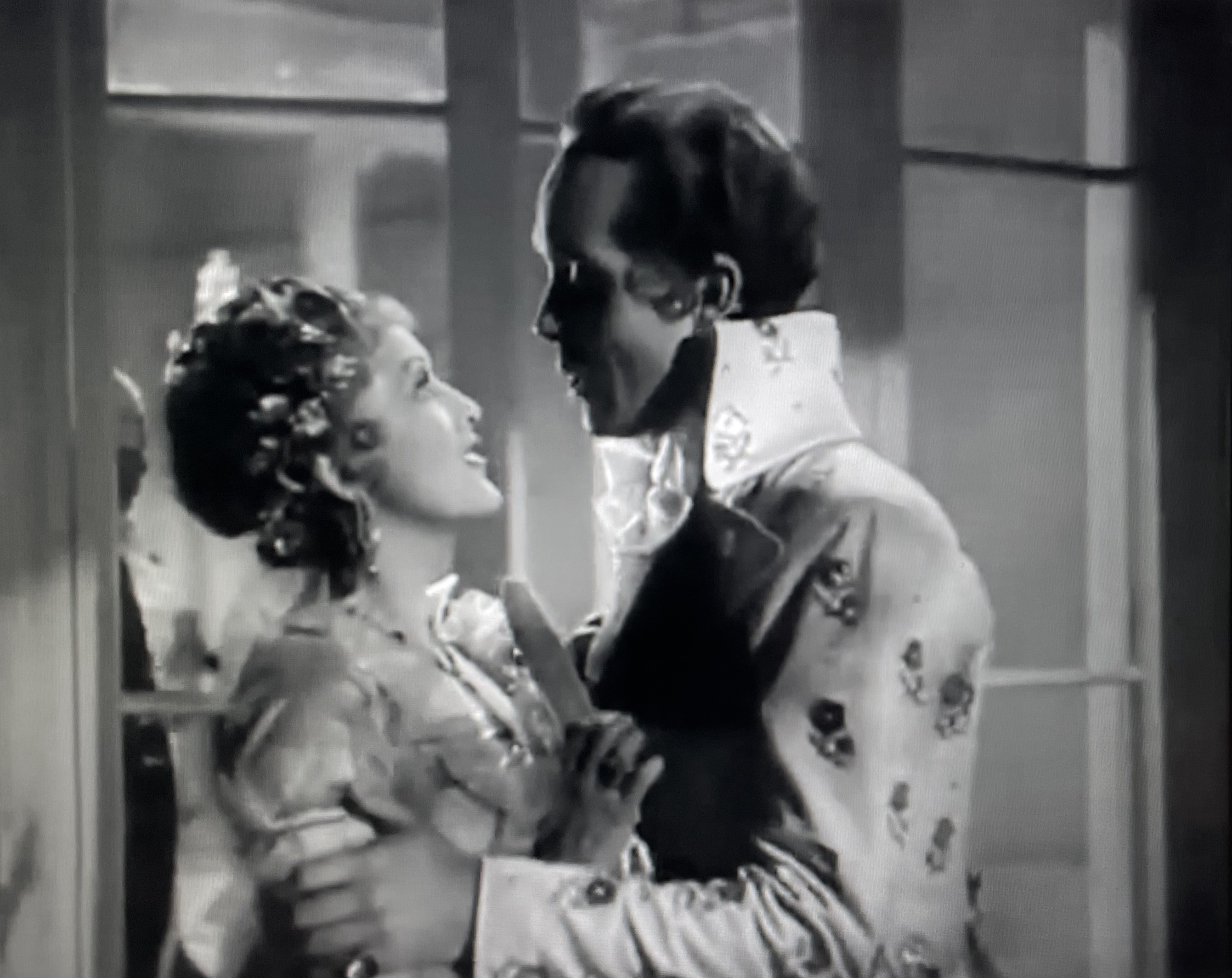
Barry K. Barnes and Sophie Stewart portray Sir Percy and Lady Blakeney in The Return of the Scarlet Image from YouTube.
W2XBS and The Return of the Scarlet Pimpernel. Take our viewing history back to May 31, 1938: The Return of the Scarlet Pimpernel Wikipedia entry cites, “… experimental television station W2XBS (now WNBC) in New York City broadcast the film, the first time that a first-run film was shown on American television. However, the staff projectionist played the last reel out of order, ending the film 20 minutes early. After the incident, NBC could not obtain first-run films for many years.”
Oops. Viewers—at the time, largely RCA and NBC execs—watching a mere 200 TV sets would have wondered about gaps in the plot. But they did get to hear Lady Blakeney’s advice to Sir Percy about Frenchie Chauvelin’s appropriate torture: “Teach him to play cricket.” ds
© Dennis Simanaitis, SimanaitisSays.com, 2025
 Simanaitis Says
Good post, today, Dennis. Brings to mind the book “David E. Fisher Tube: The Invention of Television” by David E. Fisher. This history of the invention of TV (by Philo T Farnsworth and others) and the battles in the industry as it took shape and evolved are a wonderful compliment to your recent posts. (I no longer have the book — I gave it to someone around the turn of century but I thoroughly enjoyed it.)