
Simanaitis Says
On cars, old, new and future; science & technology; vintage airplanes, computer flight simulation of them; Sherlockiana; our English language; travel; and other stuff
THE BARONESS ORCZY AND EARLY TV PART 1
“THEY SEEK HIM HERE, THEY SEEK HIM THERE/ Those Frenchies seek him everywhere.” So it was said of the Baroness Orczy’s Scarlet Pimpernel. I sought him recently—with double success—in recent Turner Classic Movies. What’s more, it piqued my interest to learn about this first of the world’s superheroes. And wouldn’t you know, I even ventured down a rabbit hole of early television. Here, in Parts 1 and 2 today and tomorrow, are tidbits gleaned from my usual Internet sleuthing.
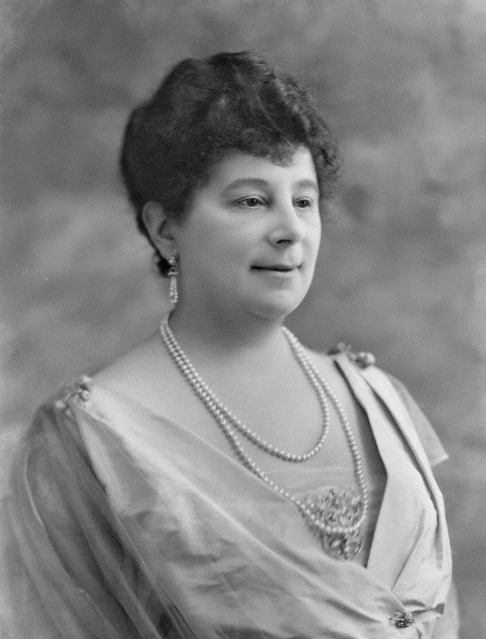
The Baroness Emma Magdalena Rozália Mária Jozefa Borbála Orczy de Orci, 1865–1947, Hungarian-born British novelist and playwright. Image, 1920, from Bassano Ltd—National Portrait Gallery.
The Baroness. Though her family heritage on both sides was rich in Austro-Hungarian nobility, her parents left their estate for Budapest in 1868, fearful of a peasant revolution. They lived in Budapest, Brussels, and Paris before moving to London in 1880; Emma turned 14 there.
Wikipedia describes, “She attended West London School of Art and then the Heatherley School of Fine Art. At art school, she met illustrator Henry George Montagu MacLean Barstow, the son of an English clergyman; they were married at St Marylebone parish church on 7 November 1894.”
Emma supplemented her husband’s earnings as a translator and illustrator. Her first attempts at writing novels were less than successful.
The Scarlet Pimpernel. “In 1903,” Wikipedia continues, “she and her husband wrote The Scarlet Pimpernel, a play based on one of her short stories about an English aristocrat, Sir Percy Blakeney, Bart., who rescued French aristocrats from the French Revolution.” Her novelization of the play was rejected by 12 publishers.
Fortunately, though, the play ran for four years in London, toured to find popularity throughout Britain, and was translated and produced in other countries. This, in turn, generated sales for the novel.
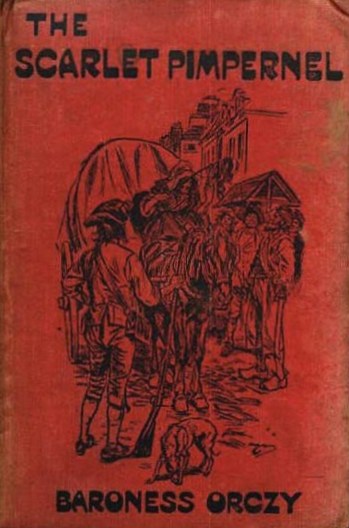
1908 edition.
The First Superhero. Wikipedia observes, “Introducing the notion of a ‘hero with a secret identity‘ into popular culture, the Scarlet Pimpernel exhibited characteristics that would become superhero conventions, including the penchant for disguise, use of a signature weapon (sword), ability to out-think and outwit his adversaries, and a calling card (he leaves behind a scarlet pimpernel at each of his interventions). By drawing attention to his alter ego, Blakeney hides behind his public face as a slow-thinking, foppish playboy, and he also establishes a network of supporters, The League of the Scarlet Pimpernel, who aid his endeavours.”

Scarlet Pimpernel, Lysimachia arvensis, a low-growing annual plant of brightly colored flowers. Image by Alvesgaspar.
The Two Movies. Turner Classic Movies recently featured The Scarlet Pimpernel, 1934, and an inevitable The Return of the Scarlet Pimpernel, 1937. Both were British productions, the first with a particularly strong cast: Leslie Howard as Blakeney/Pimpernel, Merle Oberon as Lady Blakeney, Raymond Massey as bad-Frenchie Chauvelin, and Nigel Bruce (later to be Rathbone’s Dr. Watson) portraying The Prince of Wales (essentially as comedy relief). Alexander Korda produced both flicks.
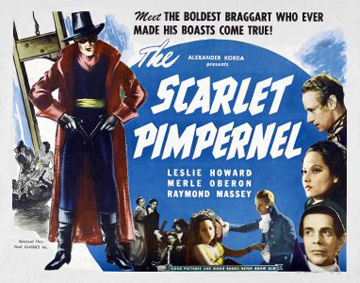
Above, the first flick; below, the second shown in DVD format.
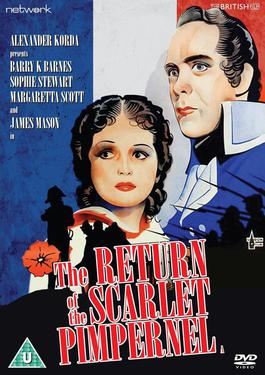
The Return of the Scarlet Pimpernel retained main characters from the first flick as well as adding others and plot elements from Orczy’s Eldorado sequel.
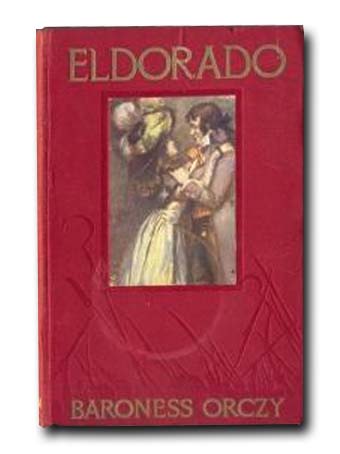
The 1913 First Edition.
The Return flick’s cast is less renowned; the only name familiar to me is James Mason as Jean Tallien. Here and there I believe film clips of crowd scenes and guillotine are recycled from the original Pimpernel.
In the second flick, Wikipedia notes, “the Reign of Terror is in full sway under Robespierre, who sends former allies and friends to the guillotine.” At one point, Mason/Tallien rouses the convention by denouncing Robespierre as “the new Cromwell.”
Well, that’s warning enough for me.
Tomorrow in Part 2, we’ll examine the Pimpernel/TV connection (an infamous one). ds
© Dennis Simanaitis, SimanaitisSays.com, 2025
 Simanaitis Says