
Simanaitis Says
On cars, old, new and future; science & technology; vintage airplanes, computer flight simulation of them; Sherlockiana; our English language; travel; and other stuff
THE ATLANTIC’S UNFINISHED REVOLUTION PART 2
YESTERDAY, WE FOCUSED ON THE COVER of The Atlantic’s “Unfinished Revolution.” Today in Part 2, we continue with this magazine’s much appreciated (and much needed) civics lessons.

Mad King George. Indeed, I expected Rich Atkin’s essay on George III to have the king conversing incoherently with trees (or so I recall from high school history). But matters were rather more complex.
Atkins recounts, “His life still had almost 40 years to run after the American Revolution, a span replete with glory—including Napoleon’s crushing defeat at Waterloo—but also abject misery.”
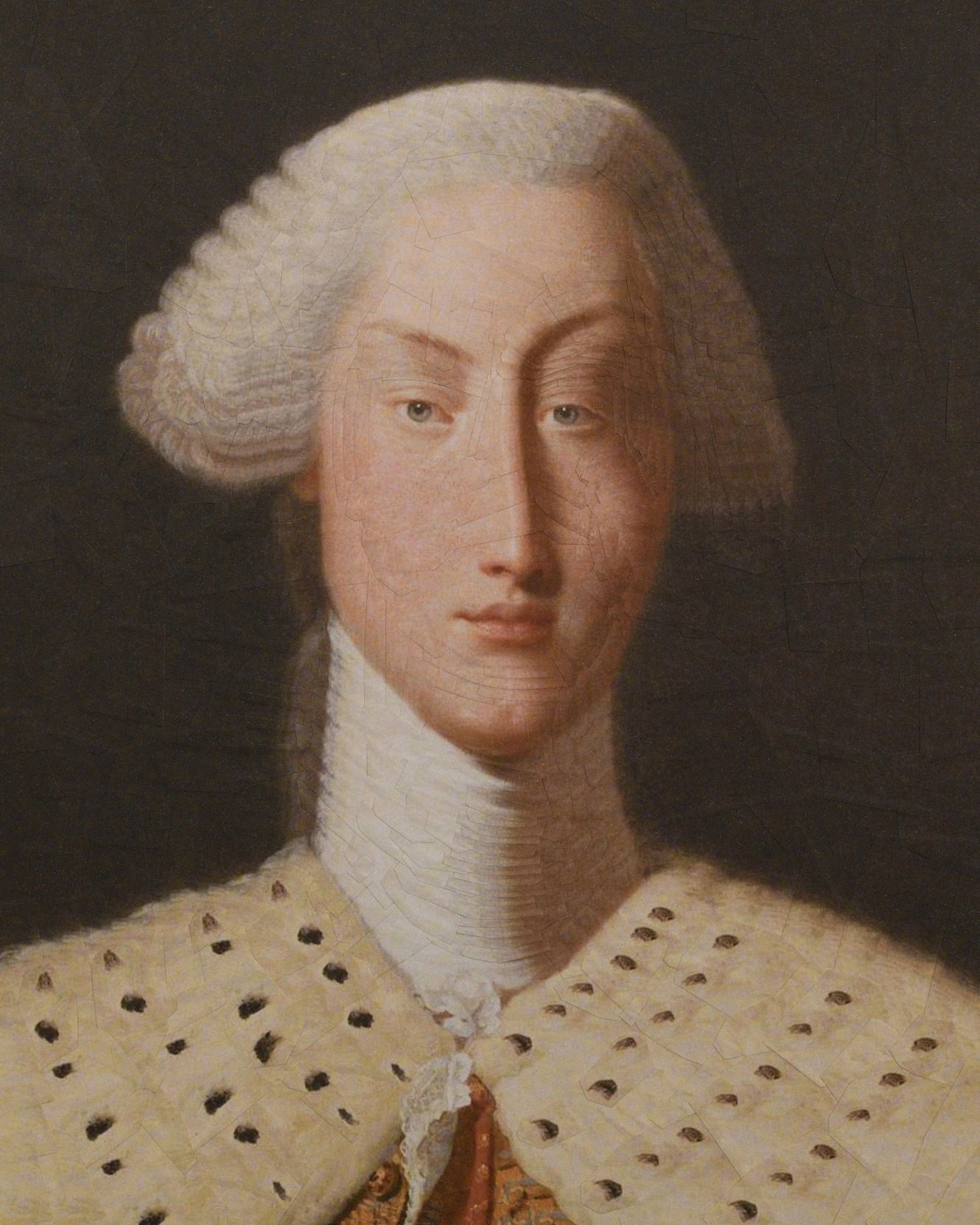
George III (George William Frederick), 1738–1820, King of Great Britain and Ireland, 1780–1820. He remains the longest-lived and longest-reigning king in English history. (Elizabeth II holds this title for all English monarchs.) Illustration by Lola Dupre. Source: Piemags/Almany via The Atlantic.
“As a young king,” Atkins relates, “George had been briefly afflicted by a mysterious illness once thought to be porphyria, a rare blood disorder that can ravage the nervous system. In October 1788, when he was 50, the malady returned with intensity, perhaps, one physician speculated, as a result of reading King Lear. Over the course of several months, he grew erratic, delirious, and ‘so ungovernable,’ an aide wrote, ‘that recourse was had to the strait waistcoat: His legs were tied, & he was secured down across his Breast.’ A phalanx of doctors also used such dubious treatments as leeches applied to the temples and blistering of the head and feet.”
Agg! The poor man.
“The attacks abruptly ended,” Atkins recounts, “but returned with redoubled fury for several months in 1804, to again be treated with the straitjacket.”
George III, In Retrospect. “In truth,” Atkins observes, “the public opening by the British Crown of George III’s papers in the past decade reveals him to be a far more complex, accomplished, and even estimable figure than the prevailing caricature. He could also be ruthless, self-righteous, and so mulish that he threatened abdication unless his government maintained a hard line against American independence.”
There were better times, sorta: Atkins recounts, “Commissioned by grateful American colonists following the 1766 repeal [gee, do you remember a repeal?] of the detested Stamp Act—intended by Parliament to raise money from the lightly taxed colonials [nor do I remember this ‘lightly taxed’ part: A typical colonial paid 1/50th of a home-Brit’s Crown tax]—the august figure lasted less than a decade. In July 1776, inflamed by a public reading of the newly adopted Declaration of Independence, Continental Army soldiers and other vandals broke through the iron fence surrounding the statue, lassoed George with ropes, and tugged him to the ground—‘levelled with ye dust,’ as a witness reported.”
From Tribute to Bullets. Atkins continues, “The mob decapitated the King and whacked off his nose. Musket balls punctured his torso, and looters scraped away the 10 ounces of gold leaf that coated rider and horse. The severed head, initially impaled on a spike outside a tavern, would be recovered by a British Army officer and shipped to England to illustrate the ‘Disposition of the Ungrateful people.’ Rebels carted the headless rider and mount in fragments to Connecticut, where Patriot women melted the lead, ladled it into molds, and soon sent George Washington’s army 42,088 bullets.”

An illustration from 1914/Chambers Publishing Company, via boweryboyshistory.com.
“As for that equestrian statue of George on Bowling Green,” Atkins reports: “The whereabouts of the head are unknown—it disappeared shortly after it was shipped to England. All that remains of the rider and horse are a few fragments, including the mount’s tail, displayed by museums in New York and Philadelphia, plus a few unearthed musket balls with the same chemical signature as the original lead statue.”
Yeah, that showed ’em; 42,088 of ’em. I look forward to continue reading The Unfinished Revolution. ds
© Dennis Simanaitis, SimanaitisSays.com, 2025
 Simanaitis Says