
Simanaitis Says
On cars, old, new and future; science & technology; vintage airplanes, computer flight simulation of them; Sherlockiana; our English language; travel; and other stuff
THE ATLANTIC’S UNFINISHED REVOLUTION PART 1
IF EVER OUR COUNTRY NEEDED LESSONS IN CIVICS, it’s as we approach its 250th anniversary. Authoritarian Trump, retro-Jim-Crow States, and an illbalanced Supreme Court are working hard to gerrymander the Democratic Party out of existence. It’s increasingly difficult to keep up with “Trump’s Autocracy Playbook.” He has recently called for “a Refuge System That Would Favor White People.” The survival of our representative democracy has become a matter of discussion.

In the midst of all this, thank God for The Atlantic magazine: Beginning with its November 2025 issue, “The Unfinished Revolution” discusses “Defiance” and “Conflict,” continuing through October 9th’s “Independence,” October 10th’s “Memory,” and October 14th’s “Crisis.”
I found compelling reading in the first of these, and I suspect the series will continue as Civics Lessons Seemingly Forgotten. Following here, in Parts 1 and 2 today and tomorrow, are tidbits gleaned from The Atlantic, November 2025; other tidbits are likely to follow.
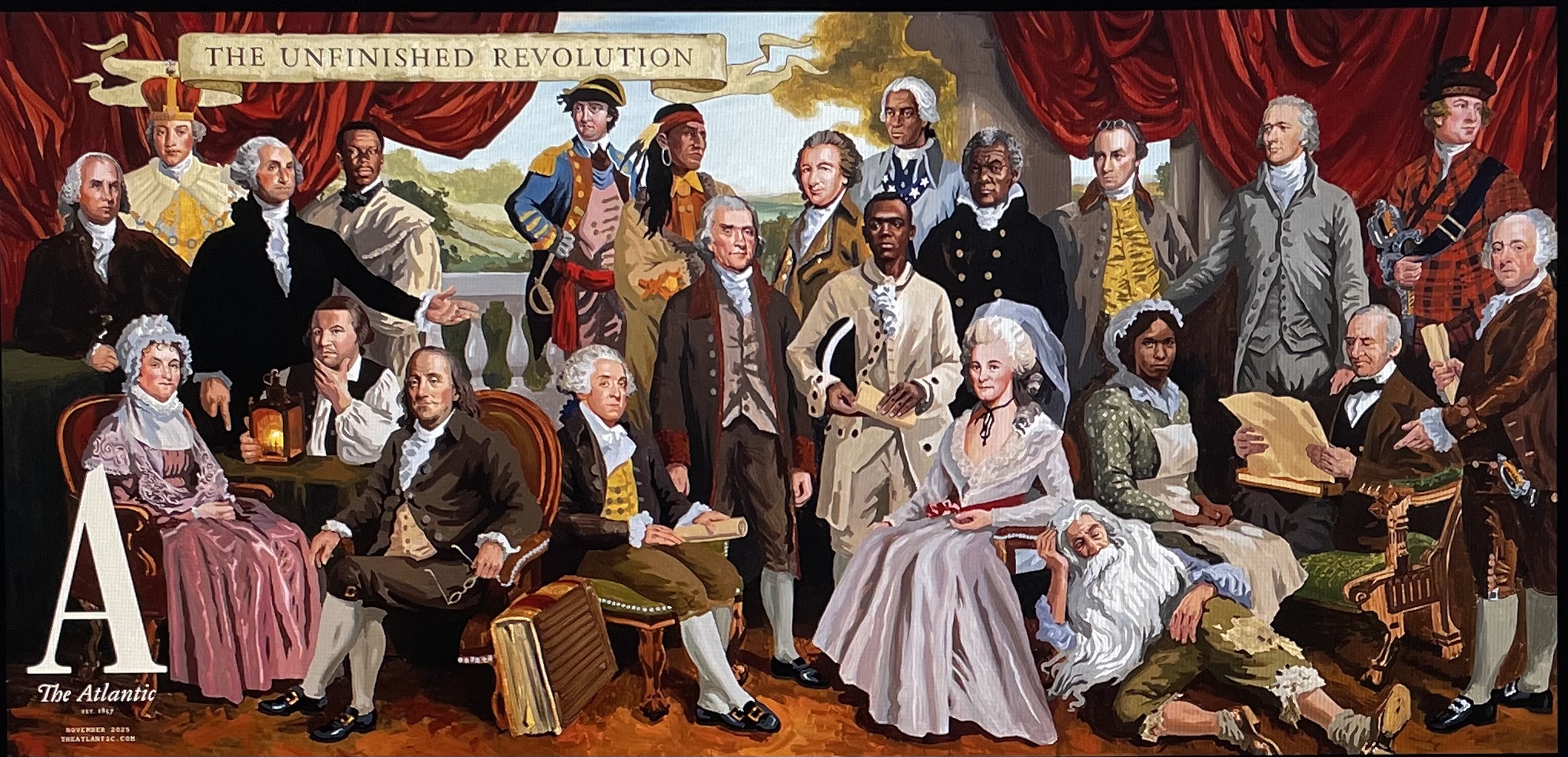
The Atlantic, November 2025 (a three-page foldout) by artist Joe McKendry.
Some Familiar, Others Not; Only One Fictional. Directly below (and also found here) is a key to the featured personages. Peter Mendelsund recounts, “Some of the figures will be instantly recognizable—Benjamin Franklin, Thomas Jefferson—and some of the depictions are based on historical portraiture. The image of Paul Revere, for instance, is an homage to John Singleton Copley’s painting of the silversmith and Patriot, which hangs in Boston’s Museum of Fine Arts.”
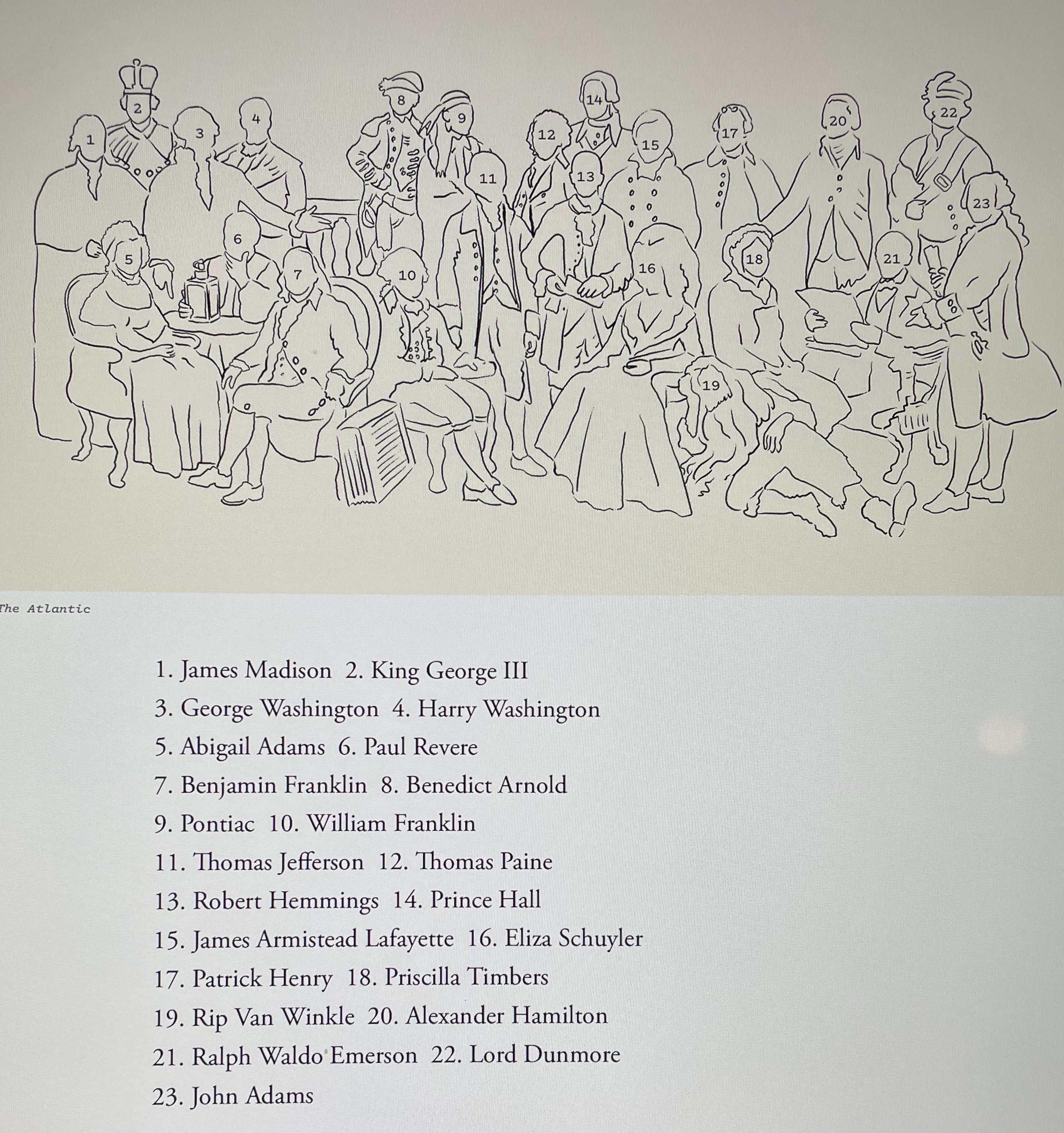
“Other figures will be less familiar,” Mendelsund notes. “Standing beside George Washington is a man he enslaved. Like thousands of enslaved people, Harry Washington abandoned the plantation when the war began and fought for Great Britain. No image of this Washington survives. For such figures, McKendry imagined their visages, taking cues from written descriptions when possible.”
Mendelsund observes, “No occasion would have brought all of these people together in the same room (certainly, it is difficult to imagine King George in the same room as the other George). They represent different sides of the war, of the period’s political ferment, and of early American society itself. One figure existed only in a work of fiction. [Can you guess which one?] But together they convey the ambition of this special issue: to capture the Revolutionary era in all of its complexity, contradictions, and ingenuity.”
Another Cover Of Note. Not to disparage either by comparison, but I found this Atlantic’s cover as fascinating as the album cover for the Beatle’s Sgt. Peppers Lonely Hearts Club Band.
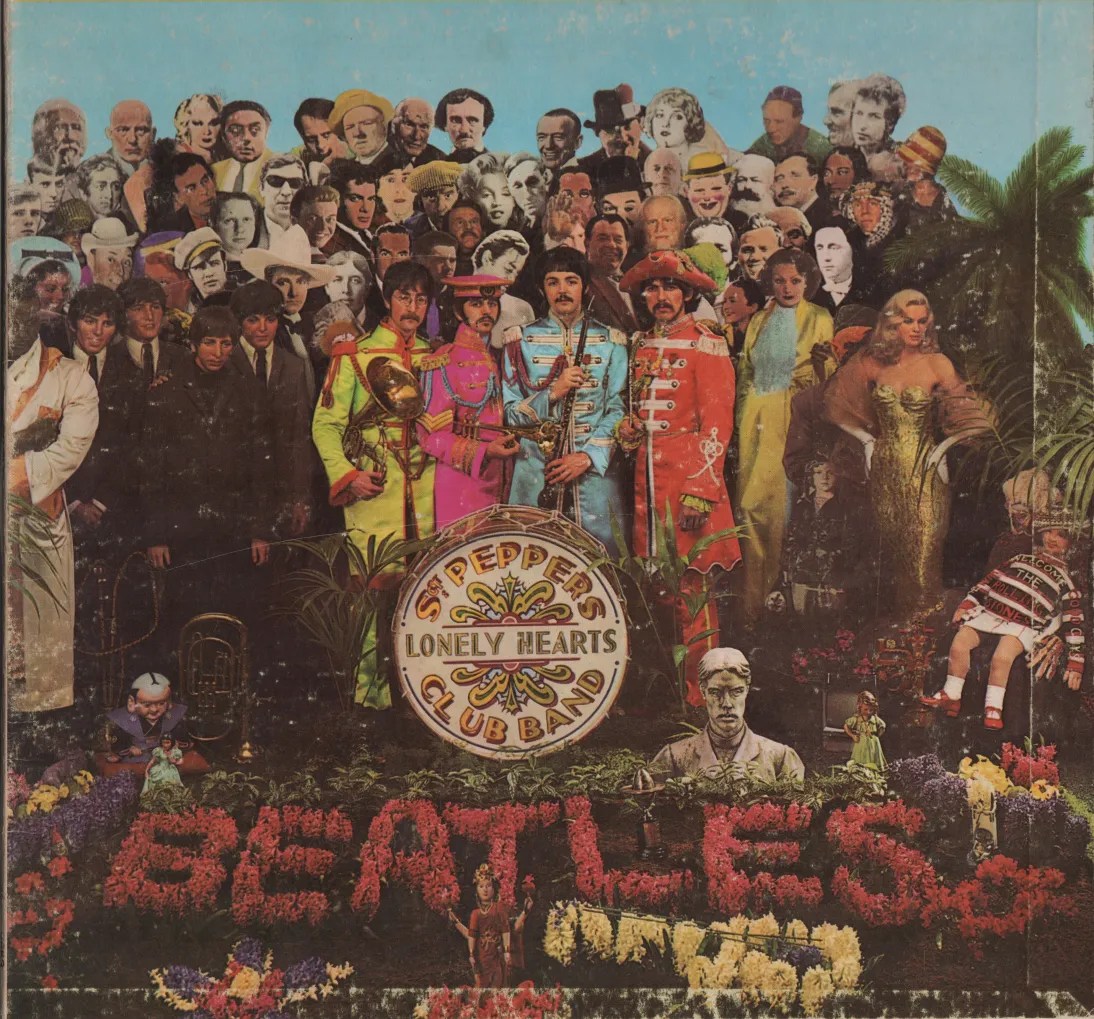
This album cover by Jann Haworth and Peter Blake won the 1967 Grammy Award for Best Album Cover, Graphic Arts. Image and key from Wikipedia.
Curiously, the cover of The Atlantic contains people as notorious—dare I say as nut case?—as Aleister Crowley.
Tomorrow in Part 2, we’ll attempt to counter the King George III image of his conversing with trees. But only sorta. ds
© Dennis Simanaitis, SimanaitisSays.com, 2025
 Simanaitis Says