
Simanaitis Says
On cars, old, new and future; science & technology; vintage airplanes, computer flight simulation of them; Sherlockiana; our English language; travel; and other stuff
DEMOCRACIES—MEASURING RISK
“WHY DEMOCRACIES DIE AND WHAT TO DO NEXT” is the thought-provoking title of Rachel Beatty Riedl’s review in AAAS Science, September 25, 2025, of Susan C. Stokes’ book The Backsliders. Indeed, the term “backslider” and a paraphrase of Riedl’s title were cited some two years ago in Daniel Ziblatt’s closing presentation at the UBS Center for Economics in Society at the University of Zurich on November 13, 2023.
Ziblatt’s assessment of Trump 1.0 carried the title “How Democracies Die—And What Can Be Done To Save Them.” And Riedl’s review of Stoke’s book continues with relevance today in light of an even more disturbing Trump 2.0. Here are tidbits gleaned from both.
Zurich, November 13, 2023. Daniel Ziblatt, professor of political science at Harvard, recounted, “You have to keep your eye on the prize. You have to understand the nature of the threat. If you do this then you realize that democracy is at stake.”
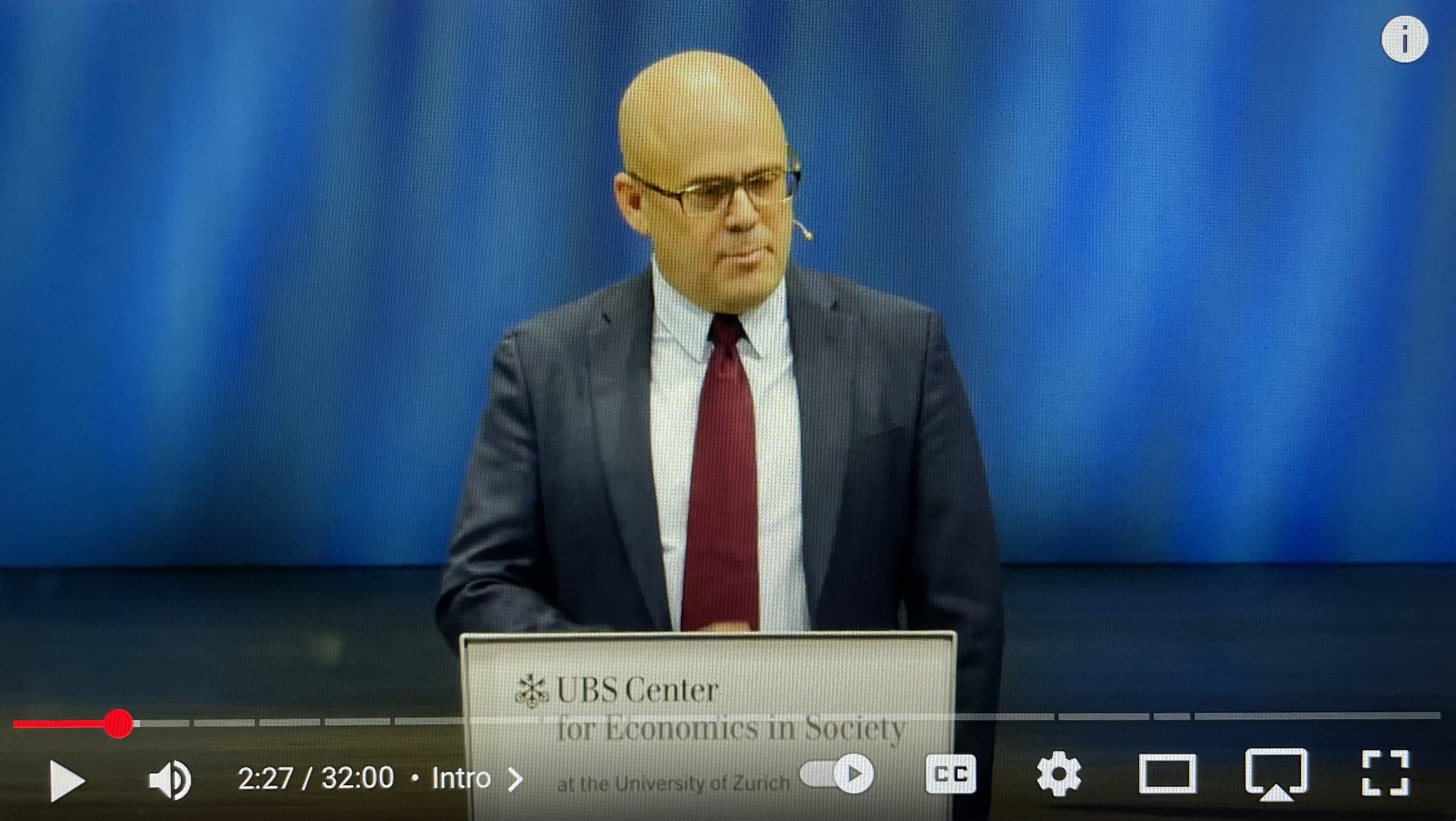
Professor Daniel Ziblatt’s Zurich presentation.
Ziblatt’s presentation is well worth its YouTube’s 32 minutes. Indeed, Chapter annotations identify thirteen points, ranging from “Rock Solid findings” and “The First Major Challenge,” to “The U.S. Constitution” and “Beyond the reach of majorities,” concluding with “The U.S. is an outlier” and “What can be done.”
Rock Solid Findings. Ziblatt cited the Freedom House Index of democracies, scored on a 0-100 scale: “A decade ago, the United States received a score of 94 out of 100, which put it on par with Great Britain, Canada, and Germany…. Today the U.S.’s Freedom House score is 83, which is tied with Romania, Mongolia, and two points below Argentina.”
Challenges. “This may come as shocking news,” Ziblatt observed, “but when you have government efforts to restrict voting rights, when you have violent threats against election workers, election officials, and when you have a president who’s unwilling to leave office after an election, you reach a point where Freedom House gives you a score lower than Argentina.”
“Political scientists,” Ziblatt noted, “call this Democratic Backsliding.”
The U.S. Constitution. “Now to be clear,” Ziblatt stressed, “the Constitution is a remarkable document to be admired and defended. But there are certain features of the U.S. Constitution that amplify the political power of political minorities.”
“And when that political minority is authoritarian,” he noted, “this can be dangerous.”
Countermajoritarian Features. Among countermajoritarian features, Ziblatt included “The Electoral College allows the loser of the popular vote to win the presidency, a severly malapportioned Senate provides equal representation to all states regardless of population, the Senate filibuster which allows a partisan minority to permanently block legislation backed by the majority,… and a powerful Supreme Court with extensive review powers and lifetime tenure for justices which allows justices appointed in one generation to thwart the majority will of today.”
What To Do? Not surprisingly, Ziblatt noted that each of these characteristics makes the U.S. an outlier among the world’s democracies. He concluded with, “I think there are things that can be done. I’m really a believer in the wonderful line from the early 20th century American reformer Jane Adams who said ‘The cure for the ills of democracy is more democracy.’ ”
His suggestions include corrections to the countermajoritarian features already noted. Ziblatt also stressed the importance of non-fractured coalitions. “It’s hard work,” he said, “to keep these democratic coalitions together…. But I think here of the 1950s/1960s song that inspired the civil rights movement, of which the key line is ‘Keep your eye on the prize.’ ”

Riedl’s Review of Stoke’s The Backsliders. Rachel Beatty Riedl begins, “Combining an urgent analysis with masterful breadth, Susan Stokes’s book The Backsliders focuses on the contemporary challenge of global democratic erosion, a notable and expanding trend. The key signifier of backsliding is that elected leaders erode democracy gradually, through some use of existing systems, while maintaining a level of public support.”
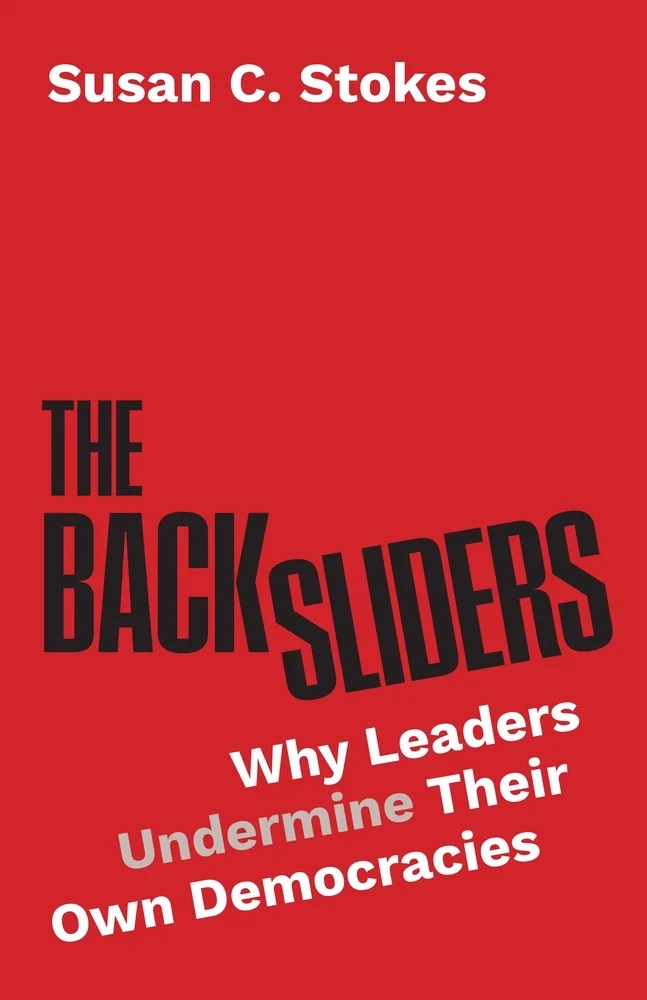
The Backsliders: Why Leaders Undermine Their Own Democracies, by Susan C. Stokes, Princeton University Press, 2025.
Reviewer Riedl writes, “In part 1, Stokes describes the significance of democratic erosion, the mechanics of how it works, and lays out a strong argument for its root causes…. In part 2, she adds substantial new material to scholarly debates and to our general understanding of democratic erosion. Here, Stokes offers an important corrective to the idea that democratic erosion is occurring unabated: Backsliding has met resistance, some of it has been successful, and there are lessons to be learned from it.”
Institutional Hardball. As an example, Riedl cites Stokes raising “the moral and practical dilemma of institutional hardball. Should pro-democracy political strategies further transgress rules and norms to pursue necessary policy and governance tasks? Despite the potential for hardball tactics to cause further degradation and destabilization of democracy, Stokes acknowledges that they may, at times, be beneficial. The key, she suggests, is in developing a clear narrative and explanation for such approaches that connect back to the ultimate goals of democracy defense and functioning governance.”
Resistance and Repair. “While these dilemmas may seem daunting,” Riedl says, “and the policy goals may appear insurmountable, Stokes demonstrates that the tasks are inseparable. Resistance and repair, she argues, must boldly address the global-to-localized structural foundations of democratic erosion to ensure a democratic future.”
It’s interesting to see Ziblatt’s 2023 comments evolving into Riedl’s 2025 resistance and repair: California’s Proposition 50 being an example of necessary hardball. ds
© Dennis Simanaitis, SimanaitisSays.com, 2025
 Simanaitis Says
The No on 50 effort, heavily funded by the usual suspect billionaire/s, ignores the reason for the Prop 50 which is to balance Congress against the theft of five House seats by Texas Republicans at the “request” of trump. Texas permanently gerrymandered thousands of voters out of representation to gain more Republican seats while the California plan is temporary, with a return to a citizen apportionment panel afterwards. Typically the No group makes it all an argument ad hominem, trying to gin up hatred of Gov. Newsom, a favorite target.