
Simanaitis Says
On cars, old, new and future; science & technology; vintage airplanes, computer flight simulation of them; Sherlockiana; our English language; travel; and other stuff
HEY, DUDE—CATCH THAT WAVE!
DORANY PINEDA AND JENNIFER MCDERMOTT report that “In LA Port, Bobbing Blue Floats Are Turning Wave Power into Clean Energy,” AP News, September 8, 2025.
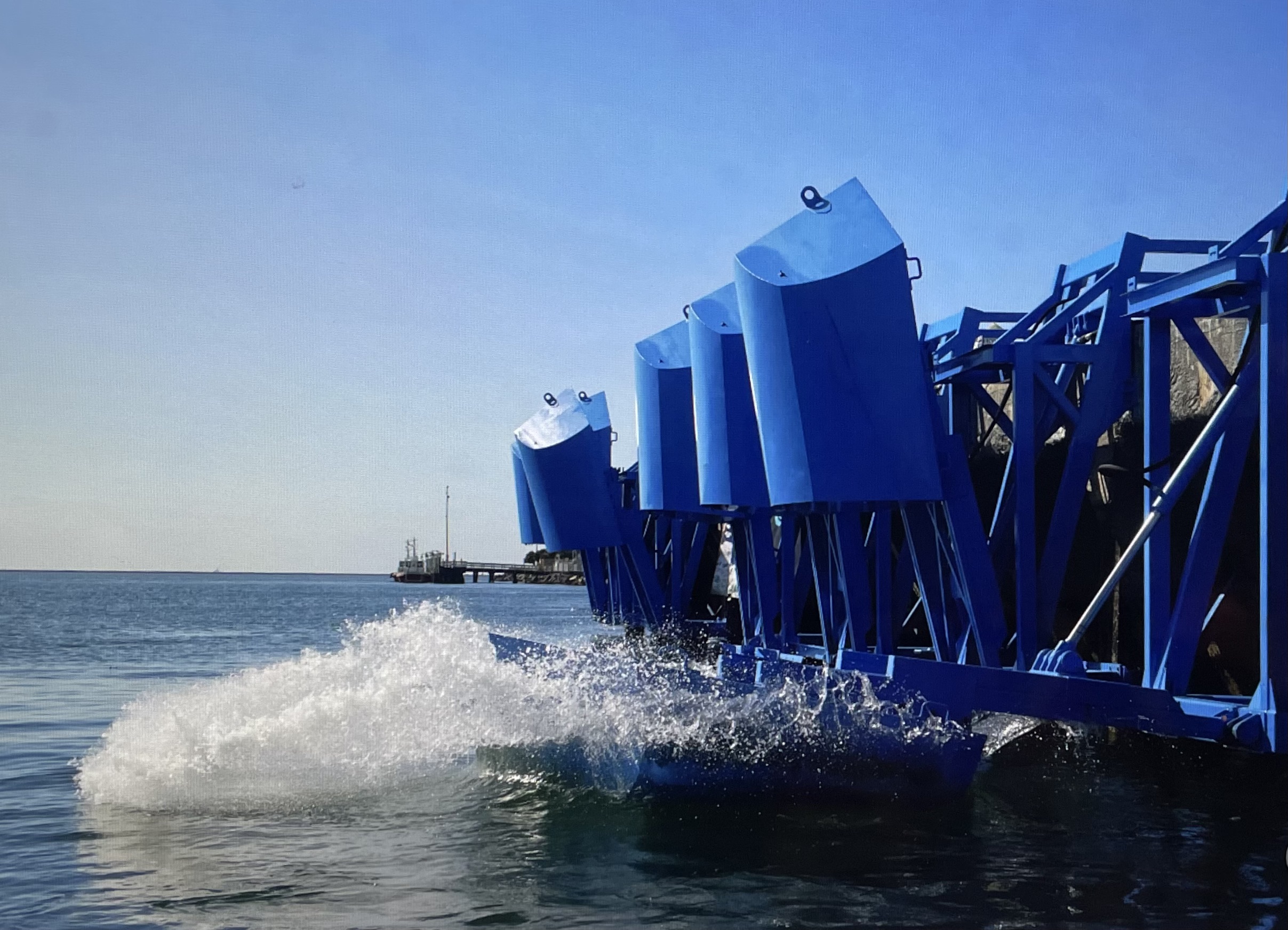
Prototype floats react to wave action and ultimately generate electrical energy. See them in action by accessing AP News.
Here are tidbits gleaned from this report and other Internet sleuthing.
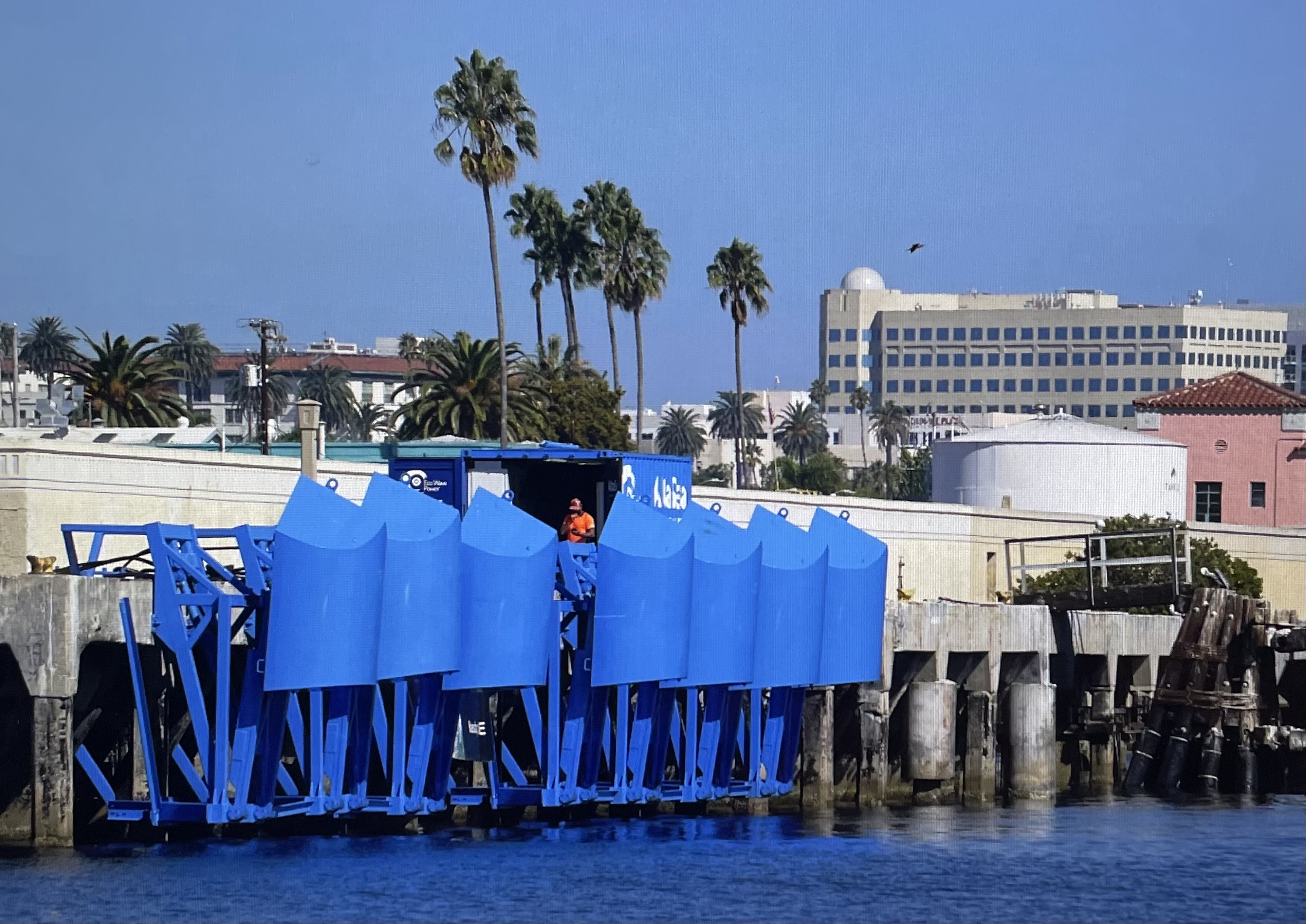
Prototype Evaluation. Pineda and McDermott describe, “This is the nation’s first onshore wave energy site, and on Tuesday, Eco Wave Power will officially unveil the pilot installation and begin operating. The pilot will generate just a small amount of electricity that can be used locally, but the larger goal is to prove the technology works well enough to expand along 8 miles of breakwater at the port — enough to power up to 60,000 homes.”
Great Potential. They note, “Wave energy is an emerging industry that’s largely still focused on research, demonstration and pilot projects. But the potential is big. Waves off the coasts of the United States generate enough power to meet roughly one-third of America’s energy needs, according to Department of Energy estimates.”
“Even if only a portion is harnessed,” Pineda and McDermott continue, “wave energy technologies could help meet the growing demand for electricity being driven in large part by the artificial intelligence race. Wave energy could also complement wind and solar to stabilize the electric grid.”
A Subsidized Pilot Project. Their AP News report cites, “Eco Wave Power installed its technology at the port’s AltaSea ocean institute, a nonprofit that is working in part to advance ocean-based solutions to climate change. Half this pilot project was funded by the oil and gas company Shell. California Gov. Gavin Newsom signed a bill in 2023 to promote wave energy development in the state. Eco Wave Power currently has a two-year license to operate the pilot station at the Port of Los Angeles.”
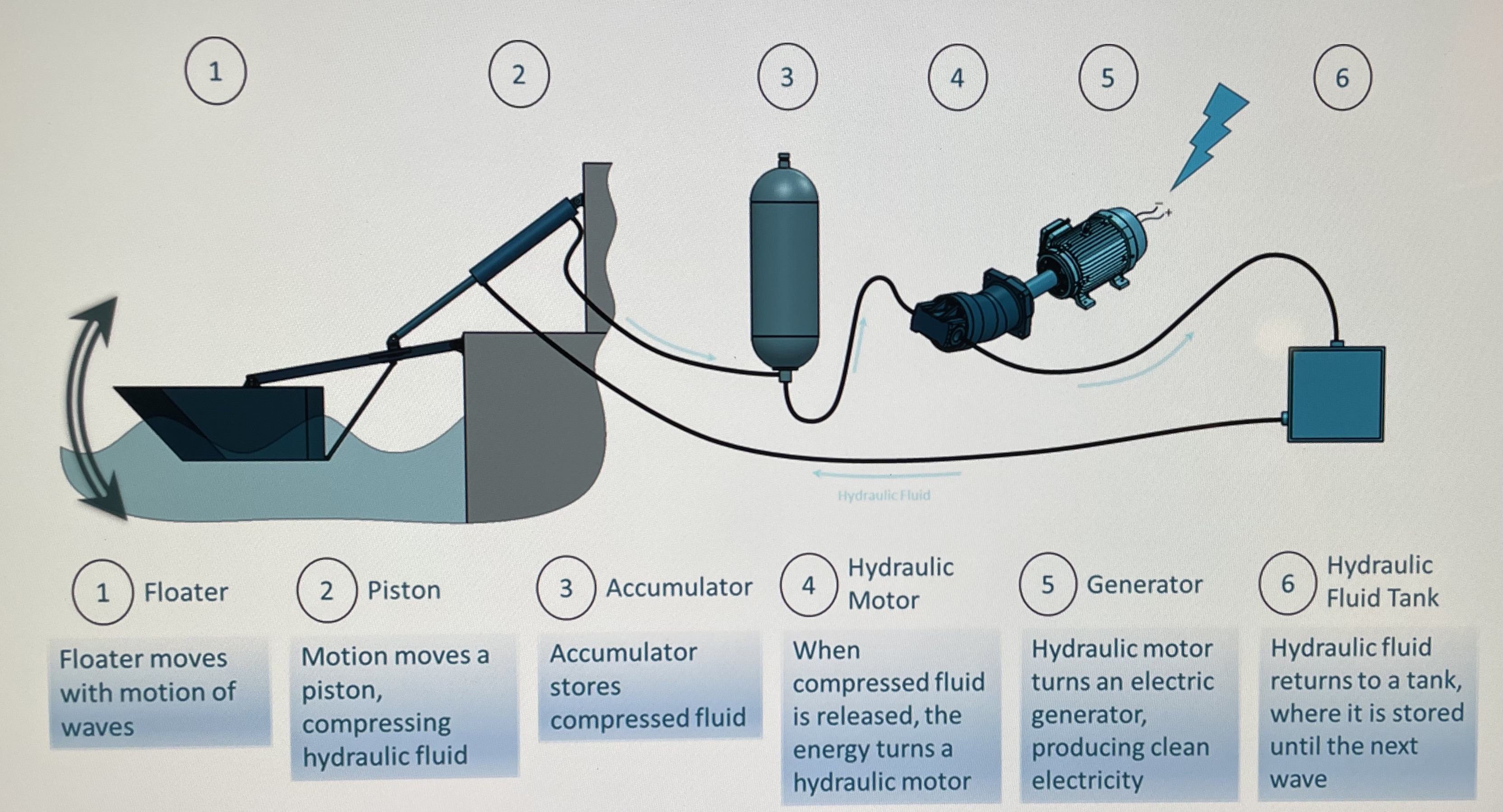
Wave Action to Electricity: “As the small blue floats bob up and down, each pushes a cylinder that sends a biodegradable hydraulic fluid through a system of pipes into storage tanks. Pressure in the tanks builds up. That pressure turns a motor, which turns a generator, producing clean electricity.”
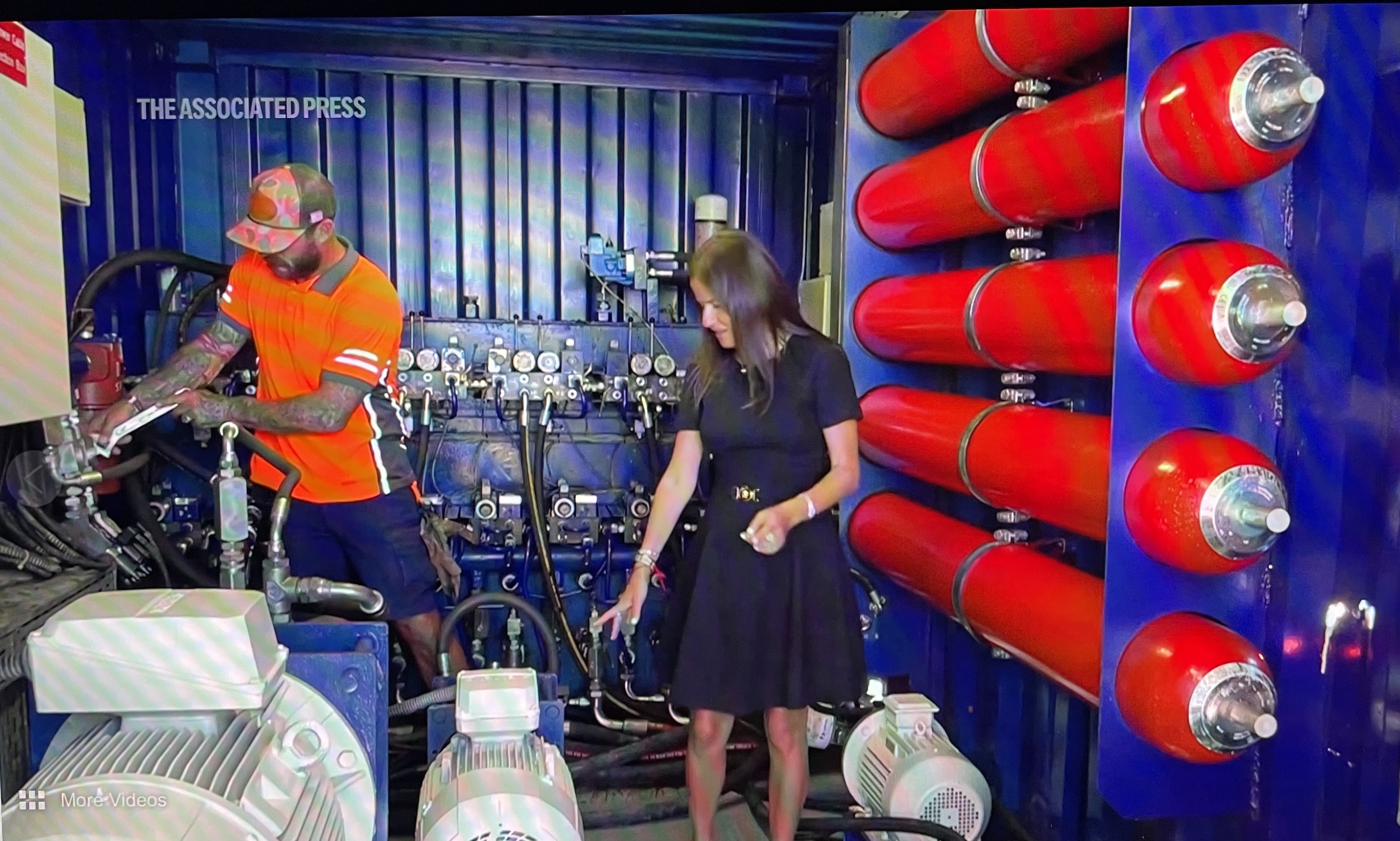
Potential Sites Along the U.S. Coastline. The AP News reporters cite Eco Wave Power co-founder and CEO Inna Braverman: “She said the technology is easy to adopt because unlike other renewables, this system doesn’t require any land acquisition, it involves repurposing existing structures rather than altering coastlines and it can generate electricity around the clock.”
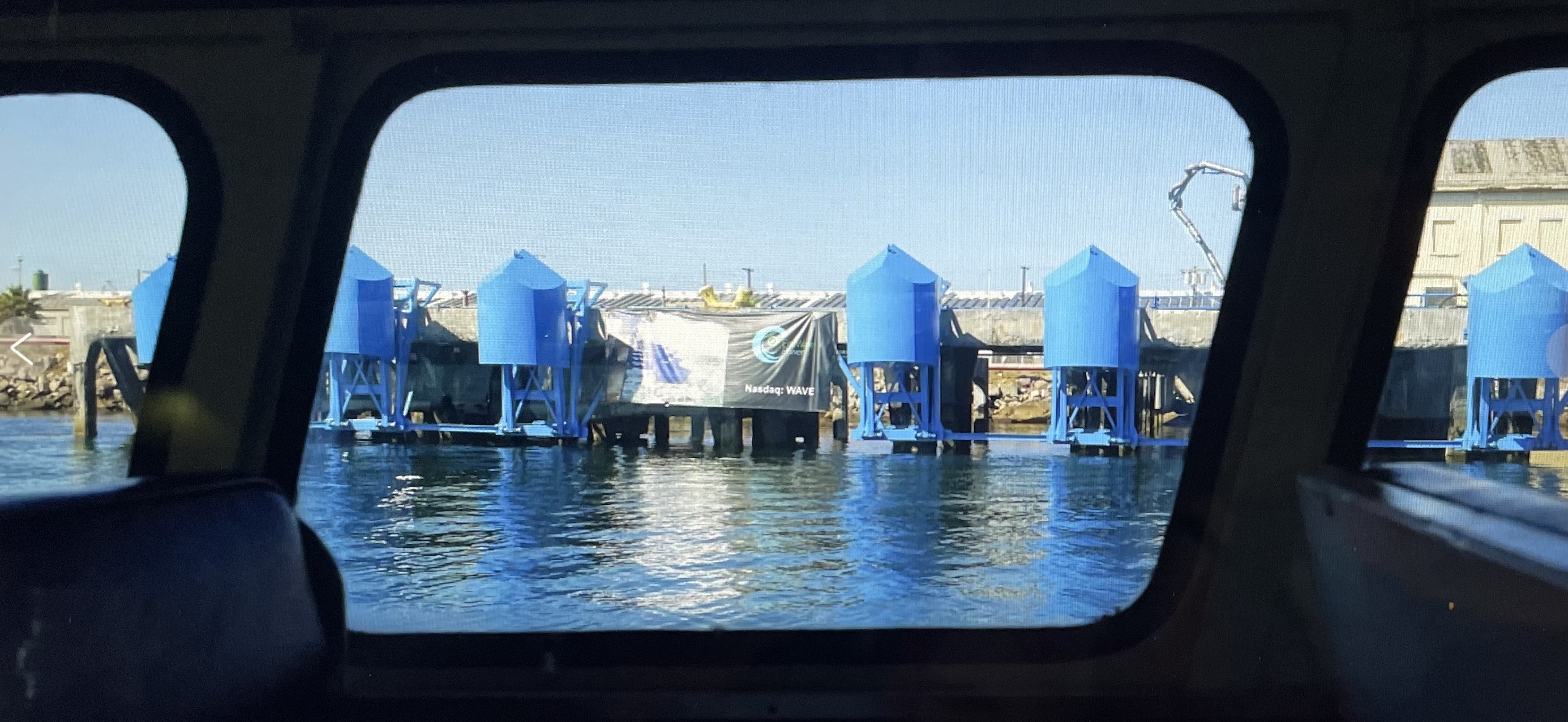
AP News continues, “Eco Wave Power is also working on projects abroad, including Taiwan, India and Portugal, and operating a grid-connected project in Israel. In New Jersey, where legislation is advancing to promote ocean energy development in the state, the company is looking for a site to install a pilot project, with help from elected officials.”
Wikipedia Searches. Wikipedia includes a “List of Wave Power Stations.” It notes, “Wave farms are classified into eight types based on the technology used: surface-following attenuator, point absorber, oscillating wave surge converter, oscillating water column, overtopping/terminator, submerged pressure differential, bulge wave device, and rotating mass.” One of them noted, a surface attenuator, is Eco Wave Power’s Gibraltar Wave Farm.
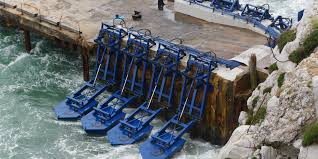
A portion of the Gibraltar Wave Farm. Image by Clairemartin96 from Wikipedia.
Wikipedia also includes a “List of Wave Power Projects,” in which several of these technologies are described. What with this being a nascent industry, there’s also a list of “Defunct, Decommissioned, or Company No Longer Trading” (not atypical of developing technology).
Filling in Gaps for Wind and Solar. AP News’ Pineda and McDermott cite Rémi Gruet, CEO of the trade association Ocean Energy Europe: “It’s the first U.S. project on breakwater, so it opens up the possibility to do that on multiple other ports in the U.S. It’s a moment where wave power is starting to turn from innovation projects to actual pilot projects that go toward industrialization and commercialization.”
What an elegant means of filling in the renewable gaps of wind and solar (and, perhaps, of political ignorance). ds
© Dennis Simanaitis, SimanaitisSays.com, 2025
 Simanaitis Says