
Simanaitis Says
On cars, old, new and future; science & technology; vintage airplanes, computer flight simulation of them; Sherlockiana; our English language; travel; and other stuff
COUZINET 10—A SHORT TALE, A LENGTHY PROJECT
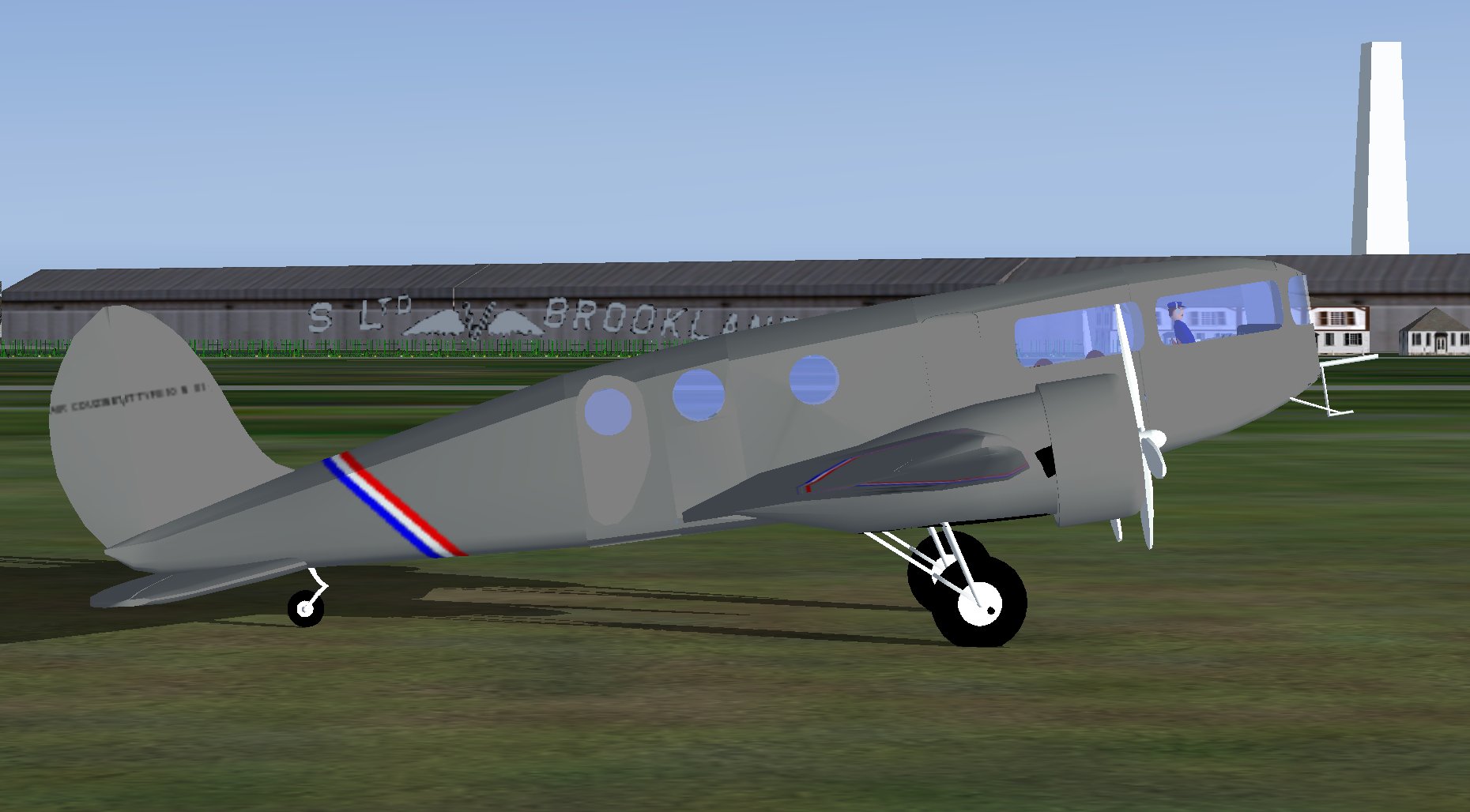
I BEGAN MY JUST COMPLETED GMAX PROJECT, THE COUZINET 10, on January 13, 2025. Fabrication of other aircraft (for example, the Consolidated PBY Catalina, the Kalilin K-12) and reporting about them here at SimanaitisSays involved maybe a month each of this wonderful time-gobbling hobby.
So why the delay with my Couzinet 10 rendering? Well, note when the project began and observe that other than routine matters here at SimanaitisSays have gobbled up my time since then.
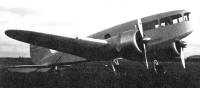
The Couzinet 10. This and following images from Уголок неба, Corner of the Sky.
Here are tidbits about the Couzinet 10, including my research of the craft and its GMax rendering.
Couzinet 10 Sources. I learned of the Couzinet 10 from Enzo Angelucci’s fine World Encyclopedia of Civil Aircraft, in which it is mentioned in “Minor French aircraft: 1934–1937.”

World Encyclopedia of Civil Aircraft, by Enzo Angelucci, English-language edition supervised by John Stroud, Crown Publishers, 1982.
Angelucci cites, “Another twin-engine type which appeared in 1937 was built by René Couzinet to compete in the Istres-Damascus-Paris race, to be held in August 1937, but met with bad luck. On 16 August, thirteen days after its first flight, the aircraft came to grief during a test flight and could not be repaired in time for the race.”
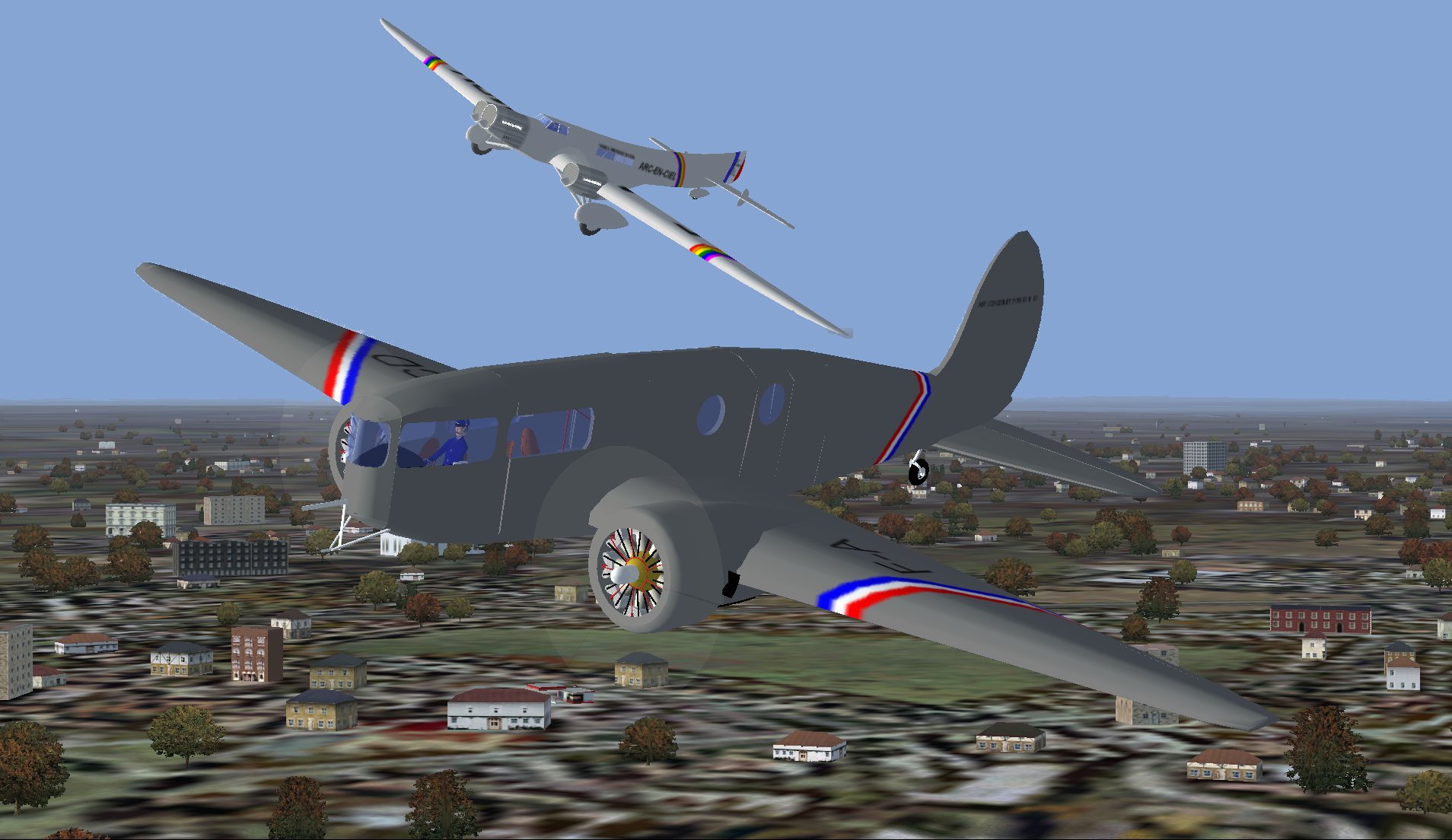
Here are my two GMax Couzinets, the 10 in the foreground, the Arc-en-Ciel aft.
My subsequent Googling of the Couzinet 10 yielded mixed results. Wikipedia’s Couzinet 10 entry mentions it ever so briefly, then focuses on the earlier three-engine Arc-en-Ciel (another project of mine). A fine Couzinet 10 three-view plus specs (en français) appear on rclibrary.co.uk.

Also, the Russian cite Уголок неба, Corner of the Sky, offered a history of the craft (in Russian; thanks, Google Translate) and several photos.

From Уголок неба: “On 10 August 1937, the prototype of the twin-engine mail plane Air Couzinet 10 took off from Bordeaux airfield and headed for Etampes… The Couzinet crew was presented by Air France to participate in the Istres-Damascus-Paris race, which was to take place in a few days.”
“There was very little time,” Уголок неба recounts, “and in order not to waste it, the crew combined the flight to Etampes with flight tests that day and were very attentive to the reactions of the aircraft. Suddenly, strong vibrations began, putting the aircraft into a heavy and dangerous pitch. The control column in [pilot René] Dubourdieu’s hands began to dance like crazy. Landing was necessary, and the pilot showed all his skill, landing successfully in a beet field. The cause of the malfunction was discovered quite quickly. It was a break in the elevator flettner rod, which led to the aircraft being uncontrollable in pitch.”

Уголок неба continues, “Following the accident, the crew was returned to regular service and the Air Couzinet 10 was modified at the request of Didier Daurat, formerly the head of Aéropostale’s operations; Daurat was then in charge of the Air Bleu airmail network, which operated small Caudron Simouns.”
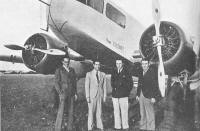
Уголок неба concludes, “Daurat believed that the Air Couzinet 10 would be an excellent complement to small single-engine aircraft due to its fuselage capabilities and performance characteristics, which included a relatively high cruising speed of 330 km/h…. The aircraft was eventually sent to the Villacoublay test centre, where it was scrapped at the start of World War II.”

A handsome craft. Indeed, I didn’t mind staring at it, on and off, for months. ds
© Dennis Simanaitis, SimanaitisSays.com, 2025
 Simanaitis Says