
Simanaitis Says
On cars, old, new and future; science & technology; vintage airplanes, computer flight simulation of them; Sherlockiana; our English language; travel; and other stuff
F1 FUELS 1989–1991: HOW GREEN THEY WEREN’T PART 1
FORMULA 1 FUELS WILL BE GREENER FOR 2026, with 100-percent sustainability based on the fuels already powering FIA Formula 2 and Formula 3 Championships. For more details, see Lawrence Barretto’s “Explained: More Electrical Power, More Overtaking Aids, More Sustainable—The Inside Scoop on the 2026 Power Unit Regulations,” back in June 6, 2024.
When There Were F1 Rocket Fuels: 1989-1991. Here today, let’s take a retrospect look at perhaps the most exotic F1 fuels, those of some 35 years ago. Conveniently enough, I can quote directly from my presentation at the SAE International Motorsports Conference, Concord, North Carolina, December 2–4, 2008. Following are tidbits gleaned from this presentation, together with several of the nifty slides accompanying it (in Comic Sans, you’ll note).


Originally Three Vignettes. In the interest of brevity—and contrary to my original title and abstract—I limit myself to three vignettes, the Cummins Indy diesel, “Gasogeno” entries of the mid-Thirties Mille Miglia, and Rocket Fuels of Formula 1, 1989-1991. (These first two, note, already recycled here at SimanaitisSays.)
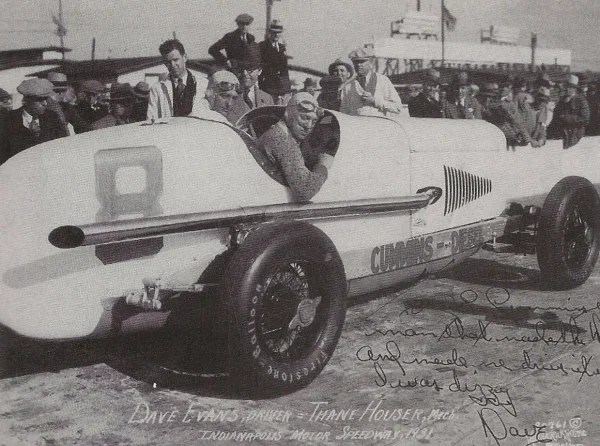
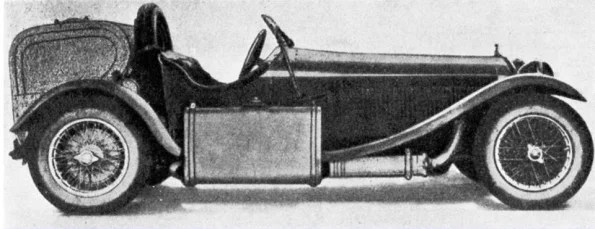
Above, the Cummins qualified midpack at the 1931 Indy, finished 13th, and then was driven back to Columbus on the fuel left in the tank. Image from The Diesel Odyssey of Clessie Cummins. Below, the Ferraguti/Agostini gasogeno Alfa at the 1933 Mille Miglia finished well beyond the time limit of ordinary entrants (its modest power called for three attempts to ascend one of the hills between Perugia and Gubbio). Image from my SAE presentation.
F1 Rocket Fuels of 1989–1991. This is my most current, my least politically correct and, alas, my most incomplete topic. I confess that I am not in a position to tell you precisely what these fuels were. For various corporate, environmental and political reasons, even those who were willing to share information about these fuels were reluctant to be quoted on the matter.
Nevertheless, with fairly high confidence, and without betraying anyone, I can identify several things that these fuels were not.
No Nazi Heritage. First, they were not derived from secret World War II fuels for Nazi V1 or V2 weaponry. The German V-1 buzz bomb, the Fieseler Fi 103, got its name from its Argus pulsejet operating at around 50 Hz. And, in fact, the buzz bomb’s fuel was low-grade gasoline.
By contrast, the V-2 was an actual sub-orbital rocket craft. Its fuel, though, was also rather straightforward, liquid oxygen encouraging combustion of a 75/25 mixture of ethanol and water. Indeed, its propellant turbo pumps had rather more exotic power: These used hydrogen peroxide, H2O2, reacted with potassium permanganate to form steam and drive the turbines compressing the fuel and oxidizer.
Hydrogen peroxide has had applications in other rocket motors as well as submarine torpedoes. In fact, for a while there, I thought I might have stumbled on something. Then I read that its current uses have “minimal environmental impact, simplicity of handling and low cost.” These criteria alone would seem to get it off the hook for any alleged F1 application.
[Here I paused momentarily for the mild snicker from my audience.]
Tomorrow in Part 2, we’ll discuss toluene, its hydrocarbon siblings, and F1 Rocket Fuels that are neither.
© Dennis Simanaitis, SimanaitisSays.com, 2025
 Simanaitis Says
Pingback: F1 FUELS 1989–1991: HOW GREEN THEY WEREN’T PART 2 | Simanaitis Says