
Simanaitis Says
On cars, old, new and future; science & technology; vintage airplanes, computer flight simulation of them; Sherlockiana; our English language; travel; and other stuff
LET’S CELEBRATE THE FROGS OF CALAVERAS—AND A.I.
REGULAR READERS, BLESS ’EM, ARE FAMILIAR with my rantings about Artificial Intelligence, its immense energy gobbling, its vast data scrapings, and its hallucinations. Today let’s celebrate another aspect of this complex technology: Nathan Roth reports “Muddy Boots and A.I. Are Helping This Threatened Frog to Make a Comeback,” NPR, July 19, 2025.

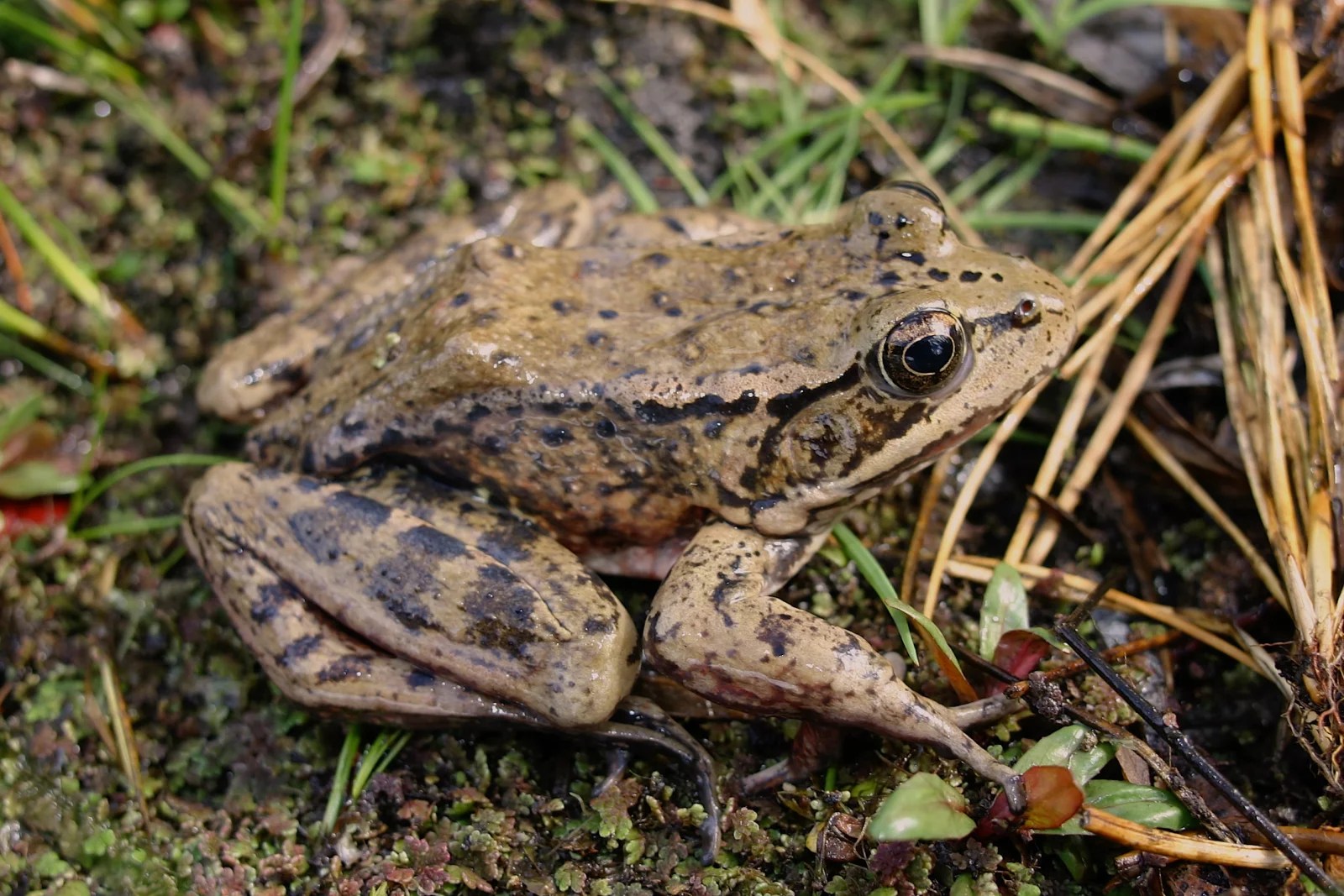
Not Just Any Frog. “At about five inches in size,” Roth describes, “the California red-legged frog is the largest native frog species west of the Rocky Mountains. It used to be found in ponds and waterways, from northern Baja California, in Mexico, to above San Francisco Bay, with populations as far inland as the Sierra Nevada Mountains.”
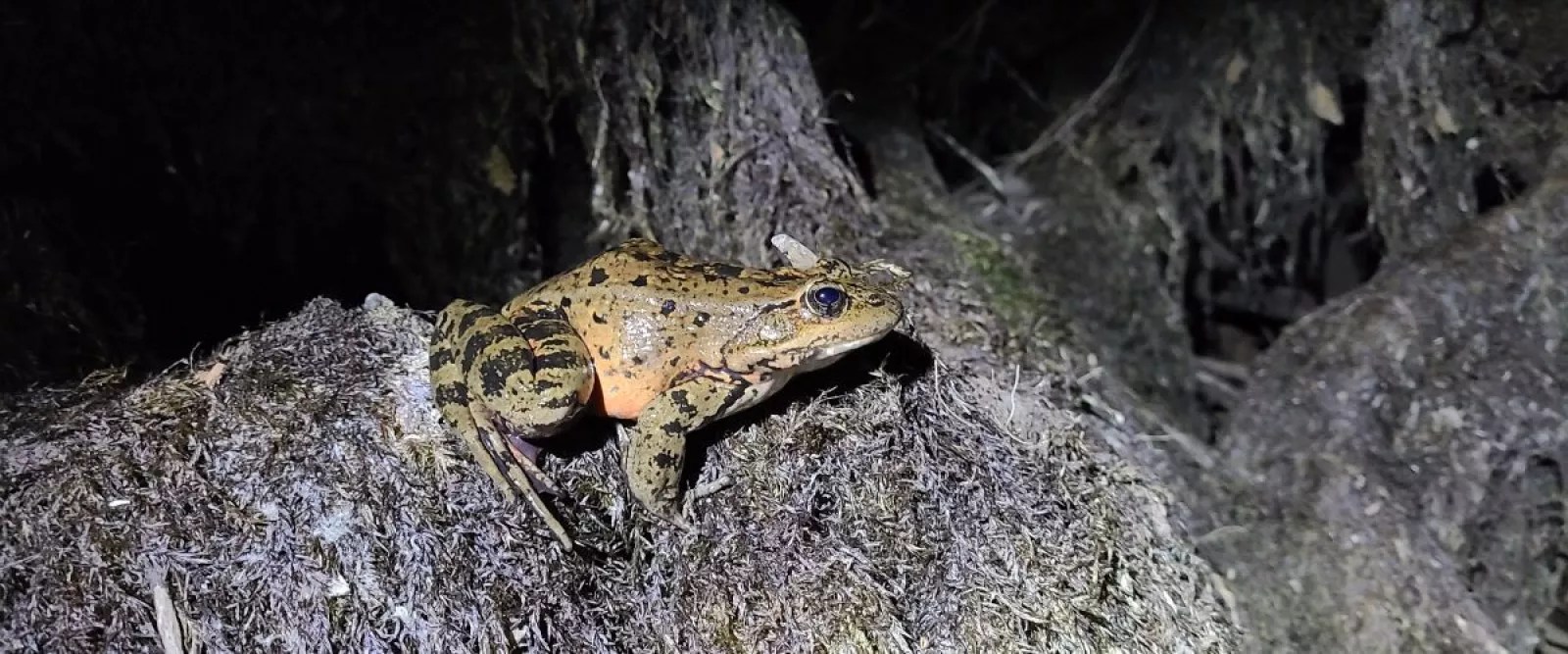
Roth continues, “The frog’s prevalence made it a popular food source in the 1800s and for miners during the California Gold Rush, says Bennett Hardy, an amphibian ecologist at the San Diego Natural History Museum. ‘It was kind of the hot cuisine at the time,’ he says. The frog leaped to national fame with Mark Twain’s short story The Celebrated Jumping Frog of Calaveras County, which helped launch his writing career.”

First edition, 1865. Image from Wikipedia.
Then Came Hard Times. Roth’s recounting continues: “But the next 150-or-so years weren’t so great. Wetlands were drained for agriculture and homes. Streams were dammed, diseases struck and the American bullfrog, a fearsome predator and the largest native frog east of the Rocky Mountains, was introduced. In 1996, the California red-legged frog was listed as threatened under the Endangered Species Act.”
Restoring Habitat. “In Mexico,” Roth writes, “[Anny] Peralta-Garcia and her nonprofit Fauna del Noroeste set to work preserving the Baja Peninsula’s last-remaining populations of red-legged frogs, restoring habitat and boosting their populations with the support of the U.S.-based groups. Meanwhile, in Southern California, two sites with multiple water bodies were identified as suitable habitats in San Diego and Riverside counties. They were cleared of invasive, predatory bullfrogs.”
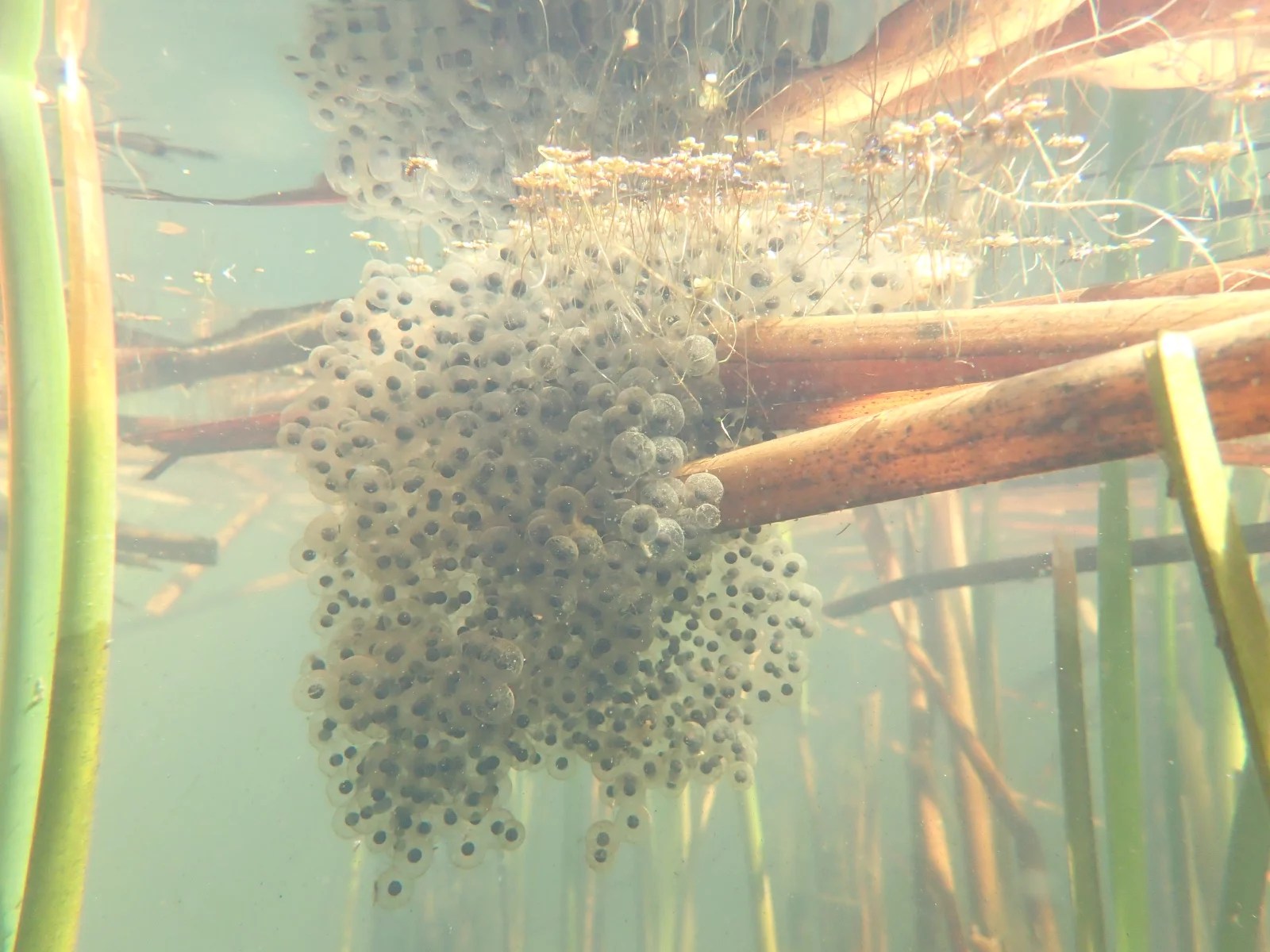
“An egg mass was moved by helicopter and car, down dirt roads and over the U.S. border to one of the prepared sites in Southern California,” Roth describes. “And now, 87 more moved egg masses later, everyone was waiting to see if it worked.”
That is, were these re-introduced frogs breeding?
Mating Calls. San Diego ecologist Hardy notes that the easiest way to know is by listening for their calls: “I’d love to be out there every night at these ponds, with my tent and camping and trying to listen for them, but it’s just not feasible.”
Instead, Hardy and his team set up a series of microphones recording from dusk to dawn, day after day, collecting thousands of hours of audio during the frog’s winter mating season.
But then how best to weed through these audible clues?
A.I. to the Rescue. Roth describes, “To help reduce the time and effort, the team partnered with outside engineers to create a custom machine learning model—similar to the popular birding app Merlin—trained to sort through the data and detect the calls of two species: the California red-legged frog and their competitor, the non-native American Bullfrog.”
An A.I. Hallucination Of Sorts Eliminated. “It wasn’t perfect at first,” Roth noted: “Hardy says that early on, the model flagged a call that it thought was a frog but was in fact a hooded merganser, a bird that’s also known as the frog duck because its mating calls sound so similar to a frog’s.”
“But with time,” Roth observed, “they’ve been able to refine the model and are now working on a real-time alert system that will let biologists know instantaneously when a Bullfrog or red-legged frog is detected.”
Saves on Muddy Boots. For Clark Winchell, a long-time muddy boot biologist with the U.S. Fish and Wildlife Service, the technology has been revelatory: “I spent countless hours by myself in a kayak listening for bullfrogs. It’s not the most efficient use of time,” he says. “What they’ve done with A.I. on this project is incredible. It’s systematic monitoring of two species.”
Roth observes, “Using the model, earlier this winter, they were able to identify the grunts of a California red-legged frog. Soon after, a survey found a new gelatinous ball of fresh eggs near the microphone that recorded it.”
That is, once perfected an A.I. learns to scrape only the right places. And in some parts of Southern California, for the first time in decades, the Red-legged Frog is heard again. ds
© Dennis Simanaitis, SimanaitisSays.com, 2025
 Simanaitis Says
We are careful about donating money to anyone. Donated to WAMC, public radio in Albany NY.Told them this is our protest vote.John