
Simanaitis Says
On cars, old, new and future; science & technology; vintage airplanes, computer flight simulation of them; Sherlockiana; our English language; travel; and other stuff
CELEBRATING JUNETEENTH
TODAY, JUNE 19, 2025, IS THE FIFTH OFFICIAL FEDERAL CELEBRATION of the Juneteenth National Independence Day, enacted on June 17, 2021 by President Joe Biden.

Etymology. Wikipedia recounts, “Juneteenth is a federal holiday in the United States. It is celebrated annually on June 19 to commemorate the ending of slavery in the United States. The holiday’s name, first used in the 1890s, is a portmanteau of the words ‘June’ and ‘nineteenth,’ referring to June 19, 1865, the day when Major General Gordon Granger ordered the final enforcement of the Emancipation Proclamation in Texas at the end of the American Civil War.”
The Juneteenth Flag. Wikipedia notes that the Juneteenth flag “was designed in 1997 by activist Ben Haith (also known as ‘Boston Ben’). Haith displayed the first version of the Juneteenth flag in June 1997 at Boston’s John Eliot Square District. It was described by Patricia Smith of the Boston Globe as, “A banner adorned with sunbursts and flaming candles.”

“The flag,” Wikipedia continues, “uses the colors red, white and blue of the American flag. Featured prominently in the center of the flag is a bursting star. Running through the center of the flag horizontally, is an arc that is meant to symbolize the new horizon of opportunity for black people. The five-pointed star refers both to Texas (nicknamed the ‘Lone Star state’) and to the ‘freedom of African Americans in all 50 states.’ Surrounding it is a 12-ray nova (or ‘new star’) representing a new beginning for all.”

The Cato Institute. Andy Craig at the Cato Institute describes “Juneteenth: A Jubilee of Freedom,” June 20, 2020. He writes, “On June 19, 1865, Major General Gordon Granger issued General Order No. 3 from the balcony of Ashton Villa in Galveston, Texas, where he had arrived the day before at the head of Union forces occupying the last bastion of Confederate‐ held territory at the end of the Civil War. The freedmen of Galveston reacted with celebrations, and a year later began the practice of annually commemorating the event.”
“These yearly celebrations,” Craig continues, “became a tradition in Texas and then spread throughout the rest of the country with the Great Migration as millions of black people left the rural South for cities in the North and West during the 20th century.”

Image from the Cato Institute.
Symbolic, but Important. Craig recounts, “It might be a symbolic gesture but symbolism matters. The abolition of slavery and the suffering and contributions of black Americans deserve a prominent place in our national narrative. The festive, celebrative spirit of Juneteenth is particularly appropriate for this. The triumph of hope over adversity and liberty over slavery is very much worth celebrating.”
A Call to Action. “Of course,” Craig observes, “it would be a mistake to think of this as a cause that ended in 1865. A century of Jim Crow, segregation, and racial terrorism would persist and eventually give way to its own modern descendants in the form of mass incarceration, the war on drugs, and police brutality targeted at black Americans.”
Craig continues, “Juneteenth can and should serve as a call to action, a reminder of our urgent need to strive towards the completion of the great unfinished work, to create a more perfect union dedicated to the self-evident truth that all are created equal. By affirming what we want to celebrate, we don’t just memorialize the past. We also set our sights on what we want to attain for our future, what kinds of progress are worth honoring because we want to both preserve those gains and continue to build on them. So today, have a happy Juneteenth from all of us here at the Cato Institute.”
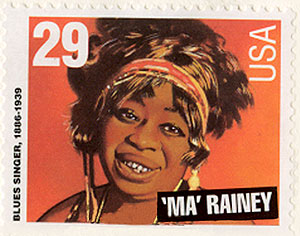
SimanaitisSays Concurs. And a happy Juneteenth from this personal website as well: From time to time I’ve celebrated achievements of African Americans in a variety of ways: “Got the Blues?,” “Bernstein on the Blues,” “The Central Park Five—Reality and Opera,” “Satchmo Blows Up The World,” “Racing on the ‘Colored’ Line,” “The 1619 Project,” “Bessie Coleman—A Courageous Woman of Soaring Ambition,” and “Woolworth’s Lunch Counter in History,” to name only a few.

Let’s celebrate them all. ds
© Dennis Simanaitis, SimanaitisSays.com, 2025
 Simanaitis Says
Thank you Sir .
Ma Rainy is one of my favorite Blues singers .
I’m a member of a blended family and I find it sad that so few young black folks seem to care about this or other important historical dates, more-so because of the current efforts to erase or change the facts of history .
-Nate