
Simanaitis Says
On cars, old, new and future; science & technology; vintage airplanes, computer flight simulation of them; Sherlockiana; our English language; travel; and other stuff
A LOT OF BRITISH CARS—WITH TALES TO TELL PART 1
BACK IN 1986, THE BRIT CLASSIC & SPORTS CAR magazine published an impressive book of post-war automotive history.

A-Z of Cars, 1945-1970, by Michael Sedgwick and Mark Gillies, Bay View Books, 1986.
Mark Hughes, Editor of C&SC at the time, wrote in its Foreword, “Commissioned by Classic & Sports Car to begin its first issue in April 1982, the A-Z ran over 13 parts. The most remarkable thing about it—and only a man of Michael’s energy could have tackled the task—was model by model analysis…. A detailed guide to models of car is altogether more ambitious than the conventional encyclopedia of marques of cars. Naturally, there had to be restrictions so that the A-Z didn’t fill the magazine for years to come, so Michael limited himself to European cars sold in Britain between 1945 and 1970.”
Tales to Tell. Among the scads of Brit cars in its 232 pages are two dozen that evoked personal recollections, 12 of which have earned mention here at SimanaitisSays. Here, in Parts 1 and 2 today and tomorrow, are tidbits of several gleaned from A-Z augmented by personal tales.
A.C. The name, A-Z recounts, “stands for Autocarriers, the first car [1907] being a three-wheeler called the Sociable.”

AC Aceca and Aceca-Bristol 1955-1963 (production: 320). This and following images from A-Z of Cars: 1945–1970.
As noted in “The AC Aceca—A British Specialist’s GT,” the Aceca had a favorite engine of mine: “I’ve long admired the Bristol single-camshaft, overhead-valve, hemispherical-combustion-chamber inline-six, a sorta reparation levied on BMW and its pre-war 326. Indeed, I liked it so much that I commissioned R&T Contributing Artist /pal Leo Bestgen to illustrate it.”

Image by Leo Bestgen from R&T, December 2004. Note the single cam/cross-block pushrod.
Allard. This ’Merican-propelled Anglo sports car resides abundantly in my memory: It certainly fit R&T Editor-in-Chief Tony Hogg’s definition of a sports car “needing nothing except what’s required to go fast.” Auto journalist/pal Don Vorderman’s comment was spot-on as well: “…surely one of the best possible ways to compensate for a poor suspension design is to keep the car at least several inches above the road.” And there’s Stan Mott’s illustration of the fearful Allard “Grendel.”
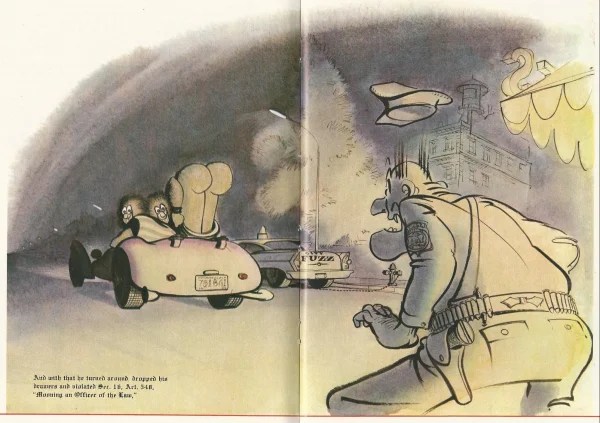
Image by Stan Mott from R&T.
Through the kindness of late pal/Allard enthusiast John Sanborn, I’ve actually driven an Allard J2X: “Note the proximity of your author’s left ear and the Allard’s exhaust pipe. I said NOTE THE….”
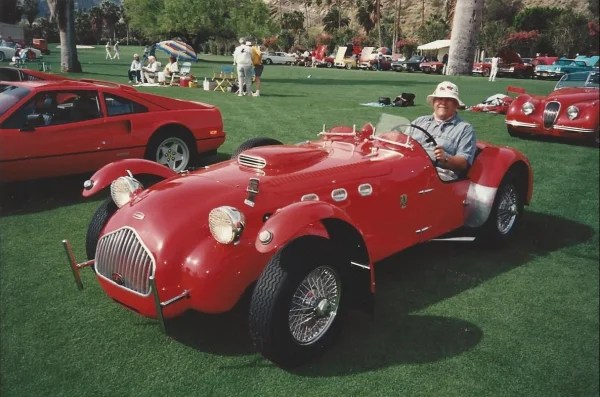
Connaught. A-Z notes, “The 1950s were a fertile time for British racing and sports car fans.” Specifically, one of these fans was a fellow who started racing Formula 3 cars. “Then, in 1957,” SimanaitisSays notes, “Bernie Ecclestone bought two Grand Prix cars left over from the disbanded Connaught team…. Connaught (Brit-speak for Continental Autos, a Surrey specialist in high-performance cars of the era) had been around since 1949.”

Connaught L2, 1949–1951 (production: 27).
Long before Driving to Survive, Ecclestone was the Formula I czar, allegedly carrying around a £-stuffed briefcase.
Dellow. “Basically,” A-Z wrote, “the Dellow was evolved from that peculiarly English form of motor sport, trialling, and was built by K.C. Delingpole and R.C. Lowe, who used a Ford 10 engine in an A-shaped tubular chassis with a very simple two-seater body.”

SimanaitisSays found special charm in the Dellow using war-surplus chrome-molybdenum tubes from RP3 rocket launchers for the chassis. And, what with a post-war glut of aluminum (remember brightly colored aluminum drinking cups?), a lot of Dellow bits were of this material (as opposed to contemporary cars’ wood).

This and the following from SimanaitisSays.
I almost bought this Mk. II; a pity I didn’t. I was once an Overseas Member of the U.K. Dellow Register; hence this key fob.
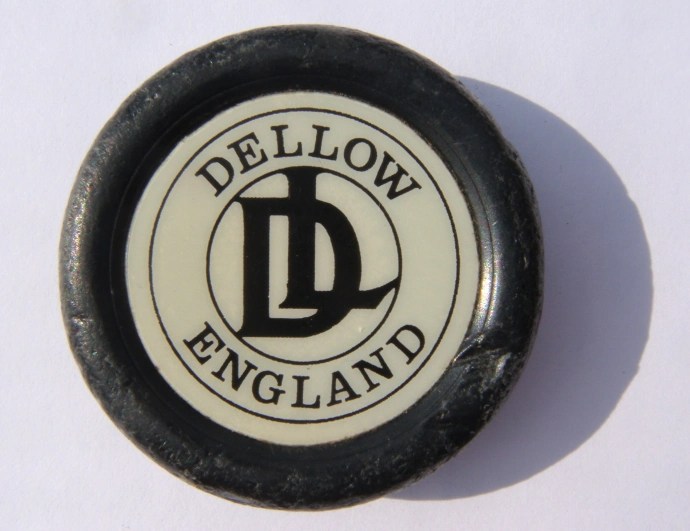
These days my Crossover key resides on this fob.
Ford Consul II. My first car, a 1958 Ford Consul II convertible, was built in vastly greater numbers than several of these others.

Ford Consul II 204E. 1956-1962 (production: 350,244).
My dad liked the car because it resembled, albeit in scaled-down form, his much-loved red 1955 Ford Fairlane Sunliner Convertible.

This 1961 right-hand-drive example is the same color as mine: ivory with red trim. Image from pinterest.
Tomorrow in Part 2, we’ll continue with A-Z Brit cars rekindling memories: of my treating a charming pub maid to a thrill ride, being hired at the Society of Automobile Engineers, and learning of a bizarre little car with a Rob Walker heritage. ds
© Dennis Simanaitis, SimanaitisSays.com, 2025
 Simanaitis Says
A wonderful compendium compiled by literate fellows, with honesty missing in today’s regurgitated auction hype. So many of the profiled cars have another missing quality today: charm. You’ll see this on Miatas today, but little else.
The English seem to tire quickly producing anything on an assembly line, hence so many home products drooling oil, but the Sceptered Isle gave us so much early engineering advancement, as with dohc, aluminum pistons, successful streamlining, land speed records, some of this well over a century ago. Then you had the 1936 Alvis with synchromesh on all four forward gears.
Do not know how i missed this one.John