
Simanaitis Says
On cars, old, new and future; science & technology; vintage airplanes, computer flight simulation of them; Sherlockiana; our English language; travel; and other stuff
BARBIE’S HEELS AND FLATS
AT THE RISK OF UTTERING THE TRUMP-DREADED WORD “DIVERSITY,” here’s an academic report on “Flat out Fabulous: How Barbie’s Foot Posture and Occupations Have Changed Over the Decades, and the Lessons We Can Learn,” Williams et al., PLOS One, May 14, 2025.

As described in its Abstract, objectives of this primary source were “To explore the correlations/relationships between foot posture, equity and diversity, employment, and time in Barbie Land.” My other sources are Alisha Haridasani Gupta’s “Is Barbie’s Empowerment Tied to the Angle of Her Feet?,” The New York Times, May 14, 2025; Maria Cramer’s “After All These Years, Barbie Is Still Reinventing Herself,” The New York Times, January 29, 2020; and Maya Salam’s “Mattel, Maker of Barbie, Debuts Gender-Neutral Dolls,” The New York Times, September 25, 2019.

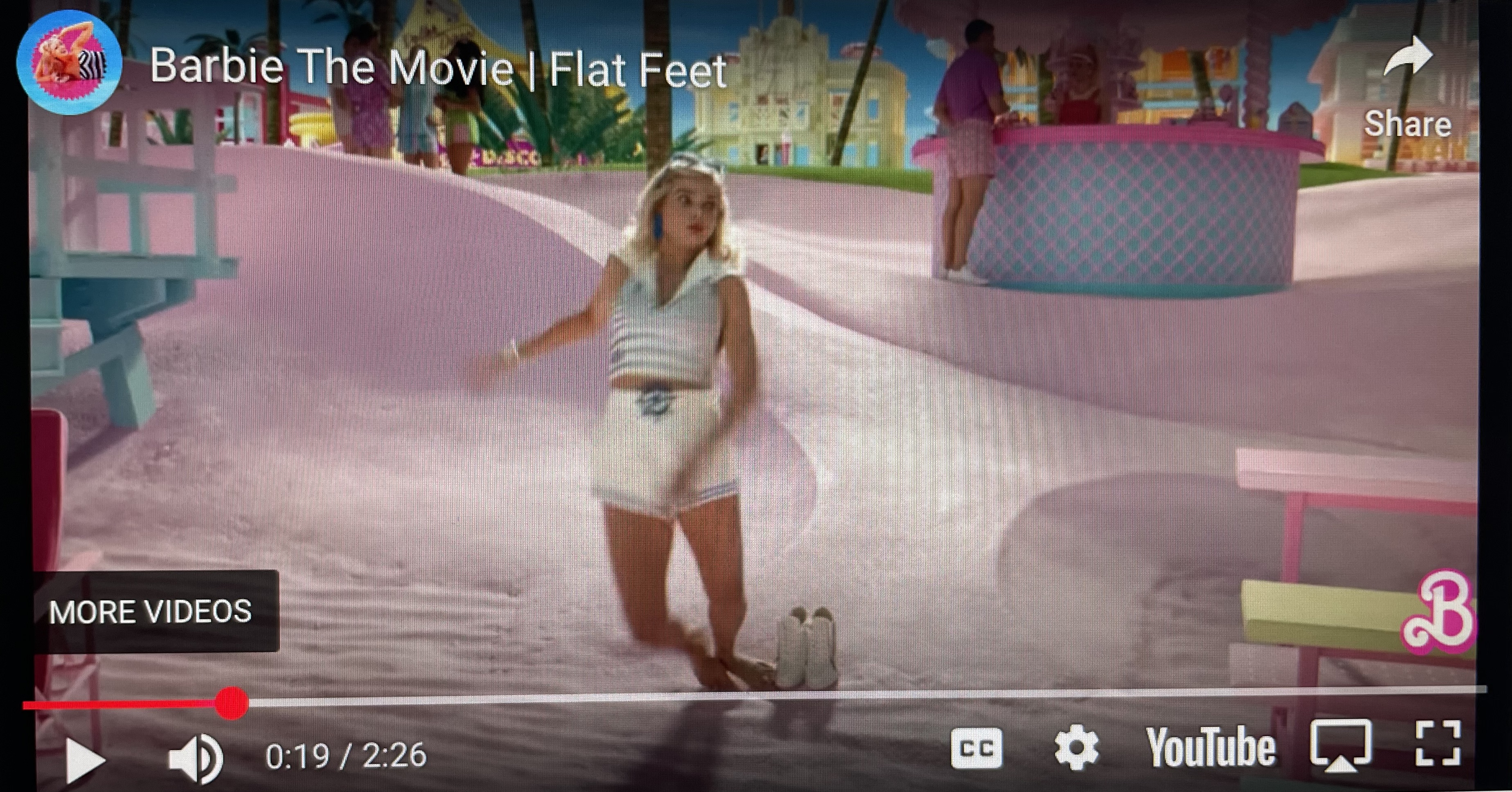
A Movie Encourages a Group Chat. Alisha Haridasani Gupta recounts, “There’s a scene from the 2023 movie Barbie in which arched feet step out of high heels onto the ground. And stay arched. It took the actress Margot Robbie eight takes to perfect the trick and it set off a social media frenzy almost akin to a collective gasp.”
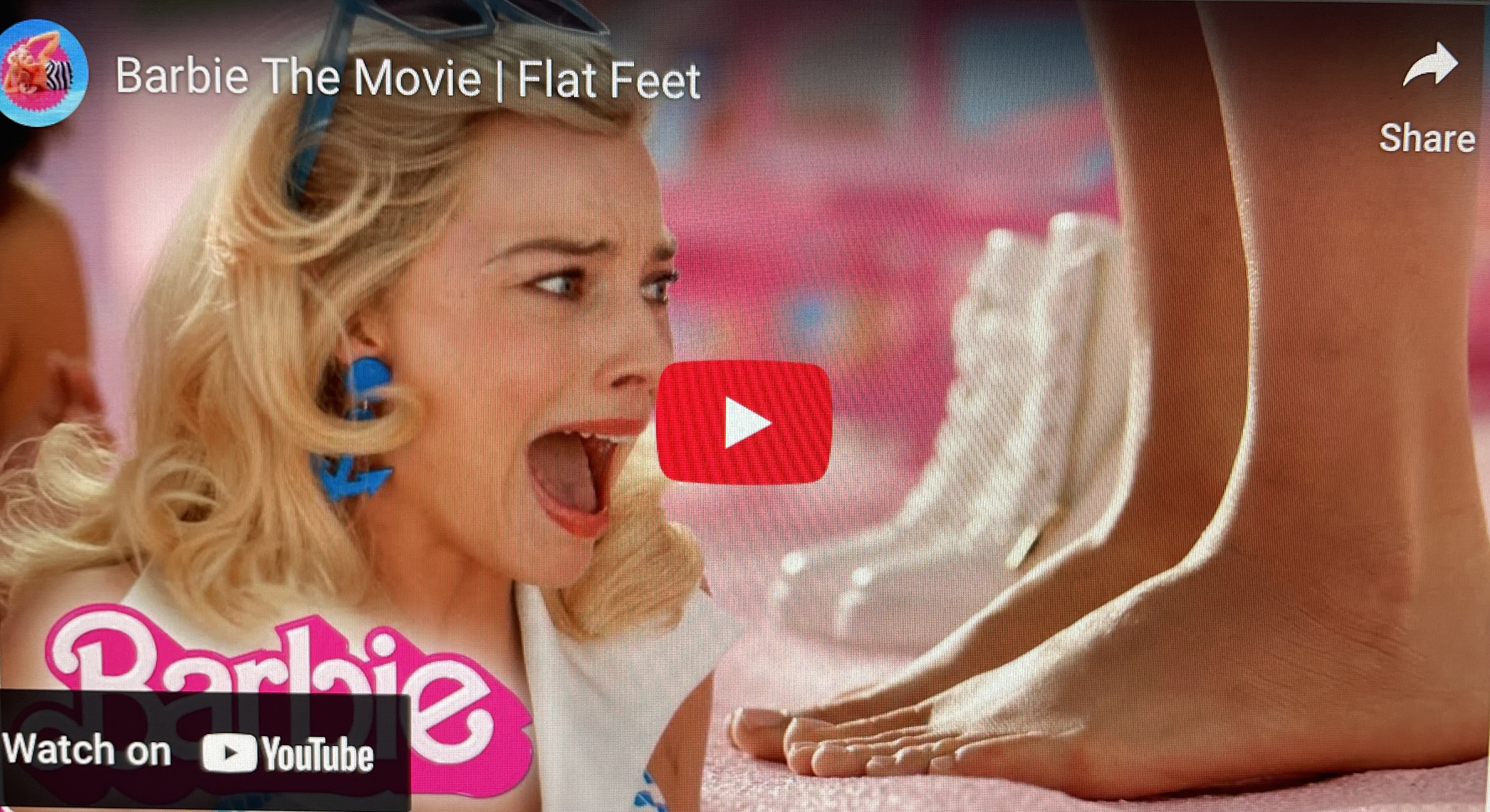
Above, the title from a YouTube (accessible from Gupta’s article); below, the result of Barbie’s first flat-footed experience.
Gupta continues, “For a group of podiatrists in Melbourne, Australia, that scene became fodder for a group chat—the angle of that arch, the weight on the balls of her feet. When Barbie’s heels eventually touched the ground, those podiatrists saw the beginnings of a research paper…. It seemed, to the group of researchers, that Barbie’s empowerment was tied to the structure of her feet, in the same way that everything about Barbie—her body shape, her skin color, her lifestyle choices—are tied to the Everywoman.”
The Research Team. Gupta describes, “Dr. Williams and two other podiatrists, including a male colleague, Ian Griffiths, who refers to himself as the ‘diversity hire’ of the group, teamed up with their friend—an occupational therapist, Suzanne Wakefield, who happens to be a lifelong Barbie collector with a personal collection of about 800 dolls.”
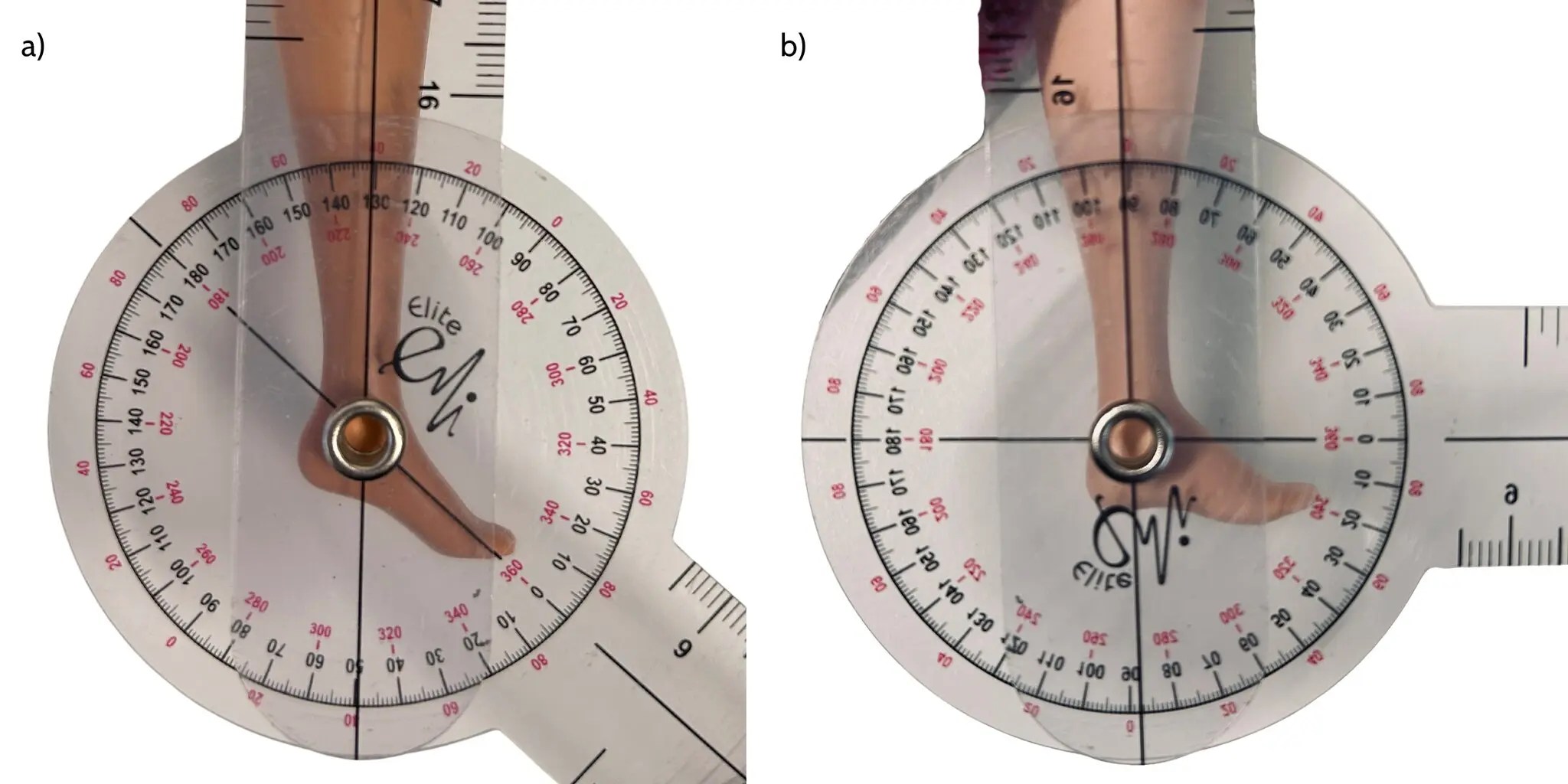
A tool for measurement of Barbie’s foot alignment over the years. Images by Dr. Cylie Williams.
And A New Metric. “Together,” Gupta describes, “they examined the feet of 2,750 dolls that were produced from 1959 to 2024. They measured each doll against a metric they had devised: foot posture (flat or arched?), equity (diversity of the doll), employment (is she a fashion girl or a working girl?) and time (the release year). Yes, the metric spells F.E.E.T.”
Dr. Cylie Williams tells Gupta: “I would like to say something really smart about that but, you know, it was Friday night, we were texting each other going, ‘We need to make something up that we can audit….’ We couldn’t have high-fived each other harder if I tried.”
“Just so we’re clear,” Dr. Williams added, “we are serious researchers.”
The PLOS ONE Results. Gupta reports, “The researchers found that, over time, Barbie’s feet did indeed go through a revolution. In the early decades of Barbie’s life, 100 percent of the dolls had arched feet. In the last four years, only 40 percent did. ‘Employed’ dolls were far more likely to have flat feet, while fashion-focused ones were more likely to have the extreme arch.”
She continues, “Barbie’s leisure choices have expanded,” Ms. Wakefield said, sitting in front of her Barbie calendar, clutching her Barbie mug: “She was originally designed as a fashion doll and so, if you look at a lot of her choices of leisure, it was going to the opera, or it was having tea parties or going to a ball. Now we see Barbie going skiing. I’ve got scuba diving Barbie—she does a whole lot of other things that are not high heel-oriented at all.”

Note the varied employment (fashion and employed) and equity (diversity and disabled) of Barbies over the years.
Barbie Reinvented Herself. Back in 2020, Marie Cramer recounted, “One doll is bald. Another has a prosthetic limb. And another doll’s curly dark hair is swept away from her face to show she has vitiligo, a condition that causes patches of skin to lose melanin.”

This and the following image from Mattel.
And even before that, in 2019 Maya Salem observed, “The new line, introduced on Wednesday and called Creatable World, is intended to reflect our culture ‘as the world continues to celebrate the positive impact of inclusivity,’ said Kim Culmone, the Mattel executive who led the team that designed the new dolls.”

“Creatable World” dolls were designed to have a youthful, gender-neural appearance.
Mattel noted back then, “In our world, dolls are as limitless as the kids who play with them. Introducing #CreatableWorld, a doll line designed to keep labels out and invite everyone in.”
What a pity that Trump and his cohorts are bringing labels back in. ds
© Dennis Simanaitis, SimanaitisSays.com, 2025
 Simanaitis Says