
Simanaitis Says
On cars, old, new and future; science & technology; vintage airplanes, computer flight simulation of them; Sherlockiana; our English language; travel; and other stuff
TIME TO EAT!
“IF YOU’VE EVERY REALLY LOOKED AT HOW FLAMINGOS EAT,” says The New York Times’ Rachel Nuwer, “you know how captivatingly peculiar it is.”
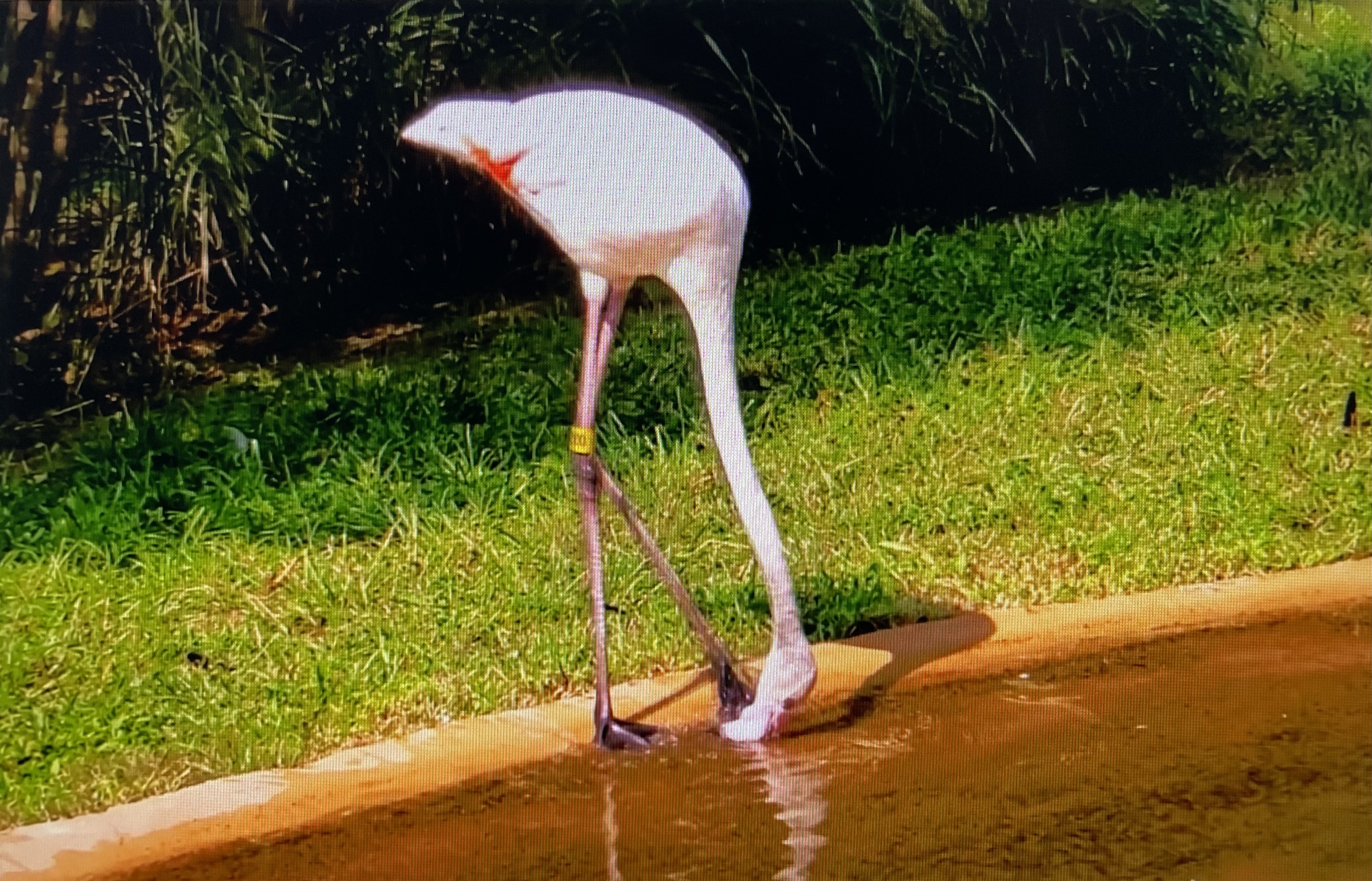
This and other screenshot captures of videos from The New York Times.
Nuwer describes, “They bob their inverted heads in the water and do a kind of waddle cha-cha as they inch their way across shallow water, filter-feeding small crustaceans, insects, microscopic algae and other tiny aquatic morsels.”
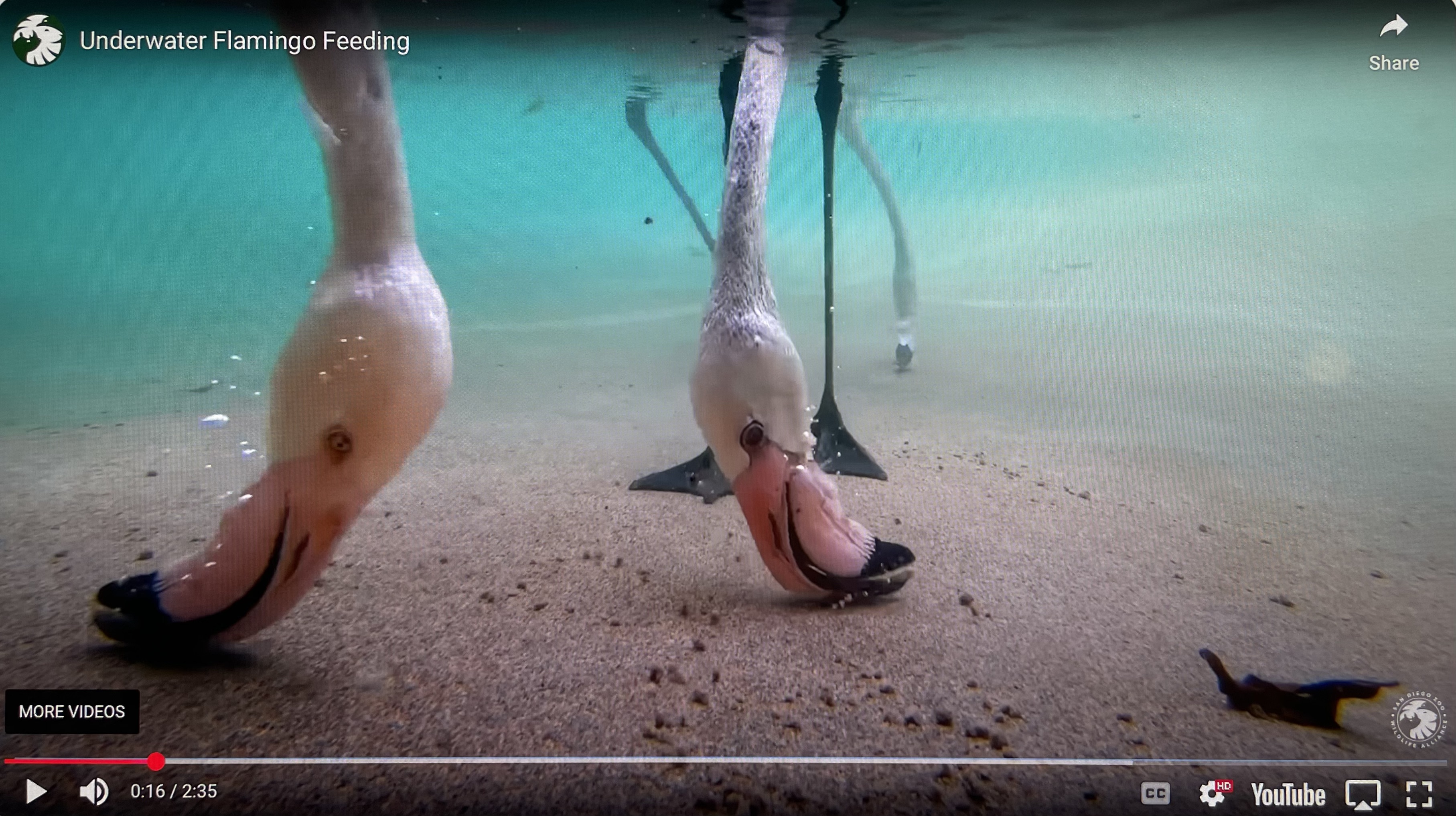
Image of underwater feeding at San Diego Zoo.
It’s mesmerizing to watch and unlike any other feeding behavior in nature.
Underwater Vortices. Nuwer talks with Victor Ortega-Jiménez, an integrative biologist at the University of California, Berkeley, in assembling her article “Flamingos Make Underwater Vortexes to Suck Up Prey,” The New York Times, March 12, 2025: “The birds looked beautiful,” Dr. Ortega-Jiménez said, “but the big question for me was, ‘What’s happening with the hydrodynamic mechanisms involved in flamingos’ filter feeding?’ We are challenging the idea that flamingos are just passive filter feeders. Just as spiders produce webs, flamingos produce vortices.”
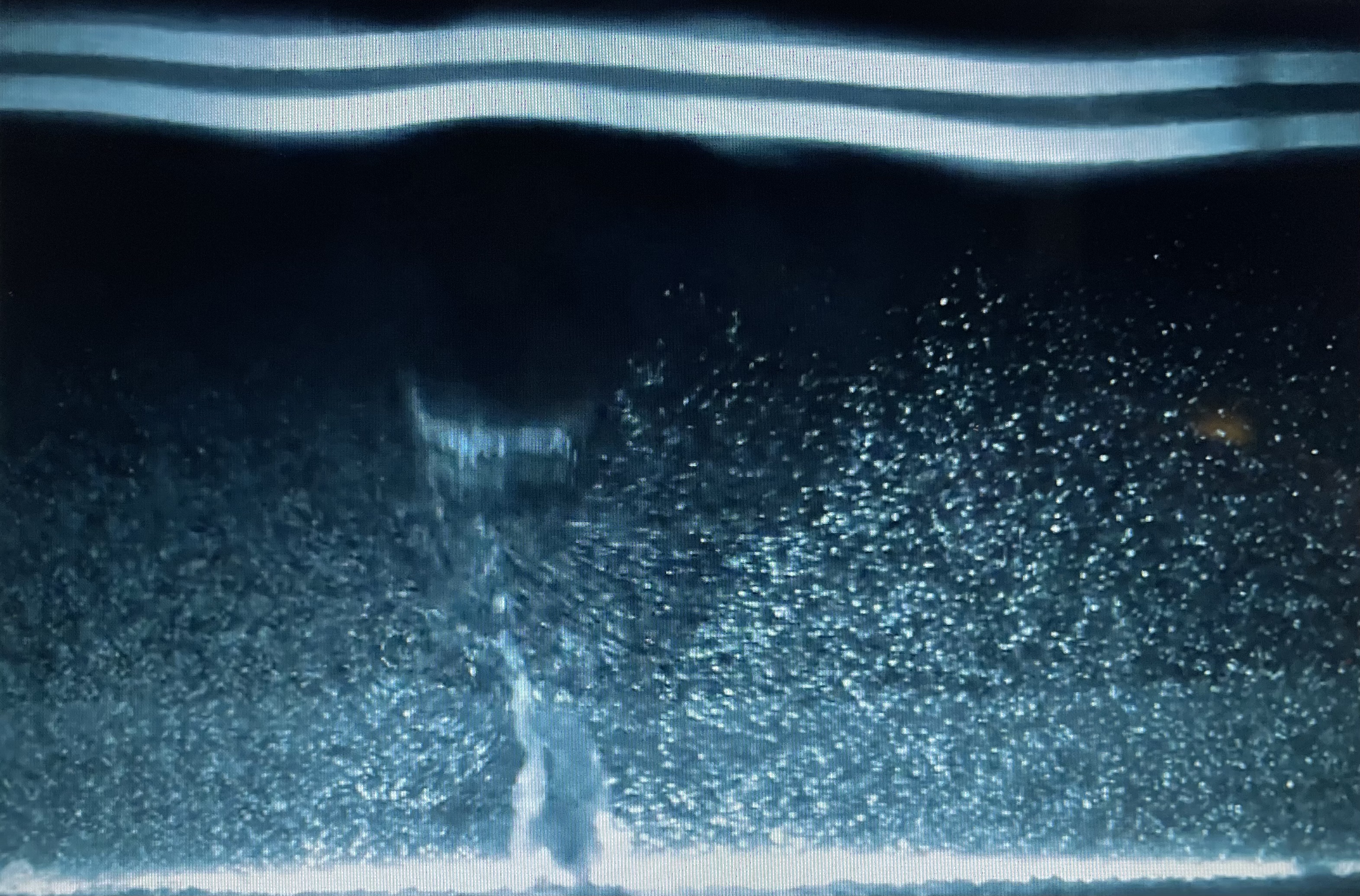
High-Speed Cameras. Nuwer recounts, “Dr. Ortega-Jiménez’s collaborators included three exceptionally cooperative flamingos from the Nashville Zoo: Mattie, Marty and Cayenne. Zookeepers trained the birds to feed in a clear container, which allowed the researchers to record what was happening using high-speed cameras and fluid dynamic methods.”
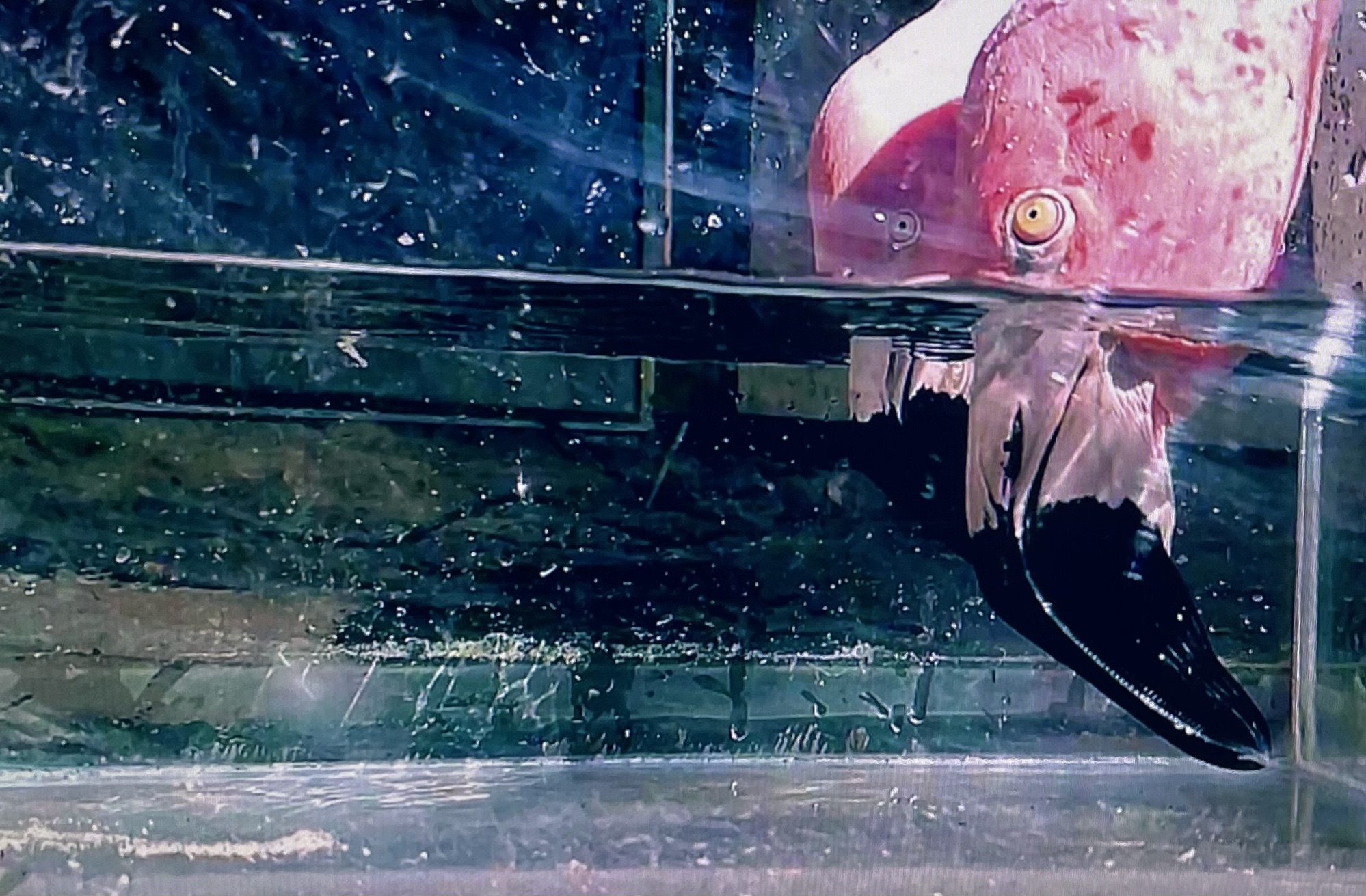
Nuwer continues, “The scientists generated oxygen bubbles and added food particles to measure and visualize the flow of the water as the birds fed.”
Geoff Brumel describes in “Scientists Have Figured Out Why Flamingos Are Such Weird Eaters,” NPR, My 16, 2025: “Of course,” Brumel says, “flamingos know perfectly well what they’re doing, and now so does Bhamla’s group [with which Ortega-Jiménez worked]. Writing in this week’s issue of the journal Proceedings of the National Academy of Sciences, the team reveals that the entire flamingo feeding process is actually a tour de force in fluid dynamics.”

Image from NPR.
Generating Vortices. Brumel describes, “The bird is creating vortices in the water with almost every move. Take, for example, the bobbing of its head. The shape of its bill creates a tiny tornado as it pulls out of the water. The swirling stirs up prey and traps it long enough for the bird to duck back in and scoop it up. Same goes for the chattering, which pulls food up toward its beak.”
And ditto for the flamingos’ foot-stomping: “The study finds that flamingos’ webbed toes create a pair of vortices that push food toward their bills. That’s why it makes sense to have the head facing the feet instead of whatever is in front of them,” Bremel writes.
“What they’re basically doing is playing with fluid dynamics—using the beak, using their legs, using their heads and necks,” Bhamla says.
Modeling Its Behavior. “After initial observations with the live birds,” The Times’ Nuwer recounts, “the team built a 3-D model of a flamingo head and used it to more precisely explore the birds’ biomechanics…. Further observation and experiments with the mechanical beak revealed that chattering, in which flamingos rapidly clap their beaks while their heads are lifted but still underwater, is responsible for causing the mini-twisters to flow directly toward the birds’ mouths, helping them capture prey.

Above, the model beak. Below, in action. Images from video in The New York Times.
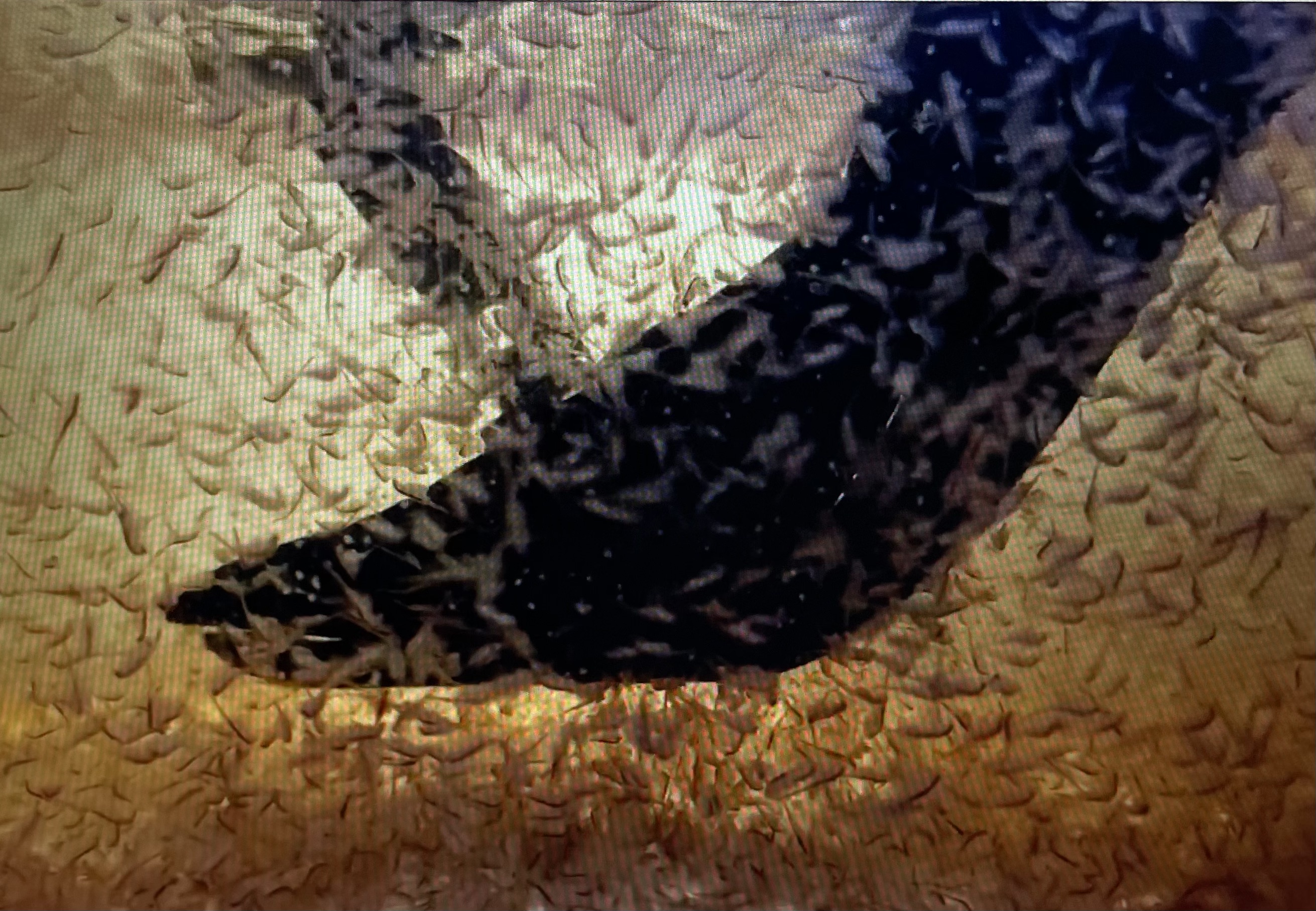
Research Conclusions. The investigations put to rest the the notion that flamingos are passive in the way they filter food. Alejandro Rico-Guevara, an evolutionary biologist at the University of Washington, Seattle, (not involved in the technical paper) observed to Nuwer, “There have been many hypotheses surrounding how their odd bills could work, but until recently we didn’t have the tools to study it.” This research, he says, “suggests another evolutionary reason for webbed feet in birds, beyond just being good paddles.”
All the more enriching that Dr. Ortega-Jiménez became fascinated by these beautiful birds at feeding. ds
© Dennis Simanaitis, SimanaitisSays.com, 2025
 Simanaitis Says