
Simanaitis Says
On cars, old, new and future; science & technology; vintage airplanes, computer flight simulation of them; Sherlockiana; our English language; travel; and other stuff
TRUMP ON AUTOMOTIVE EMISSIONS
I CONFESS I KNOW LITTLE about politics. But I surely know about automotive emissions. I understand their evolution from tetraethyllead additives introduced in the 1920s, through the mid-1960s assessments of hydrocarbons, carbon monoxide, and nitrogen oxides, the general introduction of catalytic converters in the mid-1970s, a later growing awareness of particulate matter, and the Biden Administration tightening of pollution limits for 2027 through 2032 as described in an EPA document of about a year ago.
Deleting Facts? I wonder if our new Environmental “Deregulation” Agency will scrap this document cited above. Dated March 20, 2024, its subtitle reads, “Final standards will expand consumer choice in clean vehicles and build on historic progress in U.S. auto manufacturing under President Biden’s Investing in America agenda.”

Its opening paragraph continues, “Today, March 20, the U.S. Environmental Protection Agency announced final national pollution standards for passenger cars, light-duty trucks, and medium-duty vehicles for model years 2027 through 2032 and beyond…. The final standards deliver on the significant pollution reductions outlined in the proposed rule, while accelerating the adoption of cleaner vehicle technologies.”
Yet I shudder to read Trump saying, “It doesn’t mean a damn bit of difference to the environment. It doesn’t matter.”
Now what would a Queens felon know about automotive emissions and their effects on the environment??

Another View. Lisa Friedman writes in The New York Times, April 1, 2025, “Trump Said Auto Emissions Don’t Affect the Environment. That’s Not True.” Friedman’s cred: “I write about how governments are addressing climate change and the effects of those policies on communities. I have been a reporter for more than 30 years, half of them covering climate change.”
Of course if you believe climate change is a “hoax,” crawl back under your rock and hope it has a/c. Otherwise, here are tidbits gleaned from Friedman’s article.

Whence Greenhouse Gases? “Transportation,” Friedman writes, “is the largest source of greenhouse gas emissions in the United States. It accounts for about a third of all U.S. emissions contributing to climate change, which is leading to more frequent and intense extreme weather like deadly heat waves, droughts, floods, and storms.”
Other Pollutants. Friedman continues, “In addition to releasing the carbon dioxide that is driving climate change, cars and trucks also emit pollutants like nitrogen oxide, carbon monoxide, volatile organic compounds and particulate matter.”
Less known than the others, PM2.5 are tiny inhalable particulates (and thus especially insidious to health). Alas, they’re also an inherent combustion product of diesel fuel (being a heavier hydrocarbon).
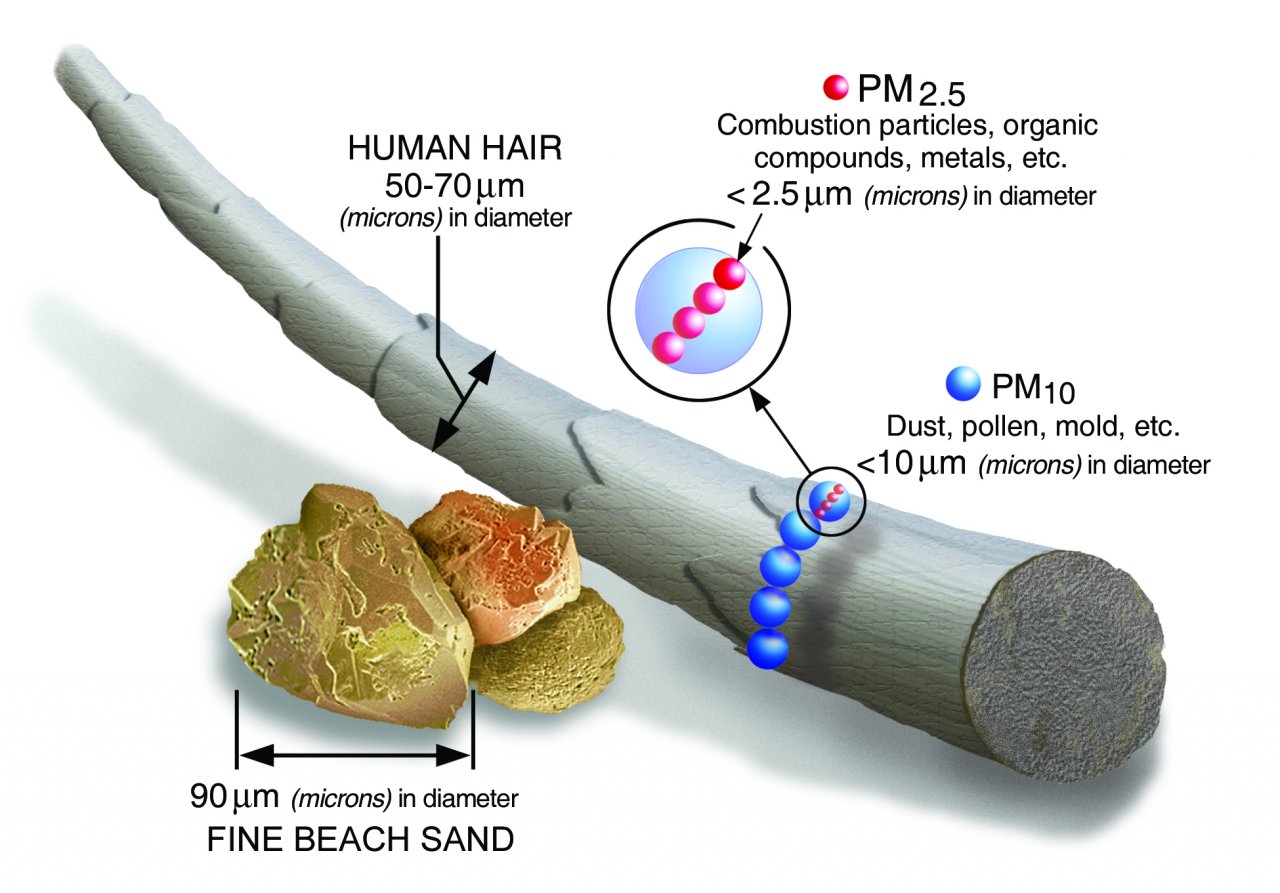
Breathing PM2.5. Friedman cites George D. Thurston, a professor of environmental medicine at NYU Langone Health, a leading hospital system in Manhattan that includes a medical school. He says that breathing fine particles from sources like vehicles can causes inflammation that spreads throughout the body, increasing increase the risk of health problems like lung cancer, heart disease and asthma.
The Benefits of Emissions Control. Friedman recounts, “The Environmental Protection Agency calculated that the Biden administration’s auto rule would eliminate 7.2 billion metric tons of carbon dioxide over the life of the regulation. That’s the environmental equivalent of taking 1.6 million cars off the road.”
“The Biden rules,” Friedman says, “would have also prevented 8,700 tons of particulate matter; 36,000 tons of nitrogen oxides; and 150,000 tons of volatile organic compounds, according to E.P.A. estimates.”
Its Economics. She concludes, “The agency calculated that the rule could cost the automobile industry about $40 billion annually. It pegged the health benefits in the range of $99 billion annually because of improved air quality. That, in turn, would lead to fewer premature deaths as well as a reduction in hospital admissions for respiratory and cardiovascular illnesses, nonfatal heart attacks, aggravated asthma and decreased lung function, the agency said.”
I cite again Trump’s “It doesn’t mean a damn bit of difference to the environment. It doesn’t matter.” ds
© Dennis Simanaitis, SimanaitisSays.com, 2025
 Simanaitis Says
Another well presented set of facts, Dennis. Thank you. This administration is too comfortable hiding scientific (and social) facts beneath rocks. They’re killing off the next generation of scientific advances by cutting federal research funding. They’re attacking universities and law firms. Anything that thinks is verboten. And, by cutting (yet again) IRS headcount, they’re negatively impacting tax revenues.
Trump == revenge and vengeance for all the perceived insults others have showered on him. Science has contradicted him. So out with science. Lawyers have taken on his inappropriate behaviors of yore. So out with law firms. The military? They don’t respect his stupidity? So screw them too. Enough. There’s more to criticize but let’s leave it for another day.
I’ve long maintained that California can justify most of its emission control programs based on the “traditional” pollutants – particulate matter, ozone, and CO. That includes EVs and a focus on diesels (all ICE produces PM10 and PM2.5, but diesels are particularly effective at producing them especially the more highly toxic variety). Control of GHGs in the process is a co-benefit. The only vehicle regulation that more or less directly controls GHGs is fuel economy, which of course also has national security and economy foci. So even if you drop climate change, you still need all the stuff California is (or was, since state-level regulation of air quality is pretty much under attack as a whole) doing to even just maintain (if not improve) public health and quality of life (neither of which, apparently, are now considered legitimate purposes of government, at least in the US). The process and criteria for allowing California to do its own thing for non-GHGs are still written in to the Clean Air Act, so until that’s changed California will still have a good chance of winning court cases when EPA delays or denies (or worse, rescinds) the waivers.
Note: Much of California is still non-attainment for ozone, PM10, and/or PM2.5. CO standards have been met, (South Coast is still in the “maintenance” period) and even the Biden EPA declined to tighten them during the last review. Standards for a few other pollutants (like NO2 in South Coast) are still not attained in limited areas. So California still has the unique issues that are not present in many other parts of the US. That (and the fact that we were first) justifies the continued existence of the waivers, GHGs or no GHGs.
We can become refugees and flee the US for places that still have some focus on the well-being of their citizens and recognition of actual facts. But (unless maybe we’re in the Elon Musk class of empathy-free billionaires) we can’t flee Planet Earth, yet.
For balance, while “diesels are particularly effective” . . .
Researchers with the Scripps Institution of Oceanography at the University of California, San Diego say that the tiny particles released in wildfire smoke are up to 10 times more harmful to humans than particles released from other sources, such as car exhaust.
The research focused on microscopic particles, commonly called PM2.5, which can travel the longest distances.
https://www.npr.org/sections/health-shots/2021/03/05/973848360/study-finds-wildfire-smoke-more-harmful-to-humans-than-pollution-from-cars
Yes,Bill. I respect your trucker points. But we have control over vehicle emissions; alas not over wildfires.—ds
It may be worthwhile to mention some of what’s already been accomplished. If we can assume comparable progress for cars and trucks it’s good to know that it takes more than sixty 2010 or newer diesel trucks to emit the same harmful emissions as one 1988 diesel truck (“The percentage of commercial diesel trucks that are near-zero emissions grows,” Fleet Equipment Mag, July 17, 2023: For the largest commercial trucks (Class 8) in operation that are 2010 or later model years, 95.4% are advanced diesel technology; 2.1% are CNG, 0.3% are electric, and the remainder are gasoline or other fuels.).
Estimates of the emissions related cost on a new large truck (class 8, 33K gross weight or more) range from $20 to $40K. The proposed 2027 rule, which is estimated to add about another $5K, will likely add an auxiliary heater to increase exhaust heat to utilize increased DEF. It would be good to know how the 60+ to one “near zero” ratio would be improved.
Sadly the orange toxic waste dump’s followers enthusiastically agree. One example is jacked up diesel pickups “blowing coal” when they’re modified to dump raw fuel into the exhaust so they leave a trail like a 1930’s coal burning locomotive. Often found d with a huge txxxp flag flying in the back, alas not sucking up the pollution.
Having been in the business I have taken note of smoking diesel trucks for over 40 years. In Pa. in the ’80s it was two to five a day. In 2025 it’s one or two a month. That’s progress. I just think some appreciation for that 98%+ reduction (!) in harmful emissions per diesel truck is in order, and perhaps an understanding of how diminishing returns are at work.
If a deplorable vehicle such as you have described is spotted we should do our civic duty:
https://air.arb.ca.gov/Forms/VehicleComplaint/SmokingVehicle?_ga=2.265903311.1931021485.1660579257-2145690925.1636569627