
Simanaitis Says
On cars, old, new and future; science & technology; vintage airplanes, computer flight simulation of them; Sherlockiana; our English language; travel; and other stuff
DO OUR LANGUAGES SHAPE US? OR DO WE SHAPE OUR LANGUAGES? PART 1
ANSWER: BOTH, AS MANVIR SINGH DESCRIBES in “How Much Does Our Language Shape Our Thinking?,” The New Yorker, December 23, 2024. Here, in Parts 1 and 2 today and tomorrow, are tidbits gleaned from this article and from sleuthing the Internet about the world’s some 7000 languages.

English Domination? Singh recounts, “France, for example, fought for decades against English’s dominance in the European Economic Community, and then in the E.U. ‘If, with the arrival of the English, French no longer were the first working language in the Community,’ the French President Georges Pompidou warned in 1971, ‘then Europe would never be totally European.’ Nearly half a century later, in 2018 President Emmanuel Macron declared English to be ‘too dominant in Brussels’ and vowed to ramp up efforts to ‘teach French to European officials.’ ”
Zut alors!

English Egalitariansim? Or Brainwash? Singh cites one scholar who “thinks there’s a kind of egalitarianism that’s inherent in English and missing from its Indian alternatives. ‘Hindi is full of caste biases,’ he told me. ‘Idioms, phrases, sayings, jokes, songs belittle Dalits [India’s “untouchables.”] How can any Dalit take pride in the so-called native tongue?”
But, Singh posits, “The idiosyncrasies of English—its grammar, its concepts, its connection to Western culture—can jointly produce an arbitrary construction of reality…. Pierre Bourdieu, the celebrated French sociologist, voiced a common concern when, in 2001, he wondered if ‘it is possible to accept the use of English without the risk of one’s mental structures being anglicized, without being brainwashed by linguistic patterns.’ Was he right to worry?”
“The real question,” Singh says, “is whether a language itself has features that affect how its speakers think: Does conversing in Spanish for a month make objects seem more gendered? Does speaking English rather than Hindi make you less casteist, and maybe more capitalist?”
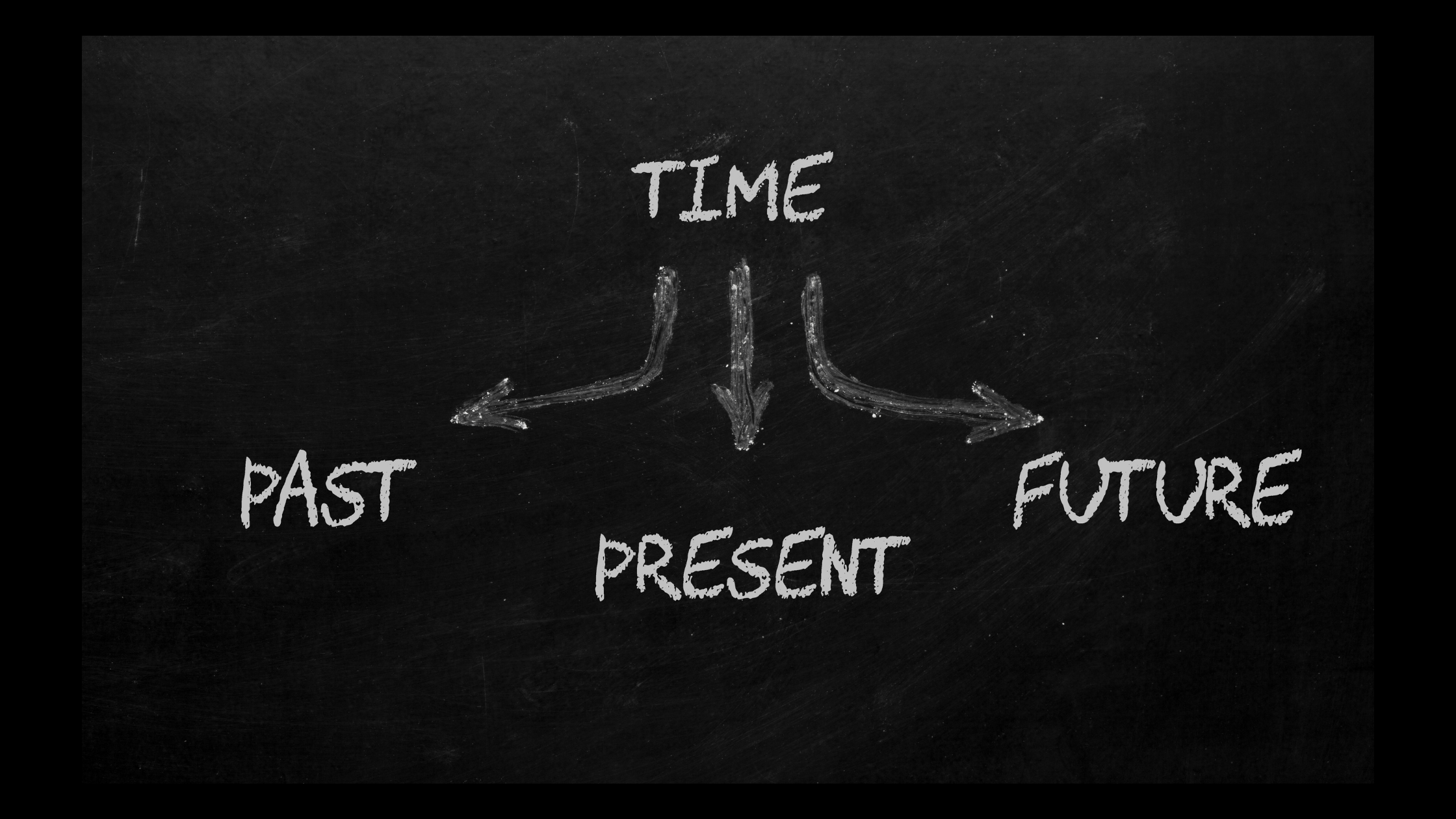
Image from Kristy Ware.
Expressing Time in Different Languages. Singh observes, “For English speakers, time is understood spatially, with the past typically ‘behind us’ and the future ‘ahead.’ Aymara, an Andean language spoken by millions of Indigenous Bolivians and Peruvians, likewise uses space to talk about time but favors a metaphor about sight. In Aymara, nayra, or last year, translates literally to something like ‘the year I can see.’ The past, visible, thus stands in front of the speaker, while the future, unseeable, looms behind. Ancha nayra pachana, or a long time ago, can roughly be translated as ‘a time way in front of me.’ ”
Gestures Too. “When researchers analyzed videos of people chatting,” Singh recounts, “they noticed that the metaphors inform gesture, with fluent Aymara speakers pointing backward to talk about the future and forward to talk about the past. Spanish speakers from the same region show the opposite patterns, suggesting that language configures how speakers map time onto space.”
Tomorrow in Part 2, we’ll move to sensory expressions. Who describes them best? ds
© Dennis Simanaitis, SimanaitisSays.com, 2025
 Simanaitis Says
What a thought-provoking piece. Meanwhile, our tongue may be egalitarian, but our justice at this late date anything but.