
Simanaitis Says
On cars, old, new and future; science & technology; vintage airplanes, computer flight simulation of them; Sherlockiana; our English language; travel; and other stuff
PARK IT HERE, PAL
DAILY PASSPORT’S MARISSA KOZMA DESCRIBES “5 Architecturally Stunning Parking Garages Around the U.S.” Each is an example of how a ubiquitous multistory box can assume character as well as utility. Here are tidbits gleaned from Kozma’s comments as well as from my usual recollections and Internet sleuthing.
T3 Parking Structure—Austin, Texas. Kozma writes, “Built in 2012 by Danze Blood Architects, the T3 Parking Structure in Austin, Texas, juts out of a steep hillside near a busy intersection. The three-level, helical garage features living green walls to blend into the surrounding environment and a green roof that collects water for irrigation, while also serving as an urban habitat for wildlife.”
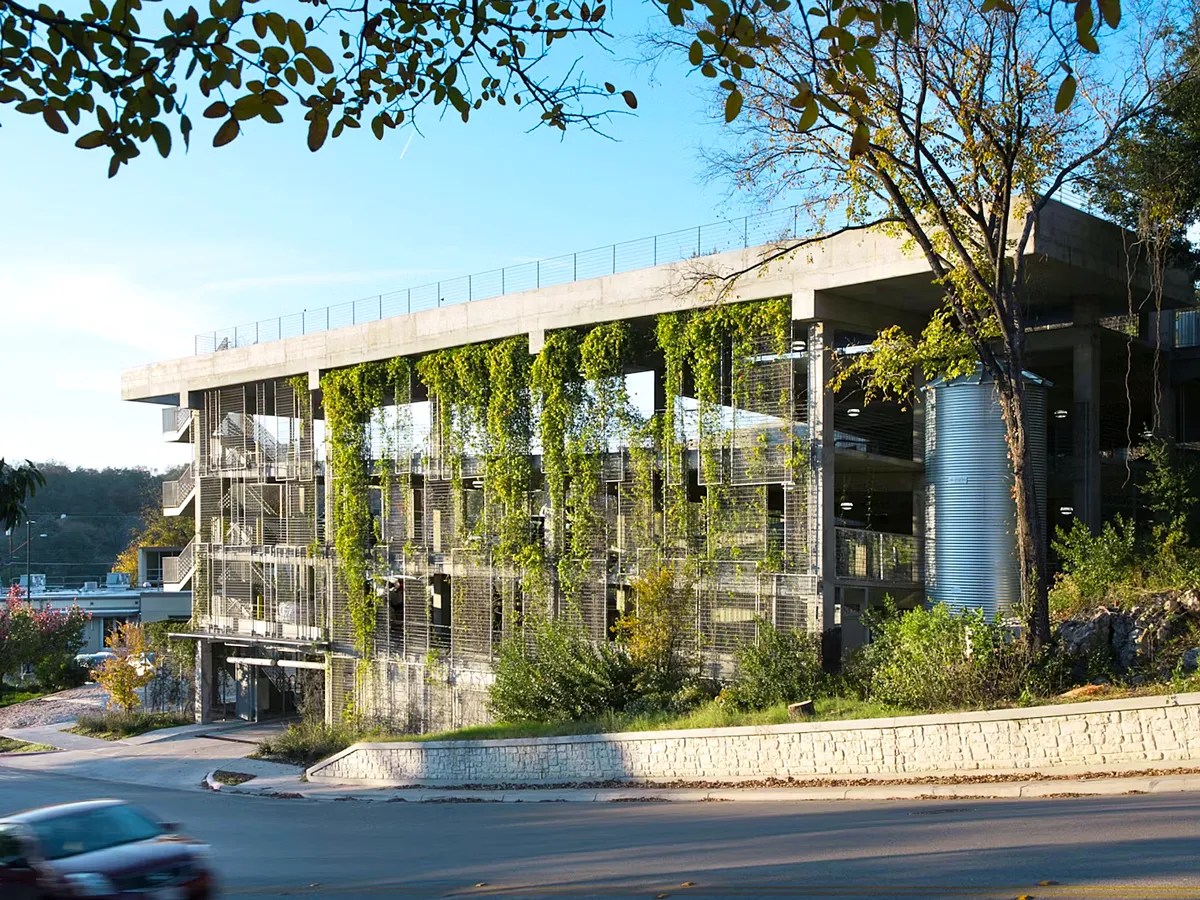
T3 Parking Structure. Image courtesy of Architizer via Daily Passport.
Kozma continues, “The eco-friendly blueprint was a response to local residents’ concerns that the structure would negatively impact the neighborhood, so the design firm decided to make nature center stage. The result is a light-filled lot that has won several architecture awards including the 2014 Chicago Athenaeum Award.”
I recall that the idea of vertical greens is exemplified in the Vertical Forest Milan devised by architect Stefano Boeri. He stresses that “forests and trees absorb nearly 40 percent of fossil fuel emissions produced by our cities every year…. Cities, which are largely responsible for climate change problems, have the opportunity to become an integral part of their own solution.”
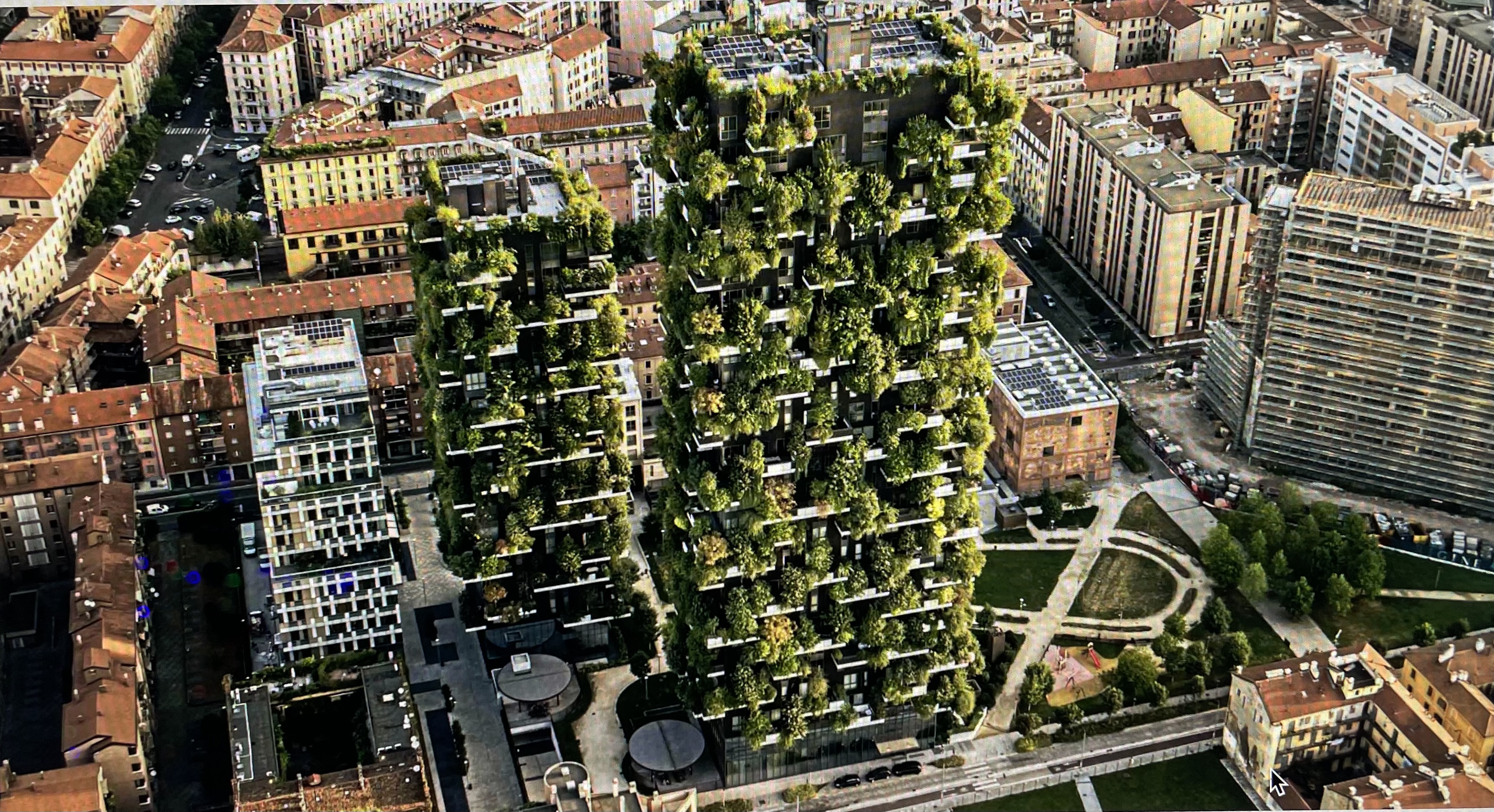
Milan Vertical Forest, the architect writes, “promotes the coexistence of architecture and nature in urban areas….. it is a tower for trees inhabited by humans.”
Helix Garage—Lexington, Kentucky. “In 2014,” Kozma recounts, “design firm Pohl Rosa Pohl was challenged to save the unsightly Helix Garage in downtown Lexington from demolition. Using nearly translucent steel panels on vertical steel scaffolding and LED backlighting, the team added an innovative geometric façade that completely transformed the structure, which is fitted with 389 parking spaces.”

Helix Garage. Image courtesy of Frank Doring/Color Kinetics via Daily Passport.
Kozma observes, “At night, the rectangles change colors to reflect the holidays or special occasions, which also makes the garage interior glow. It was a resounding success: What was once an eyesore is now a talking point in the community.”
Its multi-hued rectangularity reminds me of apartment buildings I saw in Iceland, their extensive glass belying climate, but providing colorful splashes of light during the country’s long periods of winter darkness.
City View Garage—Miami, Florida. “The garage,” describes Kozma, “faces a busy freeway and features a metal screen with folded aluminum apertures to create a geometric façade that radiates when the sun reflects on it. Another bonus of the design is that it allows for a steady airflow stream that helps keep the garage cool on hot, humid days by the Florida coast.”
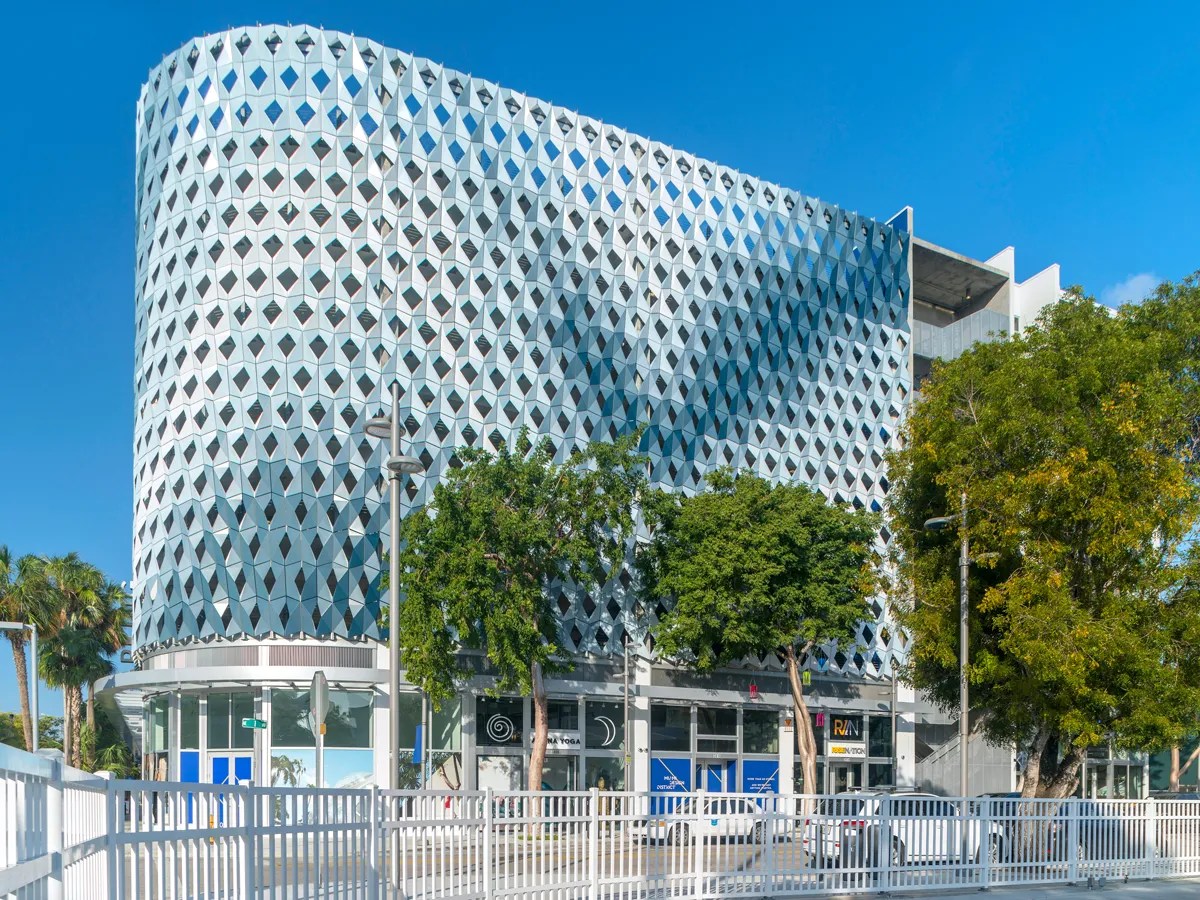
Miami’s City View Garage, erected in 2015, was designed by IwamotoScott Architecture. Image by Russell Kord/Alamy Stock Photo via Daily Passport.
10th & Wyandotte Garage—Kansas City, Missouri. “From a distance,” Kozma observes, “the patterned exterior of the 10th and Wyandotte Garage, designed by Kansas City architecture firm BNIM in 2016, appears to look like latticed concrete walls. But upon further inspection, you’ll see colored ‘eyes’ staring back at you.”
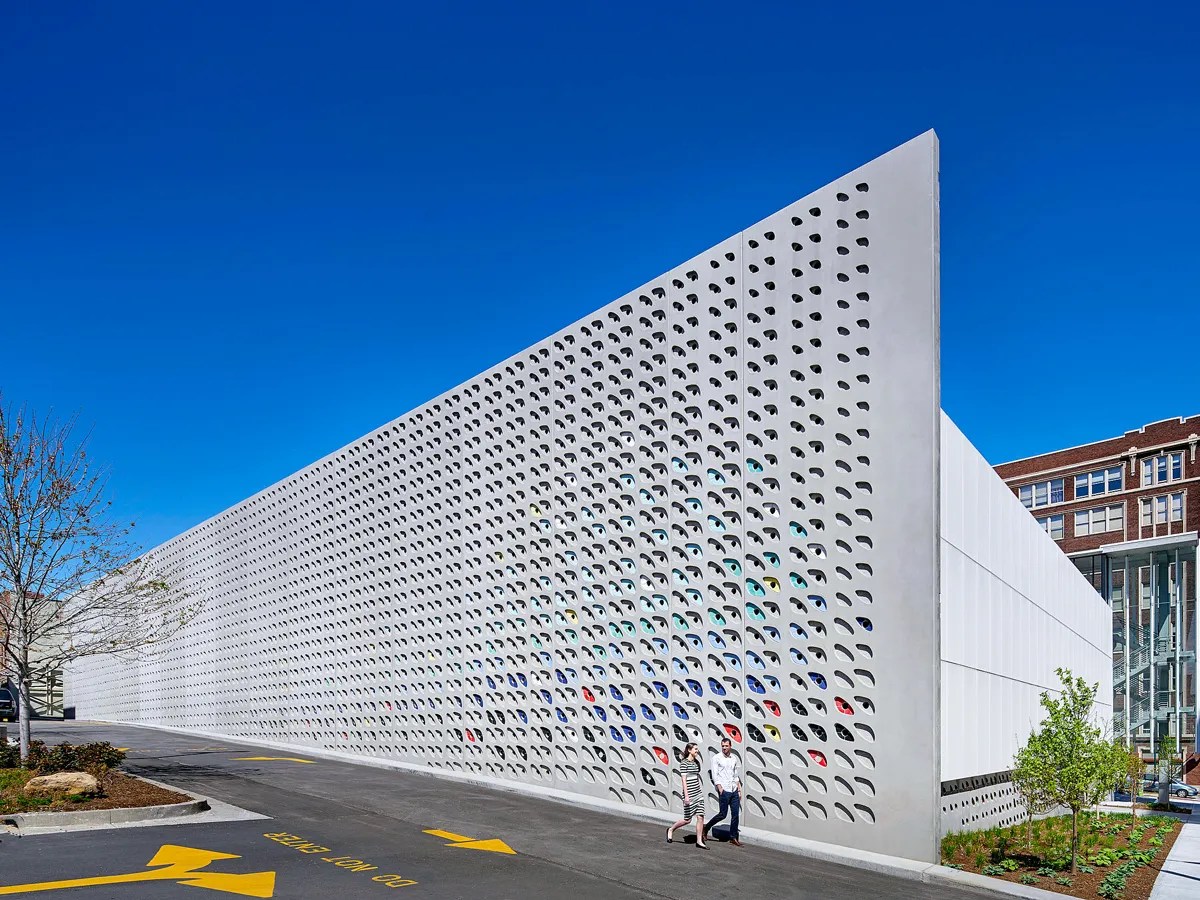
10th & Wyandotte Garage. Image courtesy of BNIM via Daily Passport.
Kozma continues, “The nearly 600 ceramic inserts were inspired by fossils found in nature, and the outcome is a mesmerizing fusion of art and architecture. The design team worked together with local artist Andy Brayman, who founded the Matter Factory, a collective that uses architectural software to bring their creative visions to life and develop building materials.”
Michigan Theatre—Detroit, Michigan. Kozma recounts, “Once a 4,000-seat concert hall that hosted many black-tie events, the Michigan Theatre in Detroit was gutted in 1977 to make room for a 160-space garage for employees at the Michigan Building next door.”
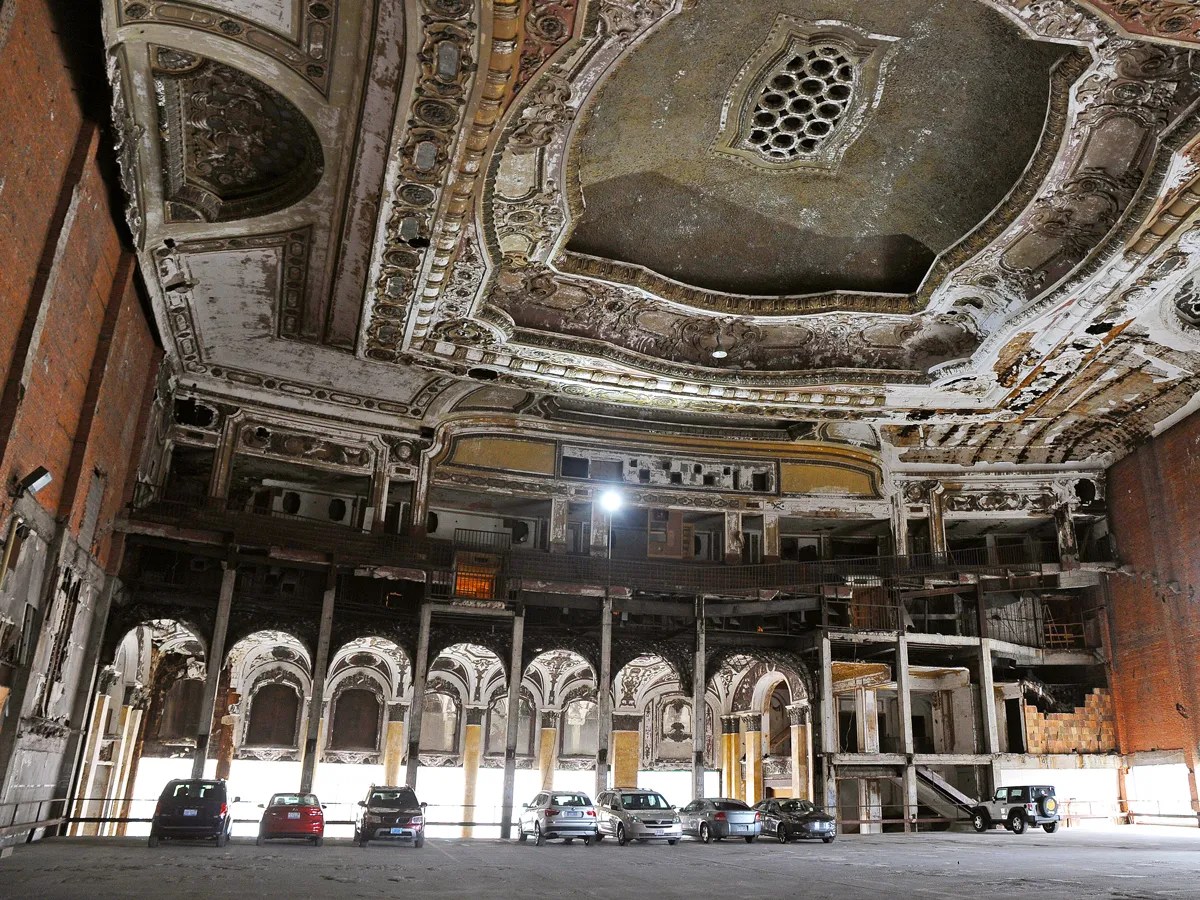
Michigan Theatre. Image by NurPhoto SRL/Almany via Daily Passport.
Kozma observes, “The use of the space as a parking garage became a clever way to preserve the landmark’s legacy in the Motor City after it was left to decay when the theater closed.”
This reminds me of the Art imitating Architecture when Michigan Opera Theatre staged a mini Götterdämmerung, the final opera in the Ring Cycle tetralogy. Most appropriate for its Detroit setting, this mini-opera was performed iteratively in the multi-level parking garage of the Detroit Opera House, with the audience traveling through in their cars.
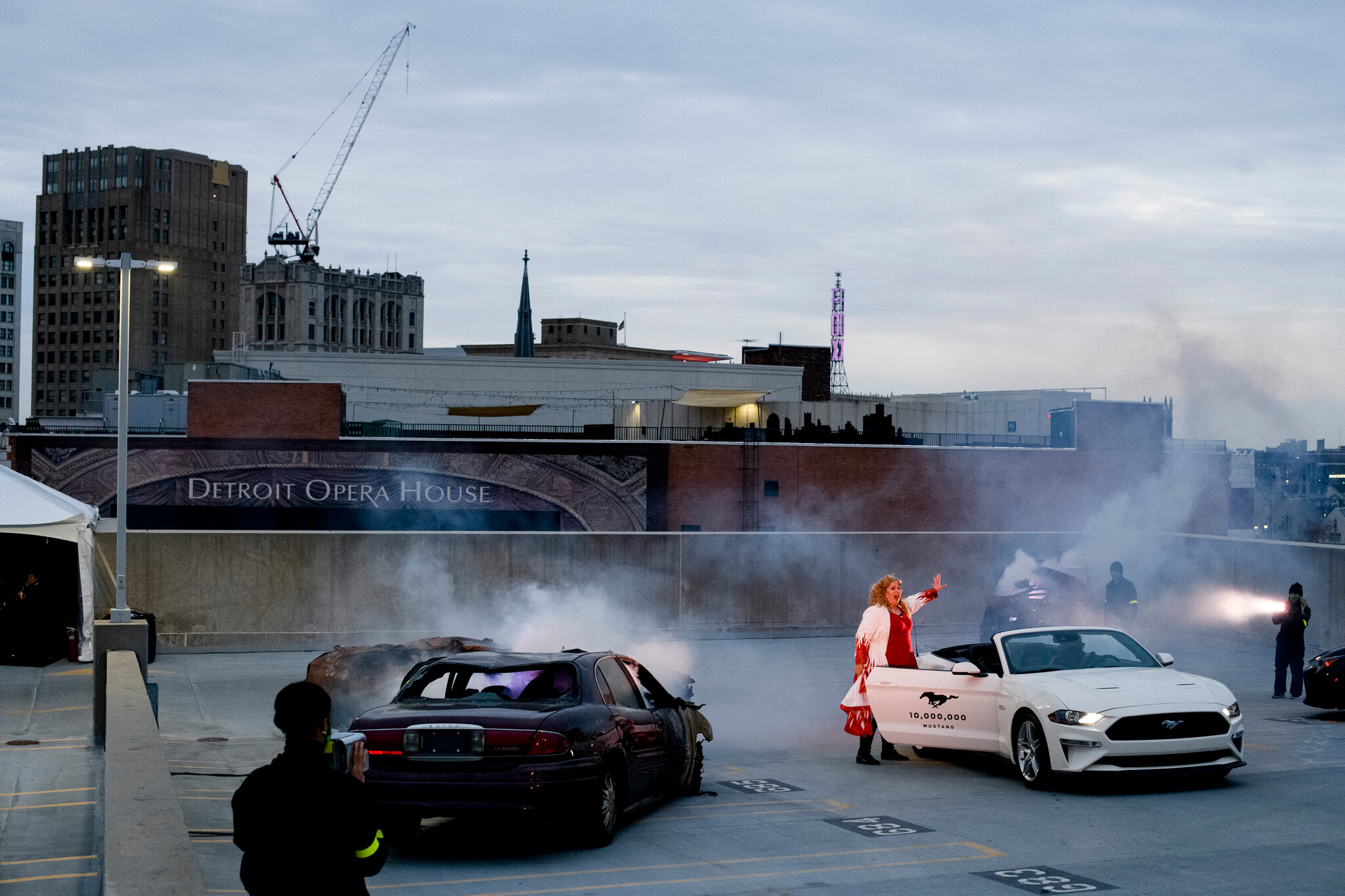
The two sites are 0.3 mile apart, both near Detroit’s Grand Circus Park. ds
© Dennis Simanaitis, SimanaitisSays.com, 2024
 Simanaitis Says