
Simanaitis Says
On cars, old, new and future; science & technology; vintage airplanes, computer flight simulation of them; Sherlockiana; our English language; travel; and other stuff
IS THERE A RIGHT OF IGNORANCE? PART 1
MERRIAM-WEBSTER DESCRIBES THE NOUN IGNORANCE as “the state or fact of being ignorant : lack of knowledge, education, or awareness.” Further, it defines the adjective ignorant as “1 a: destitute of knowledge or education. b: resulting from showing lack of knowledge or intelligence. 2: unaware, uninformed.”
Our Bill of Rights.The First Amendment of the U.S. Bill of Rights says, “Congress shall make no law respecting an establishment of religion, or prohibiting the free exercise thereof; or abridging the freedom of speech, or of the press; or the right of the people peaceably to assemble, and to petition the government for a redress of grievances.”
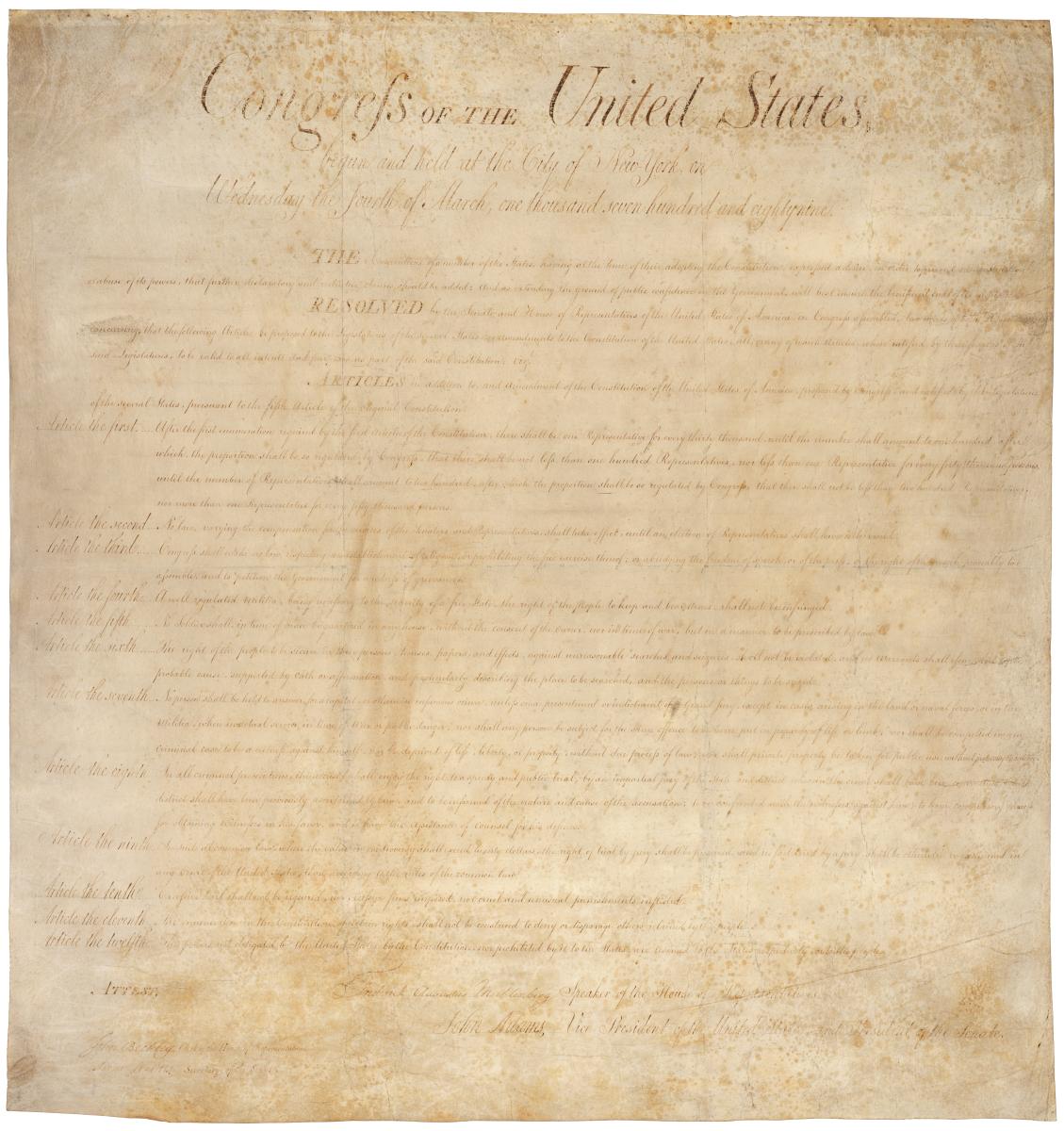
A Right of Ignorance? But is there a Right of Ignorance? Is it implied in the freedoms of speech, of the press, or of people’s peaceable assembly that we can be destitute of knowledge or intelligence, to be unaware or uninformed?
This, of course, has nothing to do with opinions. But as Senator Daniel Patrick Moynihan concurred with Economist James R. Schlesinger, “Everyone is entitled to his own opinion, but not to his own facts.”
It is the latter I have in mind here in Parts 1 and 2 today and tomorrow: To modify M-W a bit: Let’s discuss ignorance “resulting from a lack of facts.”
Separating Facts from Opinions. Bryce Hoffman writes in Forbes, March 17, 2024, “Fact and Opinions: Half of Americans Don’t Know the Difference.”

Hofffman is an adjunct lecturer at the Haas School of Business at the University of California, Berkeley. He recounts, “One of the main tools I teach leaders is called Assumptions Challenge. It does what it says on the tin: it helps people identify and stress-test their assumptions so that they can make better decisions and develop stronger strategies.”
Hoffman continues, “When I first started teaching Assumptions Challenge back in 2015, I did not bother explaining the difference between facts and assumptions to my students because I assumed that was obvious to any educated person. I quickly came to realize that my assumption – which I had embarrassingly failed to test – was wrong. Some of the learners in my courses, including a few who were quite senior leaders, struggled to differentiate between facts, assumptions, and opinions.”
There’s that word “facts” again.
“That is a big problem for any decision-maker,” Hoffman says “because decision quality is dependent in large part on our ability to make choices that are informed by a critical analysis of facts and data.”

The University of Illinois Urbana-Champaign Study. Hoffman describes, “What I learned the hard way was recently proven scientifically by researchers from the University of Illinois Urbana-Champaign who asked participants to categorize 12 statements about current events as facts or opinions. They found that 45.7 percent could do that correctly no more than half the time.”
Hoffman cites a co-author of the study, Jeffery J. Mondak, a professor of political science: “There’s a huge amount of research on misinformation. But what we found is that, even before we get to the stage of labeling something misinformation, people often have trouble discerning the difference between statements of fact and opinion.”
Here is a key point from this study, “Fact-Opinion Differentiation,” by Matthew Mettler and Jeffery J. Mondak, The Harvard Kennedy School Misinformation Review, March 7, 2024:
“Statements of fact can be proved or disproved with objective evidence, whereas statements of opinion depend on personal values and preferences…. Affective partisan polarization promotes systematic partisan error: as views grow more polarized, partisans increasingly see their side as holding facts and the opposing side as holding opinions.”
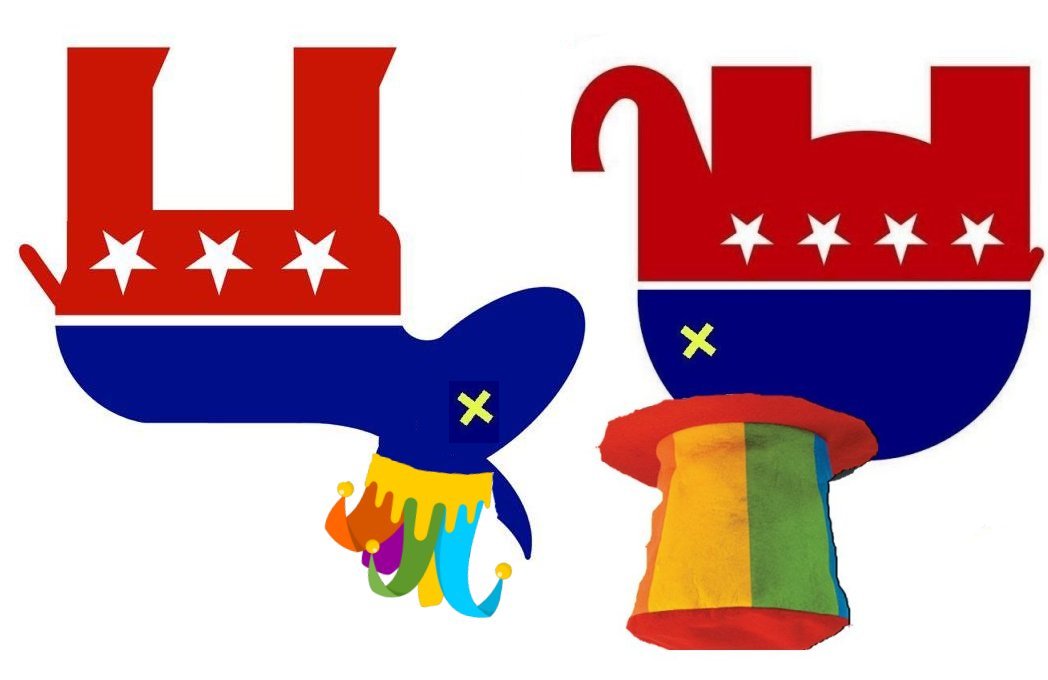
Our Current Politics. This certainly seems to fit current days. See Merriam-Webster‘s Word of the Year “Polarization,” Oxford‘s Word of the Year “Brain Rot,” our Electoral College, and “Trump and Science/Tech.”
Tomorrow in Part 2, we continue with this last thread. ds
© Dennis Simanaitis, SimanaitisSays.com, 2024
 Simanaitis Says