
Simanaitis Says
On cars, old, new and future; science & technology; vintage airplanes, computer flight simulation of them; Sherlockiana; our English language; travel; and other stuff
PORSCHE 1600—MORE THAN 60 YEARS AGO
TODAY, PORSCHE SELLS SUVS (about two-thirds of its products)—and then there’s the 911 (about 15 percent of production) and some others. However in October 1961, R&T marveled, “… back in 1949, when Ferdinand Porsche and his son Ferry first showed their prototype sports car based on a Volkswagen chassis, very few people recognized that this was the beginning of a significant new era in sports car development.”
“The first Porsche sports car,” R&T wrote back then, “obviously was all wrong; it couldn’t succeed. The engine location was ‘impossible,’ the cost would be too high, the performance inadequate.”
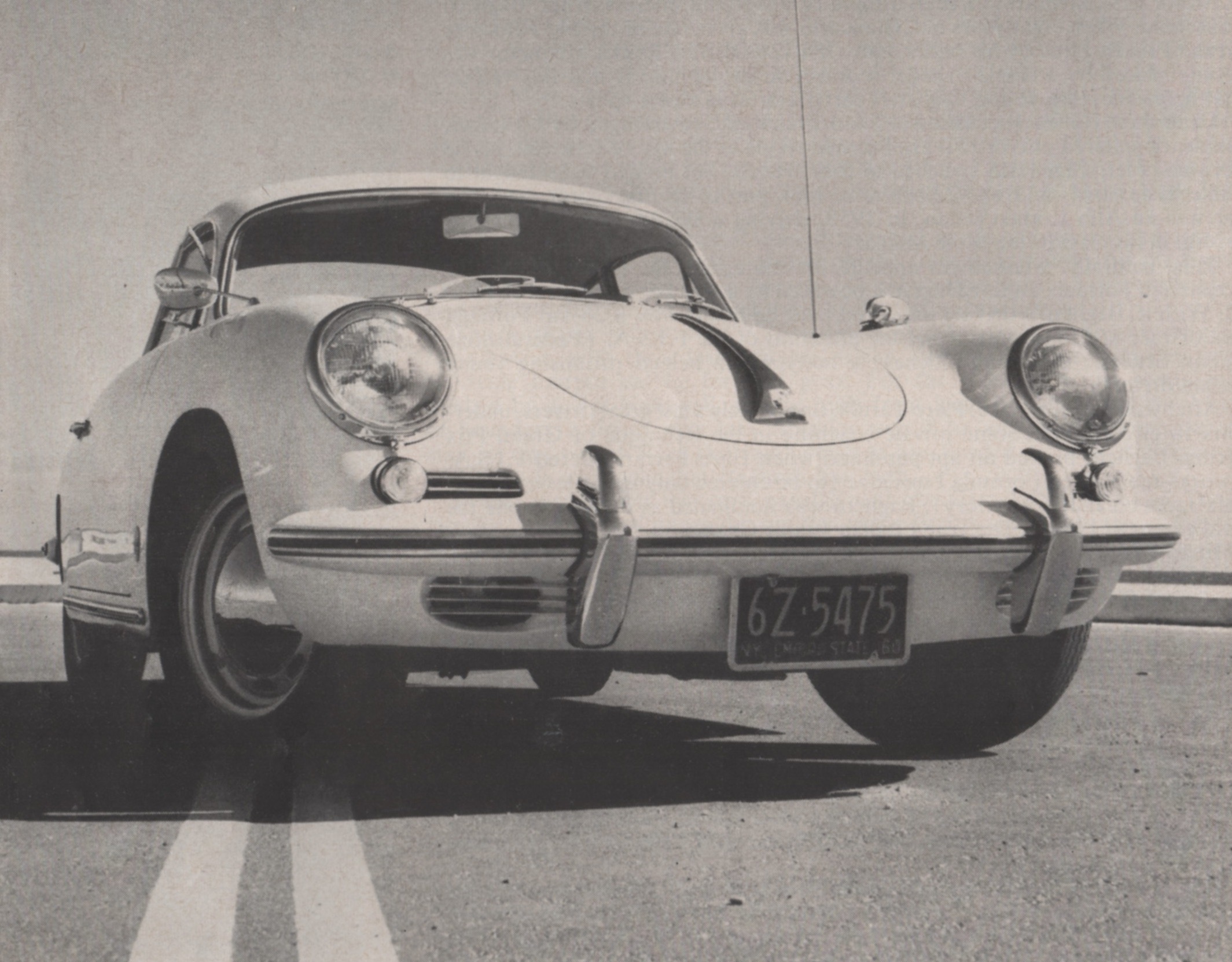
“Yet, today,” R&T continued, “a modern factory on the edge of Stuttgart turns out over 7000 Porsche sports cars a year, which are sold at over $3000 each [the 1961 equivalent of $31,566.40 these days]. Today every contender in Formula I racing employs an engine at the rear [er… mid- actually]. And the current Porsche sports car, even in its lowliest ‘1600 Normale’ form, gives a performance balance (acceleration, speed, and economy) which is virtually unmatched by any other vehicle.”
Here are other tidbits gleaned from this October 1961 report of the Porsche 1600.
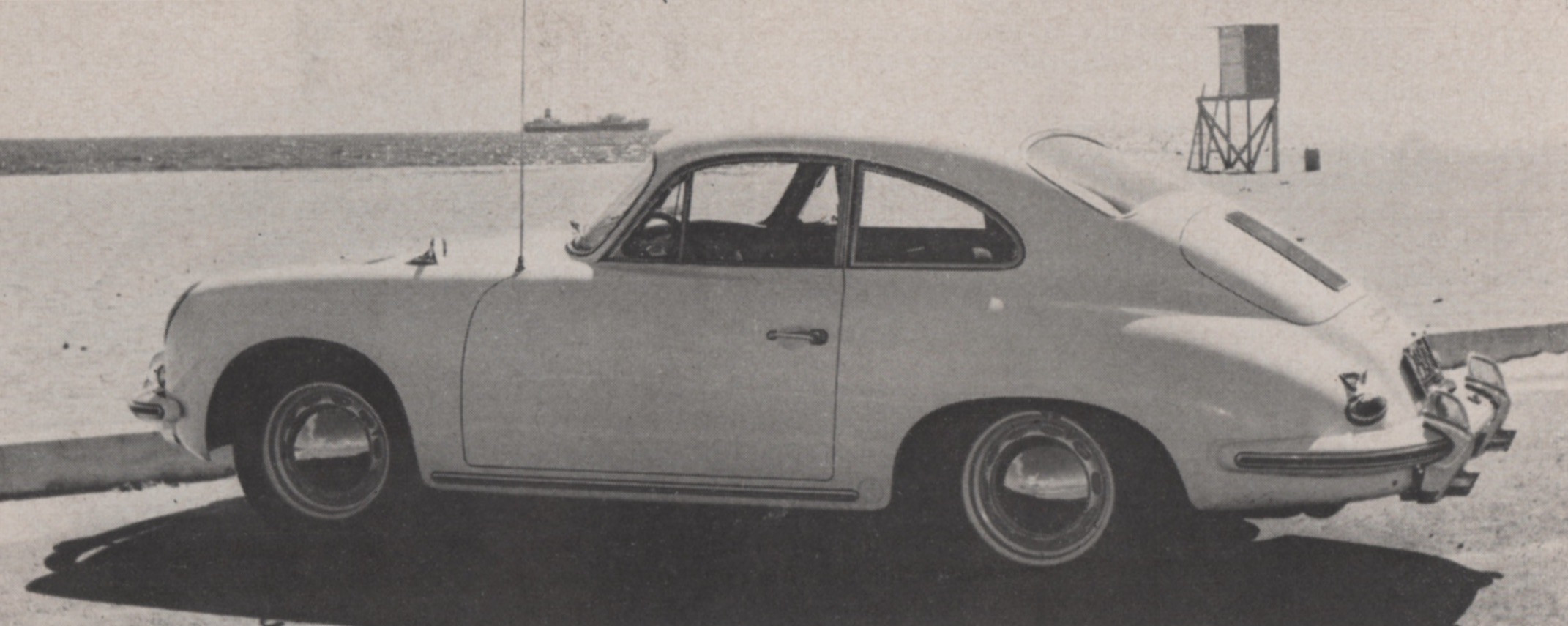
A Bunch of Porsches. “In checking back,” R&T observed, “we find that we have tested no less than 10 Porsches of various types in the past 10 years. But it has been 4 years since we tested the most popular model—the 1600-N coupe.”

R&T said, “There’s something about a Porsche that is hard to define. It is small and it costs a lot of money (‘small car, big payments’). It takes a genuine enthusiast to appreciate its real value, but there is no one-make-owner group more avid than the P.O.C. (Porsche Owners Club).”
Should I pause here to recall a Porsche joke? No.
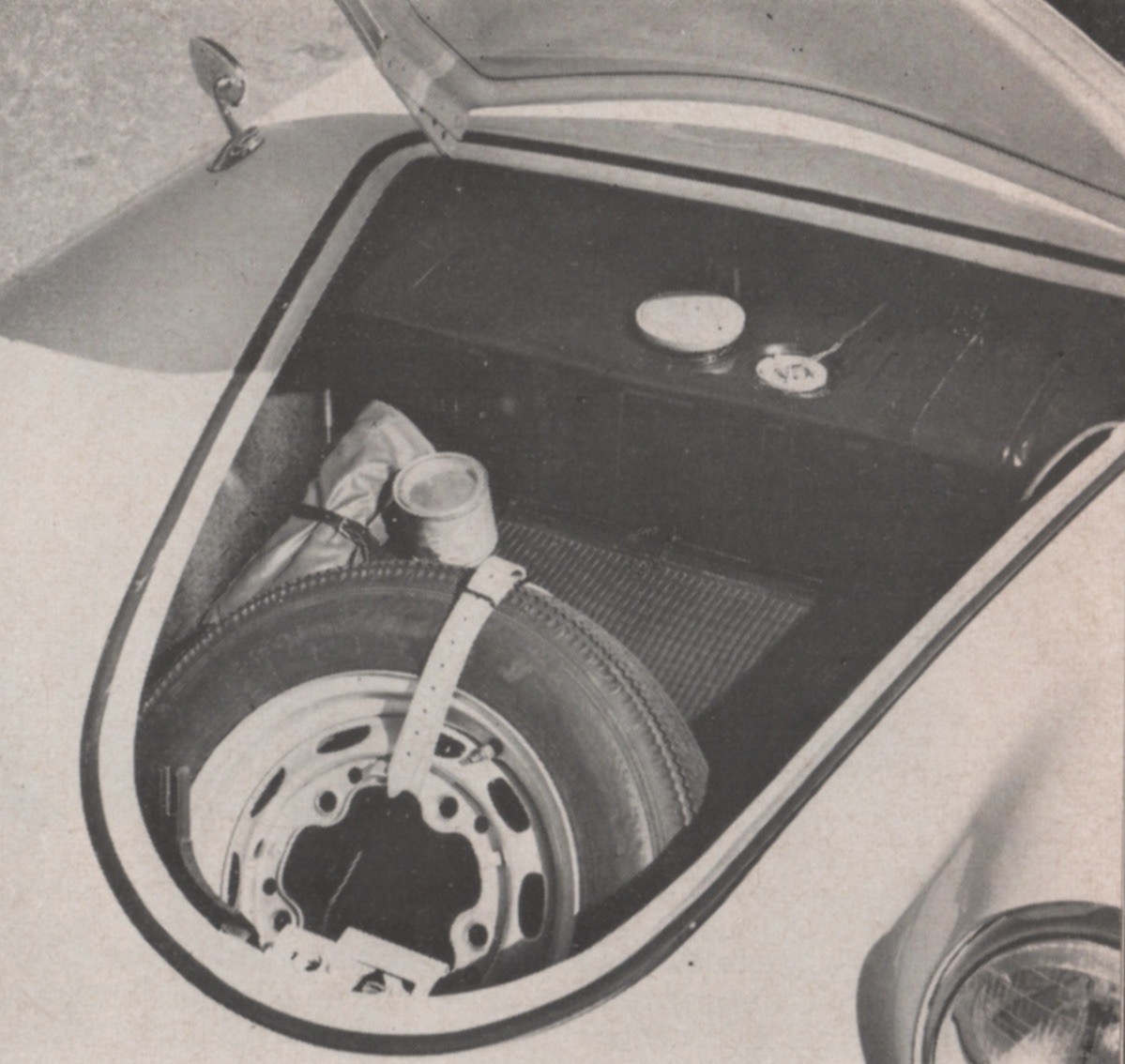
Porsche Accommodations. R&T recounted, “The first surprise, after getting in, is the tremendous amount of room; ample leg room for over-6-footers, plenty of elbow room and shoulder room, a surprising amount of space for luggage.”`

“You sit low,” the magazine noted, “yet not too close to the floor. The body sides come up clearly to the shoulders, yet visibility is truly panoramic.”

Selecting the Correct Gear. R&T described, “A Porsche is exceptionally easy to drive once you accept the fact that the car responds best only when the right gear is engaged at the right time. It’s not that the 1600-N engine is a fussy unit that doesn’t take hold until 4000 rpm [P.O.C. members, are you listening?]. But the recommended revolution range is from 2500 to 4500 rpm and if you want the most fun while driving, it is good practice to use the gears properly.”
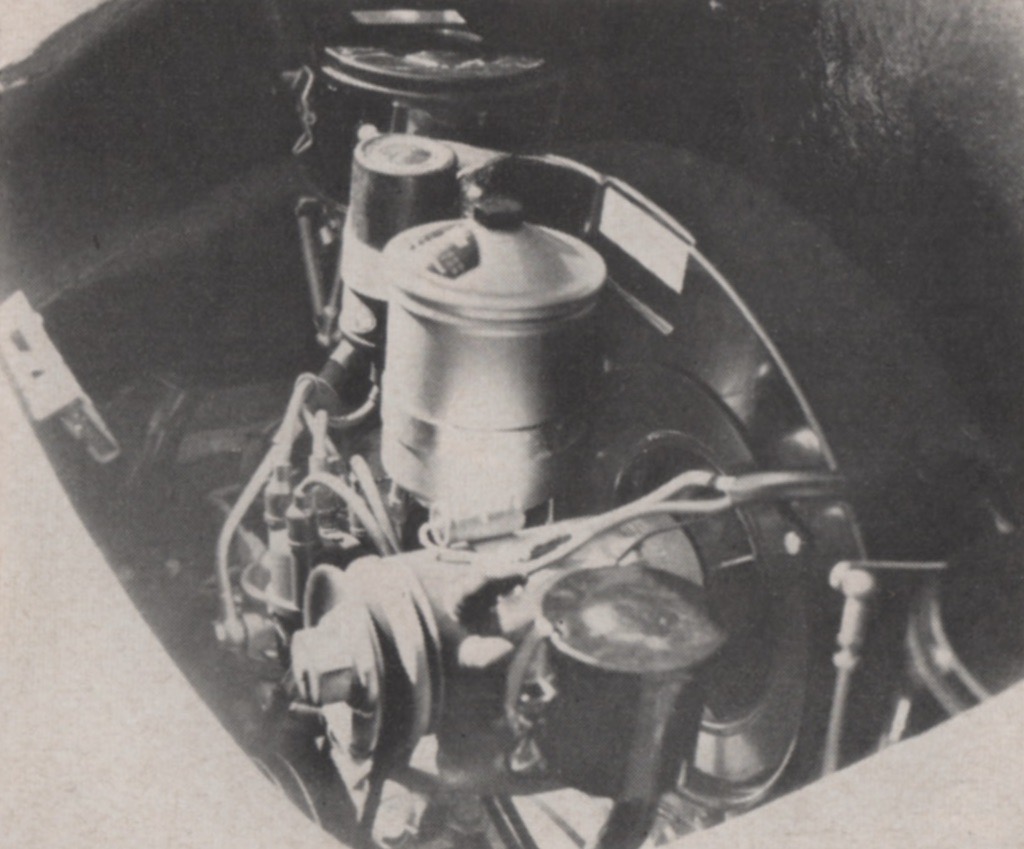
“If you happen to be a high-revving type,” R&T advised, “we suggest buying a Super or a Super-90 type.”
“Let’s Take Ride, Go Beer.” (An inside joke from pal Joe Rusz.) “When the Porsche was first introduced,” R&T wrote (this was before dear Loraine Keaton would have called out the redundancy), “the sports car buffs complained about its baby-buggy ride. The Porsche was merely ahead of its time, and even today, few sports cars can approach its excellent riding qualities and not many can match its cornering ability.”
Oversteer? “If you get wild,” R&T advised, “the rear end will start to hang-out (oversteer) but the car is easily controlled and, now that the rear wheels have negative camber, it is very difficult to spin-out. High-speed stability in a cross wind is still not good, but is much better that most cars of this size and weight.”
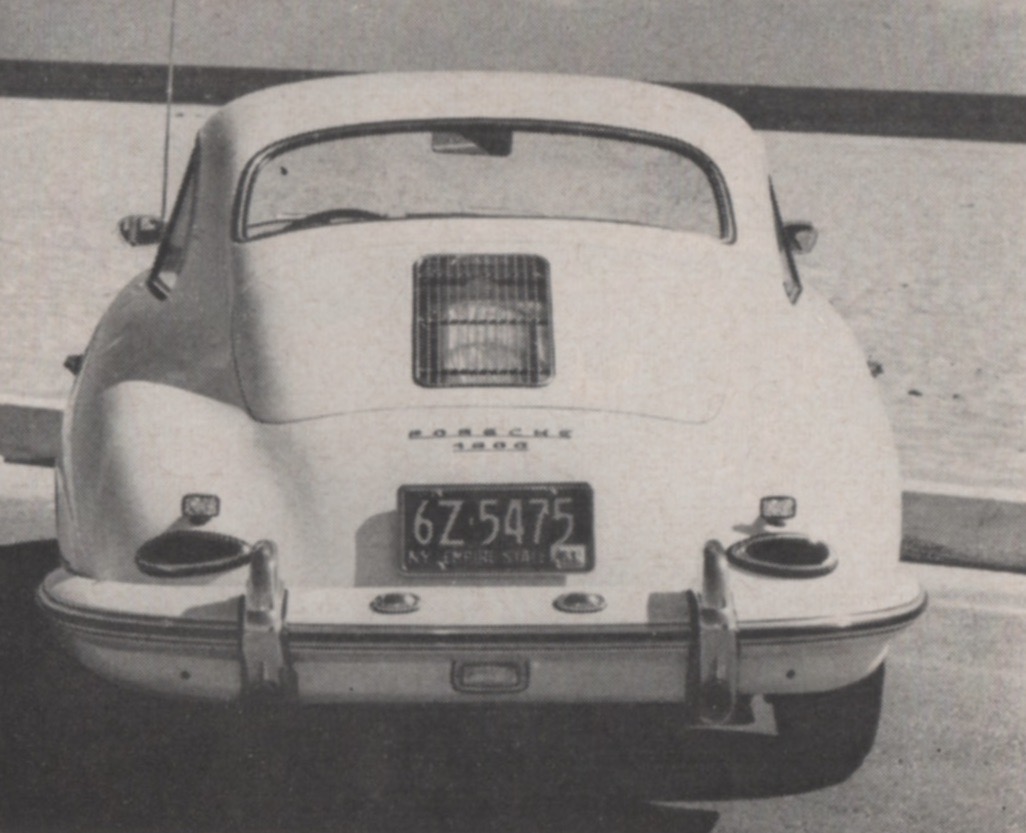
Order the Sunroof. “Better ventilation for hot-weather driving would be an improvement,” R&T said. “The rear windows swing out for an extractor effect and you can get some air. However, we found no combination of window openings which provided enough air without also allowing considerable noise at over 60 mph. A similar, but older Porsche owned by one of our staff has the optional sliding roof opening. This gives improved ventilation under some conditions, but is still not ideal.”
Stuttgart Standards. R&T concluded, “Finally, we must mention the extraordinarily high standard of finish and workmanship. This must be seen and studied to be believed and is all the more remarkable when we realize that Porsche is, technically, an ‘assembled’ car. (Body, gearbox, many engine parts are purchased items.) Obviously, Porsche maintains very high standards and having studied and observed these cars through the years we see no sign of any relaxation on their part.”
Some 63 years later, Porsches are now manufactured in Zuffenhausen, a district of Stuttgart; Leipzig; Bratislava, Slokokia; outsourced to Finland’s Valmet Automotive; and, recently, in Malaysia. Signs are that no relaxation has taken part. ds
© Dennis Simanaitis, SimanaitisSays.com, 2024
 Simanaitis Says
Dennis, I usually agree with you, but not with your statement, “Signs are that no relaxation has taken part.” I have owned and driven various Porsche sports cars both air and water cooled, on the road and on the track continuously since 1971, and I have been an active member of PCA for over 50 years. I do most of the mechanical work on them myself, so I know them quite well. My opinion of the contemporary cars is that they are of no better quality than most other cars. They have continued to be designed to provide superior driving enjoyment, but profit considerations have driven compromised decisions in materials selection and component design that have resulted in serious reliability problems. To obtain true “Porsche Quality”, one must buy a 911 GT3 for the track or a 911 Turbo S for the road, each of which sells for a stratospheric price, even without the typical outrageous dealer markup.
Thanks, Gary, for your insight.
Alas, a sign of the times.
Tho’ not a Porschefile, much enjoyed the illuminating above article as well as Gary Perser’s lifelong knowledge.
There’s that expression we’ve read about such and such a vintage car too many times, “feels like it was carved from a single billet of steel.”
While i’ve driven many well fettled auld barouches from both sides of the Atlantic and Channel, most feeling well sorted and “of a piece,” two (2) genuinely had that “carved from single billet of steel” feel. One was, of all things, a ’53 Nash-Healey, despite being a composite of three nations. The other, a black 1964 Porsche Model C coupe, that also the first year for disc brakes, tho’ that’s beside the point.
Dennis’s above also points out an attribute lacking in so many Brit sport cars, r o o m. Room for those of us over six feet, perhaps by three inches and with size 13 feet.
That thorough Porsche quality was pervasive. You could feel it, see it. Every detail. Have shared this mayhaps too often, but so well sums it: When Sir William Lyons still on Jaguar’s board, he commented to member(s) of the motoring press, “We could never get our XK quality up to Porsche levels.”
I grew up in the time of 356’s, sadly I only got to ride in / drive VW’s until the 1980’s when I was most pleased to drive a bent window coupe on the back roads between Bakersfield, Ca. and Tehachipi .
It was an outstanding car in every respect .
Some years later my then young son happened upon a 1967 912 5 gauge, 5 speed for $1,000 , he bought it but soon didn’t like it because he’s lazy and didn’t want to take the time and effort to fettle it .
I wound up with it and tinkered it to full capacity (I’m a VW Mechanic by trade) and enjoyed it greatly, I got the chance to make a quick profit selling it to a local restorer and bought a one owner 1963 356B Coupe, another lovely car but not -quite- as good a back roads driver as that well used and rusty 1967 912 5 speed was .
One has to experience these older Porches to under stand why they’re so great but these days no one actually drives their 360’s apart from the cars & coffee or local shows =8-)
My 356 sits uncovered and unloved in my son’s back yard, I wonder if he’ll ever touch it .
-Nate
Nate,
It deserves better. Do you want to sell it?
Gary
It certainly does but, I gave it to him and he’s turned down $35,000 for it .
He a;so has the old VW Bug he came home from being born in (1960 #117), it’s also rusting into the ground .
-Nate