
Simanaitis Says
On cars, old, new and future; science & technology; vintage airplanes, computer flight simulation of them; Sherlockiana; our English language; travel; and other stuff
BELINDA MULROONEY—KLONDIKE QUEEN OF HOSPITALITY PART 2
YESTERDAY, SMITHSONIAN’S MELANIE HAIKEN BEGAN “a swashbuckling story… that saw Mulrooney help build a city, make and lose several fortunes, and leave a lasting legacy as a Yukon pioneer.” Today in Part 2, we see how Mulrooney brought heat and light to Gold Rush miners (and accumulated—and lost—numerous nuggets along the way). She also managed to pick up and discard a phony Count, whose name she choose to keep.
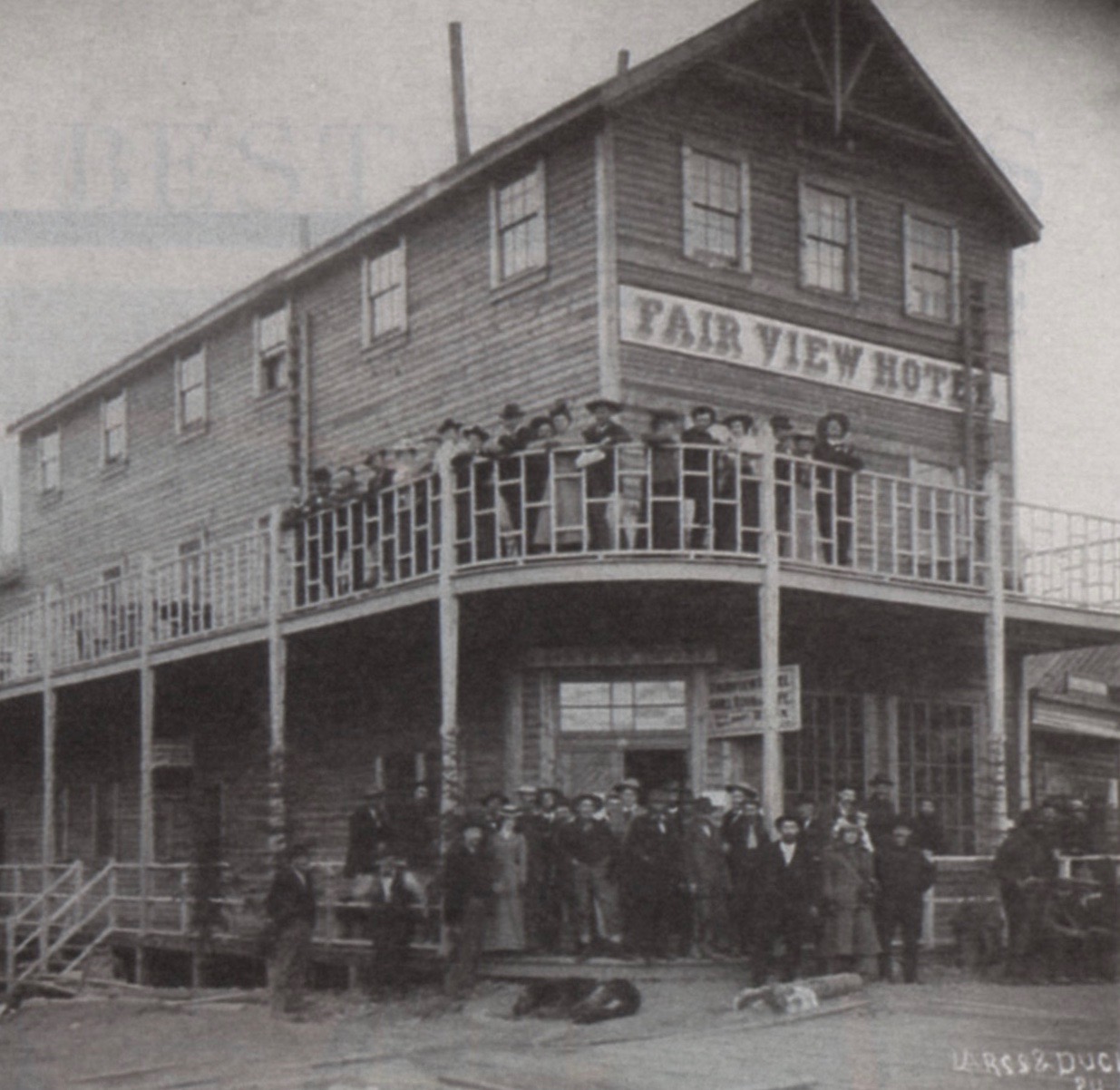
Electric Chandeliers—and Central Heat. “The Fair View was the first property in town to have electricity,” Haiken notes. “When miners bet Mulrooney $5,000 that she couldn’t keep the three-story building warm, she bought an old steamboat boiler, attaching a sawmill to provide the fuel.”
Haiken continues, “Mulrooney modernized the town in other ways, too, helping bring Dawson its first telephone and telegraph, housing the switchboard in the Fair View, and forming the Hygeia Water Supply Company to provide safe drinking water. It was less than two years since she arrived in Dawson, and already she was one of its foremost citizens.”
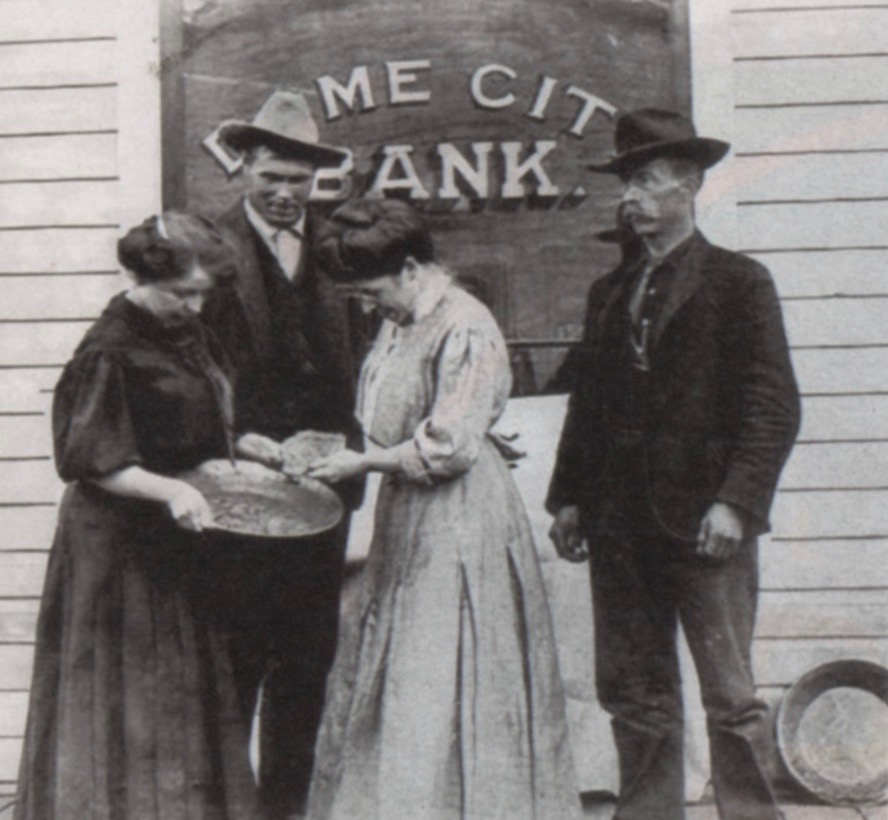
Belinda Mulrooney, center, examines an 88-ounce nugget in front of the Dome City bank she founded.
The Phony “Count.” Alas, Haiken recounts, “As sharp-eyed as she was in business, Mulrooney proved less so in matters of the heart. Disaster came courting in the form of a sham European nobleman, ‘Count’ Charles Eugene Carbonneau—actually a French Canadian barber from Montreal—whom Mulrooney wed in Dawson City on October 1, 1900. The next few years found the Carbonneaus wintering in Paris, in an apartment near the Champs-Élysées with a bevy of servants.”
“But,” Haiken writes, “Carbonneau’s profligate spending, dubious investments and mismanagement of Mulrooney’s mining companies emptied the couple’s bank accounts. Leaving the con man in France, where he was soon to be convicted of swindling and embezzlement, Mulrooney returned to Dawson alone in 1904.
For more on the faux Count and the Countess, check out Explore North. The original reports from the period are a scream.
A New Gold Strike. Mulrooney turned to a new gold strike in Fairbanks, some 400 miles to the west of Dawson City. She thrived there, and by the time she got around filing for divorce in July 1906, she was in the money again.
Haiken observes, “Perhaps foreseeing the inevitable bust of the Alaskan claims, Mulrooney decamped to Washington State’s fertile Yakima Valley, where she ran a 20-acre farm and orchard, built an imposing stone castle, and reigned there into the 1920s. Locals came to refer to her as the Countess Carbonneau.”
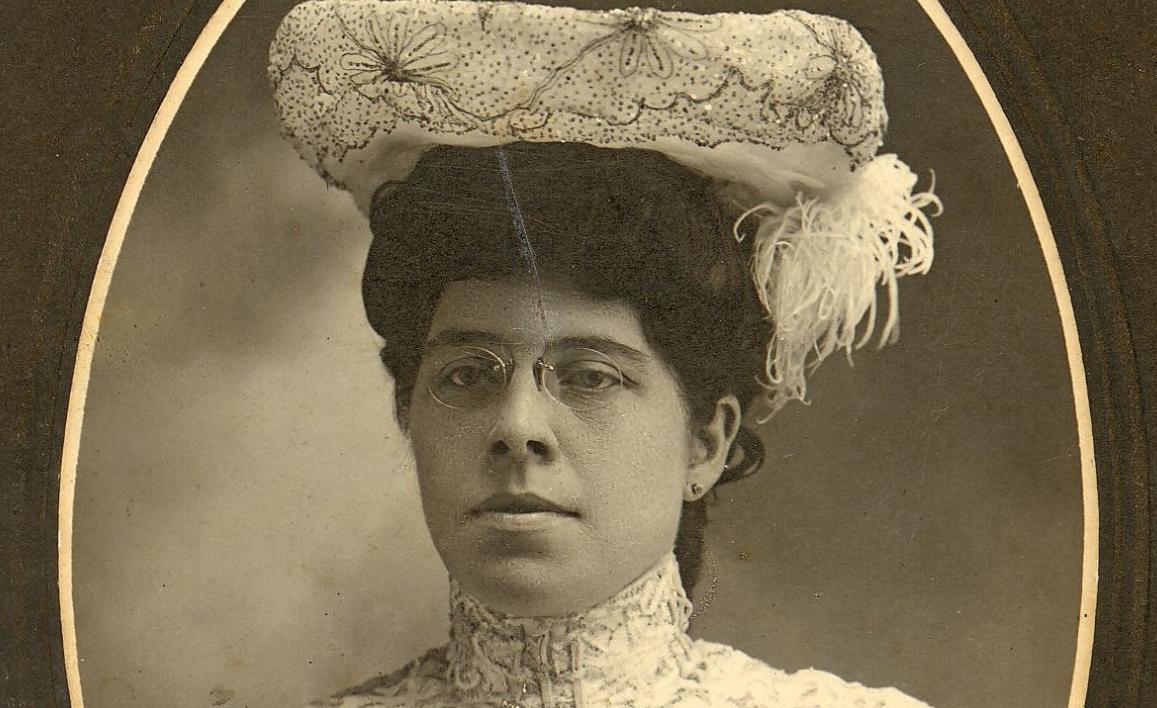
A 1900 photo of Belinda Mulrooney Carbonneau. She came to Yakima in 1910 and built what is now known as Carbonneau Castle. Image from the Yakima Valley Museum via the Yakima Herald-Republic.
“Still,” Haiken says, “it was her memories of the Klondike that Mulrooney most prized. Of her fondness for that wild country, she recalled poignantly: ‘I was young when I went there full of hope.’ Later in life, Mulrooney took special pleasure in her membership in the male-only Yukon Order of Pioneers, which made an exception for her mining achievements and civic service.”
And rightly so, I say. “In 1957,” Haiken writes, “her money mostly gone, Mulrooney moved to a senior care facility in Seattle, where she died in 1967 at the age of 95.”
Haiken also cites Melanie Mayer, author of the 2000 Mulrooney biography Staking Her Claim: “If she was down, well, she knew how she had gotten up before, and she went at it again from a different angle.”
What excellent life’s advice. ds
© Dennis Simanaitis, SimanaitisSays.com, 2024
 Simanaitis Says