
Simanaitis Says
On cars, old, new and future; science & technology; vintage airplanes, computer flight simulation of them; Sherlockiana; our English language; travel; and other stuff
BELINDA MULROONEY—HOSPITALITY QUEEN OF THE KLONDIKE PART 1
IT’S OFT OBSERVED THAT real wealth in gold rushes came not to the pick-and-shovelers, but rather to the entrepreneurs selling these utensils. Smithsonian Magazine‘s Melanie Haiken offers an entrepreneurial variation on this theme with “Queen of the Klondike.” These tidbits, in Parts 1 and 2 today and tomorrow, are gleaned from this fascinating November 2024 article together with my usual Internet sleuthing.

1885–1895, Ups and Downs. Irish immigrant Belinda Mulrooney fled a Pennsylvania coal town to become a nanny for a wealthy Philadelphia family. After the economic crash of 1891, she took her meagre savings to Chicago where, Haiken describes, she sensed “opportunity in the city’s preparations for the 1893 World’s Fair. Mulrooney purchased a lot just outside the fair’s carnival strip and built on it, renting and then selling the property at considerable profit, which she used to buy a popular restaurant nearby.”
Haiken continues, “As the fair closed, Mulrooney learned that San Francisco was planning its own exposition and took her profits westward, where she repeated her real estate speculations. But when an 1895 fire in an uninsured building left her penniless, it was time to start over.”
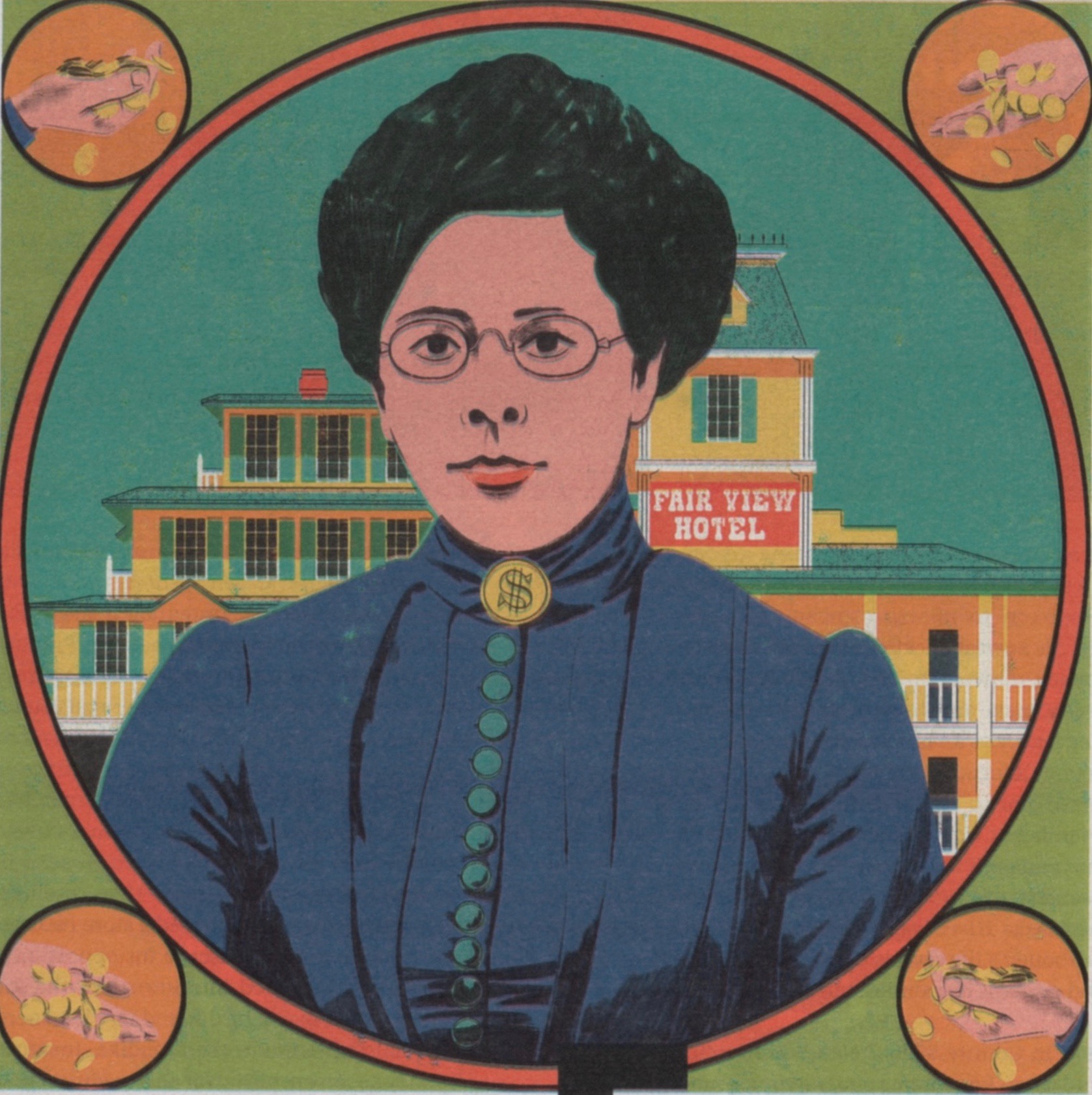
The Klondike Beckons. “This time she found success in merchant ventures,” Haiken writes, “bootlegging whiskey and other coveted supplies aboard the steamship City of Topeka between Seattle and southern Alaska—then reselling goods at frontier prices. She opened a store in Juneau and was scanning the landscape for opportunity when a prospector strolled into town, showing off some of the gold nuggets he’d found in what seemed like a promising strike in the Klondike. Instantly, Mulrooney began outfitting for an expedition that would change her life, and the frozen frontier, forever.”
Hot Water Bottles to Homestyle Meals. “Mulrooney landed in Dawson in April 1897,” Haiken writes, “one of the first entrepreneurs on the scene. In an often-told anecdote, Mulrooney describes tossing her one remaining coin in the river for luck, announcing with breezy confidence: ‘I’ll start clean.’”
“But it wasn’t luck that made Belinda Mulrooney rich,” Haiken recounts, “ it was her unerring ability to anticipate what people would most need. Her goods, including hot water bottles for miners enduring the frigid winter in tents, netted a 600 percent profit from that first trip. She also saw the miners were desperate for a good meal and opened an all-hours restaurant serving hearty homestyle fare.”
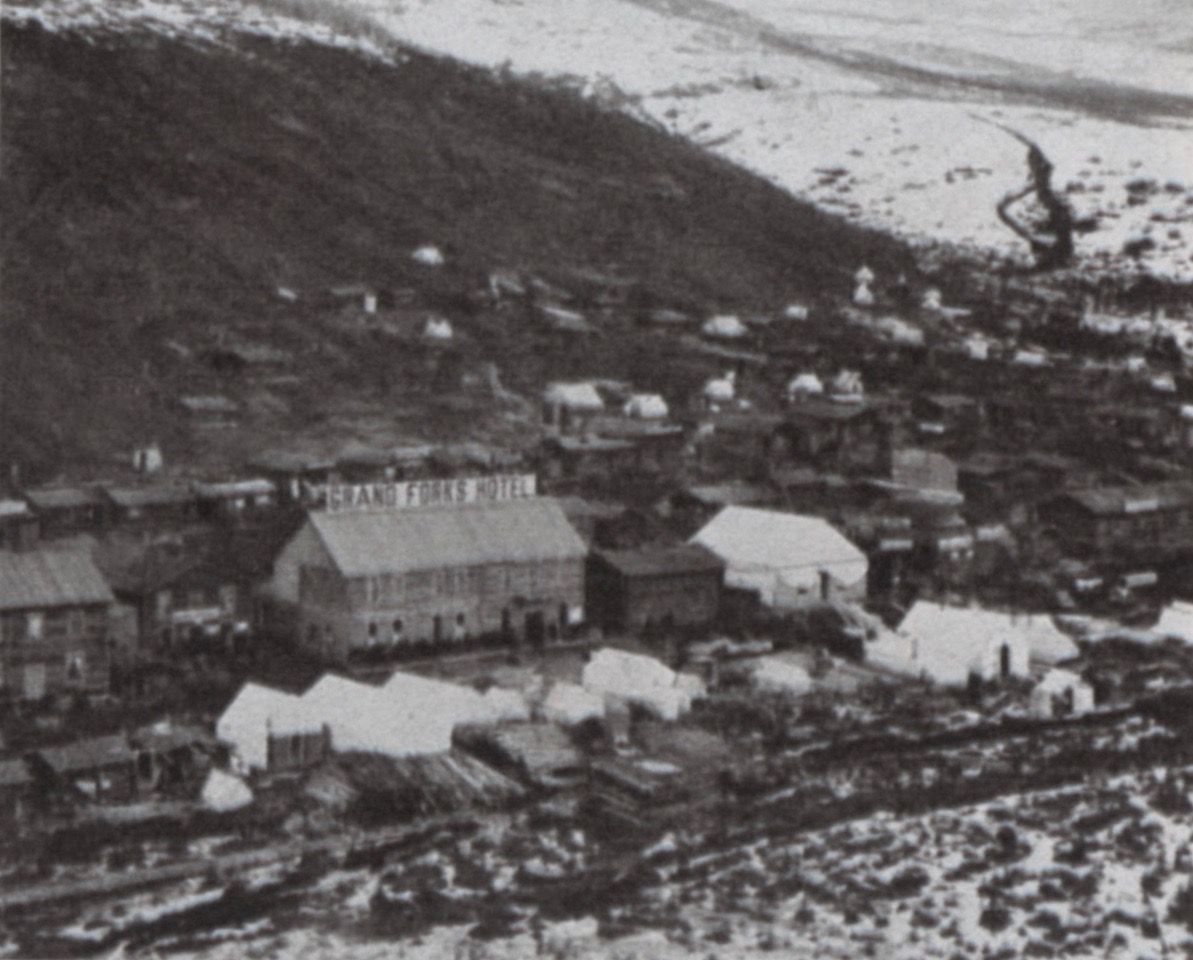
Compare Mulrooney’s Grand Forks Hotel to other buildings in 1897.
The Grand Forks, The Fair View, and More. “Only 26 when she opened the [Fair View] hotel in July of 1898,” Haiken continues, “in two short years she’d come to be known as the richest woman in the Klondike, overseeing an empire that extended from hotels, restaurants and real estate development to mining companies, banks, even utilities.”
“Ever the expansionist,” Haiken recounts, “Mulrooney set out to build the finest hotel in Dawson City, one modeled on the elegant hotels she’d seen in Chicago and San Francisco. Calling it the Fair View, Mulrooney was meticulous in choosing the lace curtains, plush carpets, brass bedsteads and other finery that would make her new hotel the envy of the region’s other hoteliers, who housed most guests in rough dormitories.”
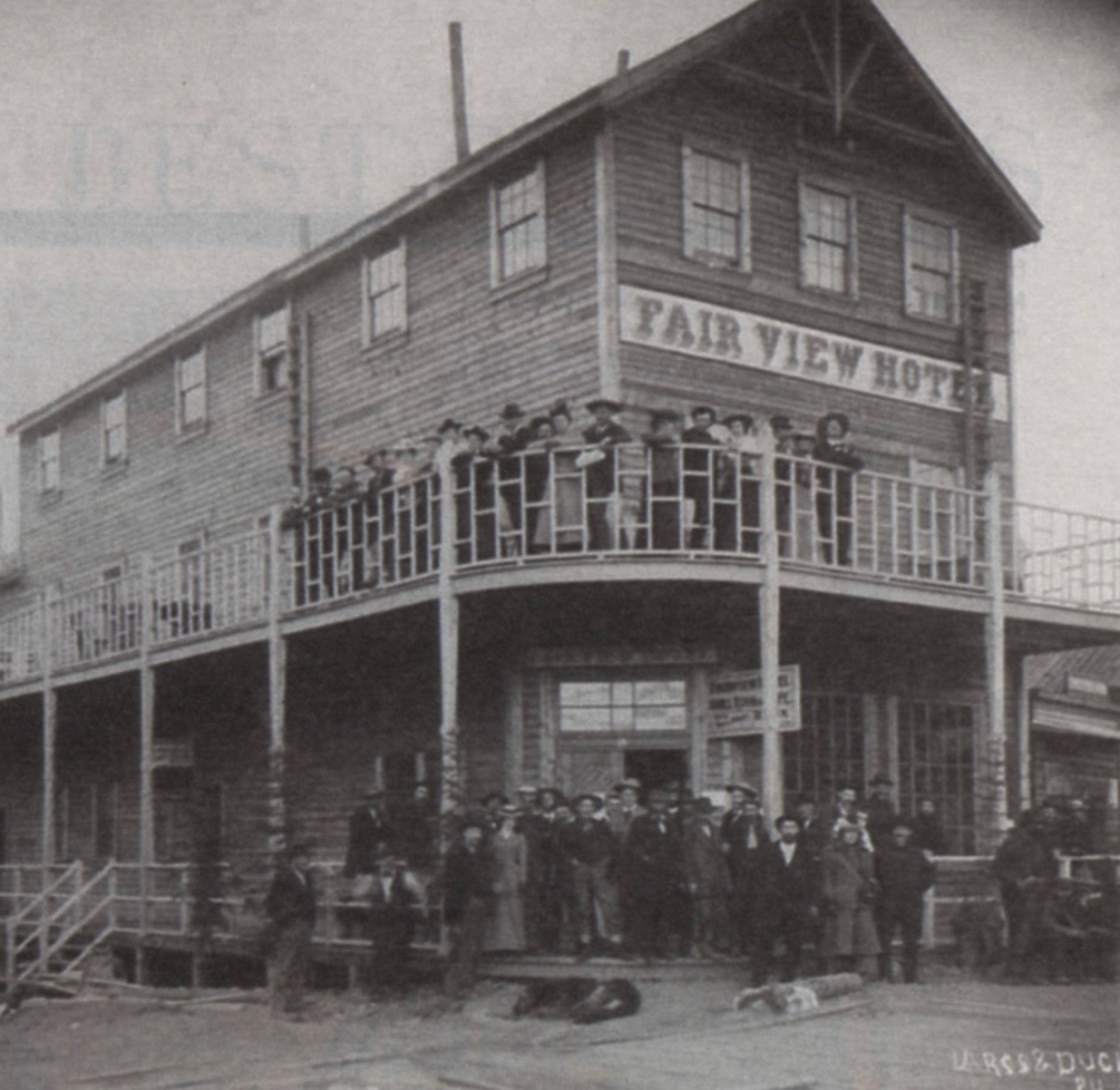
Mulrooney’s Fair View Hotel was the fanciest place in Dawson when it opened in July 1898.
Tomorrow in Part 2, we see how Mulrooney brought heat and light, not to say chandeliers, to hardy miners. ds
© Dennis Simanaitis, SimanaitisSays.com, 2024
 Simanaitis Says
These were the people who built Alaska and San Francisco during their gold rushes, becoming the then celebrated “merchant millionaires” whose families evolved into the elite brahmins. Belinda Mulrooney, Sam Brannan, Levi Strauss, Erastus Brainerd, Thomas Larkin, Friedrich Trump and Faxon Dean Atherton are credited for creating the wealth and development of San Francisco, Seattle, Juneau, etc.
Curious that in present day standards they’d be pilloried as capitalistic price gougers by those who benefited from their labors.
Just read this a couple days ago. What a woman. Reminds me of my father’ mother & grandmother in Pittston PA . I am 80.
John Patrick McNulty