
Simanaitis Says
On cars, old, new and future; science & technology; vintage airplanes, computer flight simulation of them; Sherlockiana; our English language; travel; and other stuff
PICASSO ON THE FAMILY WALL
“AFTER HE STUMBLED ACROSS the painting in 1962,” Angela Giuffrida writes in The Guardian, October 1, 2024, “Luigi Lo Rosso took the rolled-up canvas home with him to Pompeii, where it hung in a cheap frame on the living room wall for the next few decades.”

Jo Lawson-Tancred picks up on the tale in Artnet, October 1, 2024: “My father was from Capri and would collect junk to sell for next to nothing,” [son Andrea] Lo Rosso told The Guardian. “He found the painting before I was even born and didn’t have a clue who Picasso was. He wasn’t a very cultured person.”

“My mother didn’t want to keep it,” Lo Rosso continues, “—she kept saying it was horrible,” he added.

Mrs. Lo Rosso, the “horrible” painting in the background. Image from The Guardian.
A Quest to Discover the Artist. Giuffrida describes in The Guardian: “The family eventually sought the advice of a team of experts, including a well-known art detective, Maurizio Seracini. After years of complex investigations, Cinzia Altieri, a graphologist and member of the scientific committee of the Arcadia Foundation, which deals with the valuations, restorations and attributions of art works, confirmed that the signature on the painting, today valued at €6m (£5m), was Picasso’s.”
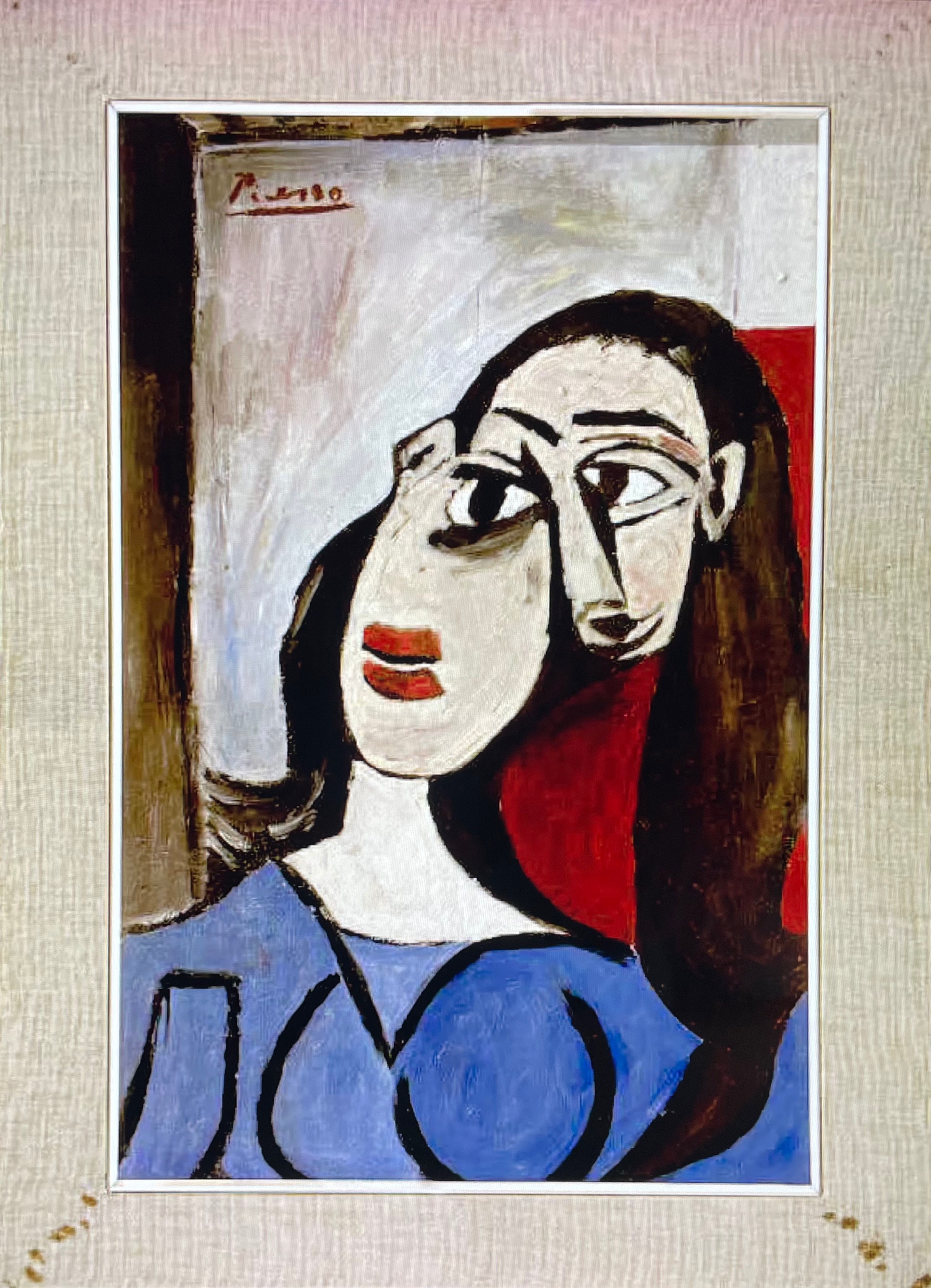
The Lo Rossos’ Picasso, oil on canvas, 21.1 x 15.4 in. Image from The Guardian.
“After all the other examinations of the painting were done, I was given job of studying the signature,” Altieri told The Guardian. “I worked on it for months, comparing it with some of his original works. There is no doubt that the signature is his. There was no evidence suggesting that it was false.”
Another Portrait of Picasso’s Pal. Giuffrida recounts, “Picasso was a frequent visitor to the southern Italian island of Capri and the painting, which is strikingly similar to Picasso’s Buste de femme (Dora Maar), is believed to have been produced between 1930 and 1936.

Buste de femme (Dora Maar), 1939, by Pablo Picasso, oil on canvas, 21.7 x 18.1 in. Image from Artnet.
Wikipedia notes, “Henriette Theodora Markovitch (22 November 1907 – 16 July 1997), known as Dora Maar, was a French photographer, painter, and poet. Maar was both a pioneering Surrealist and antifascist.”
“In 1935,” Wikipedia continues, “Maar was introduced to Pablo Picasso and their relationship had a profound impact on both artists. During this time, Maar significantly influenced Picasso’s style and themes, particularly his epic work Guernica.”
Also, Wikipedia notes, “Picasso was intrigued by Maar’s seductive and masochistic behaviour, which served as inspiration for many of his works throughout their relationship. Their liaison would last nearly nine years, during which time Picasso did not end his relationship with Marie-Thérèse Walter, mother of his daughter Maya.”

Pablo Picasso and Dora Maar at Golfe-Juan, France, in 1937. Image from CCI/Shutterstock via CNN Style.
Provenance. Giuffrida recounts, “Luca Marcante, president of the Arcadia Foundation, believes there may be two versions of the work. ‘They could both be an original,’ he told Il Giorno newspaper. ‘They are probably two portraits, not exactly the same, of the same subject painted by Picasso at two different times. One thing is for sure: the one found in Capri and now kept in a vault in Milan is authentic.” And worth $6 million or more.
Guiffrida continues, “Marcante will now present the evidence to the Picasso Foundation.”
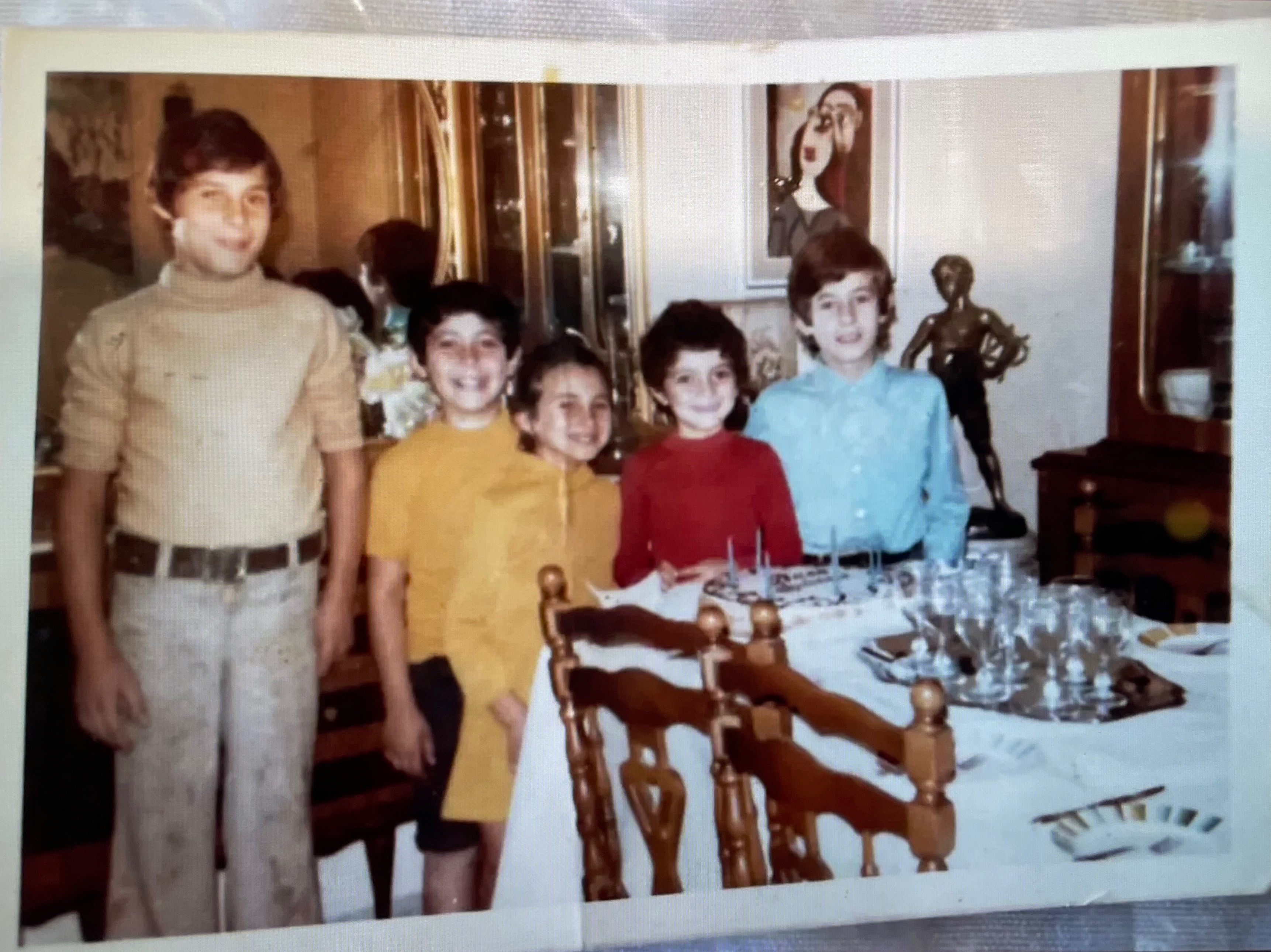
And she quotes Andrea Lo Rosso, who grew up with the painting on the family wall: “I am curious to know what they say,” said Lo Rosso. “We were just a normal family, and the aim has always been to establish the truth. We’re not interested in making money out of it.” ds
© Dennis Simanaitis, SimanaitisSays.com, 2024
 Simanaitis Says