
Simanaitis Says
On cars, old, new and future; science & technology; vintage airplanes, computer flight simulation of them; Sherlockiana; our English language; travel; and other stuff
DUDLEY CLARKE—MASTER OF DECEPTION
NOTES WIKIPEDIA, “AT THE TEHRAN CONFERENCE WINSTON CHURCHILL made his famous remark that in wartime ‘truth is so precious that she should always be attended by a bodyguard of lies.” By contrast, Dudley Clarke’s principle was the opposite: The lie of a cover plan was so precious that it should be flanked with an escort of truths.

Brigadier Dudley Wrangel Clarke, CB, CBE, 1899–1974. Image by Patrick Edward Phillips, 1945, from Wikipedia.
Robert Hutton’s “The Spy Who Hoodwinked Hitler,” BBC History, September 2024, gives marvelous details of Clarke’s achievements: “Dummy tanks at El Alamein. Bogus generals in Algiers. Sham armies on D-Day. All were ruses masterminded by Dudley Clarke.”
Here are tidbits gleaned from Hutton’s article together with my usual Internet sleuthing.
Solving Problems Yet Considered. “Born in 1899,” Hutton writes, “Clarke joined the army during the First World War so, by the time the Second World War began, he had been in uniform for most of his life…. He was the man to whom you gave unusual assignments—an original thinker who, if he sometimes seemed on the verge of insubordination, could be relied upon to solve problems you hadn’t yet considered.”
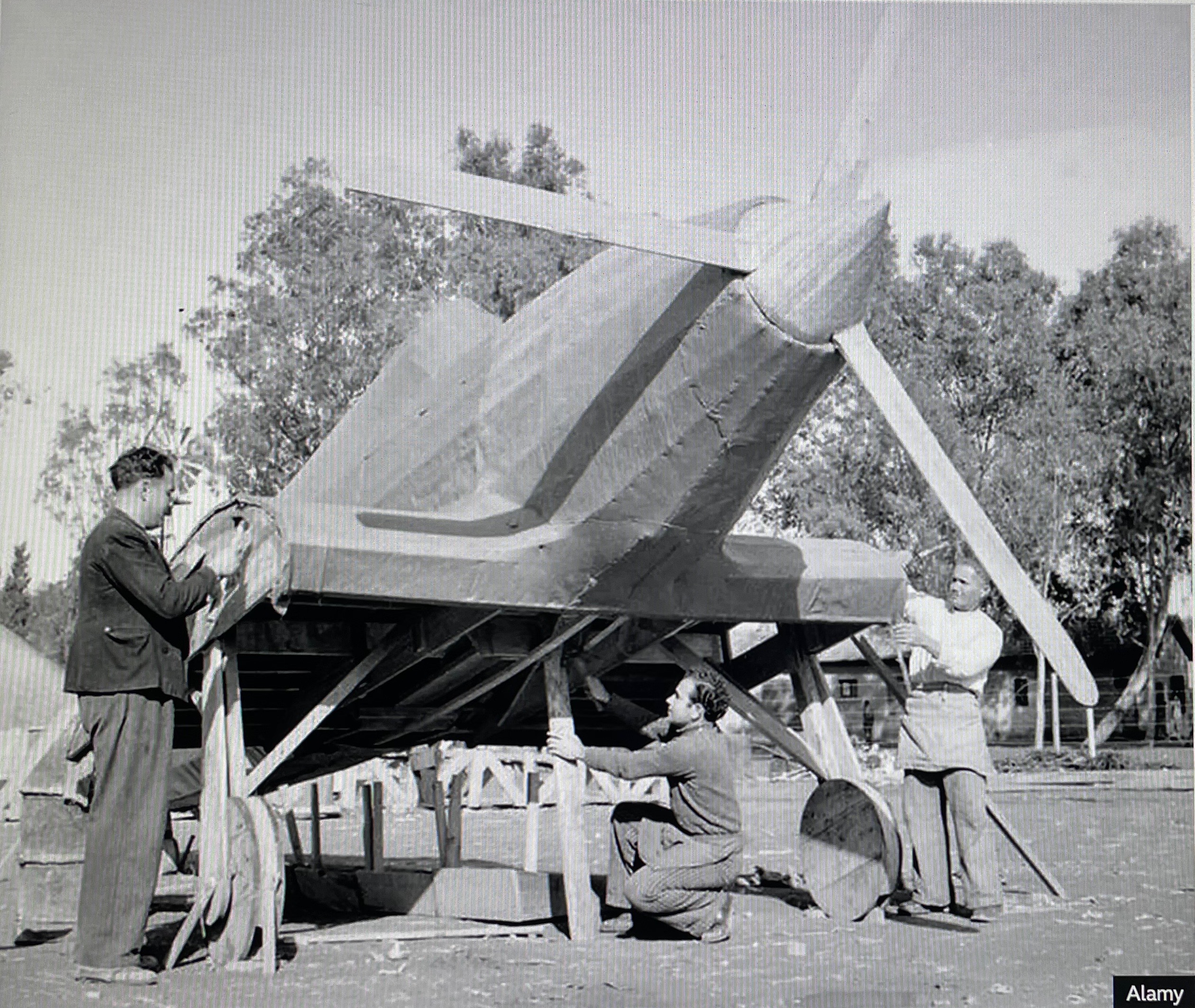
A paucity of aircraft? No matter. Fabricate an air arm of fighter planes. This and another image by Alamy from BBC “D-Day Deception Operation Fortitude: The World War Two Army That Didn’t Exist.”
Commandos. As another example, Hutton writes about the days after the evacuation of Dunkirk: “Clarke was one of the driving forces behind the idea of creating small independent fighting units that could strike behind enemy lines and then disappear. He even came up with a name for them: Commandos.”
Deception, the Rule. Early in 1941, Hutton recounts, “Clarke set about imaging his ideal parachute unit…. The unit was now—according to his myth—training in the Transjordan desert: far enough away to be hard the check, but close enough to be threatening.”
To enhance his ruse, Hutton says, “Clarke began spreading rumours about the unit’s existence, even dressing up two soldiers as airborne troops and sending them around Cairo to be noticed by people who might pass gossip to the enemy.”
An Alphabetic Ruse. When such a unit was later actually formed, Hutton notes, “As an additional touch, he suggested calling the first recruits ‘L Detachment,’ implying the existence of detachments A to K. A legend was about to be born.”
Fake Hardware in El Alamein. In late 1942, the Germans were pushing for victory in North Africa. Yet their reconnaissance photos were showing Allies installation of a pipeline and evidence of an armored brigade supporting the activity along with a large number of trucks about 25 miles from the front. “Enemy situation unchanged,” the Nazi report said, “Quiet all day along the front.”

These troops were ready to fight a battle. But look closely, it’s a dummy Bofors gun and crew. This and following images from BBC News.
“That evening, at 9.40pm,” Hutton recounts, “the British artillery opened fire with a barrage heavier than anything yet seen in the desert war…. The second battle of El Alamein—a clash that would transform Allied fortunes in the desert war—was under way. Not that the Germans knew it.”
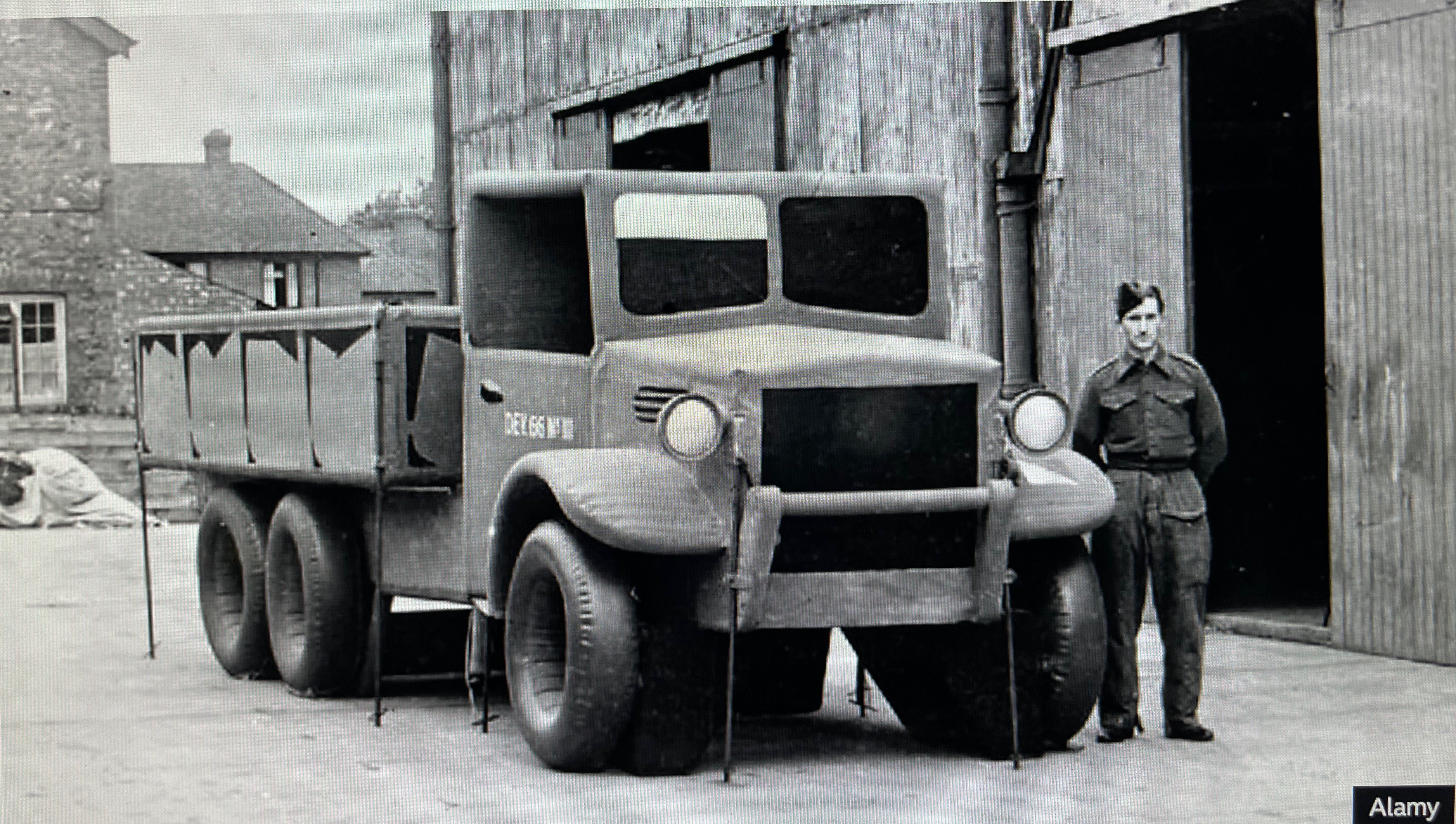
Dummy trucks were part of the ruse. Image by Alamy from BBC.
The pipeline was a dummy, made of petrol cans hammered flat. The parked trucks were stage props. “During the night before the attack,” Hutton notes, “an entire armoured corps had crept forward, unit by unit, and secured the frames on top of their tanks so that they looked like trucks. In the place they had been waiting, other teams assembled dummy tanks to replace the real vehicles that had advanced. So when the sun came up each morning, it seemed to Axis observers that those tanks had never moved.”

Large numbers of these dummy tanks were fabricated at the Middle East School of Camoflage in Cairo.
Quite a feat of military legerdemain concocted by Clarke and his associates.
Clarke the Rascal, the Cross-Dresser. Wikipedia tells of Clarke’s youth in South Africa: “During the Second Boer War, the Clarke family was trapped in the siege of Ladysmith. Although an infant at the time of the siege, Clarke later tried to claim a campaign medal.”
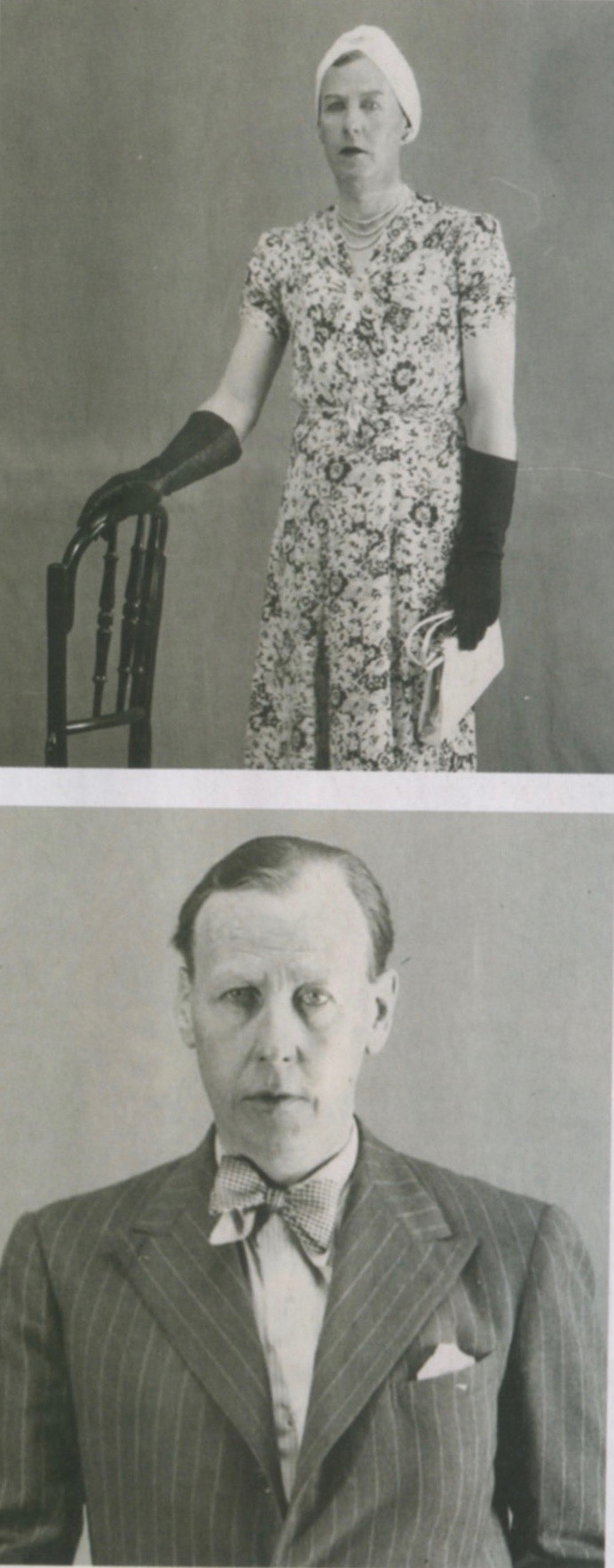
Dress code, Madrid, October 1941.
Even more puzzling was October 1941, when Clarke was arrested in Madrid “dressed ‘down to a brassiere, as a woman,’ ” recounts Hutton. “The reasons for this escapade have never been explained. Probably, as both the Spanish and the British suspected, Clarke had done it simply because he enjoyed dressing as a woman.” Or maybe it was part of a deception ploy. “In any case,” Hutton notes, “he was swiftly whisked to Gibraltar.”
Concluding with yet other WWII deception, I cite “Alexandra Tidbits Part 2,” where another Brit, Jasper Maskelyne, was perhaps another camouflager extraordinaire. See his spiffy magician outfit and inflatable Sherman tank. ds
© Dennis Simanaitis, SimanaitisSays.com, 2024
 Simanaitis Says