
Simanaitis Says
On cars, old, new and future; science & technology; vintage airplanes, computer flight simulation of them; Sherlockiana; our English language; travel; and other stuff
DON’T FORGET THE WATERCRESS SANDWICHES
IN COZY ENGLISH WHO-DONE-ITS, watercress sandwiches at teatime seem to coincide with reveal of the rascal. Now according to Korin Miller writing in Food & Wine, September 12, 2024, “The CDC Declared This Vegetable to Be the Healthiest—and It Just May Surprise You.”

Here are tidbits about watercress, Nasturtium officinale, gleaned from Miller’s article and my usual Wikipedia Internet sleuthing.
Top Nutrient Density—by Far. Miller writes, “This leafy green has been deemed the healthiest vegetable by the Centers for Disease Control and Prevention (CDC), with an impressive nutrient density score of 100 out of 100. But watercress isn’t just ranked the healthiest vegetable: It beat runner-up Chinese cabbage by more than eight points.”

She quotes Rachel O’Connor, R.D., C.D.N., a dietitian at New York-Presbyterian/Columbia University Irving Medical Center, who notes, “Watercress is a type of cruciferous vegetable that belongs in the same family as kale, broccoli, Chinese cabbage, arugula, and Brussels sprouts.”
“Nutrient density,” O’Conner tells Miller, “is the ratio of nutrients in a food to the amount of energy — or calories — it provides. A nutrient density score is essentially a numeric value given to rate how nutritious certain foods are.”
“The more nutrient-dense a food is,” says Dana Ellis Hunnes, Ph.D., a senior dietitian at UCLA Medical Center and assistant professor at the UCLA Fielding School of Public Health, “the more vitamins, minerals, and antioxidants it has per calorie per gram.”
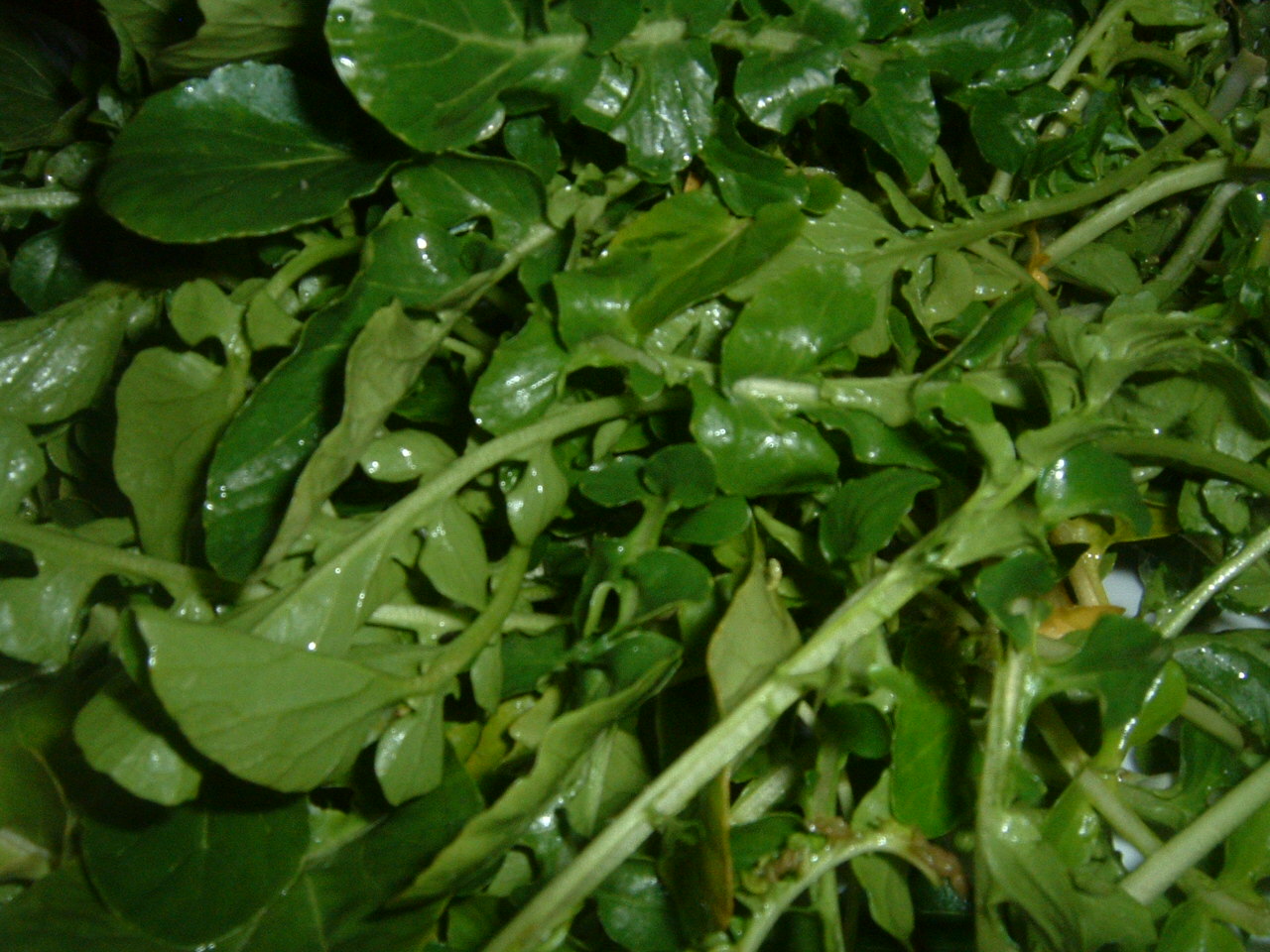
But Not Much Fiber. Miller adds, “Watercress has a few compounds, including 3,3′-diindolylmethane (DIM) and sulforaphane, which have been linked to a lower risk of cancer, O’Connor says. The vegetable is also rich in vitamin K.”
“While watercress contains fiber,” Miller continues, “the levels of the nutrient aren’t as high as they are in some fellow cruciferous vegetables. One cup of cooked broccoli, for example, will provide around 5 grams of fiber, while one cup of watercress provides less than 1 gram. ‘Fiber is an important component to our diets for numerous reasons, so watercress should definitely not be the only cruciferous vegetable one eats,’ O’Connor says.”
Runners-up. Miller cites, “The CDC’s study lists out more than 40 so-called ‘powerhouse’ fruits and vegetables. While watercress was the only one that received a perfect score, the runners-up are also worth noting. Those include: Chinese cabbage (91.99 points), Swiss chard (89.27 points), Beetroot (87.08 points), and Spinach (86.43 points).”
Favorites. Popeye would be pleased. Indeed, I’m encouraged to consult the CDC list to see where my fav arugula rates. I use it in lieu of spinach, sprinkled on favorite soups, salads, and sandwiches.
Gee, it’s an also-ran at 37.65, just a tick below red pepper and above broccoli.
“16 Ways to Enjoy Watercress” Food & Wine includes an Editors link to a neat collection of watercress recipes. I absolutely must try its “Watercress Salad with Prosciutto, Tangerines, and Hazelnuts.”

Image by James Baigrie from Food & Wine
There’s another for “Watercress and Tofu Dumplings.”

Image by Frances Janish.
Yum!
How Much to Eat? Miller writes, “It is generally recommended that you have four to five servings of fruits and vegetables a day, and four to five servings of cruciferous vegetables a week. But you can have watercress as much as you’d like, Hunnes says. ‘You could eat one cupful at a time,’ she says. ‘You could eat it more often or less often, too.’ ”
She continues, “While you can cook watercress, it may be better to have it raw to reap the full benefits. ‘Watercress, like other vegetables, loses some vitamin C and B vitamins when cooked,’ O’Connor says. ‘Vitamin C is water-soluble and sensitive to heat, and it can leach out of vegetables when they are exposed to hot water. B vitamins are similarly heat-sensitive.’ So, use it as a base for salads, toss it in a sandwich, or sprinkle it on top of a stir fry for added nutrition.”
And don’t forget the classic Victorian Watercress Tea Sandwich (thanks, French Tart!), especially when you’re sleuthing a cozy Brit mystery. ds
© Dennis Simanaitis, SimanaitisSays.com, 2024
 Simanaitis Says
Thanks for spurring us to overlooked watercress. And we’re trying the Victorian Watercress Sandwich recipe you close with, tho’ skipping the butter (with apologies to Marlon Brando’s “Maria, the butter.”) and using oat milk.