
Simanaitis Says
On cars, old, new and future; science & technology; vintage airplanes, computer flight simulation of them; Sherlockiana; our English language; travel; and other stuff
HOCKNEY’S TURANDOT PART 1
DAVID HOCKNEY IS MY FAVORITE ARTIST, as suggested by the number of times he has appeared here at SimanaitisSays. Just click on SimanaitisSays Hockney and follow up on the wonderful art.
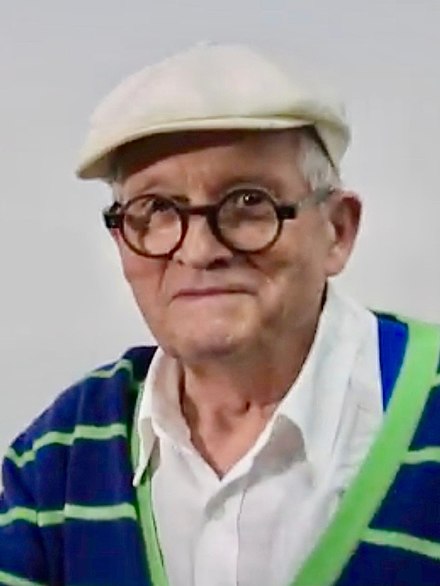
David Hockney OM CH RA (born 9 July 1937) is an English painter, draughtsman, printmaker, stage designer, and photographer. As an important contributor to the pop art movement of the 1960s, he is considered one of the most influential British artists of the 20th and 21st centuries. Image, 2017, from Connaissance des Arts via Wikipedia.
Hockney’s Turandot, Chicago 1991, San Francisco 1992, Los Angeles 2024. Here, in Parts 1 and 2 today and tomorrow, are tidbits about the longevity of opera set design, specifically David Hockney’s settings for Giocomo Puccini’s Turandot. In what follows, comments are interspersed with drawings by the artist and photos of productions featuring the Hockney sets.
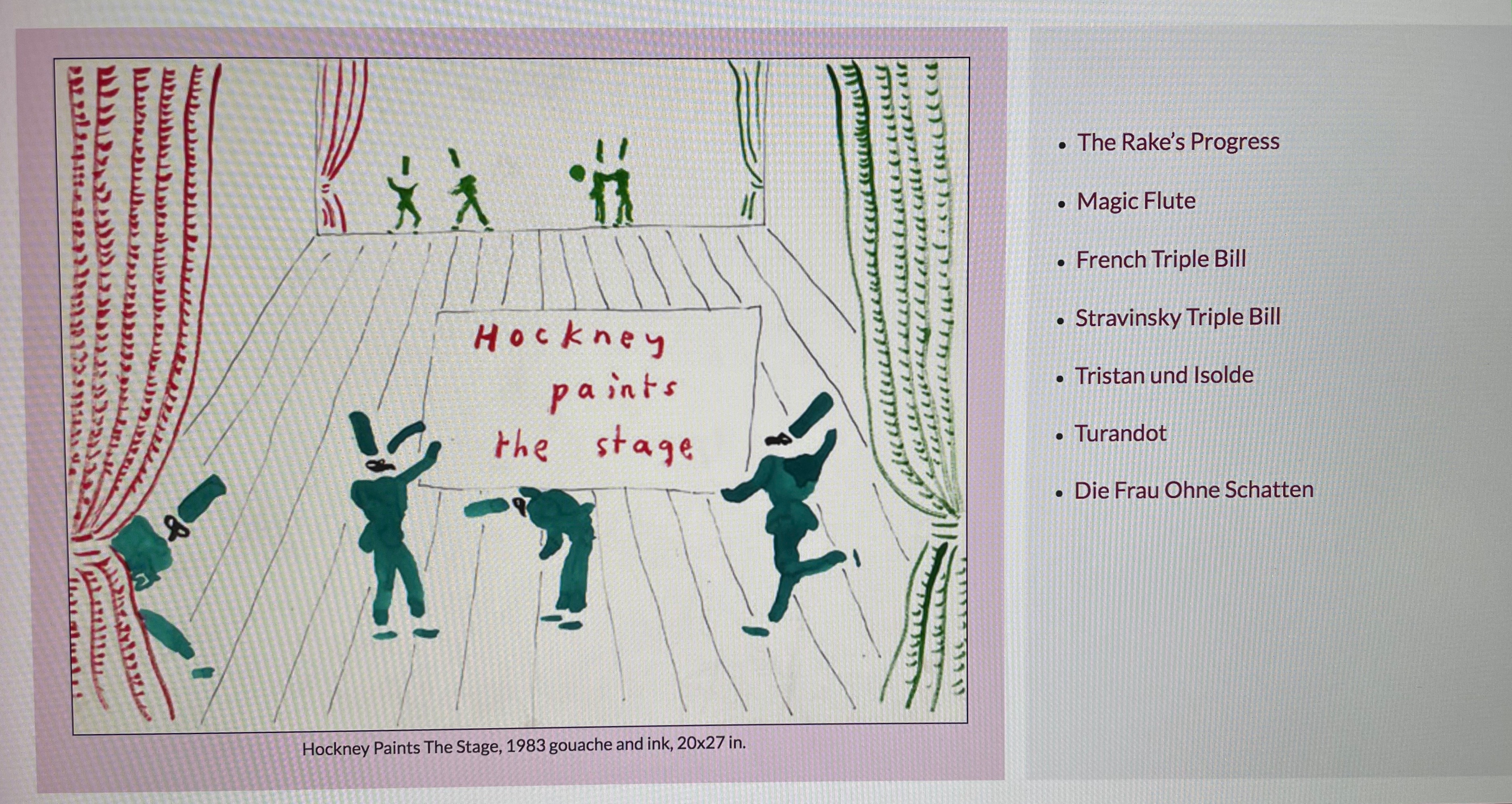
Image from hockney.com.
My principal source is Kenneth E. Silver’s interview with Hockney back in 1991 “Red China: David Hockney’s Turandot,” at Artforum, December 1991. You’re also encouraged to learn more at Jim Farber’s “David Hockney’s ‘Turandot’ Works Its Magic at LA”, San Francisco Classical Voice, May 21, 2024; and David A. Keeps’ “After 34 Years David Hockney’s Magnificent ‘Turandot’ Sets Get Resurrected in L.A.” Los Angeles Times, May 14, 2024.
But to my eye, the real find is Silver’s interview with the artist more than 32 years ago, back when the Hockney’s Turandot settings first entertained opera audiences.
Love—and a Convoluted Plot. In his preface to the interview, Silver described, “The opera itself is the quintessential riddle opera. Princess Turandot will only marry a suitor of royal descent who can answer three riddles; any aspirant who tries and fails is beheaded.
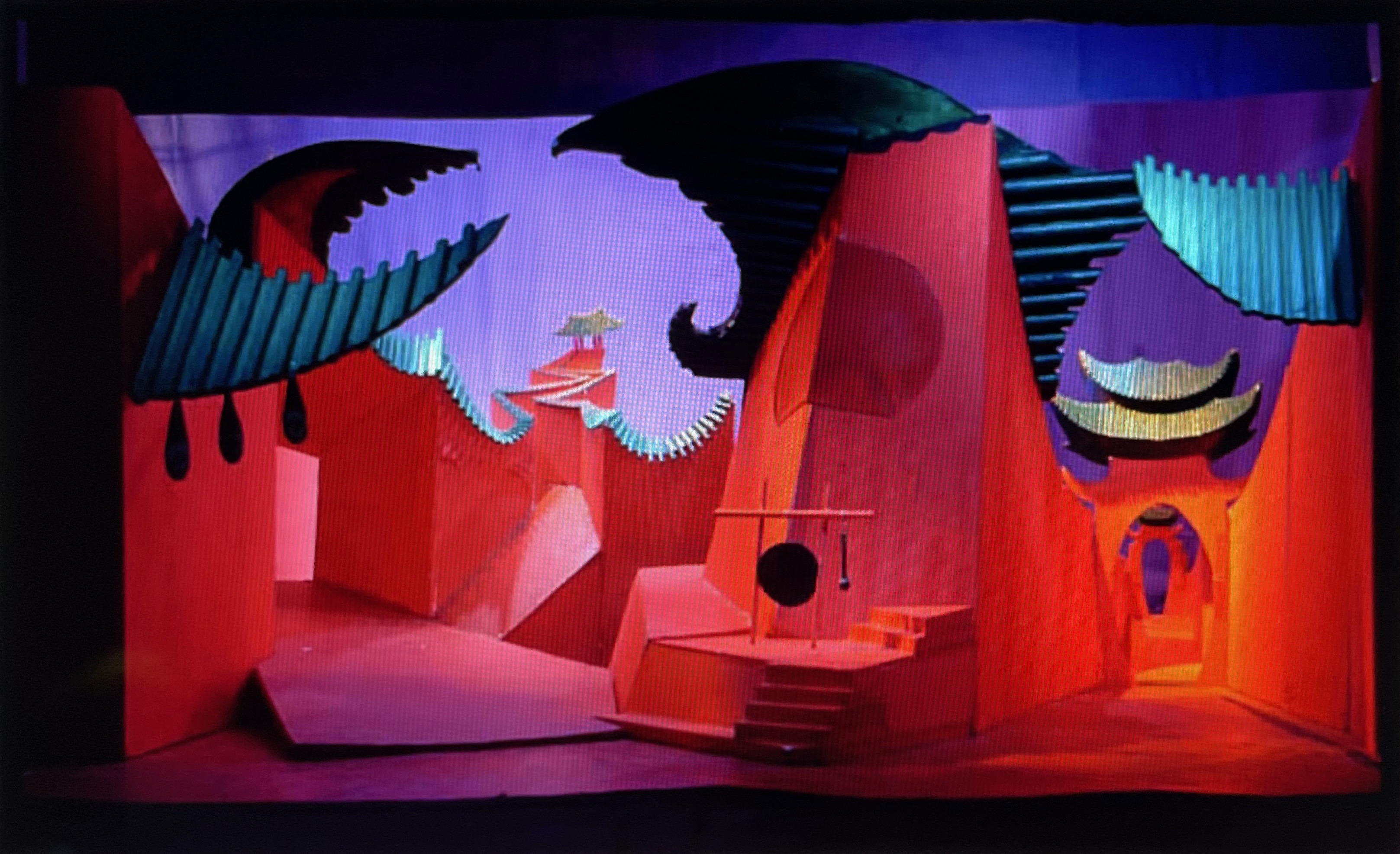
Above, Hockney’s art. Below, the Los Angeles production of Act I’s scene when Calaf accepts Turandot’s riddle challenge by sounding the gong. Image by Cory Weaver.

Along comes Calaf, son of Timur, the banished King of Tartary. Despite the attempts of his father and his father’s servant, Liù, who is secretly in love with Calaf, to dissuade him from the attempt, the incognito prince announces his desire to be put to the test, and correctly answers Turandot’s riddles.”
Yet Another Riddle. “The reluctant princess is desperate,” Silver continued. “So, out of his astonishing love for her, the young prince contrives a riddle for Turandot: if she can guess his name before sunrise, he will free her from her obligation and allow himself to be executed like the other princes before him. After Liù, the young servant girl, is tortured and killed while refusing to divulge Calaf’s name to Turandot’s soldiers, the princess finally comes to recognize true love.”
Love Conquers All, Sorta. (Too bad about Liù): Silver recounted, “When it comes her turn to pronounce Calaf’s name, to free herself from marriage, she says instead that his name is ‘Amore!’ Exultant, Calaf passionately embraces Turandot; as the curtain descends, the crowd breaks into joyous song.”
Tomorrow in Part 2, we continue with Silver’s interview and other Hockey art/Los Angeles Opera Company Turandot’s. ds
© Dennis Simanaitis, SimanaitisSays.com, 2024
 Simanaitis Says