
Simanaitis Says
On cars, old, new and future; science & technology; vintage airplanes, computer flight simulation of them; Sherlockiana; our English language; travel; and other stuff
THE EYED NEEDLE DEFINED FASHION
“CLOTHES MAKE THE MAN,” Mark Twain wrote, “Naked people have little or no influence on society.”

And Sanjana Gajbhiye writes in earth.com, June 29, 2024, “Fashion History Was Forever Altered by the Tiny Eyed Needle 40,000 Year Ago.”

What’s more, Dr. Ian Gilligan et al. confirm this in “Paleolithic Eyed Needles and the Evolution of Dress,” AAAS ScienceAdvances, June 28, 2024.
Why Clothes? Why Fashion? Sanjana Gajbhiye writes, “Have you ever thought about why we wear clothes? Yes, they keep us warm and maintain our modesty, but there’s even more to it than that. The story of clothing is as fascinating as human history itself. Surprisingly, the tiny one-eyed needle became a key component in fashion.”
Dr. Gilligan and his colleagues write in their Abstract, “Eyed needles are among the most iconic of Paleolithic artifacts, traditionally seen as rare indicators of prehistoric clothing, particularly tailoring.” They cite two significant developments: the emergence of underwear in layered garments for thermal protection, and a transition from body adornment to the decorating of clothes.”
“Archaeological evidence for underwear is limited,” the researchers note, “but the Upper Paleolithic saw an increase in personal ornaments, some sewn onto clothing. Eyed needles may mark a pivotal shift as clothes acquired the social functions of dress, decoupling clothing from climate and ensuring its enduring presence.”

Colder Climate, More Clothes. The researchers describe, “We know that clothing up until the last glacial cycle was only used on an ad hoc basis. The classic tools that we associate with that are hide scrapers or stone scrapers, and we find them appearing and going away during the different phases of the last ice ages.”
Fewer Tatts. Gajbhiye imagines, “Picture living in a world where showing off body paint or scars was impossible due to extreme cold. What could early fashion-conscious individuals do?”
She says, “The solution was simple: if they couldn’t embellish their bodies, they would embellish their clothes….”
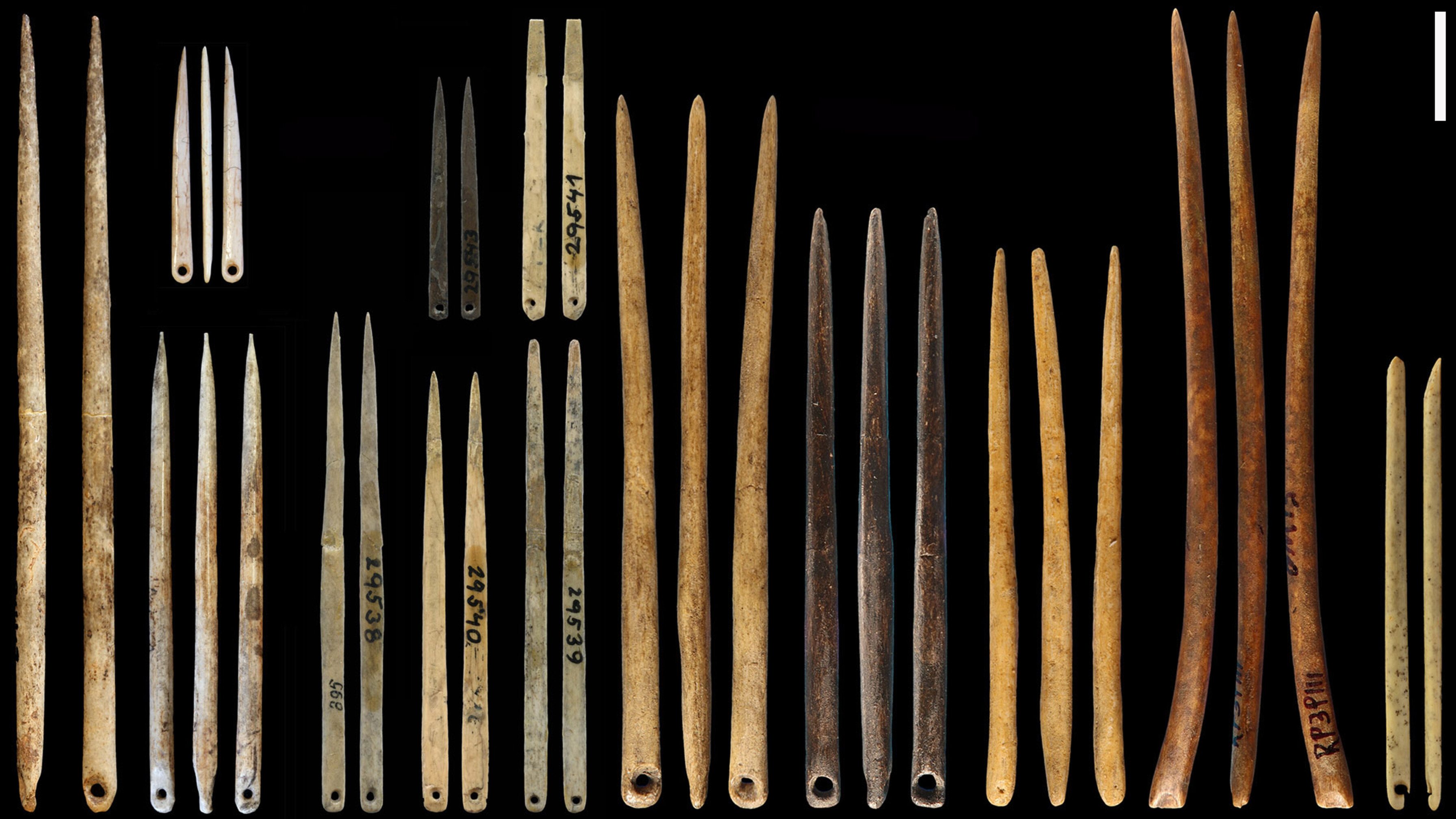
From Awls to Eyed Needles. The researchers describe, “1) In circumstances where finer sewing was desired or required, the process of inserting a thread by hand through a small hole became increasingly tedious, a challenge that was addressed by drilling an eye into the proximal end of the awl to carry the thread through.”
They continue, “2) As a consequence of the above technological innovation, eyed needles made sewing more efficient, by combining two separate processes into one: (i) the piercing of holes in hides and (ii) the threading of sinew or fiber through the holes.”
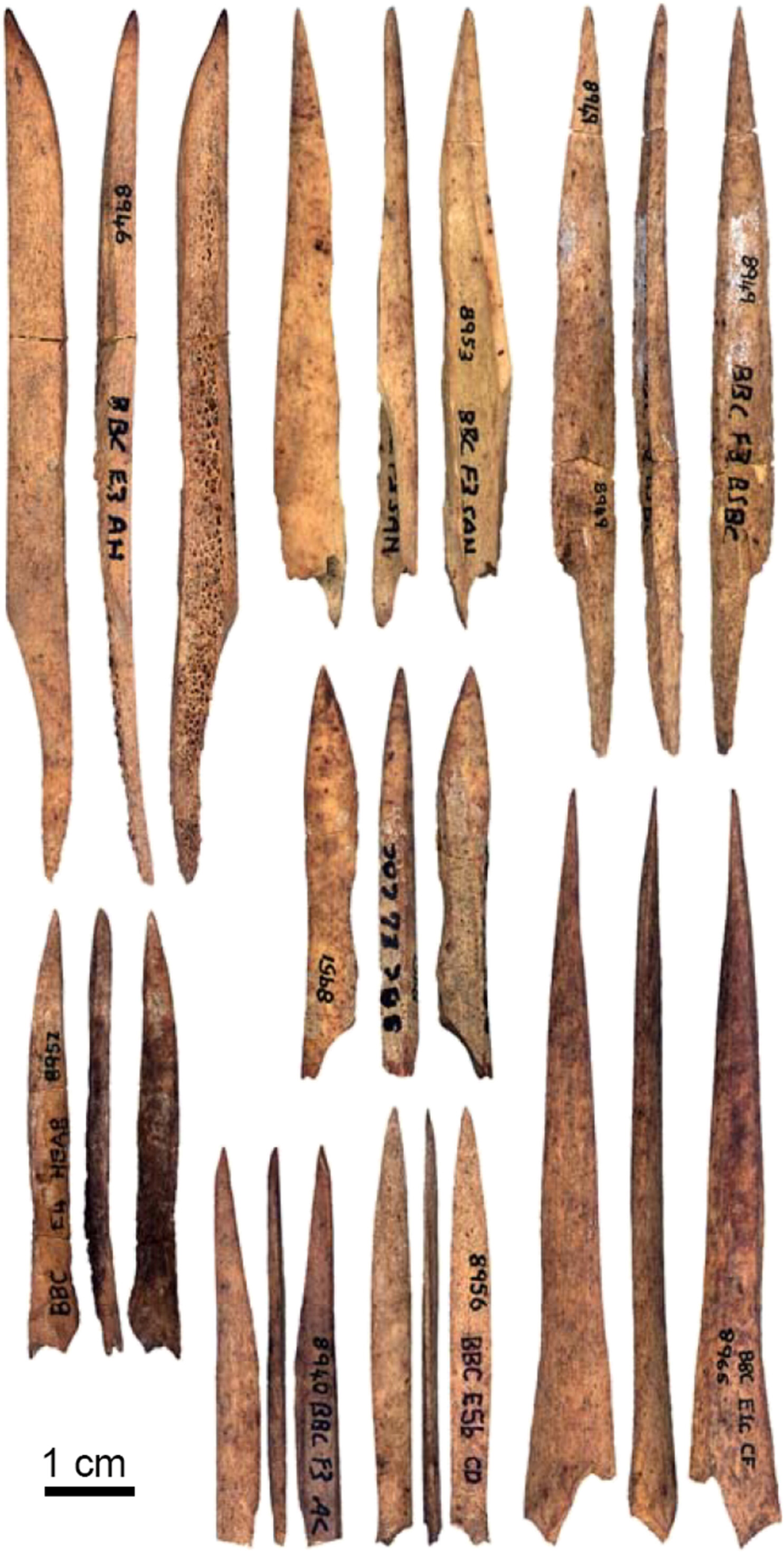
Above, awls used to punch holes in hides. Below, eyed needles efficiently included the thread. Images from Gilligan et al.
A Tipping Point in Human History. The researchers write, “Eyed needles would also be useful in adding fur trim, which can serve both thermal and decorative purposes. Eyed needles were a technological advance that facilitated more effective thermal insulation and the transformation of clothing into dress. For these reasons, eyed needles were a tipping point in human prehistory.”

An artist’s impression of decorated tailored clothing in the Upper Paleolithic. Image by Mariana Ariza in Gajbhiye’s article.
Looking Ahead. Gajbhiye writes, “So the next time you don your favorite outfit, pause to appreciate the rich history behind it. From simple animal hides to intricate designs, from survival gear to social statements, our clothes narrate a tale as old as humanity itself.”
“And who knows?” she says. “In another 40,000 years, researchers will all be dissecting the meaning of skinny jeans and what it says about our civilization.”
Zowie! ds
© Dennis Simanaitis, SimanaitisSays.com, 2024
Related
One comment on “THE EYED NEEDLE DEFINED FASHION”
Leave a comment Cancel reply
This site uses Akismet to reduce spam. Learn how your comment data is processed.
Information
This entry was posted on July 3, 2024 by simanaitissays in And Furthermore... and tagged "Fashion History Was Forever Altered by the Tiny Eyed Needle 40000 Years Ago" Sanjana Gajbhiye "earth.com", "Paleolithic Eyed Needles and the Evolution of Dress" Gilligan et al. AAAS "ScienceAdvances", examples of Paleolithic awls and eyed needles, ice age promotes layered clothing (including underwear), layered clothing covers tatts (hence decorate clothing instead), Paleolithic garment fabrication: hide scrapers/awls/eyed needles holding thread.Shortlink
https://wp.me/p2ETap-i0fCategories
Recent Posts
Archives
- March 2026
- February 2026
- January 2026
- December 2025
- November 2025
- October 2025
- September 2025
- August 2025
- July 2025
- June 2025
- May 2025
- April 2025
- March 2025
- February 2025
- January 2025
- December 2024
- November 2024
- October 2024
- September 2024
- August 2024
- July 2024
- June 2024
- May 2024
- April 2024
- March 2024
- February 2024
- January 2024
- December 2023
- November 2023
- October 2023
- September 2023
- August 2023
- July 2023
- June 2023
- May 2023
- April 2023
- March 2023
- February 2023
- January 2023
- December 2022
- November 2022
- October 2022
- September 2022
- August 2022
- July 2022
- June 2022
- May 2022
- April 2022
- March 2022
- February 2022
- January 2022
- December 2021
- November 2021
- October 2021
- September 2021
- August 2021
- July 2021
- June 2021
- May 2021
- April 2021
- March 2021
- February 2021
- January 2021
- December 2020
- November 2020
- October 2020
- September 2020
- August 2020
- July 2020
- June 2020
- May 2020
- April 2020
- March 2020
- February 2020
- January 2020
- December 2019
- November 2019
- October 2019
- September 2019
- August 2019
- July 2019
- June 2019
- May 2019
- April 2019
- March 2019
- February 2019
- January 2019
- December 2018
- November 2018
- October 2018
- September 2018
- August 2018
- July 2018
- June 2018
- May 2018
- April 2018
- March 2018
- February 2018
- January 2018
- December 2017
- November 2017
- October 2017
- September 2017
- August 2017
- July 2017
- June 2017
- May 2017
- April 2017
- March 2017
- February 2017
- January 2017
- December 2016
- November 2016
- October 2016
- September 2016
- August 2016
- July 2016
- June 2016
- May 2016
- April 2016
- March 2016
- February 2016
- January 2016
- December 2015
- November 2015
- October 2015
- September 2015
- August 2015
- July 2015
- June 2015
- May 2015
- April 2015
- March 2015
- February 2015
- January 2015
- December 2014
- November 2014
- October 2014
- September 2014
- August 2014
- July 2014
- June 2014
- May 2014
- April 2014
- March 2014
- February 2014
- January 2014
- December 2013
- November 2013
- October 2013
- September 2013
- August 2013
- July 2013
- June 2013
- May 2013
- April 2013
- March 2013
- February 2013
- January 2013
- December 2012
- November 2012
- October 2012
- September 2012
- August 2012
 Simanaitis Says
While this tome concentrates on adornment aspects, I note that there’s distinct latitude lines depicted in the needle site locations, relating to ambient temperatures. Likely, clothing’s primary purpose was warmth and survival. Those in the tropics were only in need of loin cloths and shade, requiring less tailoring.