
Simanaitis Says
On cars, old, new and future; science & technology; vintage airplanes, computer flight simulation of them; Sherlockiana; our English language; travel; and other stuff
PEKING TO PARIS—1907
THE CHALLENGE WAS SET by the Paris newspaper Le Matin on January 31, 1907: “What needs to be proved today is that as long as a man has a car, he can do anything and go anywhere. Is there anyone who will undertake to travel this summer from Paris to Peking by automobile?”
As Wikipedia describes, “Eventually the race started from the French embassy in Peking on 10 June 1907. The winner, Prince Scipione Borghese, arrived in Paris on 10 August 1907.”

“This photograph, taken from an early edition of Luigi Barzini’s ‘Peking to Paris,’ shows Prince Scipione Borghese’s ‘Italia,’ amid a crowd pf spectators, on the starting line.” This image, its caption, and the following from Unseen Histories.
A New Book on It All. Daughter Suz learned of Kassia St Clair’s Race to the Future in the February 2024 issue of BBC History. She tells me it also generated a series of BBC Podcasts “The Race to the Future: The Adventure that Accelerated the Twentieth Century” (albeit not currently available).
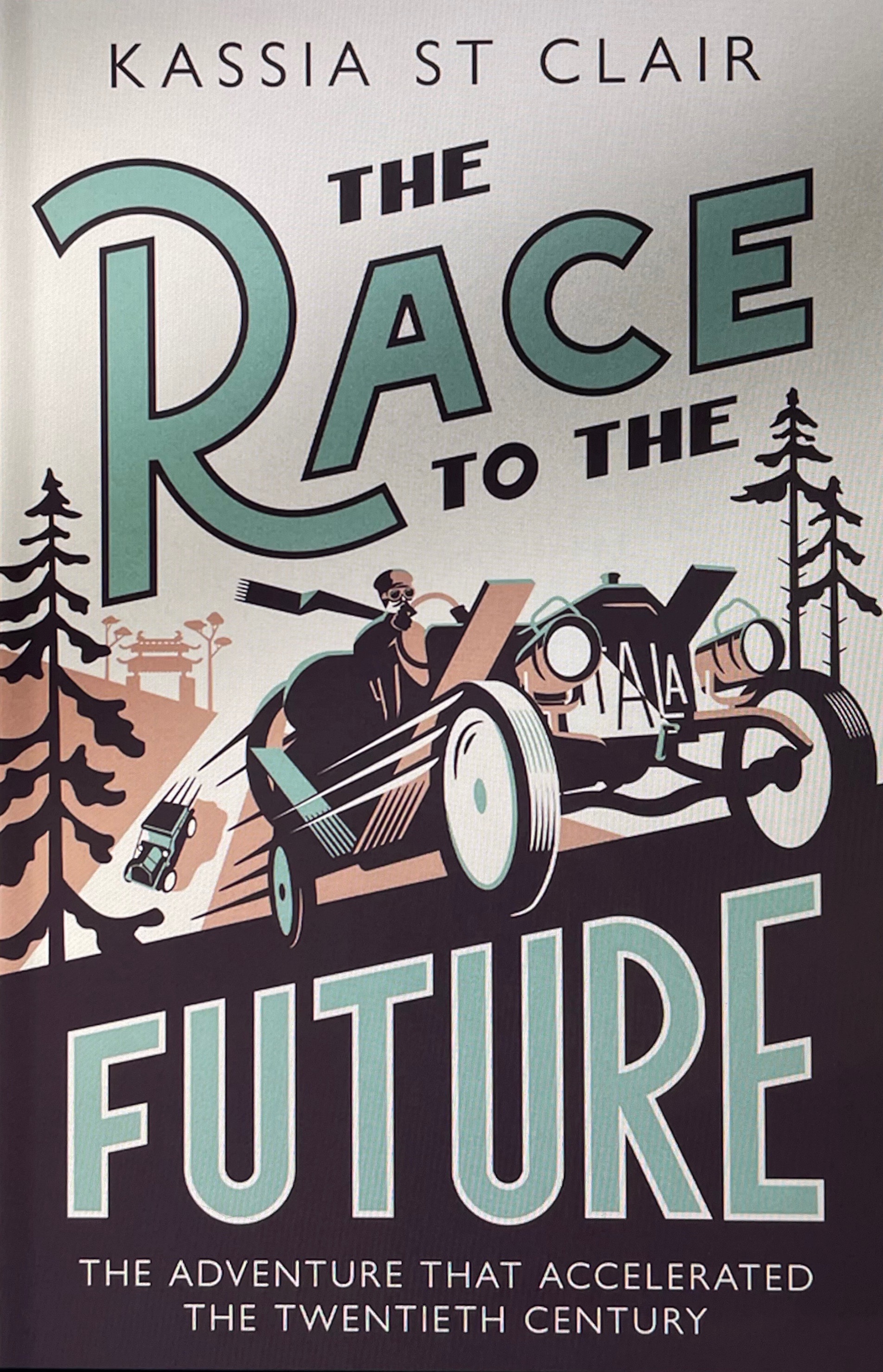
The Race to the Future: 8000 Miles to Paris—the Adventure That Accelerated the Twentieth Century, by Kassia St Clair, Liveright, May 2024.
From IndieBound: “The racers—an Italian prince and his chauffeur, a French racing driver, a con man, and several rival journalists—battle over steep inclines, through narrow mountain passages, and across the arid Gobi Desert. Competitors endure torrential rain and choking dust. There are barely any roads, and petrol is almost impossible to find. A global audience of millions follows each twist and turn, devouring reports telegraphed from the course.”
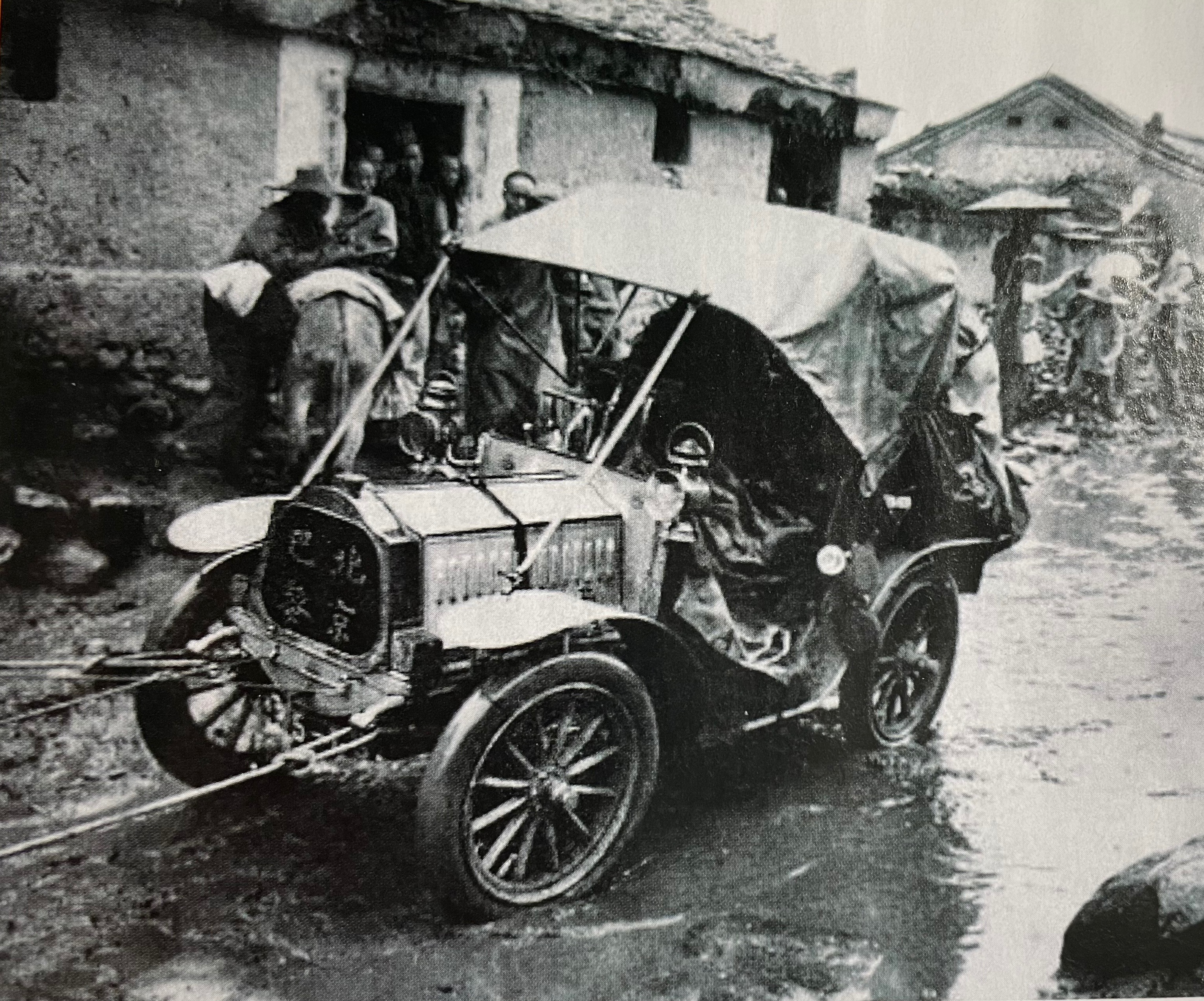
Image from BBC History Magazine, February 2024.
“A gripping, immersive narrative of the race,” IndieBound continues, “The Race to the Future sets the drivers’ derring-do (and occasional cheating) against the backdrop of a larger geopolitical and technological race to the future.”

An Excerpted Preface: The Unseen Histories website offers an “Excerpt: The Race to the Future.” Unseen Histories writes, “The first decade of the twentieth century was a time of ambition and expansion. It was the age of empires and the age of science. In 1907 all of these forces coalesced to create a wholly new kind of competition: the Peking to Paris race.” What follows are tidbits gleaned from Kassia St Clair’s Preface.
Poetry of Motion, of Distance. St Clair writes, “The race also had potent symbolic resonance as a harbinger of a new era of globalisation. The distance between East and West had never before seemed so small and traversable. ‘The Peking to Paris motor race may have something to do with the poetry of motion,’ argued a writer in the South China Morning Post, ‘but it helps to destroy the poetry of distance … Locomotion and communication are making the world smaller.’ ”
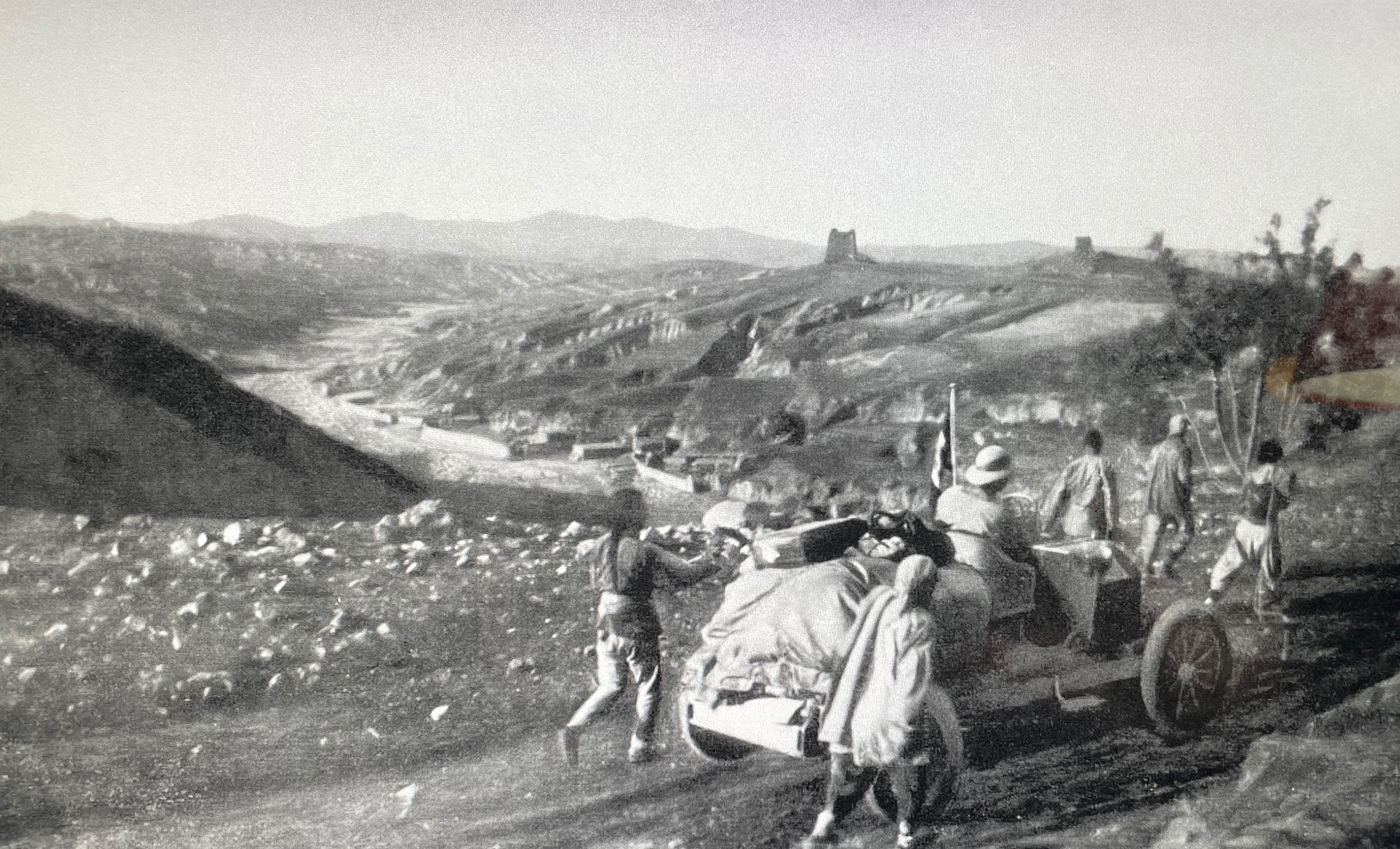
“This shows the Schi-Shan-Ho-Valley with the towers of the Great Wall of China.”
A Motor Car World in Transition. “The year of the race, 1907,” St Clair observes, “was one of the last when the automobile would be considered an experimental novelty rather than a practical form of transport…. It was also the final year when Europe—and France in particular—could claim to be the centre of the automobile industry. While their own manufacturers had been rapidly catching up, many Americans were still importing European cars. By October 1908, however, the very first Model T was completed at Henry Ford’s plant in Detroit; already the automobile was settling into a new spiritual home.”
See “Ford Model T Lore” for amplification of this.
Italian Racing Red. “My fascination with the Peking–Paris story began with a mistake,” says St Clair. “Researching the origins of rosso corsa, Italy’s racing red, for The Secret Lives of Colour, I came across numerous references to Prince Borghese and his pioneering run from Peking to Paris. The story went that Italy selected the colour of the prince’s car as its national racing colour in tribute to his success.”
“To my horror,” she says, “it would turn out to be untrue. The museum tested the paint all the way down to the metal and not a scrap of scarlet was found.”
As they say, non è vera ma bene travata.
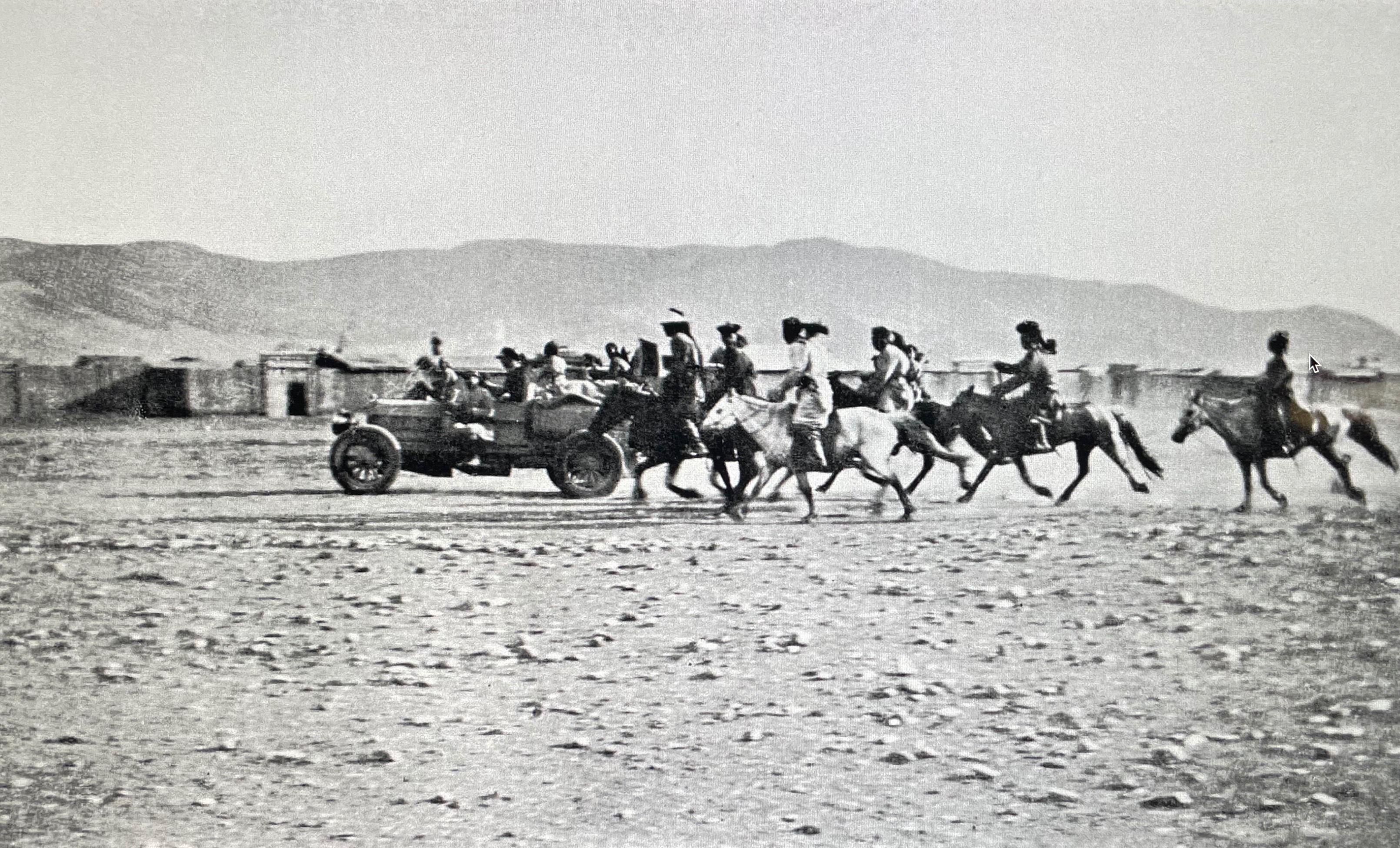
“This exhilarating shot captures a merry scene, when the governor of Mongolia took a ride in the ‘Italia.’ ”
In Conclusion. “What writing this book has taught me,” St Clair concludes in her Preface, “and what I will share with you in the following pages, is that the Peking–Paris race is a parable about a world teetering on the very edge of the most consequential century in human history. We are the inheritors of the world the Peking–Paris race helped create.”
And, as these excerpts suggest, St Clair’s The Race to the Future is a must-read gem. ds
© Dennis Simanaitis, SimanaitisSays.com, 2024
 Simanaitis Says
Great story, imagery and (unsaid) predictions for the 21st century.
Thank you,
>
Agreed. Thank BBC History, Wikipedia, Unseen Histories, and of course, Kassia St Clair. I thank Daughter Suz for bringing it all to my attention as well.
Another amazing post. Yes, the 20th century, particularly the last 40%, was a good time to be around if you lived in the West. My eldest grandmother was 10 when this race took place, but it was in many ways a completely different world. Simply an amazing century.
Where was the ‘Itala’ nickname introduced? Itala was the car’s builder, based in Turin.
Another gem, thank you. Itala, founded 1904, had a 30-year run, their remains then sold to Fiat. Second place Spyker won in the 1953 charmer, voted Best British Film of that year, based on the London to Brighton Run, which was a reliability trial, not a race.
Many auto companies both sides of the Atlantic and Channel were originally based on DeDions, which came in 3rd and 4th in the above.
The above and the Vanderbilt Cup Races held the same year(s) on Long Island were exciting heralds of the future.
Thanks again. How little most mainstream avowed car buffs know of their ancestry. Not so on the wonderful, ranging Simanaitis Says.