
Simanaitis Says
On cars, old, new and future; science & technology; vintage airplanes, computer flight simulation of them; Sherlockiana; our English language; travel; and other stuff
THE OED IS COOKIN’—IN JAPANESE
THE OXFORD ENGLISH DICTIONARY OF THE ENGLISH LANGUAGE adds 23 Japanese words in its latest update. Ella Creamer reports this in The Guardian, March 27, 2024: “More than half of the borrowed words relate to cooking,” she writes.

Being a fan of things Japanese (its language, its cuisine, its sumo), I recognized this news as tidbit-worthy.
Katsu—a Boomerang Word. Creamer observes, “Katsu—a piece of meat, seafood, or vegetable, coated with flour, egg, and panko breadcrumbs, deep-fried, and cut into strips—is considered a boomerang word, a case of reborrowing: katsu is the shortened form of katsuretsu, which is a borrowing into Japanese of the English word ‘cutlet.’ ”
NYT Tonkatsu. Coincidently, The New York Times recently published a recipe for the pork cutlet version of Tonkatsu.

Image of Tonkatsu by Christopher Testani for The New York Times. Food Stylist: Simon Andrews.
Indeed, I tried the recipe and was delighted with the result.
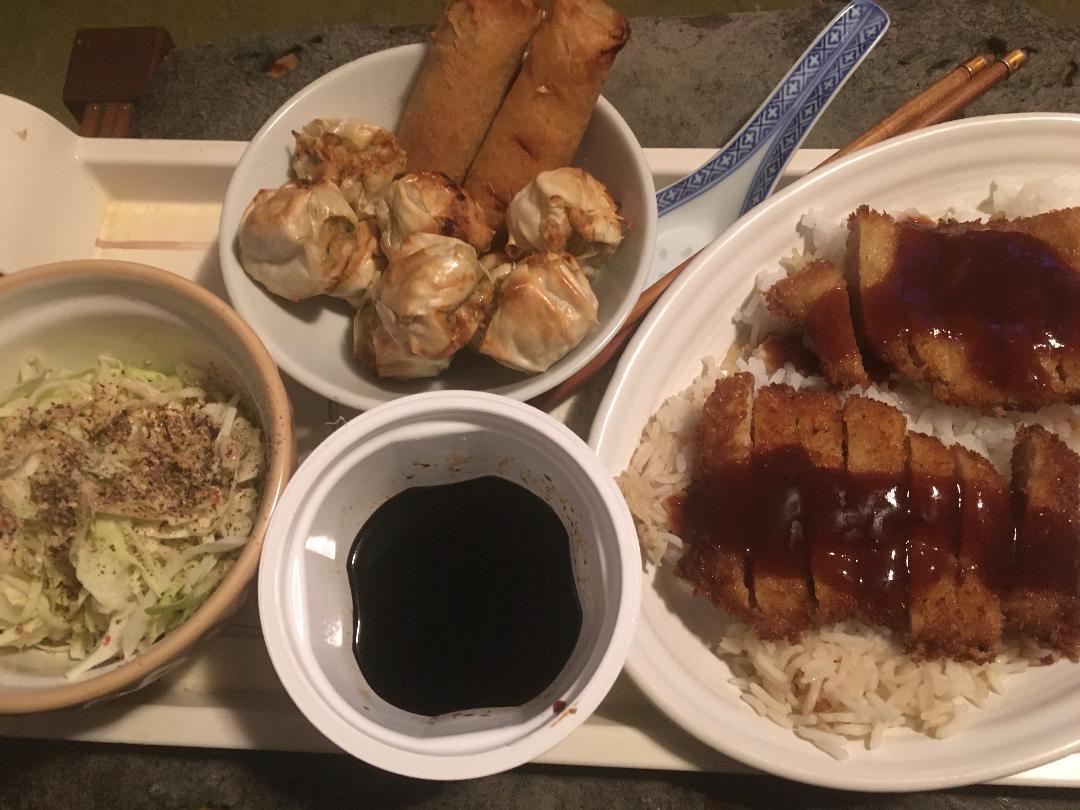
My Tonkatsu with suitable accompaniments.
Another Imported Cutlet Ready to Try. Indeed, even more recently, March 7, 2024, the NYT offered a recipe for Kotlet (Meat, Potato and Onion Patties). Farideh Sadeghin writes, “Crisp on the outside and juicy in the middle, Iranian kotlets are made from mixing grated potatoes and onions with ground beef or lamb and spices, then forming them into patties before frying. Every Persian household has its own signature spice blend, or advieh, and it traditionally includes a variety of spices such as cumin, turmeric, cinnamon, cardamom, rose petals and cloves.”
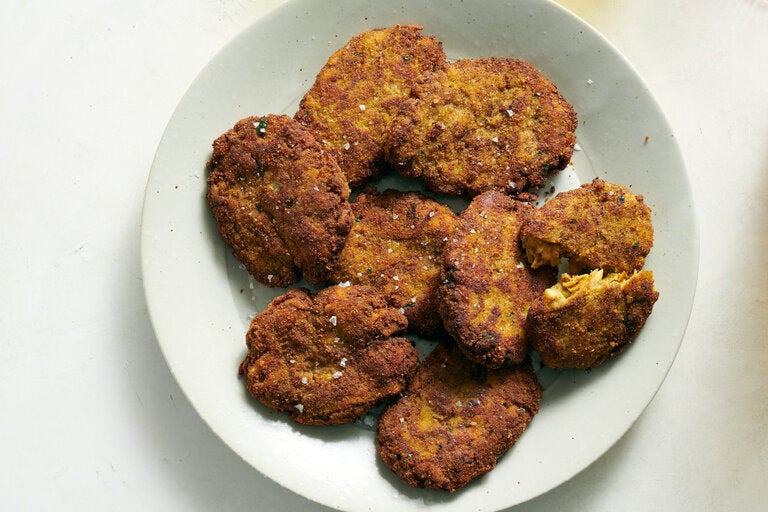
Kotlet image by David Malosh for The New York Times. Food Stylist: Hadas Smirnoff.
Given that the potato is a sacred object in Wife Dottie’s family, this one is a natural for me to try. I’d likely swap ground beef for Impossible, my favorite faux meat.
I wonder what other languages have borrowed the word “cutlet.” Might Google Translate help?

Variations include koteltjie (Afrikaans), kotëletë (Albanian), kotelet (Danish), cotoletta (Italian), kotelett (Norweigian), kotleto (Esperanto), котлета (Russian); kotletas (Lithuanian); you get the picture. Outliers include escalope (French) and Schnitzel (German, though they also have Kotelett).
Other Japanese Culinary Additions. Creamer cites, “Donburi, a Japanese dish consisting of rice topped with other ingredients, is also used to describe the bowl in which this dish is served. The culinary use is likely related to the Japanese adverb donburi, meaning ‘with a splash,’ which ‘could be an allusion to the sound of ingredients being dropped into a bowl,’ said Danica Salazar, executive editor of OED World Englishes.”

“Omotenashi,” Creamer adds, “which describes good hospitality, characterised by ‘thoughtfulness, close attention to detail, and the anticipation of a guest’s needs,’ was also added to the dictionary.”
And a Fantastic One. Creamer includes a new OED add reflecting a popular Japanese movie: “Isekai, a Japanese genre of fantasy fiction involving a character being transported to or reincarnated in a different, strange, or unfamiliar world, also made the OED. A recent example of the genre is Hayao Miyazaki’s Studio Ghibli film The Boy and the Heron, in which 12-year-old Mahito discovers an abandoned tower, a gateway to a fantastical world.”

Yet Another OED Add. The word “bibliophilia,” the love of books, is one of the non-Japanese words making the new-add list. I am a bibliophiliac, seemingly in any language. ds
© Dennis Simanaitis, SimanaitisSays.com, 2024
 Simanaitis Says