
Simanaitis Says
On cars, old, new and future; science & technology; vintage airplanes, computer flight simulation of them; Sherlockiana; our English language; travel; and other stuff
THE BENETTON FORMULA 1 TEAM: REBELS—YOU’RE TELLING ME!?
JOURNALIST EXTRAORDINAIRE JUDY STROPUS alerted me to a new book Benneton Rebels of Formula 1, by Damien Smith, Foreward by Pat Symonds, Evro Publishing, 2023.

Amazon lists it.
I surely knew the Benneton Formula 1 team, 1986–2001; especially its B186. Talk about being rebels!? The team had the termerity to put me (?!?) in the cockpit of the B186 around Silverstone as they filmed a video for display at Benetton clothing shops. Pal Innes Ireland drove the photo car.
It’s not easy to work this into conversation, but as I’ve shown several times already, it can be done.
Damien Smith’s Book. Think of Benetton Rebels of Formula 1 as sorta 344 pages of the team’s Drive to Survive packed with insider views and dense with 4/c photos. In its Foreward, Pat Symonds (today’s Chief Technical Officer of Formula 1, back then Benneton team engineer) writes, “Unconventional. If there is one word to describe Benetton then that is it.”
The team “played hard,” Symonds writes, “but that was entirely secondary to working hard. They examined convention and they questioned it. They were competitive to the core but never took themselves too seriously.”
Benetton Advertising was Special Too. Damien Smith writes, “A collaboration with photographer Oliviero Toscani began in 1982 that led to a series of advertising images splashed on billboards, primarily designed, it seemed, to those of a conservative bent, to stoke controversy.”
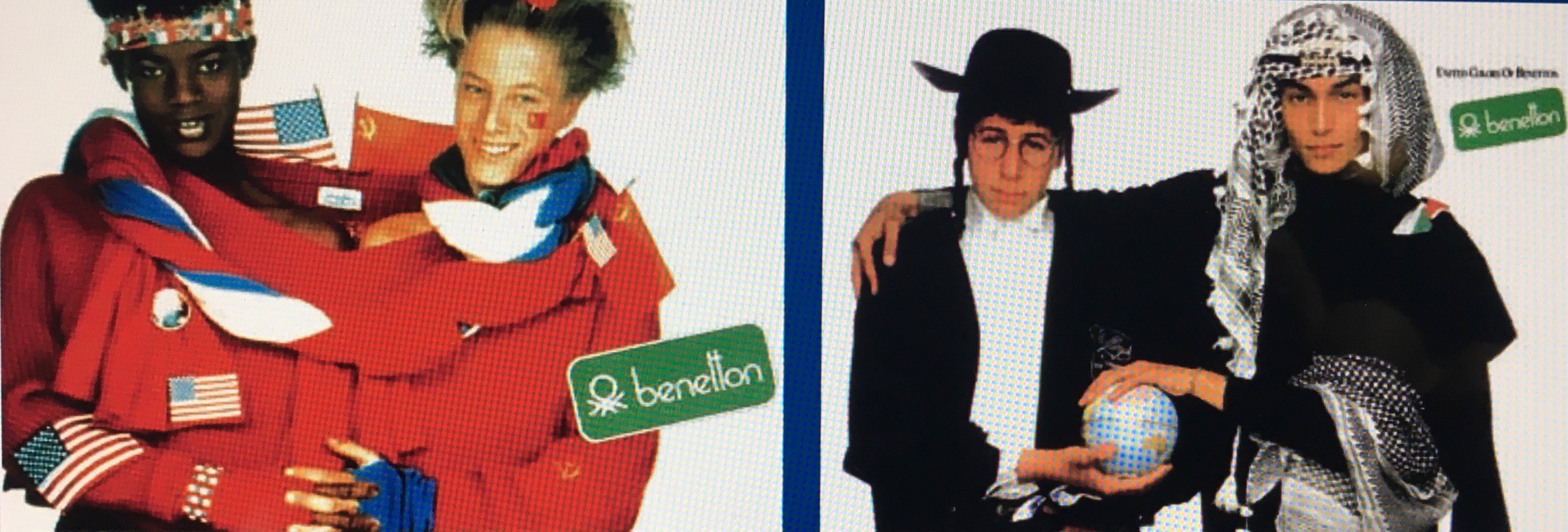
These images from Benetton Rebels of Formula 1.
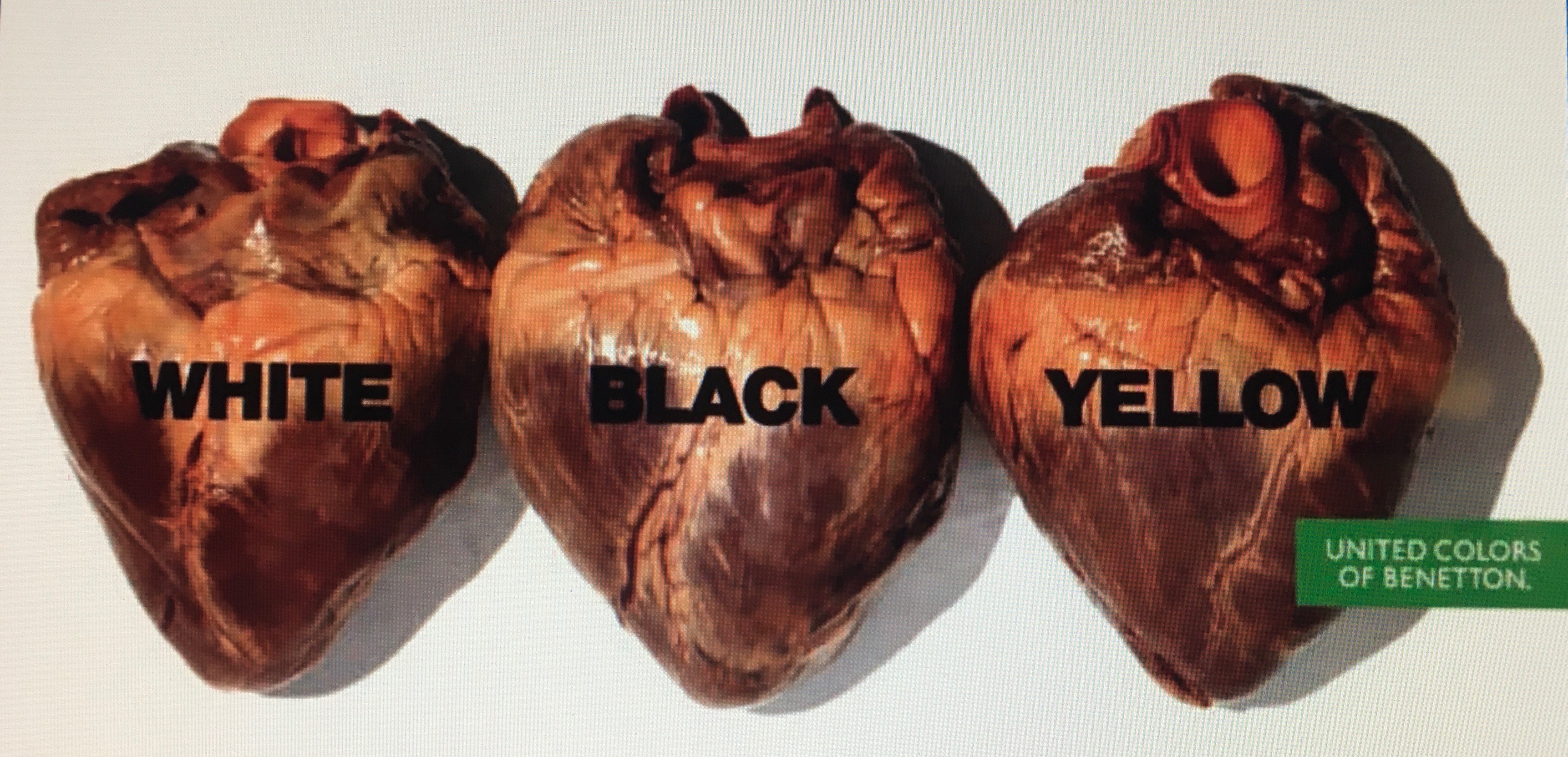
“Ads promoting an inclusive multi-racial message?” Smith observes. “That describes every multi-media marketing campaign today—but back in the 1980s this was radical. Benetton pushed the boundaries of taste further: the disturbing deathbed scene of AIDS activist David Kirby, an image of a bloodied, unwashed new-born baby still attached to its umbilical cord.”
Brave And Successful. Smith notes, “In 1985, the company won its first grand prix—a year before Gerhard Berger’s breakthrough F1 victory in Mexico City—when its edgy advertising scooped the Grand Prix de la Publicité. Those who wondered what it had to do with selling pullovers were missing the point.”
Pirelli’s Involvement. Back in Benneton’s era, there were two competing tiremakers, Goodyear and (in and out) Pirelli. Indeed, it was the latter’s involvement that got R&T its track test (and perhaps the late British journalist Alan Henry a brief Silverstone drive as well).
Smith describes Berger’s victorious drive of the B186 in the 1986 Mexican Grand Prix: “The key to Gerhard’s victory was Pirelli’s tyres, which came into their own at the high-altitude Mexico City track. As Nelson Piquet scorched through four sets of Goodyears on his Williams, Berger completed the distance on one set.”
Smith continues, “For mechanic Greg Field, the memory is among the best of many from his two decades (on and off) in F1. ‘I can remember standing in the pitlane and Senna made two stops. When he made the second we knew the race was ours—he wasn’t going to catch Berger. As Senna came past one of our guys waved at him. I bet he hated that.’ ”
Replete with Insider Views. The book is good fun because of insider views such as this. Alas, Smith cites only two magazines in his bibliography, Autosport and Motor Sport. Thus he misses R&T, March 1987.
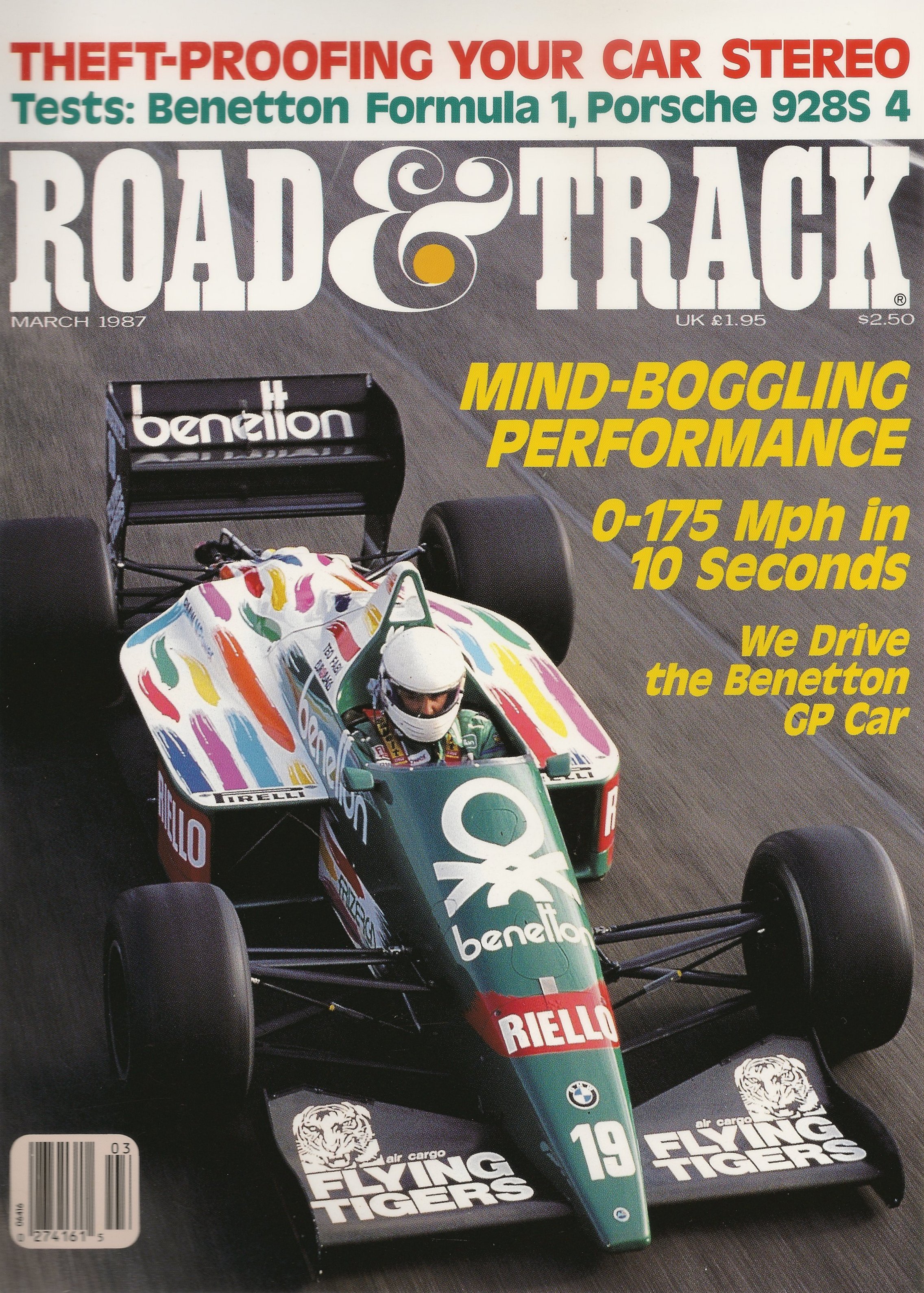
No big deal. The omission is remedied here. Thanks, Judy, for letting me know about this new book. ds
© Dennis Simanaitis, SimanaitisSays.com, 2024
 Simanaitis Says