
Simanaitis Says
On cars, old, new and future; science & technology; vintage airplanes, computer flight simulation of them; Sherlockiana; our English language; travel; and other stuff
A WELL-EMPLOYED (AND WELL-TRAVELED) DEVICE
WHAT A THOUGHT-PROVOKING HEADLINE: “This 1,000-Year-Old Smartphone Just Dialed In,” by Franz Lidz and Clara Vannucci, The New York Times, March 12, 2024.

This and following images by Clara Vannucci from The New York Times, March 12, 2024.
By the way, the device is an astrolabe, an astronomical instrument that, note Lidz and Vannucci, “allowed users to determine time, distances, heights, latitudes and even (with a horoscope) the future.”
Gee, that’s even better than a Smartphone, or at least my basic one with “BBC Sounds,” “WordPress,” “SiriusXM,” and “Talking Tom” its only add-on apps. (Full disclosure: I just now noticed that among its default Utilities is a Measure app. Neat-o!)
Here are tidbits gleaned from the Lidz/Vannucci article together with my usual Internet sleuthing.

Tracing Astrolabe Etymology. Wikipedia traces the word “astrolabe” meaning “star-taker” in medieval Latin from the Greek ἀστρολάβος : astrolábos. “In Arabic texts,” Wikipedia notes, “the word is translated as ākhidhu al-Nujūm (Arabic: آخِذُ ٱلنُّجُومْ, lit. ’star-taker’), a direct translation of the Greek word.”
The Earliest Astrolabes. Lidz and Vannucci observe, “Astrolabes are believed to have been around at the time of Apollonius of Perga, a Greek mathematician from the third-century B.C. known as the Great Geometer.”
Religious Applications. “Islamic scholars improved the gadget,” the Times authors describe, “and by the ninth century A.D. the Persians were using astrolabes to locate Mecca [toward which Muslims pray] and ascertain the five periods of prayer required each day, as stated in the Quran.”
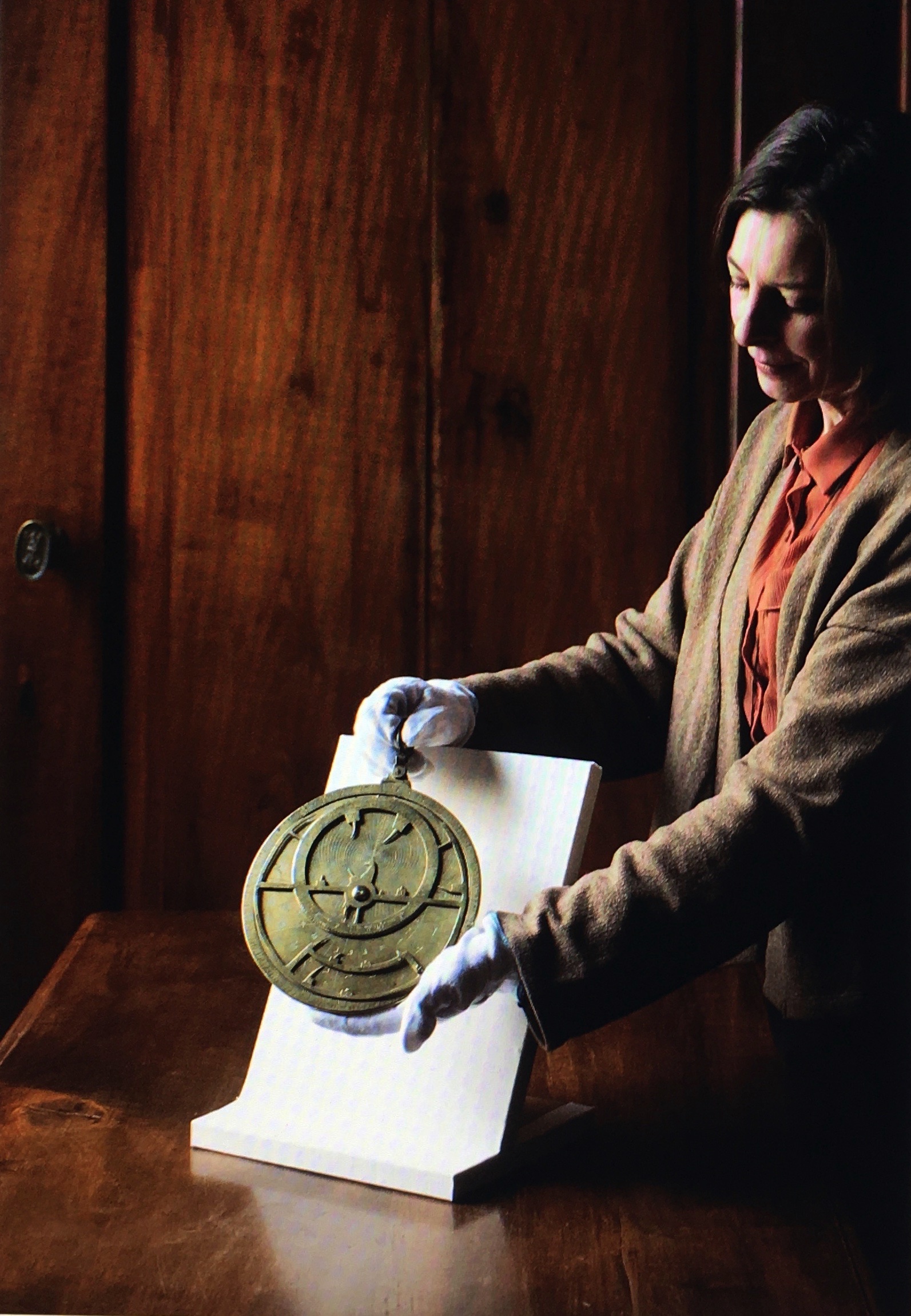
Larger than your average smartphone.
This One, a Real Find. This particular astrolabe, our authors recount, “dating to the 11th century turned up at the Fondazione Museo Miniscalchi-Erizzo in Verona, Italy. Federica Gigante, a historian at the University of Cambridge, first noticed it in a corner of a photograph while searching online for an image of a 17th-century collector whose miscellany was housed in the museum.”
Tracing its Travels. Originating in Persia, the device arrived in Europe during the Moorish conquest that reached as far north as central France. The Times authors noted, “One side of a plate was engraved in Arabic with the phrase ‘for the latitude of Cordoba, 38º 30,’ on the other side ‘for the latitude of Toledo, 40º.’” Another plate had etched latitudes of North Africa suggesting it might have been used in Morocco or Egypt.

“The original Arabic names of the signs of the zodiac were translated into Hebrew,” a detail suggesting its use within the Sephardi Jewish community.
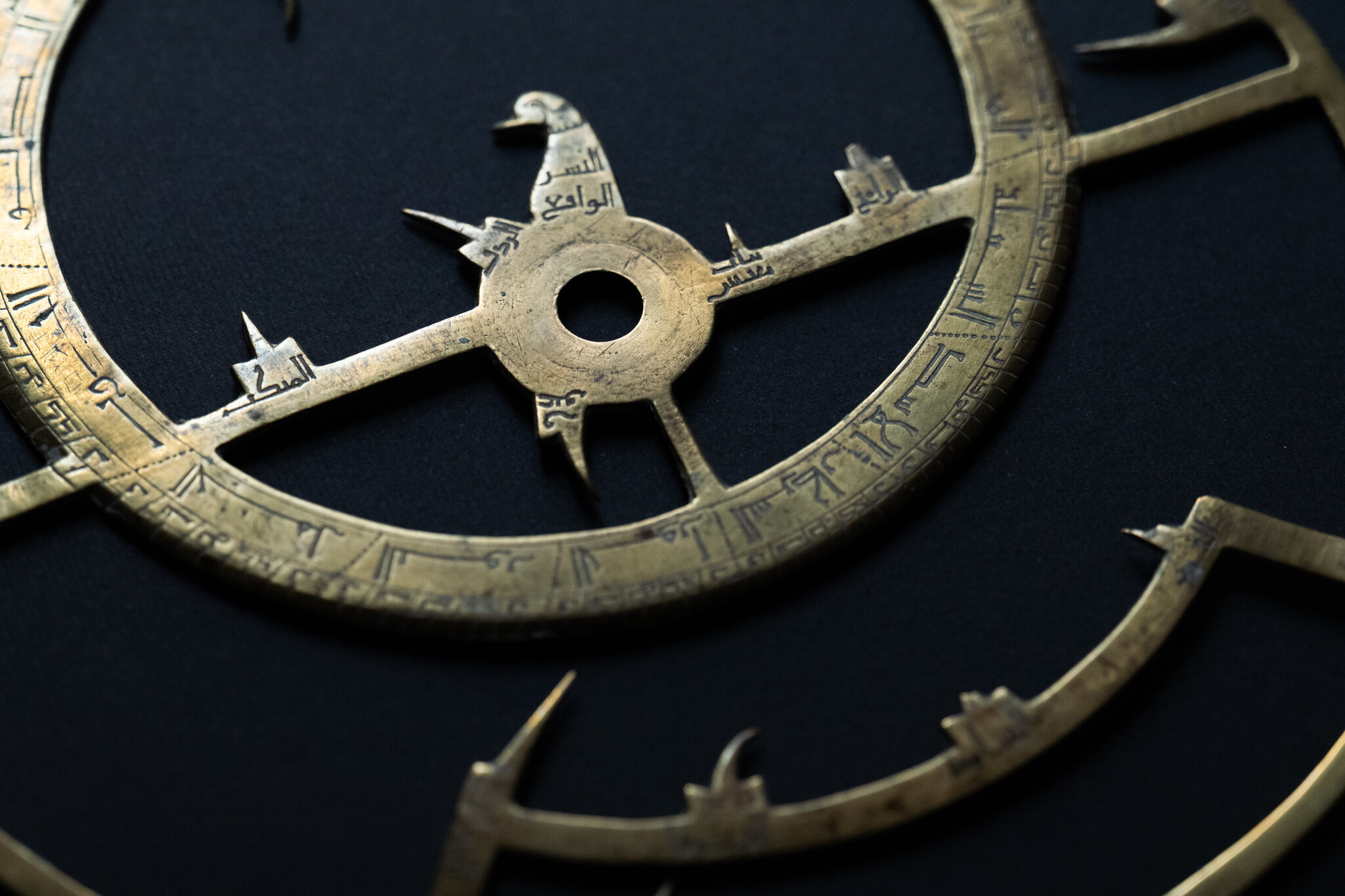
A Modern Analogy. “Basically,” Dr. Gigante said, “carving in the revisions was like adding apps to your smartphone.”
And there’s scientific justice in Dr. Gigante finding the device online. ds
© Dennis Simanaitis, SimanaitisSays.com, 2024
 Simanaitis Says