
Simanaitis Says
On cars, old, new and future; science & technology; vintage airplanes, computer flight simulation of them; Sherlockiana; our English language; travel; and other stuff
THE MAN WHO DESIGNED THE OSCAR
NOT LONG AFTER LEO THE LION roars and looks our way, scads of M-G-M films list two names, Douglas Shearer and Cedric Gibbons. Recording Director Shearer has appeared here at SimanaitisSays. The elder brother of actress Norma, he was nominated 21 times for Academy Awards and garnered seven Oscars over his 40-year career. Inevitably next on an M-G-M credit list was Art Director Cedric Gibbons, one of whose many achievements was designing the Oscar. Here are tidbits about Gibbons gleaned from a variety of sources.

Austin Cedric Gibbons, 1890-1960, American art director for the film industry.
Early Life. Wikipedia recounts, “Cedric Gibbons was born in New York City in 1890 [IMDb says Dublin, Ireland, in 1893] to Irish architect Austin P. Gibbons and American Veronica Fitzpatrick Simmons. The family moved to Manhattan after the birth of their third child. Cedric studied at the Art Students League of New York in 1911. He began working in his father’s office as a junior draftsman, then in the art department at Edison Studios under Hugo Ballin in New Jersey in 1915. He was drafted and served in the US Navy Reserves during World War I at Pelham Bay in New York.”
To Hollywood. Wikipedia continues, “Gibbons joined Goldwyn Studios, [IMDb says in 1918] and began a long career with Metro-Goldwyn-Mayer in 1924, when the studio was founded. In 1925, when he was first working in the art department at MGM, he was in competition with Romain De Tirtoff for a more substantial position…. Tirtoff is better known as Erte.”
Yes, that Erté. And it’s good fun to learn of interlinking personages (with more to appear here).
How Many Marriages? The Classics Cafe recounts that “Gibbons would marry three times. His first wife was Gwendolyn Alice Weller, an actress, whom he married in 1925. They divorced in 1926.” IMDb also cites this first marriage; Wikipedia does not.
Art Deco Love. “In 1930,” The Classics Cafe says, “he wed Dolores del Rio, a Latin American actress referred to as the female Rudolph Valentino. They would remain together until 1941 when they divorced.”
Wikipedia adds that Gibbons, an authority on Art Deco, “co-designed their house with Douglas Honnold.” The latter, an award-winning Canadian-American architect, is noted for having turned down an offer to design McDonald’s Golden Arches. (Win some, lose some; though it’s said Honnold refused the project because of artistic differences with the founding brothers.)
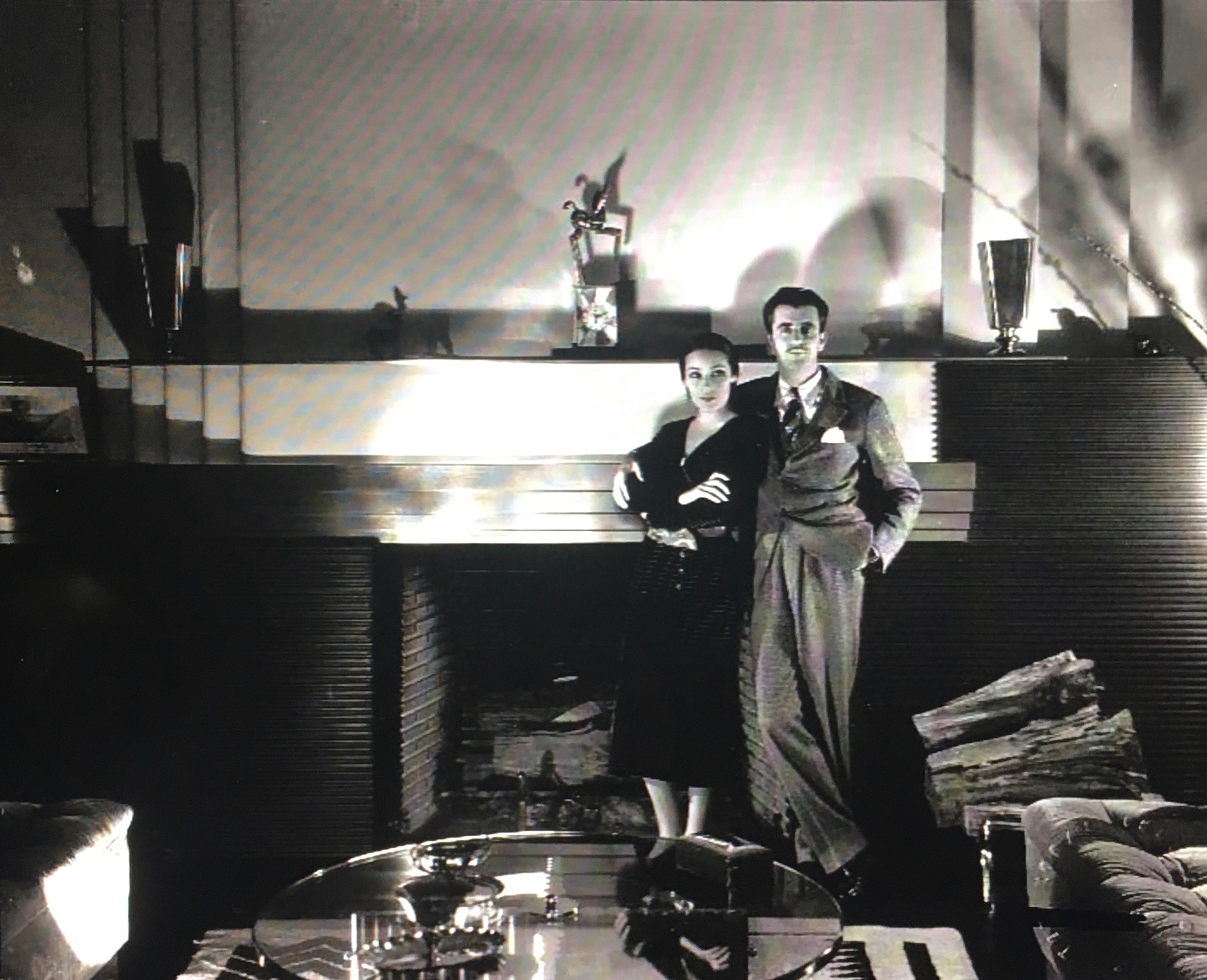
Dolores del Rio and Cedric Gibbons in their home. Image from IMDb.
And Speaking of Losing Some…. Dolores del Rio left Gibbons for a partnership with Orson Welles, as described “On Berkeley, Del Río, and Welles—Toss in Parsons and Hearst As Well.”
But Losing Only For a Few Years….Wikipedia recounts that on October 1944, Gibbons married actress Hazel Brooks, (he, 54; she, 19) with whom he remained until his death in 1960.
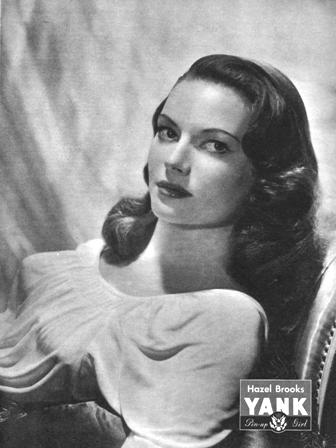
Hazel Brooks, 1924-2002, South Africa-born American model and actress. Image for Yank, the Army Weekly, 1944, from Wikipedia.
A photo of Brooks by Durward Garyhill was voted “Most Provocative Still of 1947” by the International Society of Photographic Arts in January 1948.
Gibbons’ Cinematographic Career. Wikipedia notes, “Gibbons was one of the original 36 founding members of The Academy of Motion Picture Arts and Sciences…. Gibbons designed the Oscar statuette in 1928, but tasked the sculpting to George Stanley, a Los Angeles artist. He was nominated 39 times for the Academy Award for Best Production Design and won the Oscar 11 times, both of which are records.”

His Oscars were for The Bridge of San Luis Rey, 1929; The Merry Widow, 1934; Pride and Prejudice, 1940; Blossoms in the Dust, 1941; Gaslight, 1944; The Yearling, 1946; Little Women, 1949; An American in Paris, 1951; The Bad and the Beautiful, 1952; Julius Caesar, 1953; and Somebody Up There Likes Me, 1956.
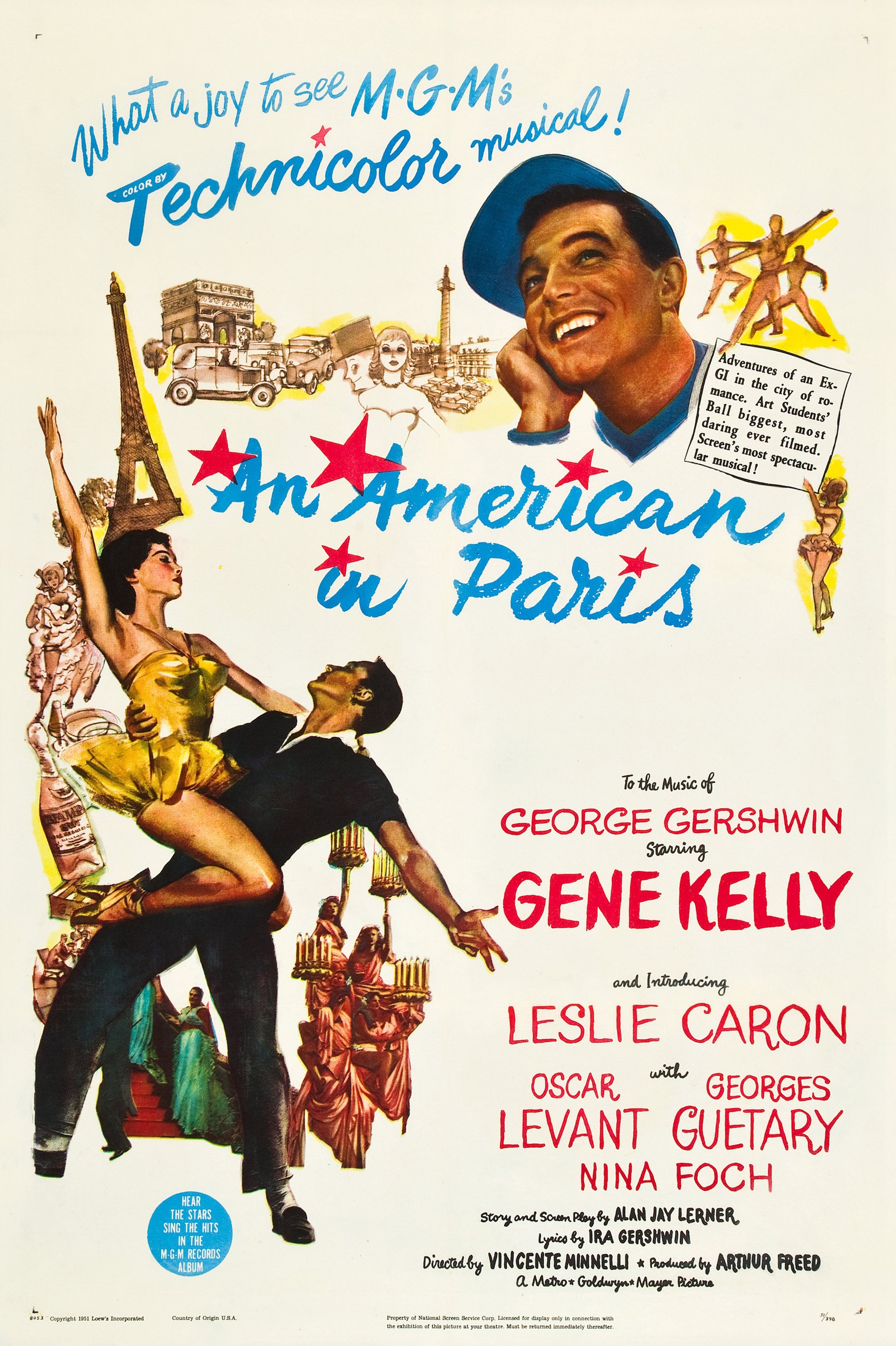
Just recently I’ve enjoyed Turner Classic Movies’ broadcast of An American in Paris (including its beautiful 17-minute ballet). And, sure enough, not long after Leo roared, two credits appeared: Recording Director Douglas Shearer and Art Director Cedric Gibbons. Quite a talented cinematographic duo. ds
© Dennis Simanaitis, SimanaitisSays.com, 2024
 Simanaitis Says