
Simanaitis Says
On cars, old, new and future; science & technology; vintage airplanes, computer flight simulation of them; Sherlockiana; our English language; travel; and other stuff
CHEAT.YU.COM
ADVISORY: IF YOU CLICK on the above, you’ll find that “The domain yu.com is for sale. To purchase, call …..” Further Advisory: Don’t do this unless you learn more about the bizarre world of Internet domains.

I got into this by reading Jacob Judah’s “The Two-Decade Fight for Two Letters on the Internet, The New York Times, February 21, 2024. By way of introduction, Judah writes, “The South Pacific island of Niue says it was cheated out of .nu, a domain that turned out to be very lucrative on the other side of the world.” Here are tidbits explaining why.
Domain Names. Wikipedia describes, “In the Internet, a domain name is a string that identifies a realm of administrative autonomy, authority or control. Domain names are often used to identify services provided through the Internet, such as websites, email services and more. As of December 2023, 359.8 million domain names had been registered.”
In general, a domain name consists of a TLD (top-level domain) preceded by a dot preceded by an SLD (second-level domain). An example is SimanaitisSays.com, which got you to this website, hosted by WordPress, a web content management system, “a factory that makes webpages,” and registered with GoDaddy, an Internet domain registry, domain registrar, and web hosting company.
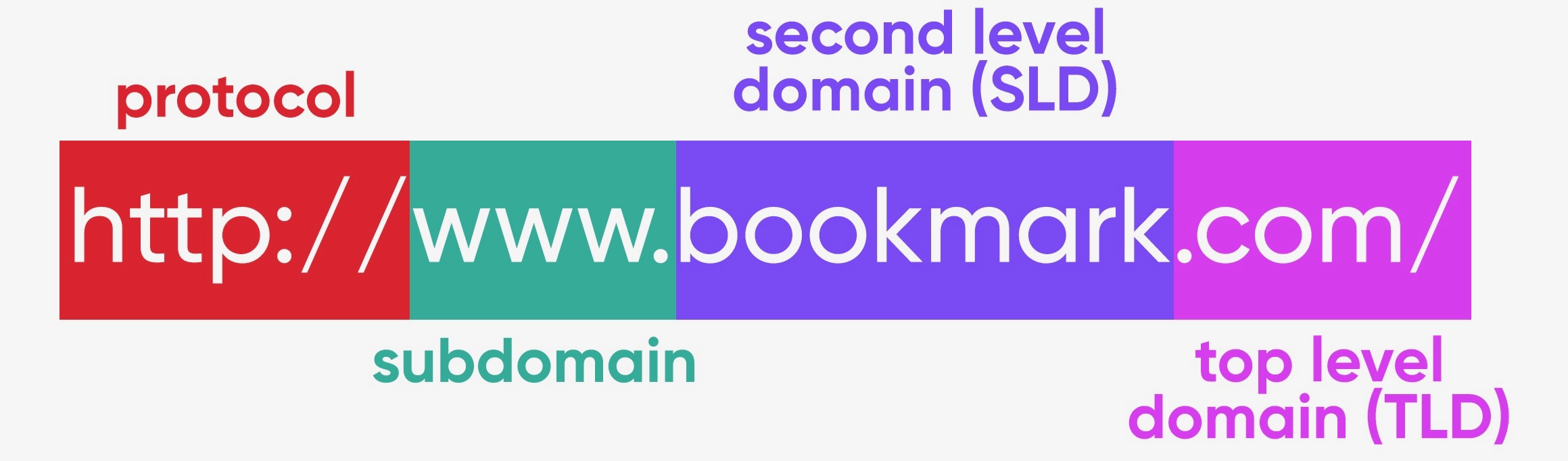
More on TLDs. When all this got devised in the mid-1980s, there were country code TLDs based on two-character codes of country abbreviations and seven generic TLDs: gov, edu, com, mil, org, net, and int. Wikipedia notes, “As of October 2009, 21 generic top-level domains and 250 two-letter country-code top-domains existed…. By 2016, a milestone of 1000 live generic TLD was reached.”
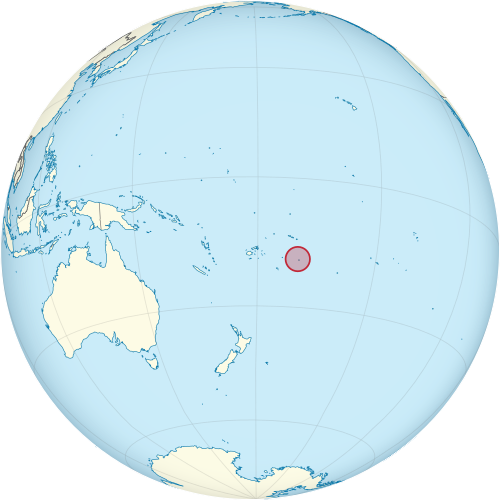
Back to Little Niue aka .nu. “In the late 1990s,” The New York Times Judah recounts, “an American businessman offered to hook up the island to the internet. All he wanted in exchange was the right to control the .nu suffix that Niue was assigned for its web addresses. The domain did not seem as lucrative as .tv — which was slotted to Tuvalu, another South Pacific nation — and the leaders of Niue (pronounced New-ay) signed off on the deal. But the two sides were soon at odds.”
Just How Lucrative is .tv? Or .nu? Back in 2000, The New York Times reported, “Under the deal, Tuvalu is to receive the $50 million over the next 12 years. Already, the company has paid the country $18 million. The payments so far have increased the country’s gross domestic product by 50 percent and allowed the government to put electricity on the outer islands and create scholarships for its citizens.”
Judah notes, “It turned out that .nu was, in fact, very valuable. ‘Nu’ means ‘now’ in Swedish, Danish and Dutch, and thousands of Scandinavians registered websites with that suffix, creating a steady business for Niue’s business partner, Bill Semich.”

Niue’s Income. Judah writes, “Niue, an oval-shaped coral island of about 100 square miles of area, about the size of Lincoln, Neb., felt it had been cheated out of a reliable stream of cash that would have helped it reduce its reliance on tourism and foreign aid. It had turned to unorthodox sources of income before, selling stamps and coins to collectors. It had also rented out its international dialing code, until Niue’s deeply Christian residents started being awakened at midnight by wayward phone sex calls from Japan.”
“Niue canceled the deal with Mr. Semich in 2000,” Judah recounts, “and has been attempting to reclaim .nu — which is now operated by the Swedish Internet Foundation, a nonprofit — ever since.” The matter currently resides in the Swedish Supreme Court.
Other Domain Tidbits. Domain names are not case-sensitive: simanaitissays.com is just as good as SimanaitisSays.com. However, Wikipedia notes, “For example: Who Represents, a database of artists and agents, chose whorepresents.com, which can be misread.”
Country domains are ripe for commercial enhancement (and occasional misidentification): Ascension Island (part of the U.K.) is assigned .ac, popular with accounting or air-conditioning firms. The Caribbean island of Anguilla, .ai, is unofficially used by tech companies specializing in artificial intelligence. The Federated States of Micronesia profits from .fm, as does last.fm which brings together “your favorite music services….” Montenegro is .me and meet.me is where one can “meet, chat, and have fun with new people—free!”
However, bibliophiles (or Arizonans) can’t scam .az because this is reserved for Azerbanjian. On the other hand, Finland’s .fi has registration allowed worldwide, local presence not required.
What’s more, .tk is assigned to Tokelau, a dependent territory of New Zealand, .nz, consisting of three tropical atolls, Atafu, Nukunonu, and Fakaofo. Tokelau has the distinction of offering free domain service for the public. Editorial types may recall “tk” as abbreviation for “to come,” reserving a place for yet-to-arrive copy. ds
© Dennis Simanaitis, SimanaitisSays.com, 2024
 Simanaitis Says
But Arizonan’s should be able to get .az.us. Each state has a domain like that using the two letter state postal id.
Similarly in Canada we have provincial domains, such as .ab.ca here in Alberta, but apparently these domains are no longer available for registration, although existing domains can continue renew.
Yes, a good point. It’s the ccTLD .az that’s being discussed above. The .az in your example is an SLD.
And basically the “Internet” doesn’t even understand these URLs, as it only really understands numeric IP addresses like ###.##.##.##.
That is why domain name servers are required as these servers provide a directory to match the URL to the appropriate IP address.
Often when launching a new domain, or relocating an existing one to a new hosting site, the URLs will fail to find the server until the updated database is propagated to all the other domain name servers (DNS).
Understanding this IP address-server registration process helped me solve a (scary) mystery a few months ago. In a short period of time my bank card got locked due to suspicious activity, twice, the second time only a week after getting a new card. I also got flagged by three services that I used that there might be suspicious sign-ons to my accounts. The bank wasn’t very forthcoming with what specifically caused their concerns, but the three other services indicated “suspicious” sign-ins in Germany, and I could see the bank be suspicious of a login from there when I was in Canada.
One of the services had a feature where I could check simultaneous sign-ons to my account, and sure enough, using both my computer and my iPhone I was able to identify a sign-on from Germany (my Mac using a VPN), and then using the iPhone I force disconnected the German connection, and my Mac was logged off the site. I contacted the VPN service and they confirmed that one of the servers that they had in Toronto had been assigned an IP address that had previously been used in Germany, and obviously DNS servers had not been updated properly.
The solution was to (at a slightly higher cost) buy a unique Toronto based VPN IP address that was mine alone rather than using the rotating bank of servers. This also solved another problem where I got locked out from my own website by my host because some of the VPN IP addresses had gotten blacklisted for excess bad traffic. I just made sure that my unique address was whitelisted by my hosting service. While VPNs do help protect your Internet activity, they are used by the bad guys too to help hide their activity.
A scary tale.
I’m glad I was able to figure this out because initially I thought that my home network had been compromised, with nefarious actors gaining access to my banking info when I logged into my bank. And glad to see that the bank/other sites are watching for suspicious activity.