
Simanaitis Says
On cars, old, new and future; science & technology; vintage airplanes, computer flight simulation of them; Sherlockiana; our English language; travel; and other stuff
SERIES HYBRIDS: GOOD ENOUGH FOR LOCOMOTIVES; PICKUP TRUCKS TOO?
THOUGH WE CALL THEM “DIESELS,” railway locomotive wheels are actually spun by electricity produced by diesel-powered generators. That is, they’re “series” hybrids. This is contrasted with automotive “parallel” hybrids like the Toyota Prius, the propulsion of which comes from interaction of both a gasoline engine and an electric motor, the latter’s battery gets charged when necessary by the gasoline engine. To complete the options, there’s also a “mild” hybrid, whose hybrid moniker comes from things like start-stop systems and electrical assist of gasoline acceleration (electric motors have maximal torque from first spin). There’s also the “micro” hybrid, typically with only start-stop. And let’s not forget the “plug-in,” capable of charging its battery with a remote source.
Herr Porsche’s Series Hybrid. In 1900 Ferdinand Porsche was still 16 years from his honorary “Dr. Ing.” but already a talented engineer with Lohner-Werke designing the Lohner-Porsche Mixte.
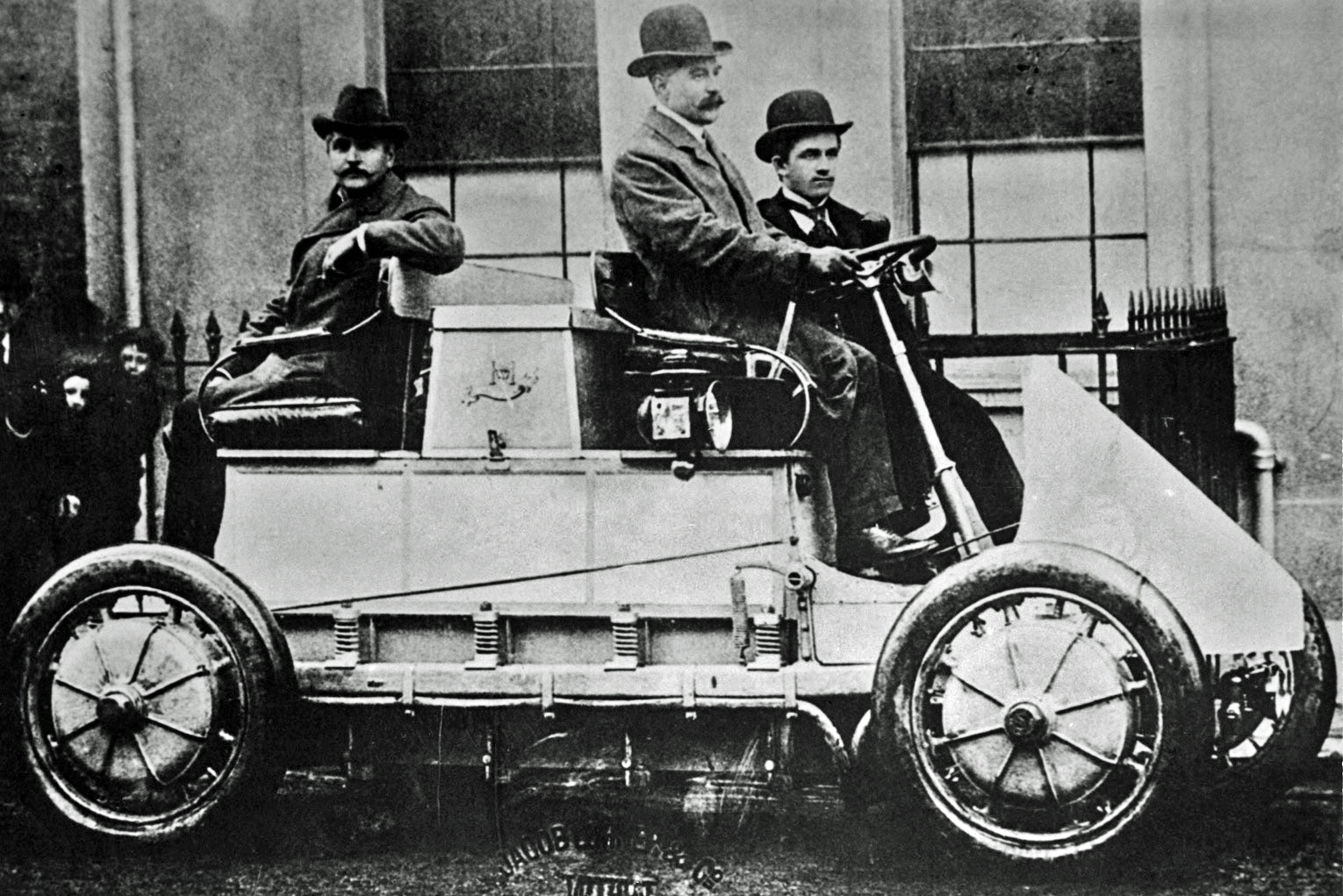
The 1900 Lohner-Porsche “Mixte.”
Wikipedia recounts, “The hybrid ‘Mixed’ or ‘Mixte’ racecars are powered by a gasoline engine which drives four electric motors, one in each wheel hub.”

Ram Ramcharger. Richard Truett describes in Automotive News, December 12, 2023, “2025 Ramcharger Aims to Put an End to Range Anxiety, Says Engineer.” This Ram 1500 Ramcharger pickup contrasts with parallel hybrid and BEV pure electric pickups (the technical gloss of which has seemingly worn off).
Anatomy of the Ramcharger Series Hybrid. Truett writes in Automotive News, December 11, 2023, “The 2025 Ram Ramcharger is the industry’s 1st series hybrid pickup. The 3.6-liter V-6 engine spins a generator that creates electricity to charge the 92-kWh battery pack and to power the front and rear electric traction motors.”
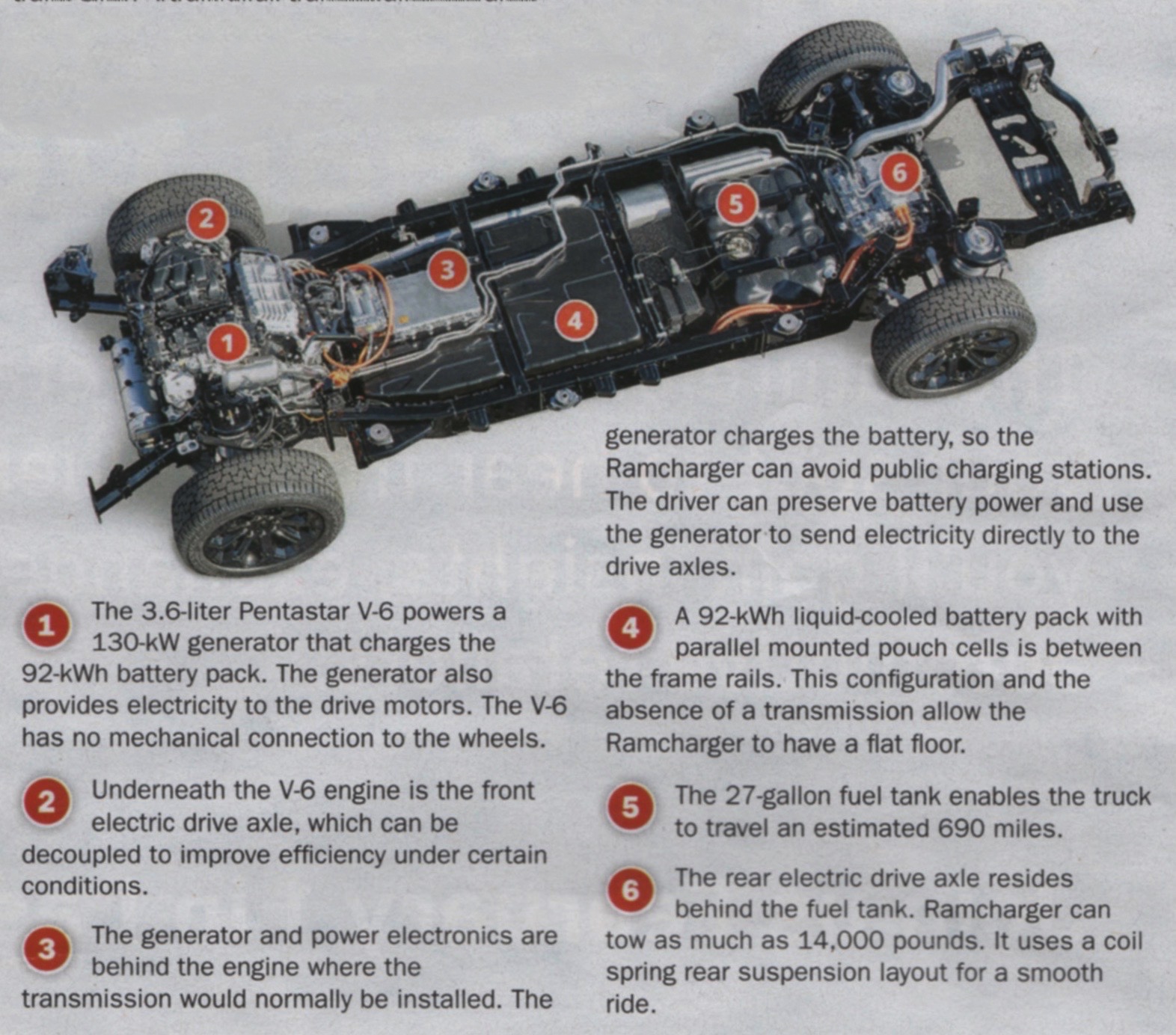
This and the following image from Automotive News, December 11, 2023.
Truett stresses, “There is no mechanical path from the engine to the wheels. This is the same powertrain layout used in diesel-electric locomotives.”
And, as Truett notes, in the Lohner-Porsche.
A Series Downside? Truett cites Greg Davis, director of the Advanced Engine Research Laboratory and a professor of mechanical engineering at Flint’s Kettering University: “The downside,” Davis says, “is all the power from the engine has to go to generate electrons. It can’t be used to spin the wheels directly. And so efficiency can take a little bit of a hit, especially at steady-state operation on the highway…. converting all that mechanical power into electrical power and then converting back to mechanical power at the wheels.”
Why Not a Parallel Design? “It’s actually cheaper,” Davis says, “ to do a parallel drive hybrid, particularly if you are doing a mild hybrid, where you are relying on the engine to provide mechanical power and only using the electric system to provide peak power. You can make the battery pack and electric motor pretty small….”
A Multiplicity of Parallel Hybrid Pickups. There’s no lack of available parallel hybrid pickups from Ford, Honda, Hyundai, Jeep, Nissan, Ram itself, and concept originator Toyota. Car and Driver recently ranked the best of them ”based on roughly 200 data points encompassing acceleration, handling, comfort, cargo space, fuel efficiency, value, and how enjoyable they are to drive.”
Their ranking places the Ford Maverick first, the Ram 1500 second, the Ford 150 third, and the Toyota Tundra Hybrid fourth.
How Would the Ramcharger Stack Up? Ram lists its total horsepower: 663. Driving range: 690 miles est. 0-60 mph: 4.4 seconds. Towing capacity: 14,000 lbs.
Ram cites that estimated 690-mile range as crucial, especially when compared with pure BEV pickups (not parallel hybrids): “After testing competitors’ electric pickups,” Automotive News cites, “Stellantis engineers were convinced that a series hybrid powertrain would enable a Ram truck to deliver the towing and hauling capability and the driving range that many buyers expect in a pickup, regardless of powertrain.”
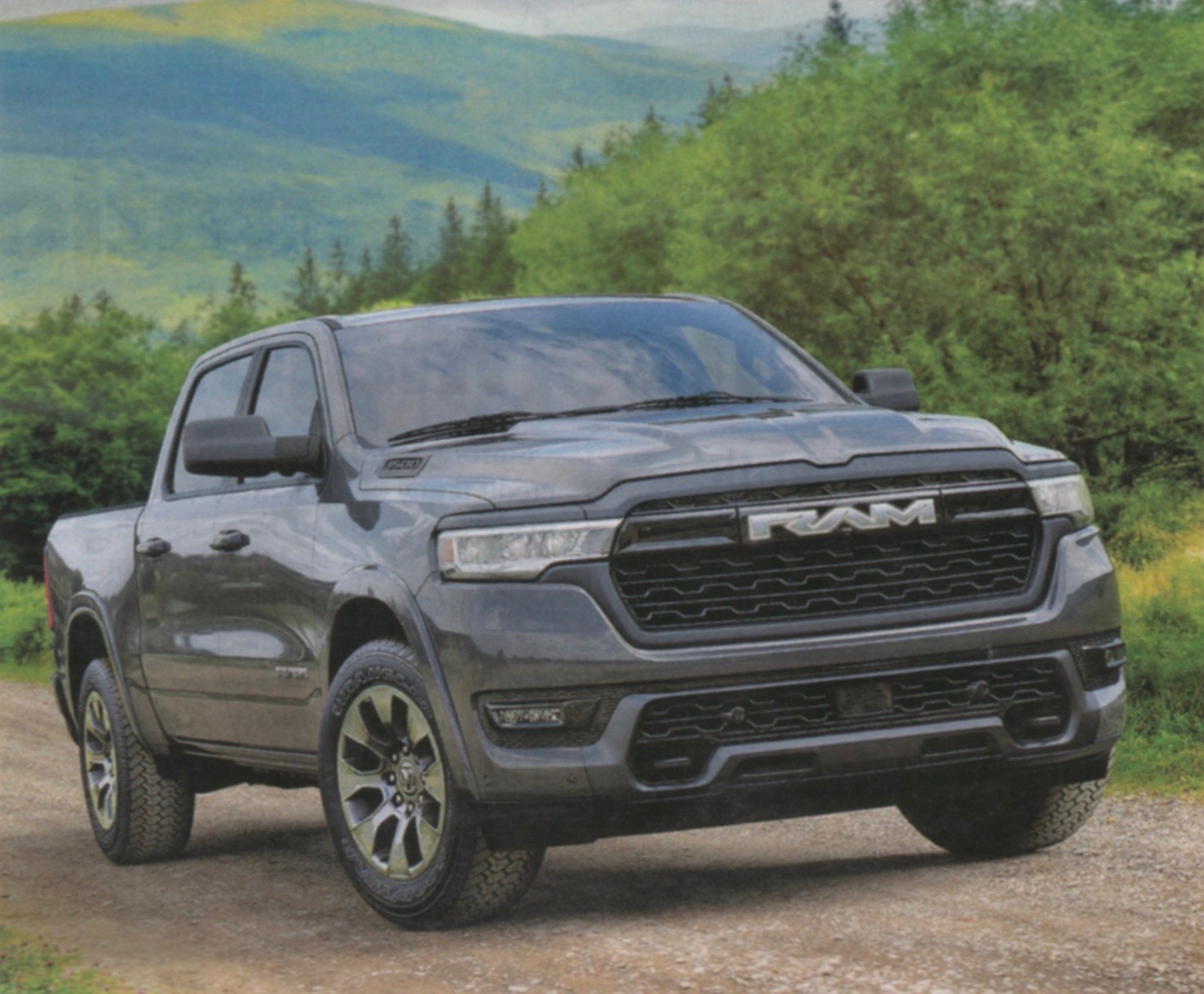
A BEV Strawman? In a sense, Ramcharger benefits seem focused against BEVs, not parallel hybrids. Green Car Reports summarizes its analysis by noting, “Ram hasn’t said anything about how many Ram REV [a BEV] versus Ramcharger models it plans to build, but it did hint that it sees the Ramcharger as a somewhat more limited offering that’s for shoppers who think about an EV but decide against it for a number of concerns.”
Series Versus Parallel. An interesting contrast with parallel hybrids, though, is in the series gasoline engine’s operation: As it’s not driving the wheels directly, it can be calibrated specifically to electric-generating requirements, not vehicle propulsion. I haven’t seen any EPA data on the series Ramcharger; this would seem to indicate how successfully this series tuning can be accomplished.
Evidently it works just fine, thanks, with railway diesels. ds
© Dennis Simanaitis, SimanaitisSays.com, 2023
 Simanaitis Says
Mr Pedantic here: ‘hybrid’ implies a combination of direct energy production (usually but not exclusively by a ICE) and storage as energy sources. The Ramcharger is a series hybrid because it has both a battery and storage, not because it has electric drive. Diesel-electric locomotives are normally not hybrid because they have no on-board traction energy storage, though they *are* electric drive. Other series hybrid vehicles of note include the Chevy Volt (with hedging because the Volt did use a mechanical connection to the engine in some modes for efficiency or emergencies) and the BMW i3.
‘Pure’ series hybrids tend to get poor gas mileage on the highway to the losses inherent in the generator-electric drive system, and the weight penalty of carrying two complete energy systems (that 90 KWH battery isn’t weightless, nor are the engine, generator, and fuel system). Maybe that matters less when it’s a huge, heavy beast to start with…
Locomotive consists (trains usually use more than on unit) can be hybrid even if the locomotive units are not. Wabtec and Progress Rail both offer battery-powered units that can run in consist with diesel units and reduce fuel consumption (and hence emissions). Some carry more than 5 MWH of batteries. Then there are ‘dual-mode’ diesels that can operate with either diesel or external (overhead wire, 3rd-rail) external power where available. After all, the electric drive itself is more or less agnostic about where its power supply comes from.
Thanks for your comment, Mike. Take it up with Automotive News, which might beg to differ on several points.
Reference acknowledged. I understand the point. I’ll continue to disagree with the source; it’s more complicated than just having electric drive. Agree about the Ram being a “pure” series hybrid, though, and it’ll be interesting to see how it works in practice.