
Simanaitis Says
On cars, old, new and future; science & technology; vintage airplanes, computer flight simulation of them; Sherlockiana; our English language; travel; and other stuff
AMONG THE FIRST FLYING BOATS: DENHAUT’S OFFSPRING
THE FIRST HYDRO-AEROPLANE COMPETITION took place in Monaco in March 1912; the first Coupe d’Aviation Maritime Jacques Schneider, the Schneider Cup, came a year later. However, these races favored conventional aircraft mounted on floats. About the same time, aviation designers assayed the concept of flying boats, of using the craft’s fuselage for buoyancy. Indeed, English eccentric Noel Pemberton-Billing conceived of a conventional boat with wings, the latter detachable in the event of aviatory failure.

Denhaut’s Flying Boats. According to Wikipedia, “In 1911–12, François Denhaut constructed the first flying boat, with a fuselage forming a hull, using various designs to give hydrodynamic lift at take-off…. Denhaut’s second model had succeeded in becoming the world’s first flying boat. Many later designs for flying boats can be seen to be very clearly based upon Denhaut’s design.”
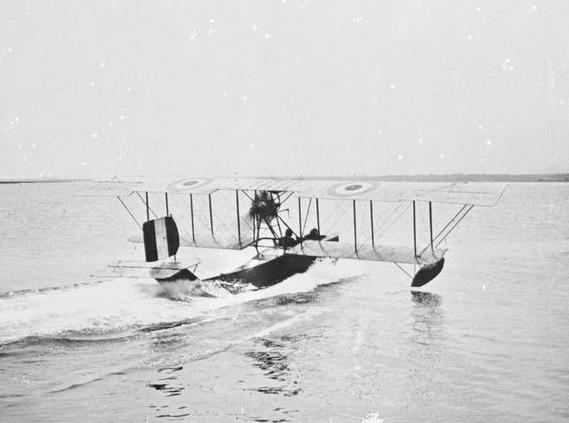
F.B.A. Reconnaissance flying boat. Image by British Ministry of Information First World War Miscellaneous Collection from Wikipedia.
The Armed Conflicts.Com website picks up on the narrative: Swiss engineer Jérome Donnet lent a 50-hp Gnome to Denhaut’s seaplane design “when he was satisfied that the engine would be placed high enough to survive a possible crash….” Denhaut learned to fly and later became chief pilot of a flying school set up “by, among others, Pierre Levasseur.”
Indeed, Denhaut’s first attempt to set down on the water failed: The craft nosed over; “Denhaut had the foresight to wear a life jacket.”
The rebuild featured a “step” in its hull design, “recommended by Robert Duhamel, another pioneer in the field of seaplanes. Simply put, the step allowed most of the fuselage to be above the water at higher speeds, making take-off easier.”

At about this same time, carmaker Henri Lévêque got involved in the project as well. Armed Conflicts reports that Donnet-Lévêque built some thirty variations of the flying boat, “more than half of which failed to find buyers.” Some of these may have been built by “a new company proudly named Franco British Co. Ltd. FBA, ‘British’ because of its London office, may have built some of the alleged thirty machines.”

Indeed, there was even a Russian knock-off: Armed Conflict recounts, “The last known military user of Denhaut’s original seaplane is Russia. The Russian Navy purchased one Type A and on 1 June 1913 it was flown from the Rowing Port in St. Petersburg. However, already on 24 June P. E. von Lipgart crashed it and the machine was handed over to the S. S. Shchetinin factory for repair. Here it was thoroughly studied by one D. P. Grigorovich, who shortly afterwards introduced his flying boat M-1… There are also mentions of another Donnet-Lévêque machine in Russia, and again it should be a C version.”

Curiously, one of the Wikipedia articles about Grigorovich seaplanes gives no credit whatsoever to the Denaut design.
My Finding a Fine 3-View. It was at this point of research that I encountered an excellent color rendering of the F.B.A. flying boat. One of its features that attracted me was the Venetian gondola sweep of its tail structure.
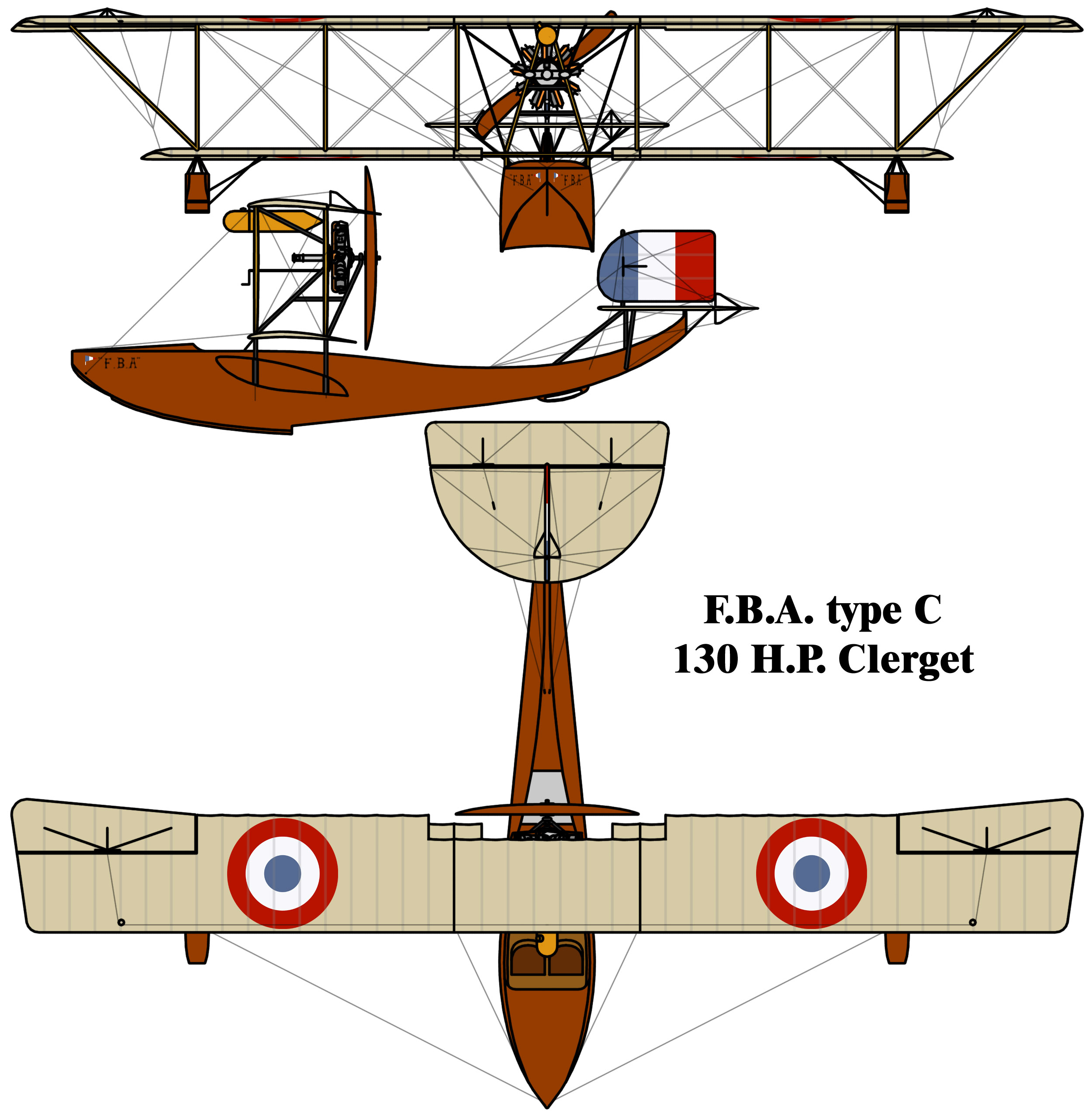
The FBA Flying Boat became my next GMax project, with enough images and design variations to give me options in its modeling.
Pilot, Observer, and Gunner. One variant included a machine gunner in the nose. Great: I could articulate him and his weapon keyed to GMax “Canopy” coding similar to the Sud-Est SE100’s. And I had already had an observer bring binoculars to his eyes (keyed to GMax “Spolier” articulation). That is, free-thinking is encouraged in GMax modeling.

Should the observer sit next to the pilot or behind him? Earlier variants of the real craft had tandem seating, but later ones gave the observer a better view sitting next to the pilot. Which I did as well.

Which Powerplant? Real craft had everything from seven- or nine-cylinder air-cooled rotaries to Hispano-Suiza water-cooled V-8s. I’ve enjoyed “Rotary Engines: Hold the Crank, Spin the Rest,” so a rotary it was.
I got well into modeling the Gnome Monosoupape 9 Type B-2, whose nomenclature indicates nine rotating cylinders each with a single pushrod operating the exhaust valve (the “monosoupape”). Intake was through internal porting.
Rendering a rotary (or a radial, come to think of it) exploits GMax’s clone-and-rotate: Model a single cylinder, head, ignition, valve articulation, then clone and rotate it appropriately (40 degrees for a nine-cylinder layout).


Ha. But then later I realized that other details of my model were closer to the F.B.A. Type C, which had a Clerget 9B (also nine cylinders, but with pushrods and rockers for both exhaust and intake. No problem: Just clone-and-rotate the pushrod/rocker/head.
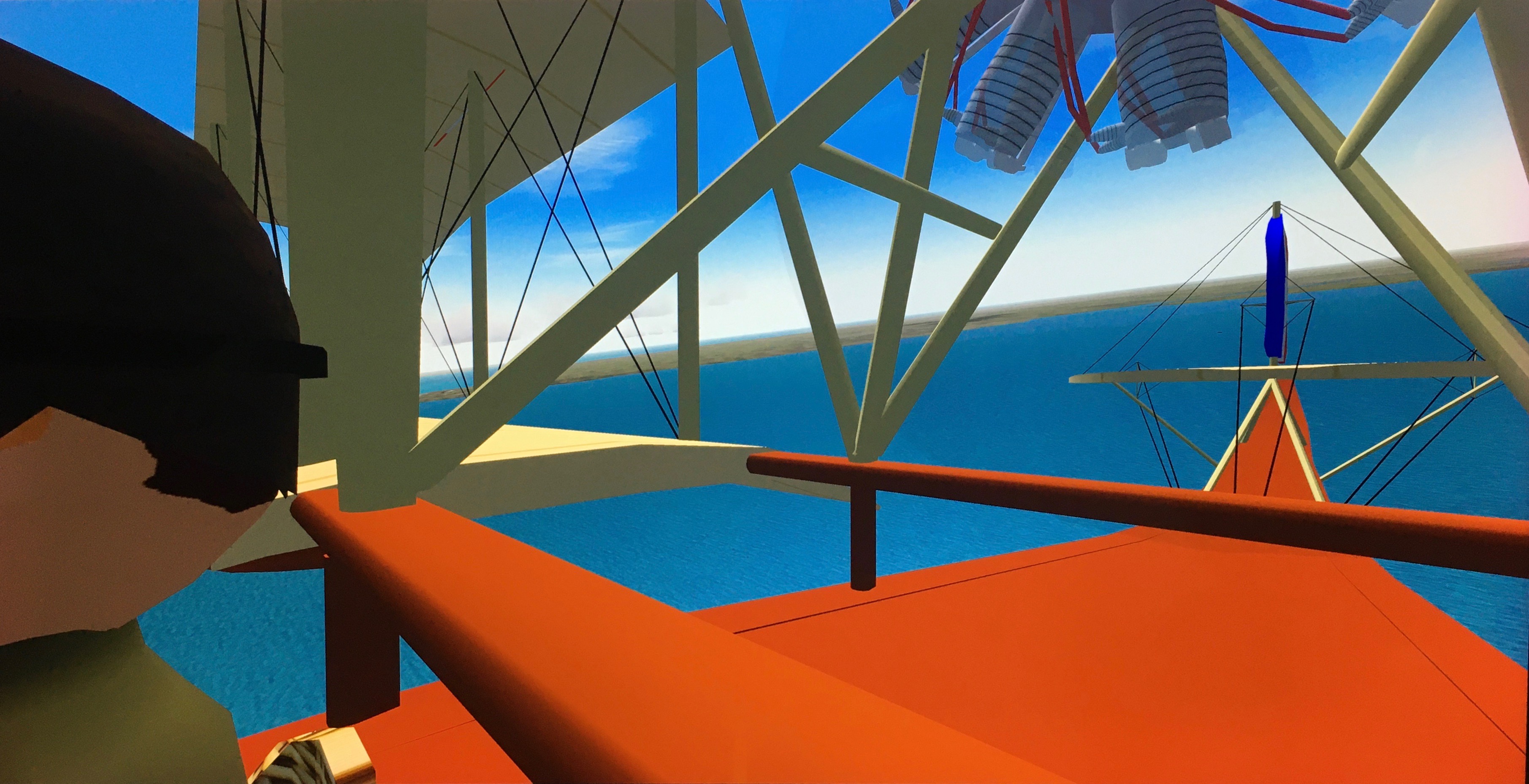
All in good GMax fun. And don’t you love that Venetian gondola sweep? ds
© Dennis Simanaitis, SimanaitisSays.com, 2023
 Simanaitis Says